
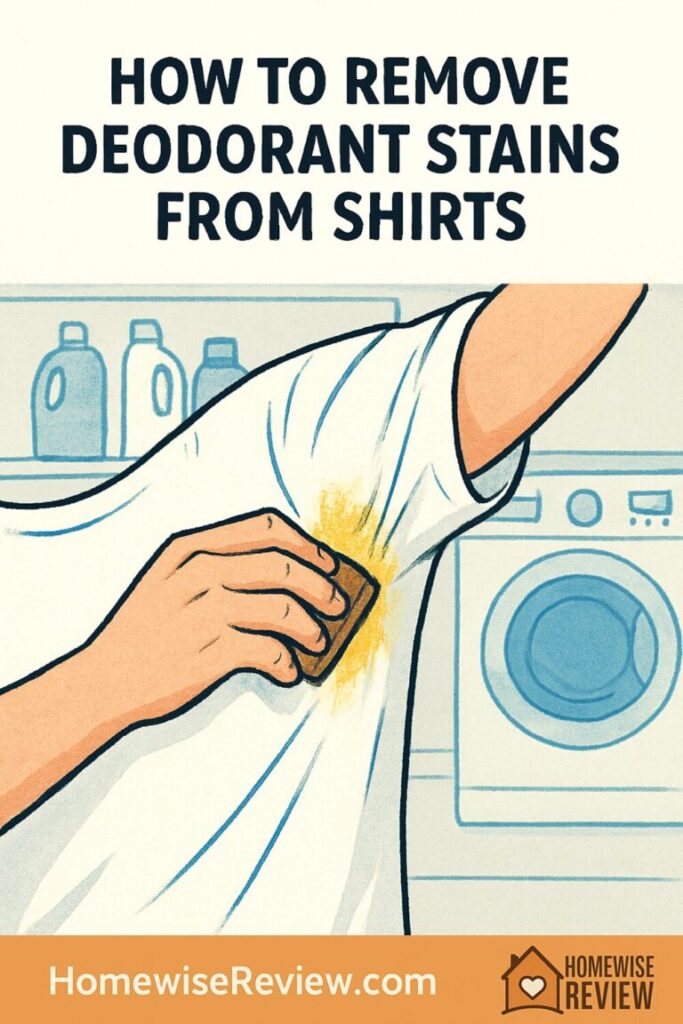
How to Remove Deodorant Stains From Shirts
Learn how to get rid of white deodorant marks and stubborn yellow underarm stains on shirts using safe, effective methods for whites, colors, and delicate fabrics.

On this page
- Why deodorant stains show up and what you are dealing with
- Before you start: quick safety checks
- How to remove fresh white deodorant marks fast
- How to remove yellow deodorant stains from white shirts
- How to remove deodorant stains from colored shirts
- Fixing deodorant buildup and crunchy underarms
- What to do with delicate or dry clean only shirts
- How to keep deodorant stains from coming back
- See also
White streaks on dark tops and yellow underarm stains on favorite white shirts are frustrating, but you can usually fix them with the right pretreatment and a few laundry tweaks.
Why deodorant stains show up and what you are dealing with
Before you reach for the nearest cleaner, it helps to know what kind of deodorant stain you have. Different stains respond to different methods, and the wrong product can make a mark much harder to remove.
- White, chalky marks on dark shirts: This is usually deodorant residue sitting on top of the fabric. It is often the easiest type to fix.
- Yellow underarm stains on white shirts: These are usually a reaction between aluminum salts in antiperspirant, sweat, and body oils. They can harden the fabric and take some work to remove.
- Stiff or crunchy underarms on any color: This is deodorant and sweat buildup that has worked into the fibers over time.
Once you know what you are facing, you can pick the safest and most effective method instead of attacking the shirt and hoping for the best.
Before you start: quick safety checks
Read the care label and fabric type
Always check the care label first. Cotton, polyester, and blends can usually handle most home stain treatments, while wool, silk, rayon, and linen can be more sensitive.
If your shirt says “dry clean only,” skip harsh treatments and either do very gentle spot cleaning or take it to a professional. For anything with stretch, sequins, or prints, be extra cautious with scrubbing and strong products.
Any new cleaner or mixture should be tested on an inside seam or hem. Apply a drop, wait 5 to 10 minutes, then blot and check for fading, color bleed, or roughness.
If the fabric looks unchanged, you can move ahead with more confidence. If you see damage or color change, switch to a milder method.
General rules that save shirts
- Avoid heat on fresh stains: Hot water and the dryer can set deodorant and sweat stains. Use cool or warm water until the stain is gone.
- Work gently: Scrubbing too hard can roughen fabric, especially on armpits where the fabric is already stressed.
- Rinse between products: If you change methods, rinse the fabric so you are not mixing chemicals directly on the shirt.
How to remove fresh white deodorant marks fast
Those bright white streaks from last minute dressing are annoying but usually surface-level. Try these quick fixes before committing to a full wash.
Method 1: Use another part of the shirt
- Take a clean, dry section of the same shirt or another clean cotton garment.
- Gently rub the stained area with the clean fabric in small circles.
- The fresh fabric will often lift the deodorant residue without water or soap.
This works especially well on black or navy t-shirts and dresses when the stain is brand new.
Method 2: A slightly damp washcloth
- Dampen a soft, clean washcloth with cool water and wring it out until it is almost dry.
- Gently wipe or dab the marks, moving with the grain of the fabric.
- Let the shirt air dry before wearing. Check in bright light to make sure the streaks are gone.
Use as little water as possible, especially on dark colors, to avoid water rings.
Method 3: Deodorant removal tools you may already have
- Dry microfiber cloth: Buff the stain in one direction to pick up residue.
- Dry foam sponge or “makeup eraser” cloth: Gently rub; these are designed to lift product without water.
- Unscented baby wipe: Dab, do not scrub, then blot dry with a towel.
Once the marks are gone, you can wear the shirt as is or toss it in the hamper for a regular wash later.
How to remove yellow deodorant stains from white shirts
Yellow underarm stains on white shirts are a mix of sweat, body oils, and aluminum from antiperspirant. They usually need some soaking and a good detergent wash.
Option 1: Baking soda paste for light to medium stains
Good for: White cotton and cotton blends, light staining, slightly stiff fabric.
- Mix 3 parts baking soda with 1 part cool water to form a spreadable paste.
- Turn the shirt inside out so you can reach the stain from the back of the fabric.
- Spread the paste over the stained area, working it gently into the fibers with your fingers or a soft toothbrush.
- Let it sit for 30 to 60 minutes. Do not let it fully dry into a crust if your fabric is delicate.
- Rinse with cool water, then wash the shirt as usual with laundry detergent in warm water, if the care label allows.
- Air dry and check the stain. Repeat if needed before using the dryer.
Baking soda helps neutralize odor and gently lifts some of the discoloration without harsh bleaching.
Option 2: White vinegar soak for stiffness and odor
Good for: White cotton and blends with stiff, crunchy underarms or strong odor.
- Fill a basin or sink with cool water and add 1 cup of distilled white vinegar.
- Submerge the stained area and gently agitate the fabric with your hands.
- Let soak for 30 minutes, up to 2 hours for heavy buildup.
- Rinse well with cool water.
- Wash right away with a good detergent on warm water, if allowed by the label.
Vinegar helps break down deodorant and sweat buildup and can soften the fabric so other cleaners work better.
Option 3: Dish soap and hydrogen peroxide for stubborn yellowing
Good for: Heavily stained white cotton shirts that have not responded to milder methods.
Not for: Colored fabrics, spandex, or delicate fibers like silk and wool.
- In a small bowl, mix 1 part clear, grease-cutting dish soap with 2 parts 3% hydrogen peroxide.
- Place a towel inside the shirt under the stained area to stop the mixture from bleeding through.
- Pour or spoon the mixture onto the stain and gently work it in with your fingers or a very soft brush.
- Let it sit for 15 to 30 minutes, checking occasionally. Do not leave it for hours on end.
- Rinse thoroughly with cool water.
- Wash immediately in warm water with detergent.
Hydrogen peroxide is a mild bleach that can lift yellowing on white cotton. Always test first and avoid this method on colors or fragile fabrics.
Option 4: Oxygen bleach soak for overall whitening
Good for: Multiple white shirts with widespread yellowing.
- Fill a tub or bucket with warm water according to the oxygen bleach package directions.
- Add the recommended amount of oxygen bleach and stir to dissolve.
- Submerge the shirts completely and soak for several hours, up to overnight if the label allows.
- Rinse, then wash as usual with detergent.
Oxygen bleach is usually gentler than chlorine bleach and safer for most washable whites. Follow the product directions closely.
How to remove deodorant stains from colored shirts
Colored shirts need a bit more care to avoid fading or light spots. Focus on gentle cleaners that cut oils and residue without bleaching.
Method 1: Liquid laundry detergent directly on the stain
- Turn the shirt inside out.
- Apply a small amount of liquid laundry detergent directly to the stained area.
- Work it into the fabric with your fingers, pinching the fabric together, or using a soft cloth.
- Let it sit for 10 to 15 minutes.
- Wash in cool or warm water, according to the care label.
This is a simple first step that often works if stains are fairly recent.
Method 2: Diluted white vinegar for residue and odor
- Mix equal parts cool water and distilled white vinegar.
- Dab the mixture on the stain with a clean cloth, or soak only the underarm area in a small bowl.
- Let sit for 15 to 30 minutes.
- Rinse thoroughly with cool water, then wash as usual.
Always test vinegar on the inside of a hem first to be sure the color stays stable.
Method 3: Color-safe oxygen bleach
Look for an oxygen bleach labeled color-safe, and follow its directions.
- Follow the product directions to create a soak solution in cool or warm water.
- Submerge the stained area or the whole shirt.
- Soak for the recommended time, usually 1 to 6 hours.
- Rinse, then wash with detergent.
If the color looks brighter but the stain is still faintly visible, repeat the process before using the dryer.
Fixing deodorant buildup and crunchy underarms
If the fabric under the arms feels thick, rough, or noisy when you pinch it, you probably have layers of old deodorant and sweat that normal washing is not removing.
Deep clean soak for buildup
- Fill a basin with warm water, as warm as the care label allows.
- Add a scoop of oxygen bleach or a strong laundry booster according to the directions.
- Submerge only the underarm sections or the whole shirt.
- Gently agitate the water and soak for 2 to 4 hours.
- Rinse well and then wash with detergent.
If needed, follow with a baking soda paste or detergent pretreat directly on the remaining hard spots before washing again.
What to do with delicate or dry clean only shirts
Silk, wool, rayon, and dry clean only items are easy to damage, so be cautious and keep treatments mild.
Spot cleaning at home
- Blot, do not rub: Use a clean, white cloth lightly dampened with cool water to blot fresh white deodorant marks.
- Mild soap solution: Mix a drop of gentle liquid soap with cool water, dip a cloth in the solution, and dab the stain, then blot with plain water to rinse.
- Avoid peroxide and strong bleach: These can strip color or weaken delicate fibers.
If the shirt is valuable or sentimental and the stain is large or old, it is usually better to take it to a trusted dry cleaner and point out the deodorant stain specifically.
How to keep deodorant stains from coming back
Once you have rescued your shirts, a few small habit changes can dramatically cut new stains and buildup.
- Apply less product: Use a thin, even layer of deodorant instead of multiple heavy swipes.
- Let deodorant dry before dressing: Give it a minute or two to set so it does not transfer straight to the fabric.
- Consider switching formulas: If you constantly fight yellow stains, try a deodorant with lower or no aluminum or a clear gel formula.
- Wear undershirts with dress shirts: A thin undershirt can absorb sweat and protect outer shirts.
- Wash promptly after heavy sweating: Leaving sweaty shirts in a hamper for days gives stains time to set.
- Pretreat armpits routinely: For shirts you wear often, add a quick detergent rub or vinegar spritz to the underarms before almost every wash.
Product formats and actives differ: our 30-label antiperspirant audit maps sticks, gels, sprays, liquids and their exact Drug Facts wording.
See also
- Find laundry detergents and additives that are gentle on itchy skin while still tackling sweat and stains.
- Learn about fabric softeners and alternatives for sensitive-skin homes if you want softer shirts without irritation.
Frequently Asked Questions
Can I use hydrogen peroxide on colored shirts to remove deodorant stains?
Hydrogen peroxide can lighten or fade many dyes, so it is safest to reserve it for white cotton shirts. On colored fabrics, test a very small hidden area first, wait 10 minutes, then blot and check for any lightening. If you see even slight fading, do not use peroxide on the visible stain and switch to detergent pretreating, diluted vinegar, or color-safe oxygen bleach instead.
How do I remove deodorant stains from a shirt when I cannot wash it right away?
For fresh white marks, gently rubbing with a clean, dry cloth or another part of the shirt usually removes visible residue so you can keep wearing it. If the shirt is sweaty or starting to yellow but you cannot launder yet, let it air dry fully, then lightly spritz the underarm area with diluted white vinegar and let it dry again. This helps limit odor and buildup until you can do a proper pretreat and wash.
Why do my white shirts keep getting yellow underarm stains even with clear deodorant?
Yellow stains are caused by a reaction between sweat, body oils, and aluminum salts in antiperspirants, not just the white color of the stick. Many clear or gel products still contain aluminum to control sweating. If stains keep appearing, try using a lighter application, letting the product dry before dressing, switching to a low-aluminum or aluminum-free deodorant, and washing sweaty shirts sooner instead of letting them sit.
Is vinegar or baking soda better for deodorant stains?
Vinegar and baking soda do slightly different jobs, and they often work best in combination. Vinegar is helpful for dissolving deodorant and sweat residues and softening stiff fabric, making it good for soaks, especially on buildup. Baking soda is mildly abrasive and deodorizing, so its paste is useful for gently scrubbing light yellowing and odor. If one method alone does not fully work, try a vinegar soak followed by a baking soda paste before washing.
When should I give up on a deodorant-stained shirt and replace it?
If you have tried a couple of gentle methods suited to your fabric type and the underarm area is still heavily discolored, stays stiff after several washes, or shows thinning or fraying, it may be time to retire the shirt. Extremely old stains can bond with the fibers so completely that removal is not realistic without damaging the fabric. At that point, consider keeping it for messy chores or workouts and protecting new shirts with better deodorant habits and prompt washing.
As an Amazon Associate, we earn from qualifying purchases made through links on our site.