

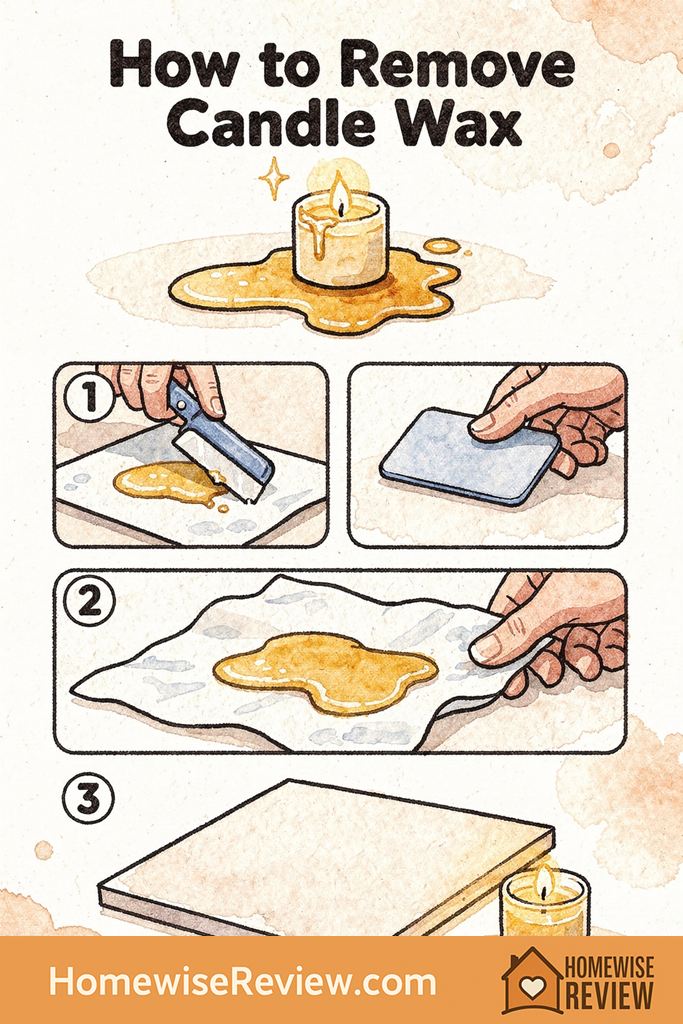
Let candle wax harden, then gently lift the loose pieces with a plastic edge. The next step depends on the surface: heat can help on suitable washable fabric, but it can damage carpet fibers, upholstery and furniture finishes. Remove the solid wax before treating any oily or colored mark.
Cold or heat? Choose by the surface
| Surface | First step | Next decision |
|---|---|---|
| Washable fabric that permits ironing | Cool and lift the surface wax | Controlled warm-iron transfer, then pretreat and wash |
| Silk, delicate trim or dry-clean-only clothing | Let cool; lift only loose pieces | Professional assessment before heat or solvents |
| Carpet or a rug | Harden, lift carefully and vacuum loose crumbs | Use only the carpet maker’s approved wax method |
| Couch or chair | Cool and lift without pulling fibers | Read the cleaning code before residue treatment |
| Finished wood | Lift cooled wax with a non-scratching edge | Clean according to the finish; stop if it changes |
| Glass, tile or a sealed counter | Cool and lift the bulk gently | Use material-compatible cleaning; avoid temperature shock |
Gather a small cleanup kit
Start with a plastic card or scraper, a clean white cloth and an ice pack sealed against leaks. For an iron-safe washable textile, also use clean absorbent paper towels and an iron. Use the cleaning product specified for the material when you reach the residue stage. Brown shopping bags may carry ink, coatings or adhesives, so avoid using them against a valued textile.
How to remove wax from clothes and tablecloths
- Let the wax become firm. Lift loose surface wax gently. Do not cut into or stretch the cloth.
- Check both washing and ironing symbols. If heat is permitted, place the waxy area between clean paper towels and press with a warm iron within the label’s temperature limit. Move to clean paper as wax transfers.
- Treat the remaining stain. Use a prewash stain remover compatible with the fabric, then launder as labelled. Check the dry result before using the dryer.
The American Cleaning Institute describes this wax-transfer and pretreatment sequence for clothing. It is not blanket permission to iron every material. Skip home heat treatment on delicate finishes, pleats, glued decoration or an item with a no-iron symbol.
If wax stops transferring but a pink, blue or oily shadow remains, move to the stain stage rather than repeatedly applying heat. Wax removal and dye removal are different jobs.
How to remove wax from carpet and rugs
Allow the wax to harden. Use a wrapped, sealed cold pack if appropriate for the carpet, avoiding leaked water. Lift small pieces without pulling the pile, then vacuum loose fragments.
The Carpet and Rug Institute describes a paper-and-low-heat technique, but first confirm that the carpet manufacturer permits it for your specific fiber, backing and installation. Do not put an iron straight on the pile. Stop if fibers flatten, discolor or soften. When the material is unknown or valuable, professional removal is preferable to experimenting with heat.
For residue, use a carpet-compatible spot product and its rinse instructions. If the wax reached the backing or a colored stain persists, tell the cleaner what candle was involved and what you applied. The carpet grease guide addresses oily marks, which need a different approach from solid wax.
How to remove wax from a couch
Lift cooled surface wax gently without rubbing it into the weave. Check the fabric’s cleaning code before applying liquid: W permits water-based cleaning, S requires solvent cleaning, WS permits either category, and X rules out cleaning agents. The code does not authorize ironing or machine-washing a removable cover.
Use the couch maker’s wax instructions for the next step. Do not apply a hair dryer to every upholstery fabric or soak foam with a homemade detergent mix. For X-coded fabric, unstable color, velvet pile or a large spill, get professional advice before treating the residue.
How to remove wax from finished wood
Let wax firm up, then try lifting an edge with a plastic card held nearly flat. Stop if the finish lifts with it. Keep water off seams and avoid sharp metal tools.
Clean any remaining film with a product approved for that finish. Heat, solvents and polish are not interchangeable repairs: a cloudy or soft patch may be damaged finish rather than wax. Antique furniture, raw wood and an unidentified finish need specialist advice.
Glass, tile and stone
For glass, separate a sturdy candle jar from a thin drinking glass, mirror or decorated object. Avoid sudden boiling-water or freezer-to-hot-water changes. See the glass wax-removal guide for the different shapes and surfaces.
On tile or a sealed countertop, lift hardened pieces with a plastic edge, then use a compatible cleaner and dry the area. On stone, a dark oily mark may need specialist stain treatment; dry kitchen powder is not proof that an absorbed stain has been removed. Start with the Natural Stone Institute’s material-specific care advice and consult the supplier for persistent marks.
What the remaining mark tells you
- A raised or waxy patch: some solid wax remains. Reassess the removal method before adding cleaner.
- A greasy ring: use a grease-treatment product allowed for that surface.
- A colored shadow: candle dye may remain. Do not assume rubbing alcohol or bleach is suitable for the fabric or finish.
- A pale, shiny or rough patch: stop. It may be damage rather than removable residue.
Avoid another spill
Keep candles upright on a stable, heat-resistant holder, away from drafts and combustible material. Let the candle cool before moving it. Follow its wick and burning instructions rather than using one trimming rule for every candle design.
Related cleanup guides
For other waxy marks, see crayon removal. Different couch stains have different limits: use the slime guide or blood-stain guide only for those substances, after checking the upholstery code.
Frequently Asked Questions
Does vinegar dissolve candle wax?
Do not rely on vinegar as a universal wax remover. Remove the solid wax first and choose a residue treatment for the actual material. Acid can damage some stone and finishes.
Can I use an iron on every wax stain?
No. Use heat only when the textile or carpet instructions permit it. A low dial setting does not establish that an unknown surface can tolerate an iron.
Can colored wax leave a permanent stain?
Yes, full recovery is not guaranteed. Once the wax is gone, a remaining dye mark may require a material-specific stain treatment or professional help.
As an Amazon Associate, we earn from qualifying purchases made through links on our site.