
Philips Sonicare ProtectiveClean 4100 Review
The Philips Sonicare ProtectiveClean 4100, now sold as the Sonicare 4100, from its listing: pressure sensor, timer, brush settings and battery, compared with the Oral-B Pro 1000, Sonicare 5300 and Aquasonic Black Series.

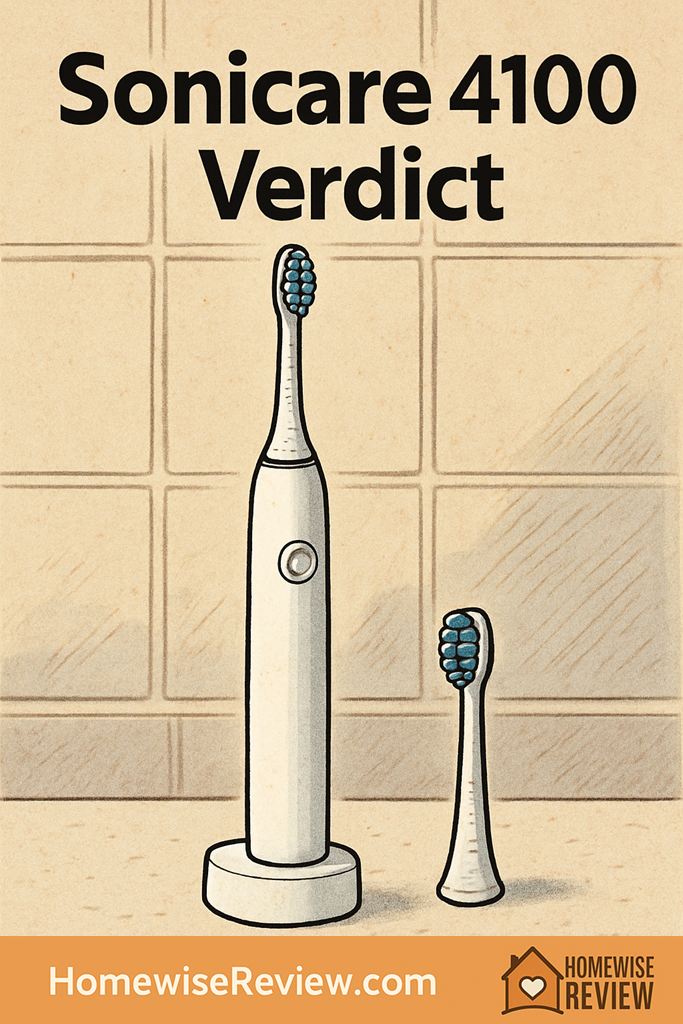
A rechargeable sonic brush with a pressure sensor, two brush settings, a 2-minute timer and up to 14 days per charge, per its listing.
On this page
The Philips Sonicare ProtectiveClean 4100 is a rechargeable sonic toothbrush with a pressure sensor, a 2-minute timer and two brush settings, and little else. The version Amazon sells new today is listed as the Philips Sonicare 4100 (HX3681/24), and this review describes that listing. It suits adults who want a simple step up from a manual brush without an app or a pile of modes. Below are its specs, who it fits, its trade-offs and how it compares on paper with the Oral-B Pro 1000, the Sonicare 5300 and the Aquasonic Black Series.
Overview
The Philips Sonicare ProtectiveClean 4100 is a rechargeable sonic toothbrush from Philips, built as a straightforward everyday model rather than a feature-packed one. Its listing describes a pressure sensor, a 2-minute SmarTimer with a QuadPacer, an EasyStart feature that gradually increases brushing power, a brush head replacement reminder and two brush settings. The American Dental Association says either manual or powered toothbrushes can be used effectively, so the case for this brush rests on those convenience features.
Key Specs
| Type | Rechargeable sonic electric toothbrush |
|---|---|
| Brush settings | 2, per the listing |
| Pressure sensor | Yes; the handle pulses if you press too hard |
| Timer | 2-minute SmarTimer with a QuadPacer every 30 seconds |
| Brush head system | One C2 Optimal Plaque brush head included; the handle reminds you when to replace it |
| Battery life | Up to 14 days of regular brushing per full charge, per the listing |
| Charging | USB charger (power adapter not included) |
Who It’s For
This brush fits adults who want a simple step up from manual brushing without an app or extra settings. The pressure sensor and EasyStart are its main features for people who are switching from a manual brush or who tend to press too hard. If your gums are sore or bleed, see a dentist rather than choosing a brush to fix it.
- Good for first-time electric toothbrush users
- Good for people who tend to press too hard, thanks to the pressure sensor
- Good for anyone who wants a simple, low-fuss routine
- Less ideal for shoppers who want whitening or gum-care modes, a travel case or an app
Features in detail
Philips’s listing describes Advanced Sonic Technology that pulses fluid between teeth and along the gumline, and a C2 Optimal Plaque brush head with soft, flexible bristles. EasyStart gradually increases brushing power when you start using it, which is meant to ease the switch from a manual brush.
The pressure sensor is the main reason to choose the 4100 over a basic electric toothbrush: per the listing, if you press too hard, the handle pulses slightly to remind you to ease off. The American Dental Association recommends a soft-bristled toothbrush and gentle pressure. The SmarTimer tells you when you reach two minutes, and the QuadPacer prompts you every 30 seconds to move to the next section of your mouth.
There are trade-offs. The listing names two brush settings but no whitening or gum-care mode, so if you like customization, the 4100 may feel basic. Battery life is listed at up to 14 days of regular brushing per full charge, and it comes with a USB charger but no power adapter. Factor in replacement heads: the listing says the handle tracks how often and how hard you brush and tells you when to replace the head, and the ADA says to replace a toothbrush every three to four months, or sooner if the bristles are visibly matted or frayed.
Pros & Cons
Pros
- Pressure sensor that pulses when you press too hard
- 2-minute SmarTimer with a 30-second QuadPacer
- Simple controls with two brush settings
- Up to 14 days per charge, per the listing
Cons
- No whitening or gum-care mode
- Replacement heads are an ongoing cost; check their price before you buy
- A USB charger but no power adapter in the box
How It Compares
| Product | Key Difference | Check Price |
|---|---|---|
| Philips Sonicare ProtectiveClean 4100 | Sonic toothbrush with a pressure sensor, two brush settings and a 2-minute timer, per its listing. | View on Amazon |
| Oral-B Pro 1000 | Round oscillating brush head and three cleaning modes, including a sensitive mode; its listing says pressure control stops the pulsations when you brush too hard. | View on Amazon |
| Philips Sonicare 5300 | Adds Clean, White and Gum Care modes, a travel case and three brush heads, per its listing. | View on Amazon |
| Aquasonic Black Series | Four modes, wireless charging, eight brush heads and a travel case in the box, per its listing. | View on Amazon |
💡 Editor’s Final Thoughts
The Philips Sonicare ProtectiveClean 4100, now listed as the Sonicare 4100, suits adults who want an uncomplicated rechargeable sonic brush from an established brand: a pressure sensor, a 2-minute timer with 30-second pacing and up to 14 days per charge, per its listing. Skip it if you want whitening or gum-care modes, a travel case or an app. Whichever brush you choose, ask your dentist or hygienist at your next checkup to look at your technique.
Frequently Asked Questions ▾
Is the Philips Sonicare ProtectiveClean 4100 good for sensitive gums?
If your gums are tender or bleed, ask your dentist or hygienist first. On features, the listing says the handle pulses if you press too hard, and EasyStart gradually increases brushing power when you start using it.
Does the ProtectiveClean 4100 have multiple brushing modes?
The listing names two brush settings and no specialty modes such as whitening or gum care. If you want those presets, look at a model such as the Sonicare 5300, whose listing names Clean, White and Gum Care modes.
How does it compare with the Oral-B Pro 1000?
The Oral-B Pro 1000 uses a round oscillating head, and its listing names three cleaning modes, including a sensitive mode; the Sonicare 4100 is a sonic brush with two brush settings. The ADA says both manual and powered toothbrushes are effective at removing plaque, so choose on features, head shape and the cost of replacement heads.
How long does the battery last in real use?
Philips lists up to 14 days of regular brushing on a full charge. Pack the USB charger for longer trips.
Can you use other Sonicare brush heads on the 4100?
The box includes one C2 Optimal Plaque brush head. Before buying other heads, check Philips’s compatibility information for your handle. The listing says the handle tracks how often and how hard you brush and tells you when to replace the head.
As an Amazon Associate, we earn from qualifying purchases made through links on our site.
Before you use any of these
The American Dental Association says either manual or powered toothbrushes can be used effectively, and that toothbrushes should be replaced every three to four months, or sooner if the bristles are visibly matted or frayed. No brush or flosser replaces regular dental checkups.
If gums bleed, swell or hurt, or there is tooth pain or a loose adult tooth, see a dentist rather than changing products.
Sources and further reading: American Dental Association: toothbrushes; American Dental Association: floss and other interdental cleaners.