

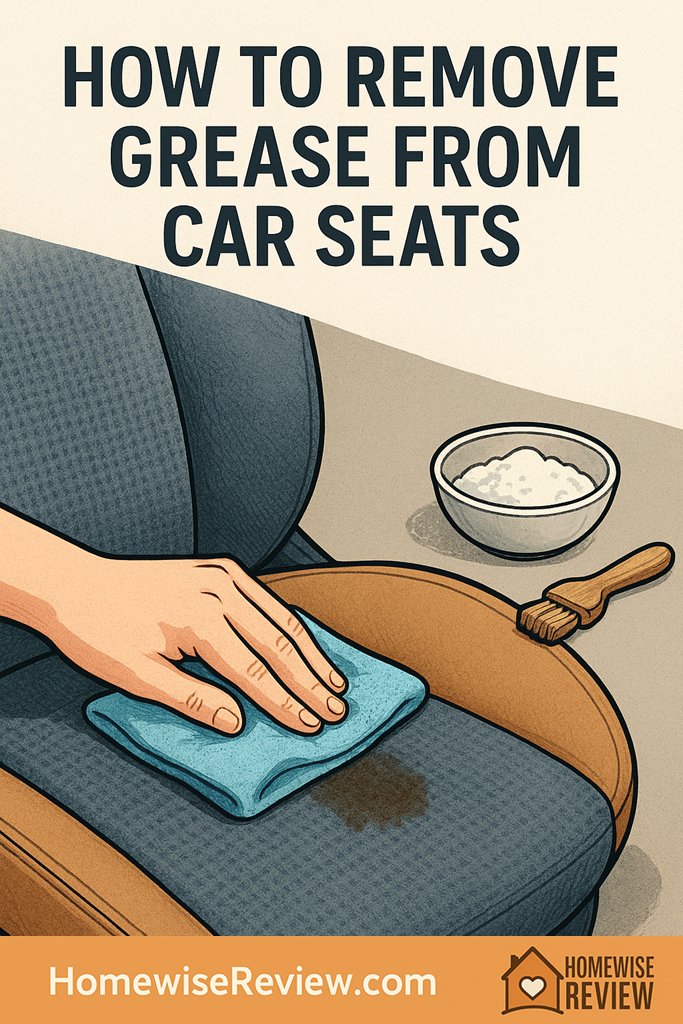
Grease on car seats spreads fast, sinks deep, and can leave a dark shadow if you clean it the wrong way. These material-specific steps help you lift the oil safely from cloth, leather, or vinyl.
Grease stains in a car are tricky because heat, pressure, and time push oil deep into the seat foam. If you scrub too hard or use the wrong cleaner, you can smear the grease wider, set it permanently, or strip color from leather. The goal is simple: absorb first, then lift the remaining oil with the mildest cleaner that works for your seat material.
Identify your seat material before you start
Car seats look similar in photos, but cleaning rules change a lot based on what you are touching. Take 30 seconds to confirm the surface so you do not accidentally damage a coating or dye.
Quick ID tips
- Cloth upholstery: Woven texture; absorbs water quickly; feels warm and soft.
- Leather: Natural grain pattern; often cool to the touch; may have perforations; usually has a protective topcoat.
- Vinyl or faux leather: Very uniform pattern; slightly plastic feel; water beads strongly; seams may look heat-welded.
If you are unsure, treat it like leather (gentler products, less moisture) until you confirm otherwise.
What to do immediately (the 5-minute triage)
The first minutes matter because grease migrates outward and downward. Your job is to pick up what you can without pushing it deeper.
Do this first
- Blot, do not rub: Press a clean microfiber or paper towel straight down, lift, and repeat with a clean area.
- Remove solids: If it is buttery or thick (fast food), lift with a plastic card or spoon edge.
- Absorb oil: Cover the spot with baking soda or cornstarch (especially helpful on leather and cloth). Let it sit 30 to 60 minutes (or longer for older stains), then vacuum.
- Work outside-in: When you start cleaning, treat the edge first to reduce spreading and rings.
Supplies that make this easier
- Microfiber cloths (several)
- Vacuum with a crevice tool
- Baking soda or cornstarch
- Dish soap (grease-cutting, unscented if possible)
- Spray bottle and small bowl
- Soft upholstery brush (for cloth only)
- Leather cleaner and leather conditioner (for leather seats)
- Wet-dry vacuum (optional but excellent for cloth)
Best method by seat type (comparison table)
| Seat type | Best first move | Main cleaner | Avoid |
|---|---|---|---|
| Cloth upholstery | Blot, then powder absorbent and vacuum | Dish-soap solution or upholstery degreaser | Over-wetting the seat, harsh solvents, heavy scrubbing |
| Leather (coated automotive leather) | Powder absorbent, gentle wipe | Leather cleaner (or very mild dish-soap solution) | Alcohol/solvents, steam, soaking, abrasive brushes |
| Vinyl/faux leather | Blot, then mild cleaner | Dish-soap solution or interior-safe all-purpose cleaner | Strong solvents that can haze, stiff brushes |
How to remove grease from cloth car seats (fresh stains)
Cloth is forgiving, but it is also absorbent, so you need to limit moisture and rinse correctly. The best results usually come from a two-stage approach: absorb, then lift with a small amount of surfactant (soap) and controlled rinsing.
Step-by-step (fresh grease)
- Vacuum after absorbing: After baking soda or cornstarch sits, vacuum thoroughly so you are not grinding powder into fibers.
- Mix a gentle degreasing solution: Combine 1 teaspoon dish soap with 2 cups warm water. Suds are not the goal; a little soap goes a long way.
- Test first: Dab the solution on an inconspicuous area. Check for color transfer onto the cloth.
- Dab the stain: Lightly dampen a microfiber cloth with the solution and blot the grease. Switch to a clean section of cloth often.
- Agitate lightly (optional): Use a soft upholstery brush with gentle circular motions only on the stained fibers, not the whole panel.
- Rinse the right way: Dampen a new cloth with plain water and blot to remove soap residue. Residue attracts dirt later.
- Pull moisture out: Press a dry towel down firmly. If you have a wet-dry vac, extract moisture to prevent a water ring.
- Dry fast: Open doors, run a fan, and avoid sitting on the seat until fully dry.
If the stain is fading but still visible
- Repeat the absorbent step (powder, wait, vacuum) before adding more liquid cleaner.
- Shorten your wet time: smaller dabs, more towel pressure, more extraction.
How to remove set-in grease from cloth seats (older stains)
Older grease bonds with dust and fibers, so it often needs longer dwell time and repeated passes. The key is patience and controlled repetition, not stronger and stronger chemicals.
Step-by-step (set-in grease)
- Warm the area slightly: Park in shade, not direct sun. If the car is cold, run the heater for a few minutes, then turn it off. Slight warmth helps oil soften, but heat can also set stains if you go too hot.
- Powder absorbent for longer: Apply baking soda or cornstarch and leave it 2 to 4 hours (or overnight). Vacuum well.
- Use a dedicated upholstery cleaner (optional): If dish soap is not enough, choose an interior upholstery cleaner labeled safe for automotive fabric. Apply to a cloth, not directly to the seat, to avoid soaking.
- Blot and lift in cycles: Work 2 to 3 minutes, then stop and blot dry. Repeat rather than flooding the area.
- Final rinse and extraction: Lightly rinse with water on a cloth and extract again. Plan extra drying time for older stains.
How to avoid a watermark ring on cloth
- Feather your cleaning: Lightly dampen a slightly larger area around the stain during your final rinse, then extract, so the boundary blends.
- Do not over-soap: Excess soap is a common cause of re-soiling and dingy spots.
How to remove grease from leather car seats (without damaging the finish)
Most automotive leather is coated, so the grease may sit on the topcoat at first, then slowly migrate into seams and perforations. Keep liquids minimal, avoid aggressive solvents, and always condition afterward if you use soap.
Step-by-step (leather)
- Blot immediately: Use a dry microfiber and gentle pressure. Do not scrub the grain.
- Absorb with powder: Apply cornstarch (less gritty than baking soda) and let it sit 1 to 3 hours. Brush off gently and vacuum with a soft brush attachment.
- Clean with leather cleaner: Put leather cleaner on a cloth, not directly on the seat. Wipe lightly, then buff dry with a second cloth.
- If needed, use a mild soap mix: For stubborn residue, use the dish-soap mix (very lightly damp). Wipe once, then wipe again with a water-damp cloth to remove soap.
- Condition: Apply a thin layer of leather conditioner after the seat is fully dry, especially if you used soap.
Special cautions for perforated leather and seams
- Do not spray cleaners directly: Liquid can seep into foam through perforations and leave a lingering odor.
- Use less product than you think: Multiple light wipes beat one wet wipe.
How to remove grease from vinyl or faux leather seats
Vinyl usually cleans up faster than cloth and is less sensitive than leather, but it can haze or get sticky if you use a harsh solvent. Mild soap and gentle wiping are typically enough.
Step-by-step (vinyl)
- Blot and lift: Start with a dry microfiber to pick up surface grease.
- Clean: Wipe with the dish-soap solution using a barely damp cloth. Focus on the grease, not the entire seat.
- Rinse: Wipe with a clean cloth dampened with plain water, then dry.
- Finish: Buff dry to prevent streaks. If you have an interior protectant you already trust, apply it lightly once the surface is clean and dry.
What not to do (common mistakes that make grease worse)
- Do not scrub hard: Scrubbing spreads oil and can rough up fabric or leather topcoat.
- Do not use strong solvents on leather: Products like acetone or harsh degreasers can strip finish and cause discoloration.
- Do not soak the seat: Water and cleaner can sink into foam, causing odor, slow drying, and potential mildew.
- Do not blast with high heat: A hair dryer on high or parking in full sun can set residue and bake in odors. Use airflow instead.
- Do not mix multiple cleaners: You can create residue or unpredictable reactions, especially on dyed materials.
When it is time to call a pro
If the grease has been sitting for weeks, covers a large area, or has soaked into foam, professional extraction can be the quickest path to a true reset. This is also the safer option for high-end leather, delicate perforated seats, or if you are seeing dye transfer on your cloth during testing.
Consider professional help if you notice
- Grease odor remains even after the surface looks clean
- The stain returns as it dries (wicking from foam)
- Visible lightening, darkening, or finish dulling on leather
- Electrical seat components under the cushion (heated/ventilated seats) and you suspect saturation
Prevention tips that actually reduce grease stains
Most grease stains in cars come from takeout bags, kid snacks, and greasy hands. A few small habits can keep you from repeating this cleanup every month.
- Use a washable seat cover or towel for road trips and messy foods.
- Keep a small kit in the trunk: microfiber cloths, a zip bag of cornstarch, and a travel-size upholstery-safe cleaner.
- Clean sooner than later: The difference between a 10-minute cleanup and a weekend project is often just one day.
- Wipe touch points weekly: Armrests and seat edges accumulate skin oils that grab new grime.
Bottom Line
To remove grease from car seats, start by blotting and using an absorbent powder, then lift what remains with a mild, material-safe cleaner. Keep moisture controlled, rinse away residue, and dry the seat quickly to prevent rings and odors. When in doubt, go gentler and repeat rather than reaching for harsh solvents.
See also
For a broader approach to oily stains across the house and car, see our practical grease cleaning guide, and for floor mats and other fabric surfaces, use this walkthrough on how to remove grease from carpet.
- Remove mildew safely from leather
- How to get blood out of leather without discoloration
- Best products to keep a car interior clean with kids and snacks
Frequently Asked Questions ▾
Can I use Dawn dish soap to remove grease from car seats?
Yes, a small amount of grease-cutting dish soap diluted in warm water works well on cloth and vinyl, and can be used very lightly on coated leather if you rinse and dry carefully. Use about 1 teaspoon per 2 cups of water, apply to a cloth (not the seat), and avoid soaking the cushion.
Will baking soda remove grease from car seats?
Baking soda (and cornstarch) helps by absorbing oil, which is especially useful right after a spill and again before repeating wet cleaning. It will not usually remove a deep, old grease stain by itself, but it improves results and reduces smearing when you follow with a gentle cleaner.
How do you get grease out of leather car seats without damaging them?
Blot first, then use cornstarch to absorb for 1 to 3 hours. After that, wipe with a leather cleaner on a microfiber cloth and buff dry. Avoid strong solvents and do not spray liquid directly onto perforated leather.
Why does the stain come back after it dries?
That is usually wicking, where grease and dirty moisture rise back up from the foam as the seat dries. Reduce it by extracting more moisture (towels or a wet-dry vac), repeating the absorbent powder step, and drying with airflow rather than heat.
As an Amazon Associate, we earn from qualifying purchases made through links on our site.