

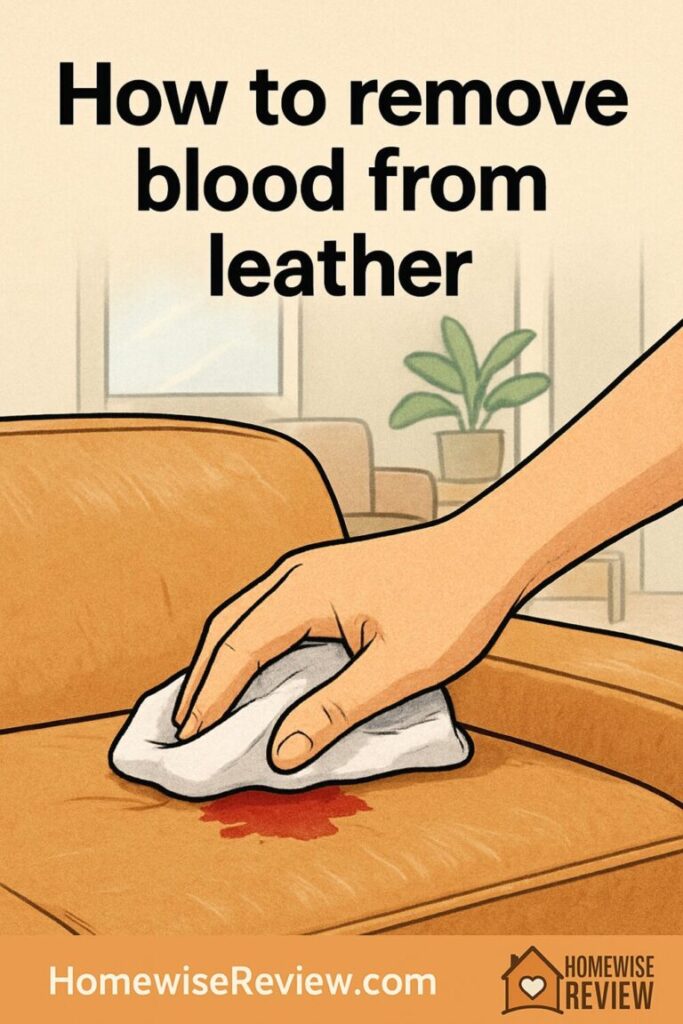
Blood on leather looks scary, but you can usually remove it without ruining the piece if you move calmly and follow a few careful steps.
Blood on leather looks dramatic, but most fresh stains can be removed if you act calmly and use gentle products. This guide walks you through safe methods that protect the leather while giving you the best chance of lifting the blood completely.
Why blood stains are tricky on leather
Blood contains proteins and iron that bind to surfaces as they dry, which is why it can leave such stubborn marks. Leather is also porous, so liquid can sink below the surface if it is not blotted up quickly.
On top of that, leather finishes can be sensitive to water, strong cleaners, and scrubbing. The goal is to loosen and lift the blood without soaking the leather or stripping its finish.
Step 1: Identify your leather type
Before you touch the stain, work out what kind of leather you have. Different finishes react very differently to moisture and cleaning solutions.
- Finished or protected leather (most sofas, car seats, many bags): The surface feels smooth and slightly coated, sometimes a bit shiny. If you place a small drop of water on a hidden area, it tends to bead up instead of soaking in quickly.
- Unfinished or aniline leather: The surface looks more natural and matte, and it absorbs water quickly. Colors often have subtle variations and may darken easily when touched with damp fingers.
- Suede or nubuck: The surface is fuzzy or velvety, and any water spot can leave a mark. These are the most delicate and usually need a professional when blood is involved.
The methods below are safest for finished or protected leather. If your leather is clearly unfinished, aniline, suede, or nubuck, skip home remedies and call a leather specialist. It is very easy to make the stain worse or leave permanent water rings on these delicate types.
Step 2: What to do immediately
If the blood is still wet, acting quickly makes a big difference. The aim is to remove as much as possible before it dries into the leather fibers.
- Blot, do not rub. Use a clean white cloth or paper towel to gently blot the blood. Work from the outer edges of the stain toward the center so you do not spread it.
- Use cold water only. Warm or hot water can set blood proteins. Lightly dampen a clean cloth with cool water and continue blotting. Do not soak the leather.
- Stop if the leather darkens heavily or feels soggy. Too much moisture can cause a tide line or damage the finish. If that happens, let the area dry fully before trying anything else.
If the blood is already dry, skip the cool water step and move directly to a targeted cleaning method. Dried blood usually needs a bit more help to loosen and lift.
Supplies you will need
You do not need specialty products for every stain, but gathering a few basics before you start keeps you from scrambling mid-clean.
- Soft white cloths or microfiber towels
- Cotton swabs or cotton balls for precise application
- Mild liquid soap (unscented dish soap or a dedicated leather cleaner)
- 3 percent hydrogen peroxide (for finished leather only, and only after spot testing)
- A leather conditioner appropriate for your item
- A small bowl and cool, clean water
Method 1: Mild soap and water for fresh blood on finished leather
This is the gentlest starting point and often all you need for fresh stains on finished leather furniture, car seats, or bags.
- Blot up loose blood. Use a dry cloth to lift as much of the stain as possible. Replace the cloth area as it becomes stained so you do not re-transfer blood.
- Mix a mild solution. In a small bowl, combine 1 cup of cool water with 1 or 2 drops of mild liquid soap. You want very light suds, not a bubbly bucket of soap.
- Spot test. Dip a cotton swab into the soapy water and dab it on an inconspicuous spot, such as the back or underside. Blot with a dry cloth and make sure there is no color loss, stiffness, or dulling when it dries.
- Dampen a cloth, do not soak it. Dip a corner of a clean cloth into the soapy water, then wring it out until it is just slightly damp.
- Lift the stain gently. Working from the outside edge of the stain inward, wipe with light, short strokes. Alternate between the damp, soapy part of the cloth and a dry part, so you are constantly lifting, not spreading.
- Rinse the area. Dampen a second cloth with plain cool water, wring it out well, and lightly wipe the cleaned area to remove soap residue.
- Dry thoroughly. Pat the area dry with a towel. Let the leather air dry completely, away from direct heat or sun.
- Condition the leather. Once dry, apply a small amount of leather conditioner following the product directions. This helps restore moisture and sheen that cleaning can remove.
If the stain lightens but does not disappear, you can repeat this process once more. If you do not see improvement after a second gentle round, move on to a more targeted method rather than scrubbing harder.
Method 2: Hydrogen peroxide for dried or stubborn stains
For dried blood that has bonded to finished leather, a small amount of hydrogen peroxide can help break it down. This method is only for finished or protected leather and always requires a spot test first.
- Confirm your peroxide strength. Use standard 3 percent hydrogen peroxide, the common brown-bottle strength sold in drugstores. Stronger solutions are much more likely to bleach or damage the leather.
- Spot test in a hidden area. Dip a cotton swab into the peroxide, dab it on a concealed spot, let it sit for 5 to 10 minutes, then blot with a damp cloth and allow it to dry. If you see lightening, roughness, or a ring after drying, do not use peroxide on the visible stain.
- Apply sparingly to the stain. If the test area looks fine, lightly dampen a cotton swab or the corner of a cloth with peroxide. Gently dab the blood stain, just enough to moisten the surface.
- Let it fizz, then blot. You may see small bubbles as the peroxide reacts with the blood. Give it 1 to 3 minutes to work, then blot with a clean, slightly damp cloth, followed by a dry cloth.
- Repeat in short sessions. If the stain remains, you can repeat the dabbing and blotting a few times, letting the leather dry between rounds. Watch closely for any color change.
- Wash and condition afterward. Once the stain is gone or as light as it will get, wipe the area with mild soapy water as in Method 1, then rinse with plain water, dry, and apply leather conditioner.
Hydrogen peroxide on leather: pros and cons
- Pros: Effective on dried blood that mild soap cannot fully remove, and accessible in most households.
- Cons: Can lighten or dull some leather finishes, especially dark colors, and should never be used on unfinished, suede, or nubuck leather.
Method 3: Leather-safe enzyme cleaner for tough stains
Enzymatic cleaners are designed to break down protein-based stains such as blood. They can be helpful on very stubborn spots on finished leather, but they must be labeled safe for leather and used with care.
- Choose the right product. Look for an enzyme cleaner that specifically states it is safe for use on leather. Avoid general-purpose enzyme sprays that do not mention leather on the label.
- Spot test carefully. As with any cleaner, test the product on a hidden section. Apply a small amount, wait the recommended time, then blot and let it dry to be sure the finish is not affected.
- Apply sparingly. Lightly mist or dab the cleaner only on the stained area. Do not saturate the leather or let the product drip or run.
- Give it time to work. Follow the timing on the product directions, usually a few minutes, so the enzymes can break down the blood.
- Blot and rinse. Blot thoroughly with a clean, damp cloth to remove loosened residue and any leftover cleaner. Follow with a dry cloth.
- Condition after drying. Once the leather is completely dry, apply a thin layer of leather conditioner.
If you are nervous about using enzyme cleaners, especially on expensive furniture or a designer bag, there is no shame in skipping this method and going straight to a professional cleaner.
What not to use on blood stains on leather
It is just as important to know what to avoid. The wrong product can fix the blood stain but leave permanent damage that is much more noticeable.
- Bleach or ammonia cleaners: These can strip color and dry out the leather, leading to cracking.
- Undiluted vinegar or lemon juice: Acids can etch and dull some finishes, and strong smells can linger.
- Baking soda pastes: The gritty texture can scratch, and heavy pastes drive moisture into the leather.
- Alcohol-based products: Hand sanitizer, rubbing alcohol, and strong disinfectant sprays can pull oils from the leather and leave cloudy spots.
- Abrasive scrub pads or eraser sponges: These can wear through the protective coating and create a rough, lighter patch.
- Soaking or steam cleaning: Too much water swells the leather and causes stiffness, waves, or water rings as it dries.
- Hair dryers and space heaters: Direct heat can warp and crack leather and sometimes sets remaining stain deeper.
When to call a professional leather cleaner
Some situations are simply beyond safe home treatment, especially when the leather is valuable or sentimental. Knowing when to stop can save you from expensive damage.
- The blood stain covers a large area or has soaked deep into cushions or seams.
- The leather is unfinished, aniline, suede, or nubuck.
- The item is high value, such as a designer handbag or collector-grade leather jacket.
- You see color lifting onto your cloth during gentle spot testing.
- You have tried mild methods once or twice with no improvement.
Look for a cleaner who specializes in leather rather than a general upholstery service. Ask whether they have treated blood stains on leather before, and if possible, request photos of past results.
Protecting leather and preventing future stains
You cannot prevent every accident, but a bit of routine care makes leather more forgiving when spills and scrapes happen.
- Condition regularly. Use a good leather conditioner every few months, or as recommended by the manufacturer. Well-conditioned leather is more resistant to moisture and less likely to absorb stains deeply.
- Apply a leather protector. Some products add a subtle barrier that makes spills bead up instead of soaking in. Always test first and follow the directions closely.
- Use throws or seat covers in high-risk spots. On a favorite leather chair or car seat where kids or pets ride, a washable cover is easier to replace than leather upholstery.
- Keep a small cleaning kit handy. Store a clean white cloth, mild soap, and leather conditioner in an easy-to-reach place so you can respond quickly when spills happen.
- Deal with cuts and nosebleeds promptly. If someone is bleeding, grab a towel or tissue before they sit on leather, and have them sit on a nonporous or washable surface instead.
See also
If you deal with frequent spills or stains, our stain-rescue decision tree and guide to the best non-toxic cleaning products can help you respond faster and more safely next time.
- Read our detailed Method all-purpose cleaner review to see where it fits in a gentle cleaning routine.
- Compare formulas in this Mrs. Meyer’s multi-surface cleaner review for everyday messes around the home.
- See how a scrubber performs in tricky spots in our Scrub Daddy sponge review.
FAQ
Will blood come out of leather completely?
Fresh blood on finished leather often comes out almost completely with careful blotting and mild soap, especially if you act within the first hour. Dried or deep stains may always leave a faint shadow, but they can usually be lightened to the point where they are hard to notice in normal lighting.
Can I use hydrogen peroxide on any leather?
No, hydrogen peroxide should only be used on finished or protected leather after a successful spot test. Avoid it entirely on unfinished, aniline, suede, or nubuck leather, since it can permanently lighten or roughen the surface.
Is vinegar safe for removing blood from leather?
Undiluted vinegar is too harsh for most leather finishes and can leave a dull or tacky patch. If you prefer a more natural cleaner, stick with a drop or two of mild soap in cool water and finish with a quality leather conditioner.
How do I remove blood from suede or nubuck leather?
Suede and nubuck are very absorbent and unforgiving, which makes blood stains particularly risky to treat at home. The safest choice is to blot gently with a dry cloth if the blood is fresh, then contact a professional cleaner who has experience with suede and nubuck.
Can I use baby wipes to clean blood off leather?
Baby wipes can seem gentle, but many contain oils, fragrances, and surfactants that may leave a sticky residue or interfere with the leather finish. It is safer to use a slightly damp cloth with a tiny amount of mild soap, then rinse and condition.
As an Amazon Associate, we earn from qualifying purchases made through links on our site.