

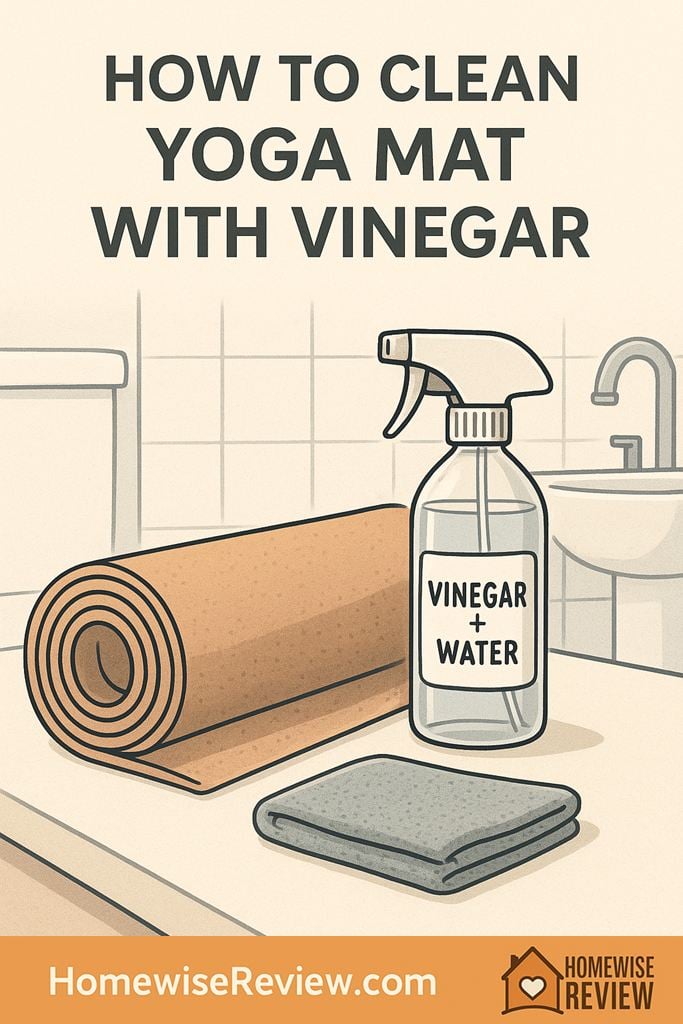
Ever notice how a yoga mat can look clean but still feel a little too slick under your hands? I once went in with a heavy vinegar spray and rolled my mat up before it was fully dry, and the next day it had that faint sticky film that made every down dog feel like a struggle. Now I treat vinegar like a measured rinse, not a soak: light mist, quick wipe, and plenty of open-air drying before it gets put away.
A yoga mat is basically a sponge for sweat, body oils, lotion, and floor germs. If it starts to smell “off,” feel slippery, or leave your hands looking dusty, it is time for a clean.
Vinegar can be a great at-home solution because it cuts through odor-causing buildup and rinses clean. The key is using the right dilution for your mat material and drying it the right way so you do not end up with residue or premature cracking.
Why vinegar works (and when it does not)
Most household white vinegar is about 5% acetic acid. That mild acidity helps break down sweat salts and body oils, and it can reduce odor by changing the environment that odor-causing microbes like.
Vinegar is helpful for routine cleaning, but it is not a guaranteed “hospital-grade” disinfectant. If you need true disinfection (for example, after illness), follow your mat manufacturer’s guidance first because stronger disinfectants can damage certain materials.
What vinegar is best for
- Regular wipe-downs after practice
- Odor control (especially sweat smell)
- Removing light grime and skin oils that make mats feel slick
When to skip vinegar
- Unsealed natural rubber or mats that explicitly say “no vinegar” in care instructions
- Suede or microfiber-top mats where vinegar can change texture or leave tide marks if over-wet
- Any mat already cracking or flaking, where extra moisture and acids can speed up deterioration
Check your mat material first (it changes everything)
If you only do one thing before spraying, do this: check the brand care tag, product page, or packaging. Then do a quick spot test on a bottom corner and let it dry fully to make sure there is no discoloration or tacky feel.
Quick compatibility guide
| Mat type | How vinegar usually does | What to watch for |
|---|---|---|
| PVC | Generally safe when diluted | Do not oversaturate seams; wipe dry |
| TPE | Usually fine when diluted | Can hold odor if not dried fully |
| PU top layer (often on rubber base) | Often okay, but varies by brand | Too much liquid can cause bubbling or slickness |
| Natural rubber | Mixed results | Some makers discourage vinegar; patch test carefully |
| Suede or microfiber top | Use very cautiously | Mist lightly, avoid pooling, wipe in even strokes |
What you will need
- White distilled vinegar
- Clean spray bottle
- Warm water
- 2 clean microfiber cloths (one to wipe, one to dry)
- Optional: a drop of gentle dish soap for extra grime
A note on essential oils
A tiny amount can make a spray smell nicer, but oils can leave residue that makes mats slippery, especially on PU and some PVC surfaces. If you use them, keep it minimal and test first.
Vinegar cleaning recipe (simple ratios that do not leave residue)
More vinegar is not always better. Too-strong mixtures can leave a lingering vinegar smell, irritate skin for some people, or contribute to material breakdown on sensitive mats. Start mild and adjust only if you need to.
| Cleaning need | Mix ratio | Best for |
|---|---|---|
| Quick after-practice wipe | 1 part vinegar : 4 parts water | Most mats, most days |
| Noticeable odor | 1 part vinegar : 3 parts water | When your mat smells “sweaty” even when dry |
| Grimy or slick surface | 1 part vinegar : 4 parts water + 1 drop dish soap per 16 oz bottle | Body oil and lotion buildup |
Step-by-step: the best everyday vinegar clean
This method is the sweet spot for most people: fast, effective, and gentle enough to repeat often. Plan on 5 to 10 minutes plus drying time.
1) Shake your spray and prep the mat
- Unroll the mat flat.
- If there is visible grit, do a quick dry wipe first so you are not rubbing sand into the surface.
- Shake your bottle each time, especially if you added a tiny drop of soap.
2) Lightly mist, do not soak
- Hold the bottle 8 to 12 inches away and mist evenly.
- Aim for a light, even sheen, not puddles.
- Pay extra attention to hand and foot zones where sweat and oils build up.
3) Wipe with firm, even strokes
- Use a microfiber cloth and wipe top to bottom.
- If you see gray smudging on the cloth, that is normal grime lifting.
- Flip the cloth to a clean side and do a second pass if needed.
4) Wipe dry right away
- Use a second clean, dry cloth.
- This is the easiest way to prevent streaks, tackiness, and that “vinegar smell that will not quit.”
5) Repeat on the other side (if your mat is reversible)
If you practice only on one side, the underside still collects floor dust. A quick wipe on the bottom helps keep your mat from transferring dirt back to the top when you roll it.
Step-by-step: a deeper clean for hot yoga or heavy sweat
If you are doing hot yoga, practicing outdoors, or your mat is starting to hold odor even after wipe-downs, a deeper clean can reset it. The goal is controlled moisture, not a long soak.
Deep clean method (bathtub or shower)
- Rinse first: Use lukewarm water to lightly rinse the surface. Avoid hot water, which can stress adhesives and some foams.
- Spray your vinegar mix: Use 1:3 vinegar to water. Mist the mat evenly.
- Short dwell time: Let it sit 2 to 3 minutes. Do not let it dry on the mat.
- Wipe and lightly rinse: Wipe with a clean cloth, then do a quick rinse to remove loosened grime.
- Press out water: Lay the mat on a towel and roll it up to press water out, like a jelly roll. Do not wring or twist.
Drying after a deep clean
- Hang the mat over a sturdy bar or lay it flat on towels.
- Dry indoors in a well-ventilated area. Direct sun can fade and dry out some materials.
- Wait until it is dry to the touch on both sides before rolling.
How to dry and store your mat so it stays fresh
Most “my mat still smells” issues come down to trapped moisture. A mat rolled damp is a perfect environment for musty odors.
Best practices that prevent stink
- Dry before rolling: Even 10 extra minutes can make a big difference.
- Store out of heat: Avoid a hot car trunk or near a heater.
- Let it breathe: If you use a mat bag, make sure it is breathable or leave it partially unzipped at home.
- Use a yoga towel for sweaty sessions: It protects the mat and cuts down how often you need deep cleans.
Vinegar vs other cleaning options (what to choose)
If vinegar is not a good fit for your mat material, or if you want a quicker grab-and-go solution, here is how common options compare.
| Option | Pros | Cons | Best use |
|---|---|---|---|
| Vinegar + water | Budget-friendly, low residue when diluted, good deodorizing | Not ideal for every material, smell during use | Routine cleaning for many PVC and TPE mats |
| Mild soap + water | Very gentle, good for oily buildup | Must rinse well or it can get slippery | When vinegar is not recommended |
| Commercial mat spray | Convenient, often designed for mat materials | Can be pricey, some are heavily fragranced | Studio bag quick spray |
| Disinfecting wipes or bleach solutions | Stronger germ-kill potential | Higher risk of damage, irritation, and residue | Only if manufacturer approves and you truly need it |
Common problems and quick fixes
If vinegar cleaning went sideways, you can usually fix it with one careful reset. Most issues are caused by too-strong solution, too much liquid, or not wiping dry.
My mat feels sticky or squeaky after cleaning
- Wipe with a cloth dampened with plain water to remove residue.
- Then wipe dry and let it air out flat.
- Next time, use a weaker mix (1:4) and do not add oils.
My mat still smells after it dries
- It may not be fully dry inside textured areas. Leave it flat longer, flipping once.
- Try one deeper clean with 1:3 vinegar to water, then rinse lightly and dry thoroughly.
- If the smell is musty (not sweaty), focus on drying and airflow, not stronger vinegar.
I see white streaks or haze
- This is usually dried minerals or leftover grime lifted to the surface.
- Wipe once with plain water, then dry with a clean cloth.
- If your water is very hard, use distilled water in your spray bottle.
There is mildew or black spotting
- First, check if the mat is already deteriorating. If it is flaking or the smell will not lift, replacement may be the safest option.
- If it is just surface spotting, clean, rinse lightly, and dry completely in a well-ventilated space.
- Prevent recurrence by never rolling it damp and by airing it out after every sweaty practice.
How often should you clean a yoga mat?
Your schedule depends on how sweaty you get, whether you practice on shared studio floors, and whether you use lotion or body oil. The more “skin contact” and sweat, the more often you should wipe it down.
Simple cleaning checklist
- After each practice: Quick wipe-down if you sweat, do hot yoga, or share space/equipment.
- Weekly: Quick wipe-down for regular home practice even if you do not sweat much.
- Monthly (or as needed): Deeper clean if odor lingers, grip changes, or the mat looks dull.
- Any time: Clean immediately after practicing outside, on carpet, or anywhere dusty.
Bottom Line
A diluted vinegar spray is a practical, low-fuss way to clean a yoga mat and keep odors under control. Stick to a gentle ratio, avoid soaking, and always wipe dry so your mat stays grippy instead of sticky.
See also
If you are building a low-tox routine beyond your mat, start with Best non-toxic cleaning products for homes, and if you prefer a ready-made spray, see this Method all-purpose cleaner review.
- Laundry routines that keep gym clothes from holding odor
- Housekeeping shortcuts that protect allergies and sensitive skin
- How to remove mildew from carpet (and keep it from returning)
Frequently Asked Questions ▾
Can I use straight vinegar on my yoga mat?
It is best not to. Straight vinegar is more likely to leave a strong smell, irritate skin, and stress certain materials over time. Start with 1 part vinegar to 4 parts water, then only go stronger (like 1:3) if odor persists.
Do I need to rinse after cleaning a yoga mat with vinegar?
For a light wipe-down, you usually do not need a full rinse if your mixture is diluted and you wipe dry. If your mat feels sticky, looks streaky, or you used any soap, wipe once with a cloth dampened in plain water, then dry.
Will vinegar make my mat slippery?
Vinegar itself usually does not, but residue can. Slipperiness typically comes from using too much solution, adding oils, or not wiping dry. Use a light mist, wipe thoroughly, then buff dry with a clean cloth.
Can I clean a natural rubber mat with vinegar?
Some brands allow it diluted, others specifically advise against it. Check the manufacturer instructions first, then patch test on a small area. If you notice dulling, tackiness, or discoloration after drying, switch to mild soap and water instead.
How long should I let my mat dry before rolling it up?
Roll it only when both sides feel completely dry to the touch. After a quick wipe-down, that may be 10 to 30 minutes with good airflow. After a deep clean, it can take several hours, depending on thickness and humidity.
As an Amazon Associate, we earn from qualifying purchases made through links on our site.