

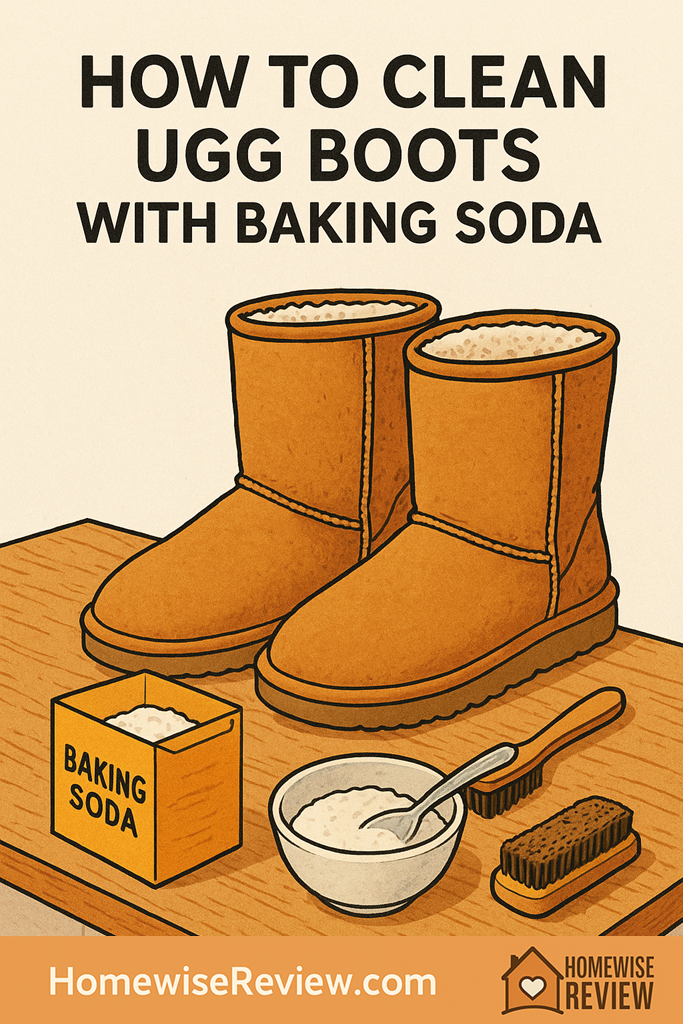
If your Ugg boots smell funky or picked up a greasy spot, baking soda can help, but only if you use it like a dry treatment. The goal is to clean and deodorize without soaking the suede or leaving a chalky residue.
If your Ugg boots smell funky or picked up a greasy spot, baking soda can help, but only if you use it like a dry treatment. The fastest way to ruin suede is to over-wet it, scrub it, or leave cleaner residue behind. This guide shows you exactly where baking soda works and the safest steps to use it.
Before you start: what baking soda can and can’t do for Ugg boots
Baking soda (sodium bicarbonate) is best as an odor absorber and a gentle dry “pull” for oils. It is not a true suede cleaner, and it will not fix water stains, deep mud, or salt lines by itself.
When baking soda is a good choice
- Boot odor from sweaty feet or storage
- Fresh oil or grease spots on the suede (small to medium)
- Light refresh when the boots are basically clean but smell stale
When to skip baking soda and use a suede cleaner instead
- Water stains (tide marks) or large wet areas
- Salt rings from snow or slush
- Ground-in mud or heavy overall grime
- Dye transfer (jeans rubbing off) or ink
| Option | Best for | How you use it | Main risk |
|---|---|---|---|
| Baking soda (dry) | Odor, fresh oily spots | Sprinkle, wait, brush or vacuum out | White residue if you use too much or add water |
| Cornstarch (dry) | Oily spots on suede | Pack on spot, wait overnight, brush off | Less deodorizing; still can leave residue if overused |
| Suede cleaner kit | Overall cleaning, set-in grime | Controlled damp cleaning, then brush | Water marks if you spot-clean unevenly or over-wet |
Supplies checklist
Most “baking soda disasters” happen because people improvise with rough brushes, too much water, or towels that shed lint. Gather the basics first so you can work fast and keep everything dry and even.
- Baking soda (plain, unscented)
- Suede brush (or a clean, soft nail brush)
- Clean microfiber cloth (lint-free)
- Vacuum with a hose or crevice tool (optional but helpful)
- Paper towels for blotting fresh oil
- Small bowl and spoon (for controlled sprinkling)
- Old clean sock (for light dusting without dumping powder)
- Plain white paper for stuffing (or unprinted paper towels)
Step 1: dry prep (this matters more than the cleaner)
Always start by removing loose dirt so you do not grind grit deeper into the suede. Baking soda works best on a surface that is already dry and brushed.
Quick dry-prep sequence
- Let wet boots dry completely before doing anything. If they are damp, stuff with paper and air-dry at room temp.
- Brush off dry soil using light strokes in the same direction. Focus on seams and the toe box where dirt packs in.
- Lift the nap by brushing back and forth very lightly at the end. This helps powders release later.
Method A: deodorize the inside with baking soda (safest and most effective)
If your main problem is odor, treat the inside first. The shearling lining holds sweat and oils, and baking soda can absorb smell without stressing the suede exterior.
Inside deodorizing steps
- Start with dry boots. If you wore them recently, let them air out for at least 1 to 2 hours.
- Add a small amount of baking soda. Use 1 to 2 teaspoons per boot for ankle-height styles, or up to 1 tablespoon for tall boots.
- Distribute it. Hold the boot opening closed with your hand and gently shake so the powder reaches the toe area.
- Wait. Leave overnight (8 to 12 hours). For strong odor, go up to 24 hours.
- Remove completely. Shake the boots upside down over a trash can, then vacuum the lining. If you do not have a vacuum, tap the soles and shake again.
- Finish with airflow. Let the boots sit open for 30 to 60 minutes before wearing.
Odor control tips that make baking soda work better
- Use less than you think. Too much powder clumps and sticks in the shearling.
- Repeat instead of overloading. Two light overnight treatments beat one heavy one.
- Address the source. Rotate wear, and let boots dry fully between uses. Odor comes back fastest when the lining stays damp.
Method B: treat fresh oil or grease spots on the suede
Baking soda can “pull” oils out of suede if you catch the stain early. Your job is to blot first, then let time do the work. Rubbing spreads oil and can flatten the nap permanently.
Oil-spot steps (dry method)
- Blot immediately. Press a paper towel onto the spot for 10 to 15 seconds, lift, and repeat. Do not scrub.
- Sprinkle baking soda. Cover the spot with a thin, even layer. If the spot is small, use a spoon so you do not over-apply.
- Wait 12 to 24 hours. Keep the boots in a dry spot away from heat and sunlight.
- Brush off gently. Use a suede brush with light strokes. If powder is stubborn, vacuum lightly with the hose held just above the surface.
- Repeat if needed. Reapply a thin layer and wait again. Most oil stains lift in 1 to 3 rounds depending on age and size.
What not to do on an oil stain
- Do not add water to “activate” baking soda. On suede, that often creates a bigger stain plus chalky marks.
- Do not use dish soap directly on the suede unless you are prepared to clean the full panel evenly. Spot soap can leave a ring.
- Do not scratch at it with fingernails or a stiff brush. You can remove dye and create a permanent rough patch.
Method C: lightly refresh the exterior (use a controlled dusting, not a paste)
If the outside is generally clean but smells stale, a very light baking soda dusting can help. This method is optional and should be done carefully because exterior residue is the most common complaint.
Exterior refresh steps (low-residue approach)
- Patch test first. Pick a hidden area near the heel seam. Dust lightly, wait 30 minutes, brush off, and check for lightening.
- Make a “powder puff.” Put 1 to 2 tablespoons of baking soda inside a clean sock and tie it off.
- Dust, do not dump. Tap the sock over the suede like a shaker, creating a barely-there layer.
- Let it sit 1 to 2 hours. Longer is not better here. The goal is deodorizing, not deep stain pulling.
- Brush thoroughly. Brush in one direction first, then lightly back and forth to lift the nap.
- Remove remaining powder. If you still see white in seams, use a vacuum hose nearby (not pressed hard) and brush again.
Drying and finishing: how to keep boots soft and even-looking
Even though the baking soda methods above are dry, your boots may still need a “reset” so the suede looks consistent. Finishing is where you get the soft, velvety look back.
Finishing checklist
- Air-dry only. Keep boots away from heaters, vents, and hair dryers. Heat can shrink the lining and warp the shape.
- Stuff to hold shape. Use plain white paper to support the toe and shaft while the boots air out.
- Brush to restore nap. Once fully dry, brush in a single direction, then lightly crisscross to lift flattened areas.
- Spot-even the look. If one area looks darker from handling, brush the surrounding panel to blend texture.
Mistakes to avoid (and what to do instead)
Most problems blamed on baking soda are really “process problems.” Here are the big ones, plus safer alternatives so you can choose the right fix.
- Mistake: making a baking soda paste for suede.
Do instead: keep it dry. If you need wet cleaning, use a suede-specific cleaner and clean evenly across the panel. - Mistake: spot-cleaning a large area with water.
Do instead: if you must use moisture, dampen and clean the whole section (like the full toe area) to avoid rings. - Mistake: scrubbing hard to “erase” a stain.
Do instead: blot, absorb, wait, and brush. Suede damage looks like shiny, flat patches. - Mistake: leaving powder in seams and edges.
Do instead: vacuum gently and brush again. Residue attracts dirt over time. - Mistake: trying to fix salt lines with baking soda.
Do instead: use a targeted salt-removal approach with minimal moisture, then re-brush after drying.
How often can you use baking soda on Ugg boots?
Think of baking soda as a maintenance tool, not a weekly cleaner. Overuse can leave buildup that makes suede look dull and can dry the lining if you use large amounts repeatedly.
| Situation | How often | Best method | Notes |
|---|---|---|---|
| Everyday wear odor | Every 2 to 4 weeks | Inside deodorizing overnight | Use small amounts and vacuum out completely |
| Fresh grease spot | As needed | Dry oil-spot treatment (12 to 24 hours) | Repeat in rounds rather than scrubbing |
| Stale storage smell | At season start | Inside deodorizing, optional light exterior dusting | Test exterior first to avoid residue |
Quick Takeaway
Baking soda is safest and most effective inside Ugg boots for odor, and it can help lift fresh oil spots on the suede if you keep it dry and give it time. Avoid pastes, heavy dumping, and aggressive scrubbing. When the problem is water marks, salt rings, or overall grime, a suede cleaner and even cleaning across the panel is the better move.
See also
If you are not sure what kind of stain you are dealing with, start with our stain-rescue decision tree, then build a safer kit using non-toxic cleaning products that actually work for families.
- How to remove mildew from leather (helpful if your boots have leather trim)
- How to remove blood from leather without spreading the stain
- Method all-purpose cleaner review: when it is useful and when to skip it
Frequently Asked Questions ▾
Will baking soda ruin Ugg boots?
Used correctly (dry, light amounts, fully brushed or vacuumed out), baking soda is generally low-risk. The biggest issues come from making a paste, using too much powder, or rubbing hard, which can leave white residue or flatten the suede.
How long should I leave baking soda in Ugg boots to remove odor?
Plan for 8 to 12 hours (overnight). For stronger odor, you can leave it up to 24 hours, then shake out and vacuum thoroughly so powder does not stay trapped in the lining.
Can I mix baking soda and vinegar to clean Ugg boots?
It is not a good idea for suede. Baking soda plus vinegar foams, adds moisture, and can leave rings or chalky residue as it dries. If you need a wet-clean method, use a suede-specific cleaner and clean evenly, not just on one spot.
How do I get white baking soda marks off the suede?
Let the boot fully dry, then brush with a suede brush using light, repeated strokes. If residue is stuck in seams, hold a vacuum hose just above the surface to lift powder while you brush. Avoid adding water unless you are prepared to clean the entire panel evenly.
Can I wash Ugg boots in the washing machine?
It is risky for sheepskin and suede because it can warp shape, harden the lining, and cause uneven color. If your boots need more than odor control or a small oil-spot treatment, a controlled suede-cleaning approach (minimal moisture, even coverage, slow air-dry) is much safer than machine washing.
As an Amazon Associate, we earn from qualifying purchases made through links on our site.