

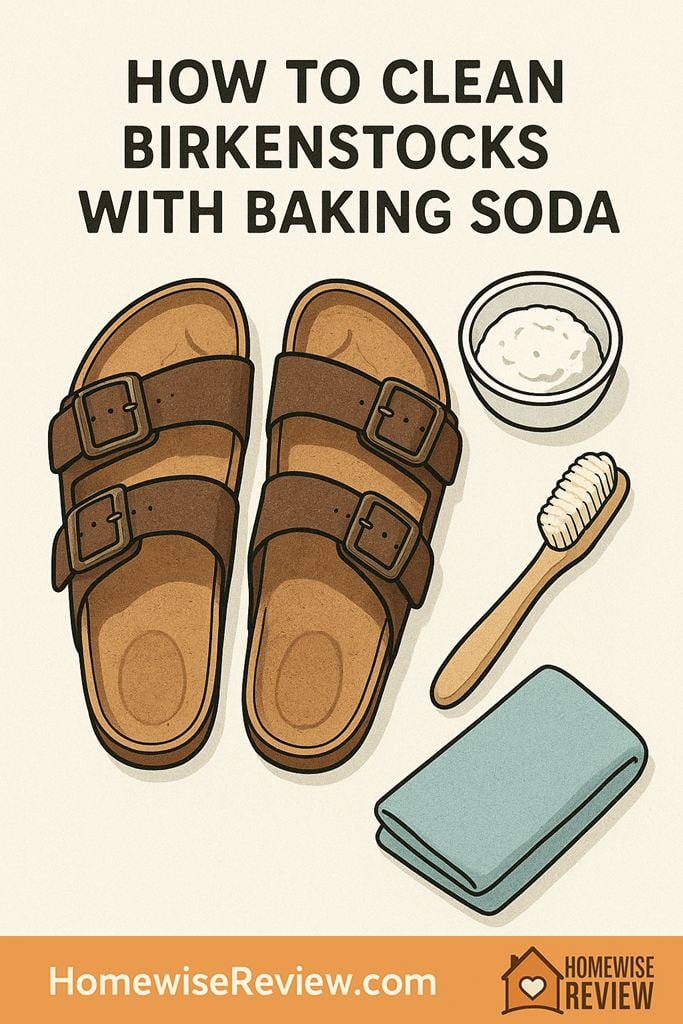
I wore my Birkenstocks through one humid week and the footbeds went from “broken in” to straight-up grimy, but I kept pretending it was just the natural patina. When the smell started hitting me the second I kicked them off, I panicked and almost soaked the whole footbed like it was a sneaker. Baking soda was the relief, but only once I treated it like a light dusting and a gentle paste, not a scrub-and-drown situation.
Birkenstocks get dirty in a very specific way: the footbed darkens from skin oils and dust, and the straps pick up scuffs or sweat. Baking soda can help with both, but only if you use a gentle approach and avoid over-wetting. This guide walks you through the safest, most effective baking soda methods for common Birkenstock materials.
What baking soda can (and cannot) do for Birkenstocks
Baking soda is a mild abrasive and an odor neutralizer. That makes it great for light stain lift and deodorizing, especially on footbeds. It is not a disinfectant, and it is not strong enough to fix deep dye transfer or heavy mold on its own.
Best uses for baking soda
- Deodorizing footbeds and uppers after sweaty wears
- Lifting light grime on suede footbeds without soaking them
- Pre-treating oily marks (especially if you use it dry first)
When to choose a different method
- Active mildew or musty smell that returns quickly after drying
- Heavy staining that is deep in the suede nap
- Delicate or finished leathers where abrasion could change the sheen
Identify your Birkenstock materials first
Before you mix anything, flip your sandals over and check the printed model info on the footbed or box. Baking soda is most reliable on the classic suede-lined cork footbed, but uppers vary a lot.
- Suede footbed lining (most common): Usually safe for baking soda paste or dry deodorizing, as long as you do not saturate it.
- Leather straps: Use baking soda carefully and spot-only. Test first to avoid dulling or lightening.
- Suede or nubuck straps: Use dry methods first. Paste can leave residue if overused.
- Birko-Flor or Birkibuc (synthetic uppers): Typically handles gentle paste or wipe-downs well.
- EVA (all-foam styles): Baking soda is optional. These usually clean best with mild soap and water.
Supplies (simple and low cost)
You do not need specialty products for a solid refresh. I like baking soda for this because it is budget-friendly and already in most pantries.
- Baking soda
- Small bowl
- Soft brush (old toothbrush or a small nail brush)
- Microfiber cloths (2)
- Water (cool to lukewarm)
- Optional: a drop of mild dish soap
- Optional: suede brush or clean, dry toothbrush for finishing
- Optional: cork sealer (if your cork edge looks dry or unsealed)
How to clean Birkenstock footbeds with baking soda (step by step)
The footbed is where baking soda shines. The goal is to lift surface grime and neutralize odor while keeping the cork and suede from getting waterlogged.
Prep: dry brush first (do not skip)
- Take the sandals outside or over a trash can.
- Use a dry soft brush to remove loose dirt from the footbed and edges.
- Brush in small circles, then tap the sandals together lightly to knock debris out.
Method 1: Baking soda paste for grime and darkened areas
This is the best all-around baking soda method for a typical “summer footbed” look. Keep the paste thick so you are cleaning with baking soda, not soaking with water.
- Mix a paste: Combine 1 tablespoon baking soda with 1 to 2 teaspoons water. You want a spreadable paste, not runny.
- Apply lightly: Use your finger or a cloth to dab a thin layer onto the footbed, focusing on darker zones (heel cup, toe bar area).
- Gently scrub: With a soft brush, scrub in small circles for 30 to 60 seconds per area. Do not grind hard. Let the baking soda do the work.
- Let it sit: Leave the paste on for 10 to 15 minutes. If it is drying fast, that is fine. You just do not want it wet for long.
- Remove residue: Wipe with a clean, slightly damp microfiber cloth. Rinse the cloth often so you are lifting residue, not smearing it.
- Dry properly: Air dry at room temperature for 12 to 24 hours, away from direct sun, heat vents, or hair dryers.
- Raise the nap (optional): Once fully dry, brush the footbed lightly with a dry toothbrush or suede brush to soften the feel.
Method 2: Dry baking soda for odor (lowest risk)
If your main problem is smell, start here. It is gentle, effective, and it avoids moisture almost entirely.
- Sprinkle a thin, even layer of baking soda over the footbeds.
- Let it sit for 8 to 12 hours (overnight works well).
- Dump the baking soda out and brush away remaining powder with a dry brush.
- If odor is stubborn, repeat once or twice before you move on to wet methods.
How to clean Birkenstock straps with baking soda (and when not to)
Straps need a lighter touch than footbeds. Baking soda can help, but abrasion and residue are the two main risks, especially on leather and suede.
Smooth leather straps
- Spot test first: Try your method on an inside edge near the buckle and let it dry fully. Look for lightening or dullness.
- Use a barely-there paste: Mix a thick paste (more baking soda than water) and apply only to scuffs or sticky spots.
- Scrub gently: Use a microfiber cloth or very soft brush for 10 to 20 seconds.
- Wipe clean: Wipe with a clean damp cloth, then again with a dry cloth.
Skip baking soda if your leather is highly polished, delicate, or you are trying to preserve a specific sheen. In those cases, a damp cloth and a tiny bit of mild soap is often safer than abrasion.
Suede or nubuck straps
- Start dry: Brush with a suede brush or dry toothbrush to lift dirt.
- Use dry baking soda on oils: If you have an oily spot, dust baking soda on it, wait 2 to 4 hours, then brush off.
- Use paste only if needed: If you must use paste, apply the thinnest layer possible and remove residue thoroughly after 5 to 10 minutes.
Birko-Flor, Birkibuc, or fabric-like uppers
- Make a thick baking soda paste and apply with a cloth.
- Lightly scrub textured areas where grime hides.
- Wipe clean with a damp cloth, then dry with a second cloth.
EVA Birkenstocks (all-foam)
You can deodorize with dry baking soda, but cleaning is usually simpler with mild soap and water. If you use baking soda, do not use it as a scrub that could dull the surface.
Drying and finishing touches that keep them lasting longer
The biggest mistake with Birkenstocks is not the cleaner you choose, it is how long the materials stay wet. Cork and suede both do better with quick, gentle cleaning and thorough air drying.
- Air dry only: Keep them in a ventilated room out of direct sunlight. Heat can warp EVA, crack leather, and dry cork too aggressively.
- Speed up drying safely: Place them near (not on) a fan. Stuffing with paper can help straps keep shape, but do not pack the footbed tightly.
- Check the cork edge: If the cork edge looks rough, chalky, or unsealed, consider applying cork sealer after everything is fully dry. This helps prevent future staining and crumbling.
Common mistakes (and how to avoid them)
- Soaking the footbed: Use thick paste, minimal water, and short contact times.
- Scrubbing too hard: Aggressive brushing can rough up suede and create fuzzy patches. Gentle, repeated passes beat one harsh session.
- Using heat to dry: Hair dryers and heaters can stiffen suede, shrink leather, and crack cork seal.
- Leaving baking soda residue: Residue can feel gritty and attract dirt. Wipe thoroughly, then brush once dry.
- Skipping the test spot: Leather finishes vary. A 2-minute test prevents permanent light spots.
Baking soda cleaning options compared
If you are not sure which baking soda method to choose, use this quick comparison to match the technique to the problem.
| Problem | Best baking soda method | Wait time | Notes |
|---|---|---|---|
| Footbed odor | Dry sprinkle and brush off | 8 to 12 hours | Lowest risk and great as a weekly reset. |
| Dark, grimy footbed | Thick paste, gentle scrub | 10 to 15 minutes | Keep water minimal so the cork does not stay damp. |
| Oily spot on suede strap | Dry baking soda spot treatment | 2 to 4 hours | Brush off gently; repeat once if needed. |
| Scuff on synthetic upper | Paste on a cloth, light rub | 5 to 10 minutes | Wipe thoroughly so white residue does not collect in texture. |
| Sticky residue (light) | Paste plus a drop of dish soap | 1 to 3 minutes | Use sparingly; wipe clean immediately to avoid buildup. |
Maintenance schedule for clean, odor-free Birkenstocks
A little routine care keeps you from needing deep scrubs that can wear materials faster. This simple schedule works for most households.
After wear (30 seconds)
- Let sandals air out in an open area instead of a closed closet.
- If they are damp from sweat, rotate with a second pair so the footbeds fully dry.
Weekly (2 minutes)
- Dry brush footbeds to remove dust and grit.
- Use the dry baking soda deodorizing method if odor is building.
Monthly or as needed (10 to 20 minutes active time)
- Use baking soda paste on footbeds for visible grime.
- Spot clean straps, focusing on high-contact areas near buckles and edges.
Seasonal check
- Inspect cork edges for dryness and reseal if needed (only on clean, fully dry cork).
- Confirm the soles are still intact and not separating before heavy wear.
Bottom Line
Baking soda is a reliable, gentle option for refreshing Birkenstock footbeds, especially for odor and everyday grime. Use it dry for smell, use a thick paste for deeper cleaning, and keep water and scrubbing pressure low so suede and cork stay in good shape.
See also
If you are trying to keep your whole cleaning routine simple and low-fuss, start with our best non-toxic cleaning products for families and bookmark the stain-rescue decision tree for quick fixes for the next surprise mess.
- How to remove mildew from leather safely
- Remove blood from leather without spreading the stain
- How to remove grease with practical step by step methods
Frequently Asked Questions ▾
Can I use baking soda on the Birkenstock footbed every week?
Yes, especially the dry deodorizing method. If you are using a wet paste, keep it occasional (for example monthly or when grime is visible) because frequent scrubbing can rough up the suede over time.
Will baking soda remove the dark footbed stains completely?
It can noticeably lighten surface grime, but it may not erase all darkening. Some discoloration is normal wear from oils and friction, and trying to “scrub it back to new” can do more harm than good.
Is baking soda safe on leather Birkenstock straps?
Sometimes, but spot test first. Baking soda can be mildly abrasive and may dull or lighten certain finishes, so keep it targeted to scuffs or sticky spots and wipe residue off promptly.
Can I soak Birkenstocks in water with baking soda?
No. Soaking can warp materials, weaken adhesives, and damage the cork and footbed. Stick to dry methods or a thick paste with minimal water, then air dry thoroughly.
How long should Birkenstocks dry after cleaning?
Plan on 12 to 24 hours at room temperature, longer if your home is humid. They should feel fully dry to the touch before you wear them again, especially the footbeds.
As an Amazon Associate, we earn from qualifying purchases made through links on our site.