

Height-adjustable, roomy surface with clean cable options—scales to your working zone so the space feels ordered and comfortable.
We may earn a small referral fee
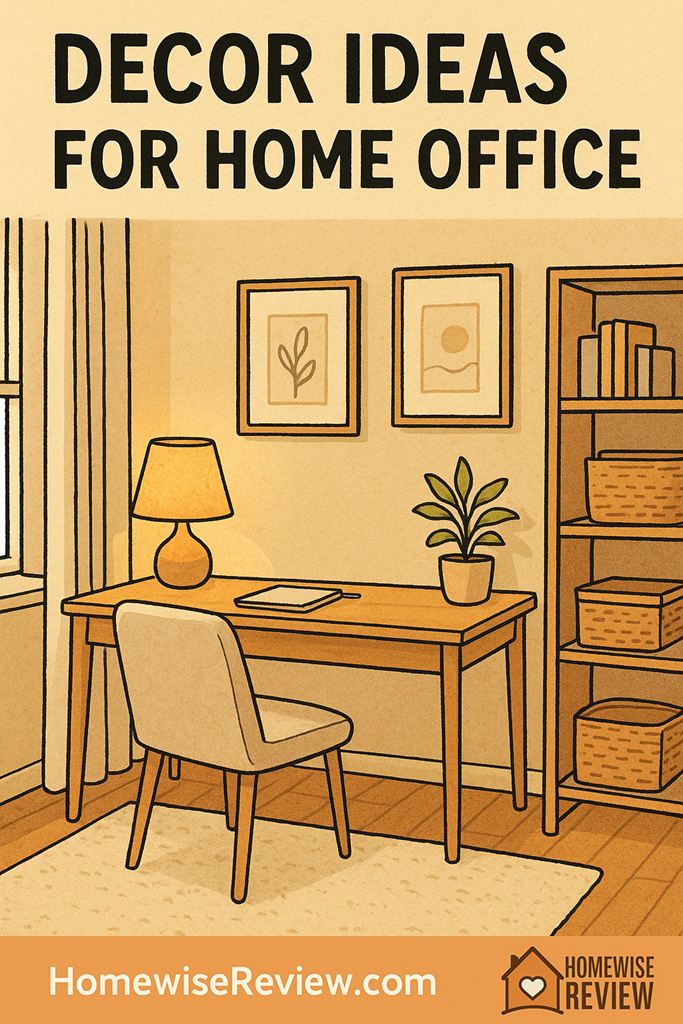
A home office can look “done” and still feel distracting, cluttered, or harsh to work in. These decor ideas help you build a space that’s calm, functional, and genuinely pleasant to sit in every day.
If your home office looks fine but feels hard to work in, the issue is usually layout, lighting, and visual clutter. The good news is you can fix most of it with a few intentional decor choices that support focus and comfort.
Use this guide to make your office feel cohesive, not busy, and to choose decor that earns its keep instead of becoming one more thing to manage.
Start with function: what you need your office to do
Decor works best when it follows your real daily routine. Before you buy anything, define what “working well” means in your space so you do not decorate yourself into new problems.
Decide your primary use case
- Deep focus work: prioritize fewer items in view, softer contrast, and sound control.
- Video calls: prioritize flattering light, a clean background, and camera height.
- Paper-heavy work: prioritize landing zones, vertical filing, and a larger clear desktop.
- Shared family space: prioritize closed storage and quick reset systems.
Measure the “working zone” (not the whole room)
Take quick measurements of your desk wall, the space behind your chair, and the nearest outlet locations. Knowing your limits helps you choose the right scale for art, rugs, shelves, and lighting without overcrowding.
Choose a cohesive style that still feels like home
A cohesive look comes from repeating a few elements, not buying a matching set. Aim for a simple recipe you can follow as you add pieces over time.
A simple style recipe that almost always works
- Base: 1 to 2 neutrals (warm white, soft beige, greige, light gray).
- Wood tone: pick one main wood finish (light oak, walnut, black, white).
- Metal finish: choose one dominant finish (matte black, brass, chrome).
- Accent color: add 1 muted accent (sage, navy, terracotta, dusty rose).
- Texture: include at least 2 textures (woven basket, linen, boucle, ribbed ceramic).
If your office is visible from another room, borrow the main neutral and metal finish from nearby spaces. That one decision instantly makes the office feel integrated, not like an add-on.
Wall and window ideas that change the whole mood
Walls and windows are large surfaces, so small changes here have a big payoff. Start by deciding whether you want the room to feel energizing or calming.
Paint and wallpaper (low effort, high impact)
- Calm and focused: soft warm white, light greige, muted green, dusty blue.
- Crisp and modern: clean white with black accents, charcoal on one wall, pale gray.
- Cozy and grounded: warm taupe, clay tones, deeper olive (best in brighter rooms).
If you cannot paint, try removable wallpaper on the wall behind your monitor or behind your chair for video calls. Keep the pattern subtle so it reads as texture, not noise.
Art that looks intentional (and not random)
Choose art based on scale first. For a typical desk, one large piece or a tight pair looks calmer than many small frames.
- Hang the center of the art roughly at eye level when standing.
- If art goes above a desk, keep it about 6 to 10 inches above the desktop.
- Match frames to your metal finish or wood tone for instant cohesion.
Window treatments that soften the room
Even a simple roller shade can feel finished when it is paired with side panels. If you want a clean look, choose curtain panels that kiss the floor and hang the rod a few inches below the ceiling to make the room feel taller.
Lighting that looks good on video and saves your eyes
Most home offices suffer from either “cave lighting” or harsh overhead glare. Layering light solves both, and it can be done without rewiring.
Use this quick lighting plan
- Ambient: overhead fixture or floor lamp for overall brightness.
- Task: an adjustable desk lamp aimed at your work surface.
- Face light: a small lamp or ring light to keep you from looking shadowy on calls.
Lighting options compared
| Option | Best for | Watch-outs | Easy upgrade |
|---|---|---|---|
| Desk lamp with adjustable arm | Reading, writing, focused work | Can cause glare if aimed at screen | Choose a shade that hides the bulb from your eyes |
| Floor lamp with drum shade | Soft ambient light | May not be bright enough alone | Add a brighter bulb (check max wattage) |
| Ring light | Video calls | Can feel clinical if too bright | Use warmer setting and dim it down |
| Wall sconce (plug-in) | Small rooms, freeing desk space | Placement matters | Install on the side opposite your writing hand |
Desk styling that stays clutter-free
A styled desk only works if it is easy to reset. The goal is to keep your daily tools close and everything else contained.
Create “zones” on the desk
- Work zone: keyboard, mouse, notebook. Keep this area clear.
- Utility zone: pen cup, sticky notes, charger. Limit to one container.
- Calm zone: one small plant, a framed photo, or a candle (one focal item).
If you tend to pile papers, add a slim vertical file sorter or two stacking trays. Papers look messier when they spread out, not when they are contained.
Cable management that looks like decor
- Use a cable box to hide the power strip and adapters.
- Choose matching cord clips so cables run in clean lines.
- Swap to one longer cord for your laptop charger rather than multiple extensions.
Storage that doubles as decor
The most peaceful offices have fewer items visible. That does not mean you need less stuff, it means you need better “homes” for it.
Pick your storage style: open, closed, or mixed
- Open shelves: best for pretty items and items you grab daily. Keep them curated.
- Closed cabinets: best for supplies, cords, and anything visually noisy.
- Mixed storage: ideal for most people. Open for display, closed for real life.
How to style shelves without making them busy
- Group items in threes (a stack of books, a vase, a small box).
- Use lidded boxes or baskets for small supplies so the shelf reads as calm.
- Leave 20 to 30 percent of shelf space empty so your eye can rest.
Textiles and comfort upgrades (the cozy, hardworking layer)
Textiles are the quickest way to soften a room, reduce echo, and make the office feel like a space you want to return to. They also help visually define the office if it shares a room with something else.
Rug tips for a desk chair
- If you use a rolling chair, choose a low-pile rug or a flatwoven style.
- Go larger than you think so your chair stays on the rug when you roll back.
- Use a rug pad to prevent shifting and to add a little cushion.
Simple comfort upgrades that matter daily
- A supportive chair cushion if your chair is pretty but not ergonomic.
- A footrest (even a firm ottoman) to reduce leg fatigue.
- Linen or cotton curtains to soften light and improve acoustics.
Greenery and life without extra maintenance
A touch of green makes an office feel less sterile, but the plant has to fit your habits and your light. If it becomes a guilt project, it is not the right choice.
Easy plant picks (and where to place them)
- Pothos: great on a high shelf, tolerates lower light.
- Snake plant: tidy, upright, forgiving if you forget.
- ZZ plant: slow-growing and sturdy for low-maintenance households.
No natural light? A high-quality faux plant in a matte ceramic pot still adds softness. The pot matters more than the plant when you are aiming for a calm, elevated look.
Small spaces need decor that works hard and stores fast. Focus on vertical space and “pack-away” systems that reset in minutes.
Corner office ideas
- Use an L-shaped or corner desk to maximize surface area without widening the footprint.
- Hang one large art piece to anchor the corner instead of several small frames.
- Add a tall plant or floor lamp to balance the horizontal line of the desk.
Closet office or nook ideas
- Paint the nook a slightly deeper tone than the room to make it feel intentional.
- Add a plug-in sconce so your desk surface stays clear.
- Use matching bins on the top shelf to hide supplies and create visual calm.
- A folding screen, a tall bookcase, or curtain panels can visually separate zones.
- Use one tray or basket as a “reset bin” for stray items at the end of the day.
- Keep your background wall simple if you work in a multi-use room.
Budget-friendly upgrades with the biggest impact
If you want the room to feel better fast, spend money where it changes the experience, not just the look.
High impact, low regret purchases
- Better lighting: one good desk lamp plus a warm bulb often beats buying new decor.
- Rug or curtains: instantly softens the space and improves sound.
- Matching containers: a set of coordinating bins or boxes makes storage feel intentional.
- Chair comfort: cushion, lumbar pillow, or footrest can transform your workday.
Save money by “shopping your house” first
- Use a serving tray as a desk catch-all for pens and clips.
- Repurpose a small lamp from a bedroom for softer ambient light.
- Pull two frames from another room and print simple black-and-white photos.
Weekend plan: decorate your home office in the right order
When you decorate in a smart sequence, you avoid buying pieces that do not fit or do not solve the real issue.
Quick checklist
- Step 1: Clear surfaces and remove anything that does not belong in the office.
- Step 2: Confirm desk placement and fix lighting (ambient plus task).
- Step 3: Add a storage solution for papers and small supplies.
- Step 4: Choose wall decor for one focal wall (usually behind desk or behind chair).
- Step 5: Add textiles (rug, curtains, chair cushion) for comfort and sound.
- Step 6: Finish with one living element (plant) and one personal item (photo or meaningful object).
- Step 7: Create a 2-minute reset routine: trash, dishes, papers to tray, pens to cup.
💡 Editor’s Final Thoughts
The best decor ideas for a home office are the ones that improve how the space works: layered lighting, contained storage, and a simple palette you can repeat. Start with function and comfort, then add a few calm, high-impact pieces that make the room feel finished without adding clutter.
See also
For more room-wide styling inspiration that pairs beautifully with an office refresh, browse our Modern decor ideas and Scandinavian decor ideas.
- Washable rugs and throws that hold up to real life
- Mini tools that keep small workspaces functional
- Home scent diffusers for a calm, cozy office vibe
Frequently Asked Questions ▾
What should I put on the wall behind my desk?
Choose one large piece of art, a pair of medium frames, or a simple shelf with a few curated items. Keep patterns subtle and colors within your office palette so the wall reads as intentional, not distracting.
How do I make my home office look professional for video calls?
Start with lighting: face a window if possible, then add a lamp or ring light at about eye level. Keep the background simple, remove loose clutter, and use one piece of art or a plant as a tidy focal point.
What colors are best for a home office?
Soft neutrals and muted colors usually support focus and look clean on camera. If you want a darker wall, use it as an accent wall and balance it with lighter textiles and good lighting so the room does not feel heavy.
How can I decorate a small home office without making it feel crowded?
Go vertical with shelves, choose closed storage for visually busy supplies, and limit desktop decor to one small “calm” item. A larger rug and taller curtain placement can also make a small space feel more open.
What are the most important decor items to buy first?
Prioritize lighting, a paper control system, and one comfort upgrade (chair cushion, footrest, or rug). Once those are in place, art and styling pieces are much easier to choose because the space already functions well.
As an Amazon Associate, we earn from qualifying purchases made through links on our site.