

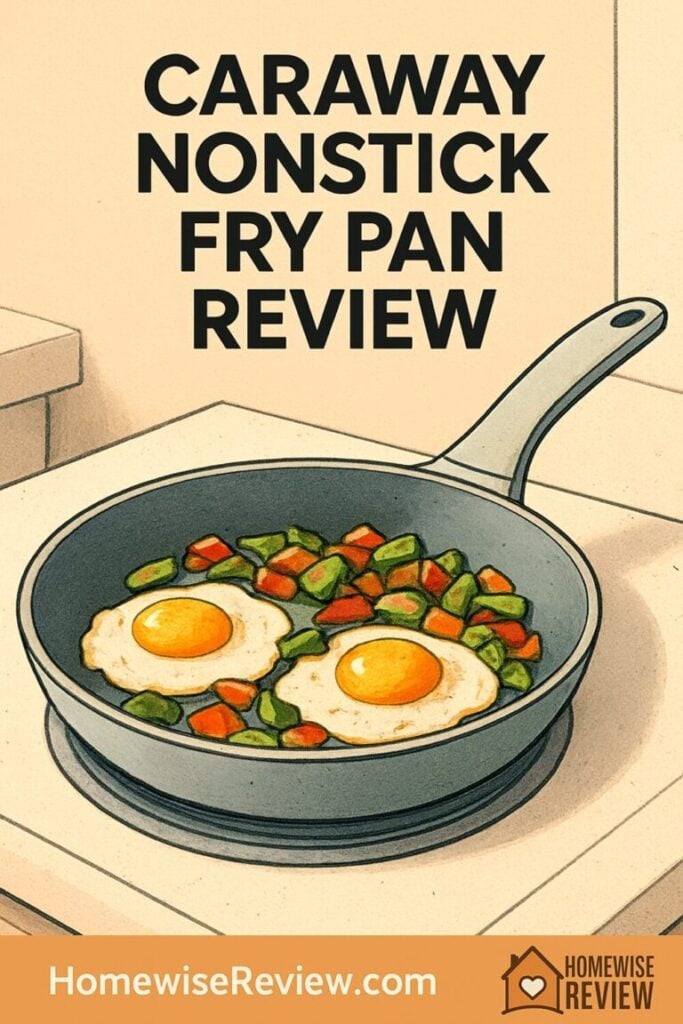
You want a nonstick pan that actually releases food easily, looks great on the stove, and does not feel coated in mystery chemicals. The Caraway Nonstick Fry Pan promises all three, but its higher price and ceramic coating come with real trade-offs.
Overview
The Caraway Nonstick Fry Pan is a 10.5 inch ceramic-coated skillet designed to be the everyday workhorse in Caraway’s cookware line. It is built with an aluminum core for fast, even heating, a mineral-based ceramic nonstick coating, and a stainless steel handle that is riveted to the body. The exterior is finished in Caraway’s signature matte colors, which is a big part of its appeal for style-focused home cooks.
Caraway markets this pan as non-toxic and free of PTFE, PFOA, and other traditional nonstick chemicals. It is oven safe to high temperatures, compatible with most stovetops, and sold both on its own and as part of the full cookware set. Price-wise, it sits firmly in the premium category, well above typical department store nonstick pans and close to some high-end PTFE options.
This review focuses on how the Caraway Fry Pan actually performs in a home kitchen, what it does better than cheaper pans, and where the limitations of ceramic nonstick will matter for you over time.
Who it is for
The Caraway Nonstick Fry Pan is best for home cooks who prioritize a clean, modern look and a PTFE-free nonstick surface, and who are willing to baby their cookware a bit to keep it performing well. If you mostly cook eggs, pancakes, sautéed vegetables, and delicate fish at low to medium heat, it will feel like a big upgrade from a scratched-up bargain skillet.
It is also a good fit for smaller kitchens where cookware often lives on the stovetop in plain view. The pan is genuinely attractive, with soft colors and a sleek profile that does not scream restaurant gear. If you entertain or simply enjoy a coordinated kitchen aesthetic, this matters more than most reviews admit.
On the other hand, this is not the right choice if you frequently sear steaks on screaming high heat, use metal utensils without thinking, or toss pans into the dishwasher. Ceramic nonstick, including Caraway’s, rewards gentle use and careful cleaning. If you want maximum durability and do not mind using a bit more oil, a well-made stainless or hardened PTFE nonstick pan may be a better match.
How it feels and performs
Out of the box, the Caraway Fry Pan feels substantial without being clunky. It has some heft thanks to the aluminum body, but it is lighter than many fully clad stainless pans of similar size. Most adults should be able to flip food one-handed, though smaller hands may find repeated one-handed sautéing tiring.
The stainless handle is straight with a slight upward angle. It stays reasonably cool during stovetop cooking when the flame or burner is kept under the base, but it does get hot during long sessions and in the oven. The handle’s underside has enough flat surface for a secure grip with a towel or oven mitt when needed.
Nonstick performance
When new and properly preheated, the Caraway Fry Pan is impressively slick. Eggs slide around with minimal fat, and you can cook pancakes, crepes, and omelets with very little sticking. Delicate foods like fish fillets, dumplings, and tofu release cleanly if you let them brown and naturally release before flipping.
For daily cooking, you will still want a small amount of fat for best results. A teaspoon of oil or butter helps eggs set evenly and keeps the surface feeling smooth. Dry cooking or relying solely on aerosol cooking sprays can shorten the life of the coating, and it is one of the fastest ways to turn a slick ceramic pan sticky.
Compared with a high-end PTFE pan, the Caraway’s release is similar at first, but PTFE tends to maintain that effortless glide longer with heavy use. Ceramic nonstick coatings, including Caraway’s, commonly lose some of their ultra-slick feel after months of frequent cooking, especially if overheated or scrubbed with abrasive tools.
Heat distribution and control
The aluminum core gives this pan very even heat across the cooking surface. You are unlikely to see the classic hot ring in the center that cheaper pans produce. For everyday cooking on gas, electric, or induction, this translates to more consistent browning on pancakes, evenly sautéed vegetables, and fewer random hot spots that scorch oil.
Caraway recommends using low to medium heat, and that advice is worth following. On gas in particular, medium heat often feels like medium-high in this pan due to the combination of aluminum and ceramic. High heat is more likely to discolor the coating, degrade the nonstick performance, and over time create patches that feel rougher and less forgiving.
On induction stoves, the latest generation of Caraway pans with a stainless-compatible base behave well, though response to heat changes is slightly slower than all-metal induction pans. You still get reasonably quick preheating and good simmer control, but you will want to avoid cranking it to maximum power.
Searing and browning
One of the trade-offs with any ceramic nonstick pan is high-heat searing. The Caraway Fry Pan can absolutely brown chicken thighs, pork chops, and vegetables at medium to medium-high heat, and it will produce a pleasant fond that you can deglaze into a pan sauce. However, it is not the right tool for deep, steakhouse-style crusts on beef or long, high-heat sears.
If you push it too hot, oil can smoke early, and the coating is at greater risk of long-term damage. For best results, think of this pan as your everyday skillet for eggs, stir-fries, and quick sautés, and reserve heavy searing or broiler-level heat for cast iron or stainless.
Durability and wear
In the first months, most owners report a very slick surface and easy cleanup. Over the first year, the biggest issues tend to be staining on the light-colored exterior, faint discoloration on the cooking surface, and gradual loss of that just-out-of-the-box slipperiness. This is typical of ceramic nonstick and not specific only to Caraway.
With gentle use, silicone or wooden utensils, and handwashing with non-abrasive sponges, the pan can stay functional and reasonably nonstick for several years of regular home cooking. If you often cook on high, use metal utensils, or soak the hot pan in cold water, the coating may degrade faster. Some long-term users end up designating it as their dedicated egg pan once the all-purpose slickness starts to fade.
How to use for best results
If you decide the Caraway Nonstick Fry Pan fits your needs and budget, using it correctly will make a big difference in how long it stays slick. These habits are easy to build and extend the pan’s lifespan.
Preheating and temperature
- Always start on low to medium heat. Give the pan a minute or two to warm before adding oil or food.
- A quick way to test: flick a few drops of water into the pan. They should sizzle gently and dance, not explode into steam.
- Avoid high heat and especially empty preheating on high. Those conditions are tough on any ceramic coating.
Choosing fats and utensils
- Use a little oil or butter for most cooking, even for foods that release easily. This keeps the surface feeling smoother over time.
- Avoid aerosol cooking sprays, which can build up a sticky residue that is hard to remove.
- Stick to silicone, nylon, or wooden utensils. Metal spatulas and whisks can scratch or chip the ceramic surface.
Cleaning and storage
- Let the pan cool before washing to minimize thermal shock to the coating.
- Wash by hand with warm water, mild dish soap, and a soft sponge or dishcloth. Skip abrasive pads and powders.
- For stubborn residue, soak the pan in warm soapy water for 10 to 15 minutes, then wipe clean.
- If stacking with other pans, place a soft liner or folded towel between them to prevent scratches.
Pros and cons
Every pan comes with trade-offs. Here is how the Caraway Nonstick Fry Pan stacks up.
Pros
- Excellent nonstick release when new: Eggs, pancakes, and delicate fish slide off easily with minimal oil.
- Attractive, modern design: Matte exterior colors and clean lines make it appealing to leave on the stovetop.
- PTFE-free ceramic coating: A good option if you want to avoid traditional Teflon-style coatings.
- Even heating: Aluminum core provides consistent browning and fewer hot spots than cheap nonstick pans.
- Oven safe and versatile: Suitable for finishing frittatas, baked pasta, or skillet desserts within recommended temperatures.
Cons
- Premium price: Costs significantly more than many PTFE nonstick pans that may prove more durable.
- Ceramic wear over time: Even with good care, the ultra-slick feel tends to fade faster than top-tier PTFE coatings.
- Not ideal for high-heat searing: Best used at low to medium heat, which limits its role for heavy searing.
- Exterior staining: The light-colored, matte sides can discolor with oil splatter and require gentle but regular cleaning.
- Handle heats in oven: Like most metal handles, it gets fully hot during oven use and requires a mitt.
Final verdict
The Caraway Nonstick Fry Pan delivers on its promise of a stylish, PTFE-free nonstick pan that feels great for everyday cooking, as long as you keep your expectations clear. It excels at eggs, quick sautés, and low to medium heat recipes where nonstick convenience is the priority. The even heating and attractive design make it a pleasure to use and to look at.
The biggest question is whether its higher price is justified, given the known lifespan limits of ceramic coatings. If you are disciplined about heat, utensils, and handwashing, you can get several years of strong performance, but it is unlikely to be a decade-long workhorse. Shoppers who want the longest-lasting nonstick surface and are comfortable with PTFE might find better value per year of use in other premium pans.
If you care a lot about aesthetics, want a PTFE-free option, and are willing to treat your cookware gently, the Caraway Nonstick Fry Pan can be a satisfying centerpiece for everyday stovetop cooking. If your kitchen style is more rough-and-tumble, or you rely on frequent high-heat searing, you may be happier choosing a durable stainless or cast iron pan and pairing it with a less expensive nonstick skillet for eggs.
See also
If you are comparing the Caraway Fry Pan with other options, start with our guide to the best nonstick frying pans to see how it stacks up on performance and value.
- Learn how different surfaces behave in the oven with our baking pan materials guide.
- If you deep fry often, our All-Clad electric deep fryer review covers a dedicated alternative to pan-frying.
- For countertop versatility, see our review of the Emeril Lagasse air fryer toaster oven.
- Need a large pot to complement your skillet, especially for soups and pasta? Read our All-Clad 8-quart stainless stockpot review.
FAQ
Is the Caraway Nonstick Fry Pan worth it if I already own a cheap nonstick skillet?
It depends on how you cook and what bothers you about your current pan. If your existing nonstick skillet is scratched, unevenly heated, or embarrassing to leave on the stove, the Caraway pan offers clear upgrades in performance, looks, and build quality. If your budget pan still releases food well and you are rough on cookware, you may not see enough added value to justify the Caraway price.
How long does the Caraway Nonstick Fry Pan typically stay nonstick?
With careful use at low to medium heat, gentle utensils, and handwashing, many home cooks report strong nonstick performance for a few years of regular use. Over time the surface usually becomes less slippery, especially in the center where most cooking happens. Even after that, it often remains easier to clean than bare stainless, but you may need a bit more oil and a softer touch when cooking eggs or delicate foods.
Can I use the Caraway Fry Pan on an induction cooktop?
Newer versions of the Caraway Fry Pan are made with an induction-compatible base, and they work well on most induction stovetops. If you are buying new, that is likely what you are getting. If you are unsure about an older pan, check the bottom for an induction symbol or see whether a magnet sticks firmly to the base before relying on it for induction use.
Does the Caraway Fry Pan replace the need for cast iron or stainless steel?
For many kitchens, it complements rather than replaces those pans. The Caraway Fry Pan is ideal for eggs, crepes, quick sautés, and sticky foods that tend to cling to bare metal. Cast iron and stainless still win for aggressive high-heat searing, broiler use, and tasks that benefit from a very tough surface, like blackening steaks or using metal tools without worry.
How should I handle staining and discoloration on the Caraway pan?
Light staining on the interior and exterior is mostly cosmetic and normal with use. For routine cleaning, warm soapy water and a soft sponge are best. If you see stubborn exterior stains, a paste of baking soda and water wiped gently with a soft cloth can help, but avoid heavy scrubbing that could dull the finish or scratch the coating. Keeping splatters wiped up and avoiding very high heat will reduce how quickly stains develop.
As an Amazon Associate, we earn from qualifying purchases made through links on our site.