

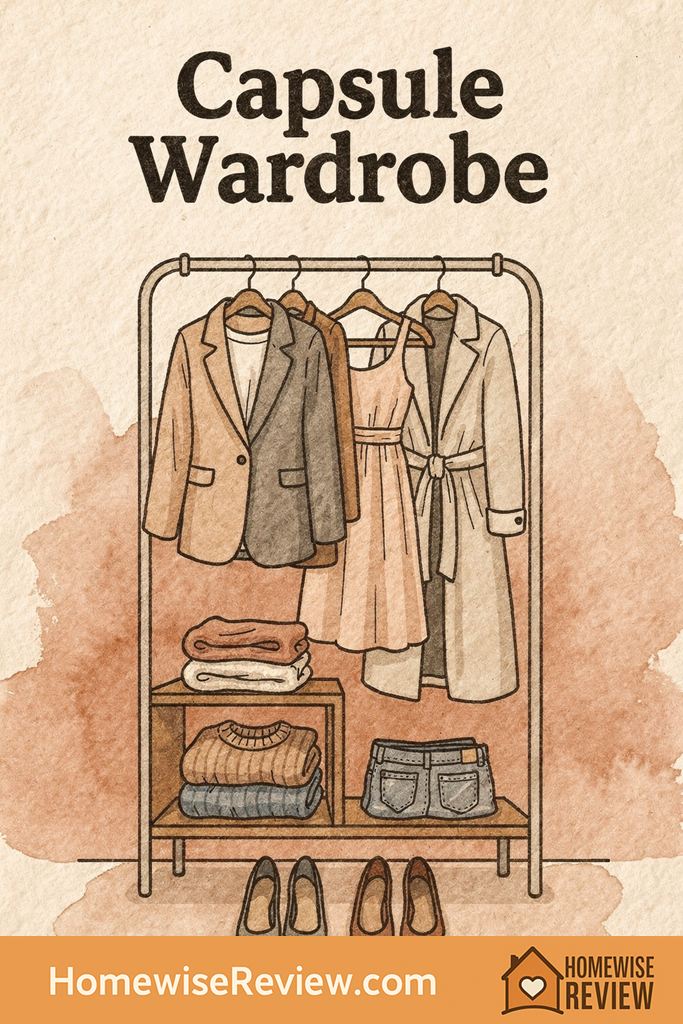
Tired of a closet full of clothes but “nothing to wear”? A capsule wardrobe simplifies your outfits by making sure nearly everything you own works together, so getting dressed is faster and shopping is more intentional.
A closet can be packed and still feel frustrating when pieces do not coordinate, fit well, or match your real life. A capsule wardrobe fixes that by focusing on fewer, better choices that mix and match easily. The goal is not perfection, it is a wardrobe that supports your week without constant overthinking.
What is a capsule wardrobe (and what it is not)
A capsule wardrobe is a curated set of clothing and shoes that covers your everyday needs for a season or a full year, with a consistent color palette and silhouettes that work together. You wear the pieces often, repeat outfits confidently, and replace items thoughtfully when they wear out.
A capsule wardrobe is:
- Mix-and-match friendly: tops, bottoms, layers, and shoes coordinate without effort.
- Built around your real schedule: work, school drop-off, errands, events, weekends.
- Quality-led: fewer items, better fit, better fabric, better longevity.
A capsule wardrobe is not:
- A strict uniform: you can still have variety, personality, and fun.
- Only neutrals: neutrals are helpful, but a capsule can include color and prints.
- An excuse to purge everything: you can build slowly and keep what already works.
Why capsule wardrobes work (especially for busy weeks)
Most closet stress comes from decision fatigue and “orphan” items that do not pair well. A capsule reduces both. When your pieces coordinate, you stop buying one-off items and start using what you own.
Practical benefits you will notice quickly
- Faster mornings: fewer choices, clearer combinations.
- Lower cost per wear: your best pieces actually get worn regularly.
- Less laundry bottleneck: you rotate through a predictable set of favorites.
- More consistent style: outfits look “put together” because they share a palette.
How many pieces should be in a capsule wardrobe?
There is no single correct number. A good capsule is sized to your lifestyle, laundry rhythm, climate, and dress code. Use the ranges below as a starting point, then adjust based on how often you need different levels of dressiness.
| Capsule size | Best for | Typical piece count (not including underwear) | What to watch out for |
|---|---|---|---|
| Micro | Travel, maternity, a reset month | 15 to 25 | Too little variety for messy seasons or in-person work |
| Classic seasonal | Most people, most climates | 30 to 45 | Over-buying “just in case” pieces you do not reach for |
| Expanded | Strict dress codes, large temperature swings | 45 to 60 | Losing the simplicity that makes capsules helpful |
What to count (and what to exclude)
- Count: tops, bottoms, dresses, layers, outerwear, shoes you wear regularly, a few occasion pieces if you truly need them in-season.
- Usually exclude: underwear, socks, sleepwear, workout gear (unless it doubles as daily wear), specialty uniforms.
Step-by-step: How to build a capsule wardrobe from what you already own
The easiest capsule is the one you can start today. Begin by identifying what you actually wear, then fill the gaps with intention. If you are on a budget, this method also prevents panic shopping.
Step 1: Define your “real life” week
- List your weekly activities and assign rough percentages (work, casual, dressy, active).
- Note your practical constraints: comfort needs, weather, walking, care requirements (machine wash vs dry clean).
- Choose your capsule timeframe: a season (3 months) is simplest for beginners.
Step 2: Pick a color palette you can repeat
A tight palette makes mixing easy. You do not need to love every color, you need colors that love each other.
- Start with 2 to 3 neutrals: examples include black, navy, gray, cream, camel, olive, denim.
- Add 1 to 2 accent colors: choose shades you enjoy wearing near your face.
- Choose 1 “bridge” print: a stripe, small floral, plaid, or leopard that contains your neutrals plus an accent.
Step 3: Pull your best basics first
Before you buy anything, shop your own closet. Pull items that fit now, feel good, and match your palette. If something is “almost right” but needs tailoring or a button, put it in a small fix pile so it stops living in limbo.
Step 4: Build around a simple outfit formula
Outfit formulas keep capsules from becoming random. Choose 2 to 3 formulas you can repeat without boredom.
- Everyday casual: knit top + straight-leg jeans + sneakers + layer.
- Elevated casual: fitted tee + midi skirt + cardigan + flats.
- Work-ready: blouse + ankle pants + blazer + loafers.
- Cold weather: sweater + trousers + boots + coat.
Step 5: Identify gaps (then shop the gaps only)
Gaps are missing “connectors” that make outfits work, like the right shoe, a layer, or a bottom that pairs with most tops. A gap is not “I want something new.” It is “I cannot complete outfits without this.”
Quick gap checklist
- Do you have at least 2 bottoms that work with most of your tops?
- Do you have a third piece (cardigan, blazer, jacket) to finish outfits?
- Do you have 2 everyday shoes that match your bottoms and your weather?
- Do you have one nicer option for meetings, dinners, or events?
- Do you have one practical outerwear piece for your climate?
A practical capsule wardrobe template (with suggested counts)
Use this template as a flexible starting point for a seasonal capsule of about 35 to 45 pieces. Adjust up or down depending on how often you do laundry and whether you need workwear.
| Category | Suggested count | Notes for better mixing |
|---|---|---|
| Tops (tees, knits, blouses) | 10 to 14 | Balance fitted and relaxed; keep most in your neutrals |
| Bottoms (jeans, trousers, skirts) | 5 to 7 | Choose 2 “go-to” silhouettes; avoid trendy cuts you will ditch fast |
| Dresses or jumpsuits | 1 to 3 | Pick ones you can wear casual or dressy with shoe changes |
| Layers (cardigans, blazers, overshirts) | 3 to 5 | These are outfit multipliers; prioritize comfort and structure |
| Outerwear | 1 to 3 | One everyday coat or jacket, plus weather-specific pieces if needed |
| Shoes | 3 to 5 | Include one casual, one polished, one weather shoe at minimum |
| Accessories | 5 to 10 | Use accessories to add variety without adding more clothes |
How to shop for a capsule wardrobe (without wasting money)
The best capsule purchases are the ones you can wear weekly for years, not the ones that look good only on a hanger. Shop slower than you think you need to. When you buy intentionally, you buy less.
Use the “rule of three” before you buy
- Can you style it with at least three items already in your capsule?
- Can you wear it in at least two settings (casual and work, or weekday and weekend)?
- Can you see yourself wearing it at least once a week for the season?
Focus on fabric and fit first
- Fabric: choose materials that match your care preferences. If you never dry clean, do not build a capsule around dry-clean-only items.
- Fit: prioritize shoulder fit in jackets and blazers, waist and hip fit in bottoms, and comfortable range of motion.
- Transparency and pilling: check knits and light tops in natural light before committing.
Budget strategy that keeps the closet cohesive
- Spend more on outerwear, shoes, and bags if you can. They carry outfits and take the most wear.
- Save on trend accents (a color top, seasonal print) so you do not feel guilty swapping them later.
- Set a one-in, one-out rule once your capsule is full to prevent quiet clutter creep.
How to keep a capsule wardrobe from feeling boring
Capsules only feel boring when everything is the same shape, the same texture, and the same level of “casual.” Variety comes from intentional contrast, not more volume.
Add interest with these outfit levers
- Texture: denim, knits, linen blends, leather or suede accents.
- Proportion: pair a slimmer top with a wider leg, or a chunky sweater with a straighter bottom.
- Color placement: keep bottoms neutral, then rotate accent tops and scarves.
- Accessory rotation: belts, earrings, and bags change the vibe fast.
Seasonal resets: how often to edit and what to store
A seasonal capsule typically changes four times a year, but you can also do two larger capsules (warm and cold) if your climate is mild. The key is not rigid dates, it is matching the clothes to the weather and your calendar.
Simple seasonal reset routine (30 to 45 minutes)
- Pull out items for the coming season and hang them front-facing.
- Remove out-of-season pieces and store them in bins or vacuum bags if space is tight.
- Try on last season’s “maybes” and decide: tailor, replace, or donate.
- Write a short gap list (no more than 5 items) and shop slowly.
What to store vs keep out
- Store: heavy sweaters in summer, sandals in winter, specialty outerwear not needed weekly.
- Keep out: year-round basics like a denim jacket, a neutral tee, or a layering tank if you use them often.
Common capsule wardrobe mistakes (and easy fixes)
- Mistake: Picking a palette you like in theory but do not reach for.
Fix: Base neutrals on what you already wear weekly. - Mistake: Too many tops, not enough bottoms.
Fix: Aim for roughly 2 tops per bottom to start. - Mistake: Ignoring shoes.
Fix: Choose shoes that work with 80 percent of outfits, then add “fun” pairs second. - Mistake: Buying aspirational pieces for a lifestyle you do not live.
Fix: Build for the next 2 weeks on your calendar, not your fantasy self. - Mistake: Keeping uncomfortable items out of guilt.
Fix: If you avoid wearing it, it is not serving you. Replace with something that fits and feels right.
Bottom Line
A capsule wardrobe works when it matches your real week, sticks to a repeatable color palette, and is built around outfit formulas you can lean on. Start with what you already own, fill gaps slowly, and let the capsule evolve as you learn what you truly wear.
See also
If you want a weather-specific plan, start with how to build a winter capsule wardrobe and pair it with cute winter outfit ideas for easy outfit formulas.
- Capsule wardrobe for teachers (comfortable, polished, classroom-friendly)
- How to build a seasonal beauty capsule
- Desk-drawer beauty capsule essentials for work
Frequently Asked Questions ▾
Do I have to get rid of most of my clothes to have a capsule wardrobe?
No. Start by separating your active capsule (what fits, what you wear, what matches your palette) from the rest. Store the “maybe” items for a season, then decide later based on what you missed and what you did not.
Can a capsule wardrobe include trends and fun pieces?
Yes, just keep them in the accent lane. A good rule is to make most pieces core basics, then add 3 to 8 trend or personality pieces per season (a color sweater, a print skirt, statement earrings) that still coordinate with your neutrals.
How do I build a capsule wardrobe if my weight fluctuates?
Prioritize adjustable and forgiving fits: wrap styles, elastic-back waists, knit tops, relaxed blazers, and layers. Keep a small “bridge” mini-capsule in a secondary size so you are not forced to shop urgently when your body changes.
What is the fastest way to make outfits look more put together?
Add a third piece (cardigan, blazer, jacket), choose one structured accessory (belt or bag), and wear shoes that match the outfit’s level of polish. These three upgrades make simple basics look intentional without adding more clothing.
How long does it take to build a capsule wardrobe?
If you use what you already own, you can build a starter capsule in an afternoon. A truly dialed-in capsule usually takes one to two seasons because you learn what you reach for, what you avoid, and what gaps are real.
As an Amazon Associate, we earn from qualifying purchases made through links on our site.