

Mix-and-match teacher-ready pieces that cut morning decision-making while staying comfortable, durable, and appropriate for your school’s dress norms.
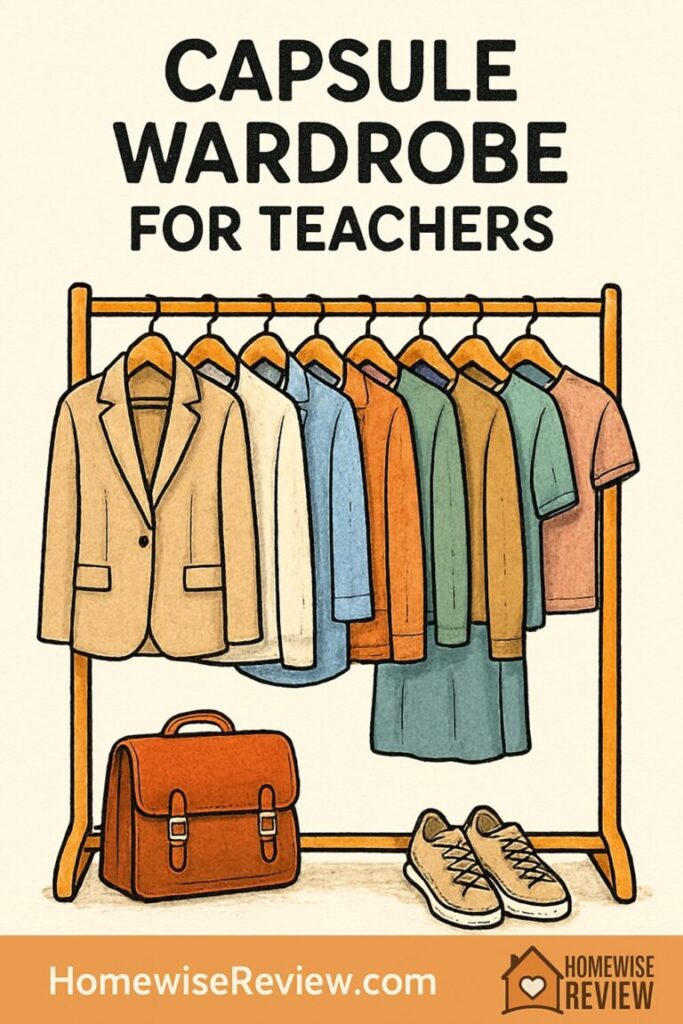
Your classroom wardrobe should work as hard as you do, without draining your time, energy, or budget. Build a teacher-friendly capsule wardrobe that delivers polished, comfortable outfits on autopilot.
You spend your days thinking about lesson plans, students, and grading, not what to wear at 6 a.m. A well planned capsule wardrobe can give you comfortable, classroom ready outfits in minutes while keeping your closet and budget under control.
What is a capsule wardrobe for teachers?
A capsule wardrobe is a small, carefully chosen collection of clothes that mix and match easily, so you can create many outfits from fewer pieces. For teachers, that means outfits that look professional enough for parents and administrators, but are comfortable and durable enough for floor sitting, lab days, and lunch duty.
The goal is not to own the fewest items possible. The goal is to own the right items, so getting dressed becomes a quick, low stress decision instead of a daily puzzle.
- Most pieces work with several others, so you get maximum outfits from minimal clothing.
- The colors and styles coordinate, which makes you look pulled together even when you are tired.
- You know your closet gaps, so you spend with intention instead of buying random sale items.
Step 1: Get clear on your school reality
Before you buy anything, anchor your wardrobe in the real life of your school. A perfect Pinterest outfit is useless if it does not fit your dress code or your day.
Check your dress code and culture
Look at your official dress code and the unwritten rules. Notice what veteran teachers and administrators actually wear.
- If your school expects business attire, prioritize structured pants, dresses, and blazers.
- If you teach younger grades in a more casual setting, you can lean into comfortable separates and smart sneakers.
- If you teach special subjects like art, science, or PE, plan for clothes that tolerate stains and constant movement.
Consider your schedule and comfort needs
Walk through a typical week and note what your clothes must handle. Examples might include floor time with kindergartners, climbing stairs all day between classes, supervising recess in cold weather, or rushing straight from dismissal to family conferences.
Think honestly about your body and comfort: what waistbands dig in by 10 a.m., which fabrics make you overheat, and what shoes you can stand in all day. Your capsule should respect your body as it is, not as you wish it were.
Step 2: Choose a simple color palette
A clear color palette is what makes a small wardrobe feel flexible rather than limiting. It lets you reach into your closet in the dark and pull out pieces that simply work together.
Pick your base neutrals
Choose one or two base neutrals for your core items like pants, skirts, and jackets. Common options are black, navy, gray, tan, or camel.
Most teachers do well with one dark neutral and one lighter one, such as navy and camel, or black and gray. Keeping bottoms mostly in these shades makes it easy to pair any top without thinking.
Add two or three accent colors
Next, add two or three accent colors that flatter your skin tone and feel like your personality. These go into tops, cardigans, scarves, and accessories.
- Cool toned example: navy and gray neutrals with accents of soft blue, burgundy, and white.
- Warm toned example: camel and cream neutrals with accents of rust, olive, and mustard.
- Low maintenance example: black and charcoal neutrals with accents of white and one favorite color like teal.
If your school has strong spirit colors, consider one accent that works with them. That helps spirit days blend smoothly into your regular closet instead of needing totally separate outfits.
Step 3: Decide how many pieces you need
The right size for a teacher capsule depends on your climate, how often you do laundry, and how much variety you want. You need enough pieces to get through a week without stress, but not so many that your closet feels crowded again.
A good starting point for a three season work capsule is:
- 8 to 10 tops in breathable fabrics, including at least 2 that you can dress up for meetings.
- 4 to 5 bottoms such as trousers, ankle pants, or midi skirts.
- 2 to 3 dresses or jumpsuits that work alone in warm weather and with layers when it is cooler.
- 2 to 3 layers like cardigans, knit blazers, or casual jackets.
- 3 to 4 pairs of shoes that you can stand and walk in all day.
This gives you dozens of outfit combinations without requiring a huge closet.
Sample capsule for a smart casual school
Here is one way that might look in real life for a smart casual environment where dark denim is allowed on Fridays:
- 9 tops: 3 patterned blouses, 3 solid knit tops, 2 lightweight sweaters, 1 school spirit tee.
- 5 bottoms: 2 pairs of ankle pants, 1 pair of wide leg trousers, 1 ponte knit skirt, 1 pair of dark jeans.
- 3 dresses: 1 wrap dress, 1 shirt dress, 1 knit midi dress.
- 3 layers: 1 cardigan in a neutral, 1 in an accent color, 1 knit blazer.
- 4 shoes: polished sneakers, low block heel, supportive flats, ankle boots.
Adjusting for formal or very casual schools
If your school is more formal, replace jeans and casual knits with tailored trousers, structured dresses, and classic loafers. If it is very casual, you might keep the same number of pieces but choose more relaxed cuts and textures like soft chinos and elevated joggers.
In very hot or very cold climates, you may want a slightly larger capsule to accommodate more layers or fabric changes across seasons.
Step 4: Build your go to outfit formulas
Outfit formulas are simple equations that you repeat with different pieces. They are the key to getting dressed on autopilot without feeling like you wear the exact same thing every day.
Formula 1: Teach all day, stay comfortable
This is your everyday workhorse look. Try a pair of stretchy ankle pants, a breathable blouse or knit top, a soft blazer or cardigan, and supportive flats or low block heels.
Rotate the colors and prints within your palette so the outfits feel fresh while the formula stays the same.
Formula 2: Messy or high movement days
For lab days, art projects, or heavy classroom setup, lean on durable fabrics and easy washes. Think dark wash jeans or stain resistant pants, a knit tee or casual top, and sneakers that still look pulled together.
Keep at least one version of this formula that you would not mind if it got paint or marker on it.
Formula 3: Parent meetings and observations
On days when you want extra polish, build an elevated version of your everyday look. A structured dress with a blazer and low heels, or tailored trousers with a drapey blouse and refined flats, can take you from classroom to conference room without changing clothes.
Formula 4: Casual Fridays and spirit days
Plan a formula that still feels like you, even when you are in school gear. Try dark jeans or colored pants, a school tee layered under a cardigan or denim jacket, and clean sneakers or loafers.
Limiting spirit wear to one or two pieces that coordinate with your palette keeps these days from clashing with the rest of your wardrobe.
Step 5: Shop your closet before you buy
The most sustainable and budget friendly capsule starts with clothes you already own. Set aside an hour when you can pull things out without rushing.
- Gather all work appropriate clothes and shoes into one place, including items in storage.
- Sort into three piles: love and wear often, maybe, and not working.
- Try on anything in the love and maybe piles. Move only the pieces that fit your current body, feel comfortable for a full day, and suit your school reality into your capsule.
- Compare what you have to your ideal capsule list. The items you are missing or short on become your shopping list.
If possible, keep the rest of your closet out of your daily line of sight for a few weeks. This helps you test your capsule and see what you truly miss.
Step 6: Fill the gaps with smart purchases
When you do need to buy, focus on pieces that will earn their keep. Use your list to stay on track and avoid impulse buys.
Prioritize comfort first footwear
Shoes can make or break your teaching day. Look for styles with cushioned insoles, arch support, and a low, stable heel or platform.
- Consider loafers, supportive ballet flats, platform sneakers, ankle boots, or low block heels.
- Choose materials that can handle a lot of walking, like leather, high quality faux leather, or sturdy knit uppers.
- Test them by walking on hard floors for several minutes, not just standing in front of a mirror.
Choose teacher friendly fabrics
Pick fabrics that are breathable, do not wrinkle easily, and are simple to wash. Cotton blends, ponte knit, viscose, and performance fabrics with a bit of stretch tend to hold up well in the classroom.
Save delicate silks and dry clean only items for special events, unless your school culture truly requires that level of formality every day.
Where to spend and where to save
- Spend more on shoes, bras, workhorse pants, and outer layers that you will wear weekly.
- Save on simple tops, trend driven pieces, and extras like costume jewelry or scarves.
- Buy solids for your more expensive items and use lower cost pieces for prints and seasonal colors.
Step 7: Plan for seasons and curveballs
A teacher capsule wardrobe works best when it flexes with your life. Build in small adjustments for weather, health, and surprises.
Seasonal swaps
Instead of building entirely separate wardrobes, keep your core colors and swap fabrics and layers by season. In warm months, rely on lightweight dresses, breathable tops, and open shoes; in cold months, shift to sweaters, heavier pants, and closed footwear.
- Store off season items in a bin or another closet so your current capsule stays uncluttered.
- Use cardigans, tights, and base layers to extend the life of dresses and skirts across multiple seasons.
Weight changes, pregnancy, and postpartum
Your body may change over the course of a school year or career. Build grace into your capsule with a few pieces that have flexible fits, such as wrap dresses, elastic waist skirts, and knits with stretch.
If you are pregnant or postpartum, consider a mini capsule of mix and match pieces that work for a few months, rather than trying to force pre pregnancy clothes or invest heavily in maternity specific items.
Keep a small back up kit at school
Even with a great wardrobe plan, teaching comes with spills, accidents, and sudden temperature changes. Keep a minimal backup outfit at school so you can recover quickly.
- A neutral top that matches your capsule colors.
- Comfortable dark leggings or pull on pants.
- Simple flats or sneakers that work with any outfit.
- Stain wipes, a lint roller, and spare hosiery if you wear it.
Simple weekly routine to keep your capsule working
The power of a capsule wardrobe shows up in daily routines. A few small habits will keep it running smoothly all year.
- Sunday or one evening a week: glance at your calendar, check the weather, and pull outfits for the most demanding days. Hang or fold them together so you can grab and go.
- Each night: take two minutes to set out the next day clothes, including underwear and shoes. Morning you will be grateful.
- Laundry rhythm: choose predictable wash days that match your schedule, such as midweek and weekend. This keeps your smaller wardrobe from feeling like it is always waiting for clean clothes.
As the term goes on, notice which pieces you reach for constantly and which ones you skip. Use that information to adjust your capsule during breaks so it continues to serve you.
See also
To make your mornings as streamlined as your closet, read our guide to school-morning routines alongside these beauty routines for teachers so you can look polished fast.
- 10-minute Sunday reset for skin and home that pairs well with a weekly wardrobe check in
- How to audit your routine for duplicates and gaps when you are ready to simplify beyond clothes
- Handbag-size essentials kit for kids emergencies to complement your classroom capsule
FAQ
- How many pieces should be in a teacher capsule wardrobe?
- Most teachers do well with 20 to 35 core work pieces, not counting underwear, workout clothes, or outerwear. Start with enough clothing to get through one workweek plus a couple of backup outfits, then adjust up or down based on your laundry schedule and how much variety you personally enjoy.
- Can a capsule wardrobe work if my school has casual Fridays and frequent spirit days?
- Yes, as long as you plan for those days on purpose. Include one or two bottoms that pair well with spirit shirts and at least one cardigan or jacket that dresses them up a bit. Limiting spirit wear to a few mixable items keeps it from taking over your closet while still letting you participate.
- How do I build a capsule wardrobe on a tight budget?
- Shop your closet first and be honest about what already works. Then prioritize purchases that solve real problems, such as comfortable shoes or pants that actually fit, rather than trendy extras. Thrift stores, resale apps, and clearance sections can be great for neutral layers and tops once you know your color palette and list.
- What shoes belong in a teacher capsule wardrobe?
- Focus on three or four pairs that you can wear for a full school day without pain. Many teachers rely on a pair of supportive flats or loafers, polished sneakers, ankle boots, and a slightly dressier shoe for meetings or events. Whatever styles you choose, make sure the soles are non slippery and the fit is secure enough for quick movements.
- How do I keep my capsule from feeling boring?
- Use variety in texture, pattern, and accessories rather than buying lots of different cuts and colors. For example, mix smooth cotton with textured knits, add a few patterned tops or scarves, and keep two or three statement earrings or necklaces at the ready. Rotating your accent colors each season can also refresh your look while your core pieces stay the same.
As an Amazon Associate, we earn from qualifying purchases made through links on our site.