

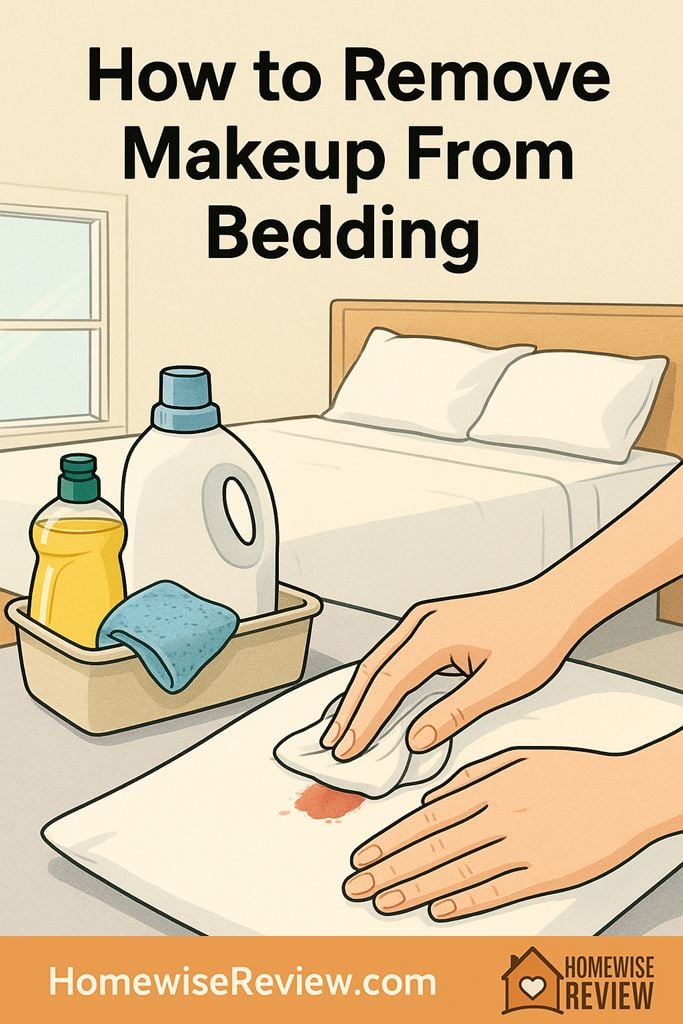
I tossed a makeup-smudged pillowcase straight into a hot wash, then into the dryer, and the faint brown “shadow” stayed forever.Now I pause, blot, and pre-treat based on what it is before I wash cold and air-dry until I know it’s gone.
Makeup stains on bedding happen fast: a little foundation transfer on a pillowcase, mascara after a late night, or lipstick that somehow ends up on the top sheet. What makes them feel impossible is that many formulas combine color + oils, so they smear when you rub and “set” when you dry. With a few targeted steps, you can usually remove them without bleaching, harsh scrubbing, or replacing your linens.
What makes makeup stains tricky on bedding
Most makeup is not one ingredient, it is a blend. The best remover depends on whether the stain is mostly oil, wax, or dye, plus what fabric your bedding is made of.
Common reasons makeup stains stick
- Oils and silicones (foundation, concealer, tinted moisturizer) bind to fibers and resist plain water.
- Waxes (lipstick, some cream blush and bronzer) create a slightly “greasy” barrier that traps pigment.
- Intense pigments and dyes (liquid lipstick, longwear eyeliner) can leave a shadow even after the oily part lifts.
- Heat (hot dryer, hot iron, very hot wash) can permanently set the remaining color.
Fabric matters more than people think
- Cotton and cotton blends are forgiving and can handle more agitation.
- Linen is durable but can show “ringing” if you spot-treat unevenly.
- Microfiber and polyester often release oily makeup well with dish soap, but can hold onto pigment if heat-set.
- Silk and satin need gentle products and minimal friction, and some solvents can leave water spots or weaken fibers.
Before you start: a quick, no-mistakes checklist
If you do nothing else, do these basics. They prevent the two big problems: spreading the stain and locking it in.
5-minute prep checklist
- Check the care label for water temperature and bleach warnings.
- Blot, do not rub, especially on pillowcases (rubbing pushes pigment deeper).
- Lift solids first with a spoon or dull knife edge (lipstick, cream blush).
- Test in a hidden spot if you are using alcohol or oxygen bleach (inside hem is ideal).
- Skip the dryer until the stain is fully gone in good light.
What to grab (most homes already have this)
- Dish soap (a grease-cutting kind)
- Liquid laundry detergent
- White cloths or paper towels for blotting
- Soft toothbrush or small soft cleaning brush (optional)
- Rubbing alcohol (70%) or alcohol-based hand sanitizer (for some stains)
- Oxygen bleach (color-safe) for whites and many colors
Identify the stain: pick the right first treatment
Use this table as a quick match. Start with the gentlest option that makes sense for the formula and fabric, then escalate if needed.
| Makeup stain | What it is usually made of | Best first step | Avoid |
|---|---|---|---|
| Foundation, concealer, skin tint | Oils, silicones, pigment | Dish soap + warm water pre-treat | Dryer heat before it lifts |
| Powder (setting powder, bronzer) | Dry pigment, talc/mica | Shake/brush off dry, then detergent | Wetting first (can make mud) |
| Lipstick (classic) | Waxes + oils + pigment | Alcohol dab, then dish soap | Heavy scrubbing on satin or silk |
| Liquid lipstick (longwear) | Dyes, film-formers | Alcohol dab, repeat, then detergent soak | Chlorine bleach on colors |
| Mascara, eyeliner (waterproof) | Waxes, polymers, black pigment | Dish soap pre-treat, alcohol spot dab if needed | Hot water first (can spread) |
| Cream blush/bronzer | Oils, waxes, pigment | Lift solids, dish soap pre-treat | Rubbing stain outward |
Step-by-step: remove makeup from sheets and pillowcases
This method works for most cotton, cotton blends, and microfiber. For silk or delicate satin, use the “Delicates” section below.
Step 1: Remove excess and contain the stain
- Lift any solids (lipstick, cream products) with a spoon edge.
- Blot from the outside in with a dry white cloth to prevent spreading.
- Turn the fabric over and blot from the back if the stain is soaking through, especially on pillowcases.
Step 2: Pre-treat based on what you see
- For oily or creamy makeup: Apply a few drops of dish soap directly to the stain. Add a splash of warm water and gently work it in with your fingertips for 20 to 30 seconds.
- For very pigmented stains (lipstick, eyeliner): Dab (do not pour) rubbing alcohol onto a cloth, then tap the stain. Keep switching to a clean section of cloth so you lift color instead of redistributing it.
- For powder makeup: Shake or brush off as much as possible while dry, then proceed with a small amount of liquid laundry detergent as the pre-treat.
Timing that works: Let your pre-treat sit 5 to 10 minutes. If it starts to dry, add a few drops of water to keep it active.
Step 3: Rinse the right way
- Rinse from the backside of the fabric with cool to lukewarm water to push the stain out rather than deeper in.
- If the stain is large, rinse in sections so you do not spread tinted water across clean fabric.
Step 4: Wash, check, then wash again if needed
- Wash with your usual detergent on the warmest water safe for the fabric, but lean cooler if color is still visible.
- Before drying, check the stain in bright light. If you see any shadow, repeat pre-treat and rewash.
Targeted fixes for the most common makeup stains
If your first wash improved the stain but did not fully remove it, these are the best “second pass” options.
Foundation on pillowcases (the everyday transfer stain)
- Make a quick pre-treat: 1 teaspoon dish soap + 1 teaspoon liquid laundry detergent.
- Work it into the stain gently for 30 seconds, then let sit 10 minutes.
- Rinse and wash. If there is a beige or orange shadow, soak 1 to 4 hours in oxygen bleach solution (follow the product label) and rewash.
Lipstick on sheets (wax plus pigment)
- Lift solids first.
- Dab rubbing alcohol on a cloth and blot until transfer slows.
- Follow with dish soap directly on the area, then rinse and wash.
If it is a longwear liquid lipstick: expect to repeat the alcohol blotting step two or three times, then soak in detergent before washing.
Waterproof mascara streaks (black smears that spread)
- Do not start with hot water.
- Apply dish soap, then press a damp cloth on top and blot to lift.
- If the gray shadow remains, dab a small amount of rubbing alcohol and blot again.
Powder makeup (bronzer, setting powder)
- Shake, tap, or brush it off dry.
- Use a small amount of liquid detergent, work in gently, rinse, then wash.
Delicate bedding: silk, satin, and specialty fabrics
If your bedding is silk or a delicate satin weave, treat it like a nice blouse. Your goal is to lift the stain with minimal friction and minimal chemical stress.
Safer approach for delicates
- Blot, then apply a drop of gentle detergent mixed with cool water.
- Press the solution in with your fingertips, do not scrub with a brush.
- Rinse by running cool water through the area from the backside.
- Lay flat on a clean towel and press out water. Air dry.
When to pause and consider professional cleaning: if the fabric is labeled dry-clean only, if it is dyed silk that water-spots easily, or if the stain is large and very dark.
How to wash and dry bedding without setting makeup stains
A lot of “permanent” stains are just heat-set stains. Your wash routine matters as much as your pre-treat.
Wash settings that usually work best
- Cycle: normal or heavy duty for cotton sheets, gentle for satin and delicate weaves.
- Water temp: cool to warm while stain is present, then wash warmer only after it is gone.
- Detergent: use the full amount for a large bedding load (bedding soaks up water and can dilute detergent).
- Extra rinse: helpful if you used a lot of dish soap or oxygen bleach soak.
Drying rules
- Air dry when in doubt. Even one dryer cycle can set a faint makeup shadow permanently.
- If you must tumble dry, use low heat and check after 15 to 20 minutes.
If the makeup stain reached a duvet insert or mattress
It is less common, but if makeup transfer goes through the duvet cover or fitted sheet, treat it like upholstery.
Duvet insert (spot clean)
- Blot dry first.
- Use a small amount of dish soap diluted in water and dab with a cloth.
- Rinse by dabbing with a clean damp cloth. Do not soak the filling.
- Dry thoroughly (fan or well-ventilated room) to prevent odor or mildew.
Mattress (spot clean and dry fast)
- Blot, then use a tiny amount of dish soap solution and dab gently.
- Follow with plain water dabs to remove soap residue.
- Press with dry towels, then let it dry fully before remaking the bed.
Prevention that actually helps (and still feels realistic)
- Swap pillowcases more often if you do skincare or makeup removal in bed. Even 2 extra pillowcases in rotation makes a difference.
- Use a white or light “sacrificial” pillowcase on nights you know you will self-tan, test a new foundation, or use heavy mascara.
- Keep a clean washcloth by the bed for quick blotting if you notice transfer right away.
Worth Knowing Before You Buy
Heat is what turns makeup on bedding from removable to permanent. Because these stains usually contain pigment plus oil or wax, a hot wash or, worse, the dryer can set a light smear into a lasting mark even if it seems to fade at first. Cold wash and air dry are the safe default for cotton, blends, and microfiber, while silk and delicate satin need gentler handling from the start.
Bottom Line
Makeup stains usually come out of bedding when you match the pre-treat to the formula (dish soap for oils and waxes, alcohol dabs for heavy pigment) and avoid heat until the fabric is truly clean. When in doubt, repeat a gentle pre-treat and rewash rather than drying and hoping for the best.
See also
If you are not sure what kind of stain you are dealing with, start with our stain-rescue decision tree, and use this related guide for the oily side of makeup: how to remove grease.
- fabric rinse booster review (what it helps with and what it does not)
- how to remove deodorant stains (similar pre-treat and wash logic)
- free and clear detergent review for sensitive households
Frequently Asked Questions ▾
Can I use makeup remover or micellar water on sheets?
Sometimes, but use caution. Many makeup removers contain oils or conditioners that can leave a new spot. If you try it, apply a small amount to a cloth (not directly on the fabric), blot the stain, then follow with dish soap and rinse to remove any oily residue.
Will bleach remove foundation stains on white pillowcases?
Chlorine bleach can remove some color, but it can also react with makeup pigments and turn stains yellow or orange, and it can weaken fibers over time. A safer first choice for white bedding is an oxygen bleach soak, followed by a normal wash.
What if I already dried the bedding and the stain is set?
You can still improve it, but it may take a few rounds. Pre-treat with dish soap (and alcohol blotting for lipstick or mascara), wash again, then soak in oxygen bleach if the fabric allows. Avoid drying between attempts until you see the stain lift as much as it is going to.
Why does my stain look “gone” wet but reappear when dry?
That is common with oil-based makeup. When fabric is wet, leftover oil can look less visible. Once dry, the oil oxidizes and the pigment becomes more obvious. The fix is another dish-soap pre-treat and a full wash, not more scrubbing.
What is the fastest safe method when guests are coming?
For cotton pillowcases: dish soap directly on the stain, work in gently for 30 seconds, rinse from the back, then wash on warm and air dry or tumble on low only after checking the stain. If there is any shadow, swap in a clean set and rewash the stained one later rather than risking the dryer setting it.
As an Amazon Associate, we earn from qualifying purchases made through links on our site.