
Vitamin C Serums to Check if Brown Oxidation or Metallic Smell Bothers You
Brown serum, a metallic scent, and orange transfer are common reasons shoppers give up on vitamin C. Here is how to spot oxidation risk before you buy and when a derivative formula may be a safer fit.

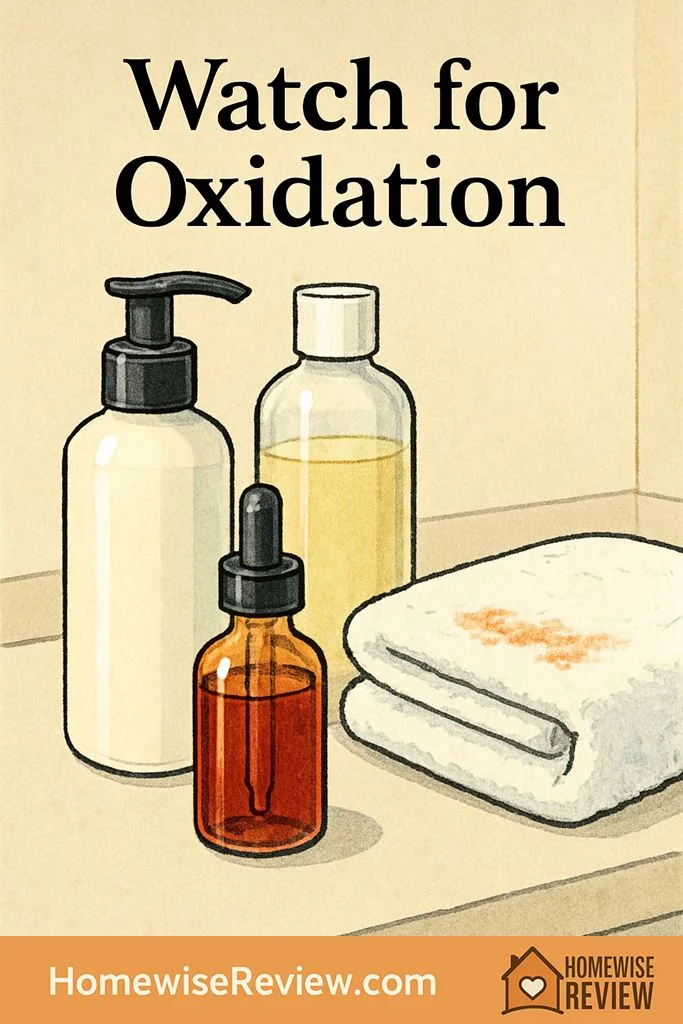
If vitamin C serums that turn brown, smell metallic, or leave orange marks drive you crazy, pure L-ascorbic acid formulas are the ones to screen hardest. The riskiest buys tend to be bottles that arrive dark, sit in clear or dropper packaging, or linger too long after opening.
When a vitamin C serum turns tea-brown, smells metallic, or leaves orange-brown smudges on skin, collars, pillowcases, or towels, the problem usually is not your imagination. It is a common fit issue with certain vitamin C formulas, especially for shoppers who use serums slowly, keep products in warm bright bathrooms, or are very sensitive to scent changes.
If that sounds familiar, shop this category more like a risk screen than a treasure hunt. A respected vitamin C serum can still be the wrong buy for you if darkening, staining, or that slightly metallic edge in the scent will make you stop using it.
Why this complaint happens
The usual culprit is L-ascorbic acid, the classic pure form of vitamin C. It is popular for a reason, but it is also fussy. Air, light, heat, and time can all push the formula to oxidize. That is why shoppers often describe these serums as changing from a very pale straw or champagne tone to deeper yellow, amber, or brown.
For some people, that shift is not just cosmetic. As the serum ages, the smell can get sharper or more metallic, the texture can feel less fresh, and the color can become more likely to show up on fingertips, along the hairline, or on light fabrics if the product is not fully dry. If you wear white sleepwear, use white towels, or apply skincare right before getting dressed, you may notice the downside faster than someone who does not.
Packaging matters almost as much as the ingredient list. A dropper bottle may look elegant, but every use exposes the formula to more air. Clear or lightly tinted bottles make light exposure harder to control. Large bottle sizes can also work against you if you only use vitamin C a few times a week. A formula does not have to be bad to become a poor fit for a slow user.
Storage adds another variable. A serum shipped during hot weather, left in a mailbox, or stored next to a steamy shower may age faster than the same product kept cool and dark. That helps explain why two shoppers can buy the same serum and report very different experiences.
One important nuance: not every yellow-toned vitamin C serum is automatically spoiled. Some formulas naturally start off slightly straw colored. What tends to raise concern is a noticeably orange, tea, or brown cast on arrival, especially when it comes with a strong metallic smell or obvious staining. If you already know those signs bother you, it makes sense to buy accordingly instead of hoping you will tolerate them later.
What to watch for before buying
If oxidation is your dealbreaker, treat pure L-ascorbic acid serums as higher-maintenance skincare. Before you check out, look for a few practical signals.
- Ingredient form: If the label highlights L-ascorbic acid or pure vitamin C, expect more sensitivity to air and storage than with many derivative-based formulas.
- Packaging style: Opaque pump packaging usually means less routine exposure than clear bottles or classic droppers.
- Bottle size: A bigger bottle is not really a value if it will take months to finish.
- Freshness positioning: Phrases like fresh-mixed or activate before first use can help with shelf aging before you open it, but they do not stop oxidation after regular use begins.
- Retailer and stock turnover: Buy from a seller with clear return policies and decent product turnover, not a mystery listing where the bottle may have been sitting for a long time.
- Recent user feedback: Sort for the newest reviews and scan for phrases like arrived dark, smelled metallic, oxidized quickly, or stained fabric. Newer feedback matters more than older praise if packaging, shipping, or formula batches changed.
- Return window: Know how quickly you need to inspect the serum. Oxidation concerns are much easier to address in the first few days than after the bottle is half used.
A simple arrival check can save you frustration. When the product shows up, inspect the color before adding it to your routine. If the serum looks much darker than expected right out of the box, or the scent feels aggressively metallic from day one, pause. Take a photo, compare it with the brand’s own shade guidance if available, and decide while the return window is still open.
Also be honest about your habits. Shoppers who rotate several actives, forget to recap products quickly, travel with skincare, or leave bottles out on a vanity are usually worse candidates for fragile L-ascorbic acid serums. If your routine is casual, the category should work around that, not punish it.
| Quick risk check | Usually lower risk | Usually higher risk |
|---|---|---|
| Vitamin C type | Stable derivative | L-ascorbic acid |
| Packaging | Opaque pump | Dropper or clear bottle |
| Your usage speed | Finish within a few weeks | Use slowly or rotate many serums |
| Scent tolerance | You do not mind a mild formula scent | Metallic notes ruin the experience |
| Fabric concerns | Dark towels and careful drying time | White linens or dressing right after skincare |
Products to scrutinize before buying
The products below are not listed as proven bad formulas or verified complaint leaders. They are simply well-known vitamin C serums that shoppers should inspect more carefully if fast darkening, metallic smell, or orange-brown transfer is exactly what they want to avoid.
| Product | Why to check carefully | What to verify before buying |
|---|---|---|
| SkinCeuticals C E Ferulic | A classic L-ascorbic acid formula that is often discussed for its strong scent profile and sensitivity to storage, age, and handling. | Confirm seller freshness, expected arrival color, and whether the return policy gives you enough time to inspect the bottle. |
| Timeless 20% Vitamin C + E Ferulic Acid Serum | The 20% strength and pure vitamin C format can be a lot for shoppers who already dislike scent shifts or visible darkening. | Check the current packaging format, recent arrival-color comments, and whether you will finish it quickly after opening. |
| Drunk Elephant C-Firma Fresh Day Serum | The fresh-mix concept can reduce aging before first use, but once activated it still enters the same time-and-storage conversation as other L-ascorbic acid serums. | Verify the mix-by steps, your realistic use window, and what recent buyers say about post-mix color and smell. |
| Paula’s Choice C15 Super Booster | A concentrated L-ascorbic acid booster can be convenient, but frequent opening and slow use can matter if you are highly oxidation-averse. | Look at the latest packaging, scan fresh reviews for darkening concerns, and avoid overbuying if you rotate several active products. |
The pattern here is less about one brand being right or wrong and more about formula fit. If your biggest frustration is paying for vitamin C and ending up with brown liquid that smells off, the common thread is usually pure L-ascorbic acid plus real-world handling variables, not a universal defect that applies to every bottle.
Shoppers who are especially likely to be disappointed include anyone with a very sensitive nose, anyone who hates visible color change, anyone using white linens and clothing, and anyone who buys backup bottles during sales. Those habits are not wrong, but they do make fragile vitamin C formulas a tougher match.
Better-fit alternative
Vanicream Vitamin C Serum is the safer fit for shoppers who want to sidestep the fast-darkening, metallic-smelling side of this category. The key reason is simple: it uses a more stable vitamin C derivative instead of the classic L-ascorbic acid setup that tends to be fussy, and it comes in opaque, pump-style packaging that can reduce routine exposure to air and light.
That does not make it perfect or universally better. If you specifically want a traditional low-pH L-ascorbic acid serum because that exact format is your priority, Vanicream may feel like a compromise. Shoppers who prefer a very watery, almost invisible serum texture may also want something lighter depending on what they are used to.
Still, for this very specific complaint, it is the more practical buy. If you hate opening a bottle and wondering whether the color changed, or you do not want orange-brown smudges on cuffs and pillowcases, a derivative formula in protected packaging is usually the calmer choice. The tradeoff is that it does not deliver the same classic L-ascorbic acid experience that some vitamin C enthusiasts actively seek out, which may or may not matter to you.
Final buyer guidance
If brown oxidation or a metallic smell is your hard no, skip impulse buys in the pure L-ascorbic acid camp and start with Vanicream Vitamin C Serum instead, then only circle back to classic formulas if you know you will use them quickly and store them carefully.
See also
If you are narrowing the field, these related guides can help you shop around the same issue from a few different angles.
- Best oil-free vitamin C serums
- pH drift in opened products
- See our Target vitamin C serum roundup
- Best luxury vitamin C serums
- Moisturizers with vitamin C
As an Amazon Associate, we earn from qualifying purchases made through links on our site.