

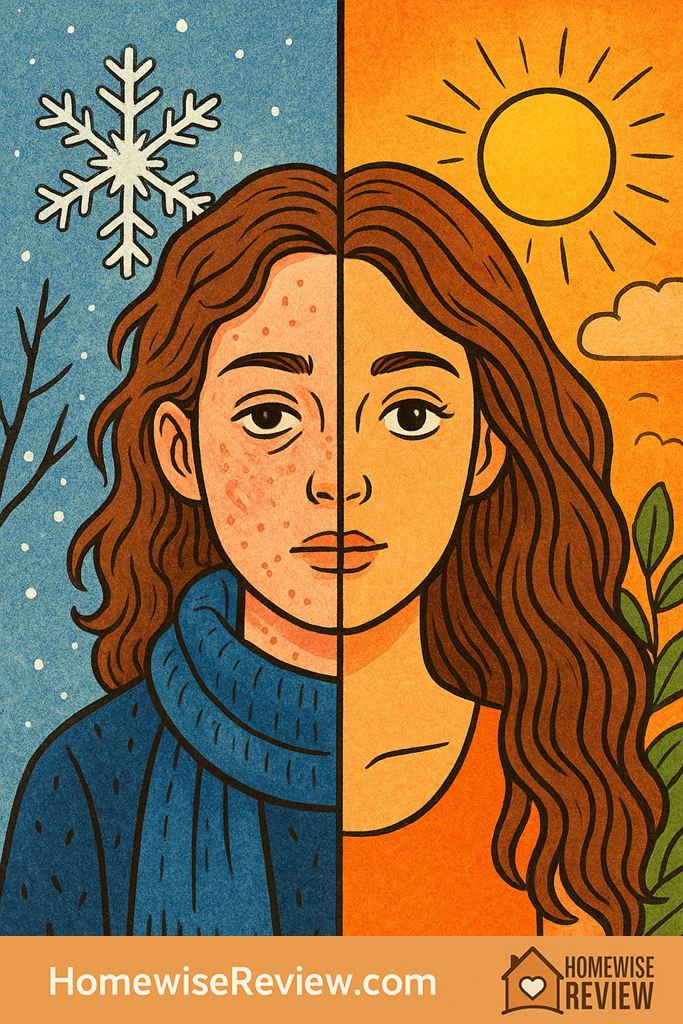
If your skin and hair seem to ignore the same routine a few months later, the weather is often the hidden variable. Humidity, UV intensity, indoor heat, and sweat can change barrier function, oil balance, and hair behavior faster than most people realize.
- EPA classifies UV Index 8-10 as very high and 11+ as extreme, helping explain why summer exposure can accelerate pigment changes and photoaging.
- Low-humidity conditions are linked to weaker skin-barrier performance and faster water loss, a major reason winter tightness and stinging often spike indoors as well as outdoors.
- Hair fiber is hygroscopic and can absorb roughly 30% of its weight in water, so humid air can swell strands, shorten style hold, and increase frizz.
- NOAA climate normals show seasonal shifts in temperature and humidity are predictable, which is why many skin and hair complaints follow weather patterns more than random product failure.
Seasonal beauty advice usually gets framed as routine swapping, but the deeper story is physical. The EPA treats UV Index 8 to 10 as very high and 11 or more as extreme, low humidity is linked to weaker skin-barrier performance, and hair fiber can absorb roughly 30% of its weight in water. Put together, that means the same cleanser, serum, or blowout can behave very differently in January than it does in July.
- Winter stress is cumulative. Cold outdoor air and dry indoor heat can both increase the strain on the skin barrier.
- Summer damage is not just about burning. Higher UV intensity, sweat, and oil can push pigment changes, irritation, and congestion before skin looks obviously sunburned.
- Hair reacts fast to humidity. Moist air swells the fiber and changes style hold, while dry air raises static and roughness.
The first thing that changes is your skin barrier
Skin is not just reacting to products. It is constantly negotiating with the environment. The outermost layer, the stratum corneum, is designed to keep water in and irritants out. When humidity drops, that job gets harder. Water evaporates more quickly from the surface, barrier lipids work less efficiently, and skin starts sending familiar warning signs: tightness after cleansing, rough patches around the mouth, redness around the nose, and that strange mix of flaking plus breakouts.
This is why seasonal skin trouble can feel random even when the routine stays the same. It is often less about a single bad product and more about a background shift in evaporation. In dry conditions, skin that seemed balanced in spring can act suddenly sensitive by late fall. A lightweight moisturizer that felt elegant in April may feel invisible in January because the environment changed first.
Winter is a double hit, not a single one
The obvious stressor is cold air, but the sneakier one is heating season. Indoor heat lowers humidity for hours at a time, especially in bedrooms, offices, cars, and stores. That means skin is often hit twice: once by cold, windy outdoor exposure and again by long stretches of dry indoor air. It helps explain why winter can create rough cheeks and cracked hands while the forehead and nose still look shiny.
Hair takes a parallel hit, but it shows up differently. With less moisture in the air, strands become more prone to static, surface roughness, and a brittle feel. Brushing, hot tools, and tight styling can then turn ordinary wear into visible breakage. Many people interpret this as their hair becoming weaker overnight, when the more likely story is seasonal dryness plus handling stress.
The most useful winter adjustments are usually boring, which is another way of saying effective. Gentler cleansing, richer creams, less aggressive exfoliation, lower heat settings, and more conditioning tend to outperform dramatic overhauls. Winter is the season when barrier support matters more than experimentation.
Summer damage starts before you notice a burn
Summer is often described as the oily season, but the larger story is cumulative exposure. UV intensity rises, sweat stays on the skin longer, and sunscreen, sebum, and pollution can mix into a film that changes how skin behaves by midday. The result is not only obvious sunburn. It is also slow pigment persistence, inflammation, and collagen stress that can make skin look duller or more uneven weeks later.
The EPA’s UV categories are helpful because they frame the problem correctly. Once the index moves into high, very high, or extreme territory, incidental exposure matters much more. Walking the dog, driving to work, sitting near a bright window, or running errands all add up. That helps explain why summer can worsen hyperpigmentation, post-acne marks, and facial redness even in people who never spend whole afternoons outdoors.
Hair pays a seasonal price too. UV exposure, higher temperatures, salt water, and chlorinated water can all roughen the cuticle and speed up color fading. That is why summer hair complaints tend to cluster: more frizz, flatter roots, less shine, and ends that feel straw-like long before a haircut would normally be due.
Humidity makes hair tell on the weather first
Hair is often the clearest seasonal sensor because it responds quickly to water in the air. In humid weather, the fiber absorbs moisture, swells, and shifts shape. That is the science underneath frizz, shrunken blowouts, expanded curls, puffed-up bangs, and styles that hold for an hour instead of a day. It is not always a styling failure. The atmosphere is physically changing the strand.
Dry weather creates the opposite problem. Instead of swelling, hair becomes more prone to flyaways, static, dullness, and a scratchier texture. If hair is color-treated or frequently heat-styled, the contrast can feel even sharper because a stressed cuticle has less protection against both moisture overload and moisture loss.
This is also why many people feel as if their texture changes with the calendar. Often the core texture has not changed much at all. What changes is water uptake, surface roughness, scalp oil balance, and how long a style can resist the environment around it.
Spring and fall are the seasons that confuse people most
Winter and summer get the attention, but transition seasons may create the most routine confusion. In spring, rising humidity and more time outdoors can make a rich winter routine suddenly feel greasy or congested. In fall, the reverse happens. A lightweight summer setup can stop being enough almost overnight, especially when indoor heating returns before skin has adjusted.
These shoulder seasons are also when people tend to overcorrect. They add stronger exfoliation because skin looks dull, when the real issue is a barrier that has not caught up to the weather. Or they keep clarifying the scalp because summer oil lingers in memory, even while cooler air is starting to make the lengths drier and rougher.
If your routine seems to fail every March or October, that pattern is useful. It usually means the products are not universally wrong. It means the environment moved first, and your routine is lagging behind it.
What changes by season, at a glance
| Season | Most common skin shift | Most common hair shift | What usually helps |
|---|---|---|---|
| Winter | Higher water loss, roughness, stinging, tightness | Static, dullness, brittle ends | Gentler cleansing, richer moisturizers, less heat, more conditioning |
| Spring | Reactive combination skin, fluctuating sensitivity | Inconsistent hold, early frizz, scalp oil changes | Lighten textures gradually instead of replacing everything at once |
| Summer | More oil, sweat, clogged pores, pigment persistence | Frizz, fade, flatter roots, rough cuticle | Daily UV protection, lighter layers, thorough but non-harsh cleansing |
| Fall | Sudden dryness as heating returns | Less humidity, more static, rougher lengths | Rebuild moisture early before flaking or snapping starts |
The bigger pattern is that weather changes the rules faster than products change formulas
People often blame the last thing they applied, but seasonal shifts are broader than that. Humidity changes evaporation. UV changes inflammation and pigment behavior. Temperature changes oil flow, sweat, and how comfortable products feel on the skin. Hair responds to the same forces through swelling, static, cuticle wear, and color fade.
That is why the smartest seasonal adjustment is usually structural, not dramatic. Think texture changes instead of constant brand changes, more barrier support before winter irritation starts, and stricter UV habits before summer marks deepen. The lesson is not that skin and hair are unpredictable. It is that they are more climate-sensitive than most routines admit.
Methodology
This report synthesizes public EPA UV Index benchmarks, NOAA U.S. climate normals, and peer-reviewed dermatology and hair-science literature on humidity, barrier function, UV exposure, and hair fiber behavior. The goal is to explain recurring seasonal patterns that show up across climates and routines, not to suggest that one product type fits every person or region.
Buying Guides Based on This Data
If changing humidity keeps making your routine feel inconsistent, these multipurpose beauty products for travel and gym bags highlight flexible basics that adapt well when weather and schedule both shift. For a tighter shortlist of dependable formulas, see our curated Amazon beauty buys for options that balance value with solid everyday performance. And if your routine needs to stay fast without turning chaotic, these top beauty products for busy moms focus on practical picks that save time and counter seasonal routine creep.
Frequently Asked Questions ▾
Why can skin feel dry and oily at the same time?
Because different systems are reacting to different cues. A weakened barrier can make skin feel tight and rough while sebaceous glands still produce oil, especially in summer or during seasonal transitions.
Does humid weather actually change hair texture?
It changes hair behavior more than true texture. Humid air increases water uptake, which can swell the fiber, lift the cuticle, and make curls, waves, or blowouts look different.
When should a seasonal routine change start?
Usually a little before discomfort becomes obvious. Skin and hair respond best when moisture, UV protection, and cleansing strength are adjusted at the start of a weather shift rather than after irritation, frizz, or breakage are already established.
As an Amazon Associate, we earn from qualifying purchases made through links on our site.