
How to Build a Scalp-Care Routine for Oil, Flakes, Buildup, or Sensitivity
Match your scalp routine to the problem you can actually observe, change one step at a time, and know when flakes, irritation, or hair loss need medical care.

On this page
A useful scalp routine is not a shelf full of scrubs, oils, and serums. It is a small set of steps matched to one observable problem: excess oil, removable product residue, mild dryness, or recurring flakes. Start with cleansing technique, change one variable at a time, and do not treat pain, sores, patchy hair loss, or persistent inflammation as a cosmetic problem.
The scalp is skin, but hair changes how products reach it and how easily they rinse away. Hair texture, styling, wash frequency, sweat, dry shampoo, and leave-ins all affect the routine. The goal is not to diagnose yourself from a flake. It is to make the safest reasonable adjustment, observe the result, and recognize when a dermatologist should take over.
First, identify the pattern you can see
Use the simplest description that fits. Avoid jumping straight to a medical label, because dry skin, dandruff, contact irritation, psoriasis, and product buildup can overlap in appearance.
| What you notice | Reasonable first step | What not to assume |
|---|---|---|
| Roots look oily and hair loses volume | Wash the scalp thoroughly and adjust frequency to oil and activity | Oil means the scalp is dirty or needs a harsh detox |
| Powdery residue after dry shampoo or styling | Use regular shampoo and water; reduce product amount | Every white speck is dandruff |
| Fine flakes with tightness after washing | Try a gentler shampoo and pause scrubs or strong actives | More exfoliation will always help |
| Recurring itchy flakes | Use an appropriate dandruff shampoo as directed | Oil alone or a cosmetic serum treats the cause |
| Thick scale, marked redness, sores, pain, or hair loss | Arrange medical evaluation | A personalized beauty routine is enough |
Build the routine from cleansing outward
Put shampoo on the scalp
Part the hair enough to reach the skin, concentrate shampoo at the roots, and use fingertips rather than nails. Rinse until the scalp and hair no longer feel coated. Conditioner belongs mainly on the lengths unless its directions specifically say it is designed for scalp use.
Wash frequency is personal. An oily scalp and fine or straight hair may feel and look better with frequent washing. Curly, coily, dry, color-treated, or tightly styled hair may need a different rhythm to protect the lengths. The American Academy of Dermatology recommends adapting dandruff-shampoo frequency to hair type and applying the medicated product to the scalp, not assuming one schedule fits everyone.
Treat dry shampoo as a styling aid, not a wash
Dry shampoo absorbs some surface oil but does not replace shampoo and water. Apply a small amount only where needed, follow the timing directions, and brush or comb it out when appropriate for your style. Regular washing removes accumulated oil, dead skin, microorganisms, and dry-shampoo residue.
If dry shampoo causes itching, burning, stiffness, or a gritty layer, stop using it and wash the scalp. The AAD advises washing with regular shampoo after one or two dry-shampoo uses rather than repeatedly layering more powder.
Add only one targeted step
Once cleansing is consistent, add a treatment only for a clear reason. A pre-wash exfoliant may help removable residue, but it should not be stacked with a gritty scrub and a strong clarifying shampoo on the same day. A lightweight hydrating serum may feel comfortable on a mildly dry scalp, but it is not a substitute for dandruff treatment or medical assessment.
Record the product, frequency, and result for two to four weeks unless irritation appears sooner. If you change shampoo, serum, wash frequency, and styling products together, you will not know what helped or what caused a reaction.
Choose the branch that matches your main concern
For oil and flat roots
- Clean the scalp often enough that oil and residue are removed without aggressive scratching.
- Keep rich conditioners, masks, and oils mainly on the mid-lengths and ends.
- Use less dry shampoo rather than allowing repeated layers to become the routine.
- Choose lightweight leave-ins and apply them away from the roots unless they are specifically intended for the scalp.
Oil production is not a failure of hygiene. The practical target is a wash rhythm that keeps the scalp comfortable and the hair manageable.
For flakes and itch
Dandruff shampoos use different active ingredients and require different contact times. The AAD lists options including ketoconazole, selenium sulfide, salicylic acid, sulfur, coal tar, and zinc pyrithione, and advises following the exact bottle directions. If one appropriate product does not help, a dermatologist may recommend alternating actives or checking for another condition.
Do not scrape scale loose with fingernails. Rubbing, scratching, and forceful scale removal can worsen inflammation, especially when psoriasis is involved. Persistent or severe flaking deserves diagnosis because seborrheic dermatitis, psoriasis, eczema, and fungal infection need different treatment.
For tightness and mild dryness
If tightness starts after washing, simplify before adding more. Pause fragranced scalp products, strong clarifying shampoos, acids, essential oils, and scrubs. Try a gentler cleanser, lukewarm water, thorough rinsing, and a less frequent strong-cleanse step. A small amount of a simple scalp-compatible hydrator may help comfort, but stop if it increases grease, itch, or residue.
Dry scalp and dandruff can look similar. The AAD notes that dandruff often improves with dandruff shampoo, while simple dryness may improve with a gentle non-medicated shampoo. Lack of improvement is a reason to get a proper diagnosis rather than escalating at home.
For product buildup
Start by removing the source. Reduce the amount of dry shampoo, edge control, oil, butter, or styling spray reaching the scalp. Use regular shampoo and water, and make sure you rinse sections that are easy to miss around the crown, nape, and behind the ears.
An occasional clarifying wash can be useful when the scalp feels coated, but stronger is not always better. If the scalp becomes tight or the lengths become rough, reduce frequency and protect the hair lengths with conditioner. Residue that returns immediately with redness or greasy scale may not be ordinary buildup.
When a scalp tool or serum is unnecessary
A massager is optional. Fingertips can distribute shampoo without adding another object that must be cleaned. Hard pressure, sharp teeth, and prolonged scrubbing can irritate skin and tangle or break hair.
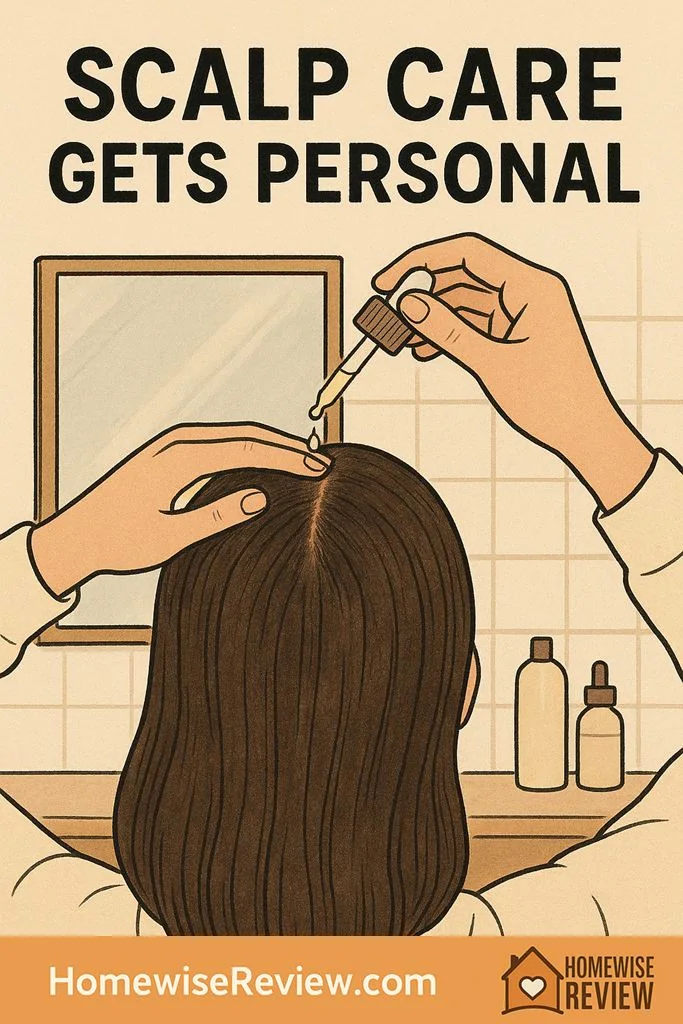
A scalp oil is also optional. Oil can reduce friction or soften some dry scale, but it may worsen a coated feeling and does not treat every cause of flakes. Essential oils can irritate or trigger allergic contact dermatitis, especially in concentrated or homemade mixtures. Do not apply undiluted essential oils to the scalp.
Growth serums are not general scalp-care products. Hair loss has many causes, and the correct treatment depends on the cause. A cosmetic routine cannot reliably distinguish hereditary thinning, shedding after illness, alopecia areata, traction, infection, or scarring hair loss.
Scalp symptoms that should change the plan
Seek medical advice rather than adding products when you notice:
- a bald patch that appears quickly, a widening part, a receding hairline, or clear loss of density;
- intense itching, burning, tenderness, swelling, or pain;
- open sores, pus, bleeding, or thick adherent scale;
- broken hairs with scaly bald patches;
- symptoms that persist despite a gentle routine and correctly used over-the-counter dandruff shampoo.
The AAD emphasizes that hair loss can have many causes and that earlier diagnosis can improve the chance of successful treatment or prevention. Do not delay evaluation while cycling through cosmetic products.
A simple four-week reset
- Week 1: Remove extra scalp oils, scrubs, and overlapping serums. Use one suitable shampoo with careful scalp application and thorough rinsing.
- Week 2: Adjust wash frequency based on oil, sweat, styling, and comfort. Keep the hair lengths conditioned without coating the roots.
- Week 3: If one mild problem remains, add one targeted product and follow its directions exactly.
- Week 4: Compare itch, visible flakes, oil timing, tenderness, and residue with your starting point. Keep only steps that produced a clear benefit without irritation.
Stop the reset and seek care sooner if symptoms are severe, rapidly worsening, or accompanied by hair loss, sores, or signs of infection.
Related guides
Use our shampoo-matching guide to narrow the cleansing step. If removable residue is the main issue, compare clarifying shampoos for buildup. For an optional leave-on step after cleansing is settled, see scalp serums for mild itch, tightness, and residue.
As an Amazon Associate, we earn from qualifying purchases made through links on our site.