

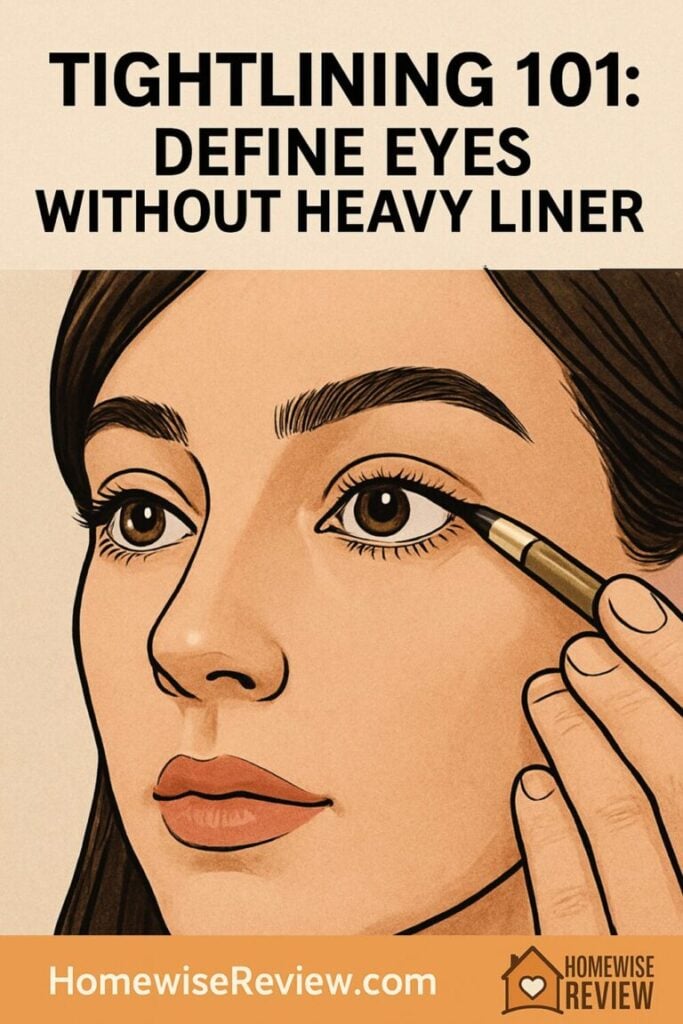
Want your eyes to look bigger and your lashes fuller without a thick stripe of eyeliner? Tightlining gives you that definition in minutes, using a technique that hides liner between your lashes instead of on top of your lids.
Tightlining is one of those small makeup tricks that makes a big difference. Done well, it gives you fuller looking lashes, brighter eyes, and soft definition that never looks harsh or overdone.
If regular eyeliner feels too heavy or always seems to take over your look, tightlining is your low key alternative. This guide walks you through what it is, which products work best, and exactly how to do it without smudging, irritation, or raccoon eyes by noon.
What is tightlining?
Tightlining is the technique of applying eyeliner into the base of your lashes, right along the upper waterline. Instead of drawing a visible line above your lashes, you fill in the tiny gaps between them so the roots of your lashes look darker and thicker.
The result is subtle. From a normal distance people will not see a strip of eyeliner, only deeper looking lash roots and more defined eyes. It is especially useful on days when you want to look polished without a full eye look.
Tightlining also pairs beautifully with bolder eye makeup. By darkening the lash line first, any mascara or shadow you add on top looks richer and more intentional, rather than floating on a pale lash line.
Who tightlining is best for
Almost anyone can benefit from tightlining, but it is especially flattering if you:
- Have light colored or sparse lashes and want them to look naturally fuller
- Have hooded or deep set eyes that lose lid space to thick liner
- Prefer a no makeup or low makeup look but still want definition
- Wear glasses and feel like regular liner hides behind your frames
It is also a great option as your eyes mature. A thin, well placed tightline emphasizes the lash base without dragging the eye downward the way a heavy, thick liner sometimes can.
Choosing the right products for tightlining
Any formula you use near your waterline needs to be smooth, long wearing, and as non irritating as possible. Here is how the main options compare.
Gel pencil liners
Gel pencils are often the easiest way to learn tightlining. They have a creamy texture that glides along the waterline with minimal pressure and are usually designed to be long wearing and smudge resistant.
Pros: Easy control, twist up formats do not need sharpening, many are safe for the waterline. Good for everyday use and quick mornings.
Cons: Can transfer if the formula is too soft or not set properly. Some very stiff pencils tug at the delicate skin and are harder to work into the lash base.
Gel pots or cake liners
Gel liners in pots and cake liners activated with water or mixing medium are popular with makeup artists because they are very precise and long wearing. You apply them with a small, firm brush.
Pros: Excellent control once you get the hang of it, very rich pigment, and usually strong staying power. You can also adjust how intense the line looks by changing how much product you load onto the brush.
Cons: Slightly longer learning curve and slower to apply. You must clean the brush regularly to avoid eye irritation. Some formulas are not labeled for waterline use, so always check.
Liquid liners
Classic liquid liners are usually not ideal directly on the waterline, but they can be pressed between the lashes from above for a tightlined look.
Pros: Extremely long wearing and crisp once set, great if your eyes get watery and break down softer pencils.
Cons: Less forgiving if you make a mistake, and many liquid liners are not meant for the inner rim. Reserve this approach for pressing pigment into the roots from above the lashes rather than swiping along the wet inner rim.
Best shades for a natural tightline
For the most natural effect, match the intensity of your liner shade to your coloring and the look you like:
- Soft black for dark hair or evening looks
- Dark brown for fair to medium features or a softer daytime look
- Charcoal, navy, or deep plum if pure black looks too harsh but you still want depth
Whatever shade you choose, look for words like long wear, waterproof, smudge resistant, and suitable for waterline or ophthalmologist tested on the packaging.
Prep your eyes for tightlining
Good prep keeps your tightline clean, comfortable, and long lasting.
- Clean the area. Start with a clean face and dry lash line. Remove any leftover mascara or liner so you are not layering over old product.
- Avoid heavy eye cream on the upper lash line. Too much slip makes liner smear. Keep richer creams on the orbital bone, not right up at the lashes.
- Have the right mirror. A handheld or magnifying mirror at chin level lets you look slightly down as you work, which exposes the upper waterline more easily.
- If you wear contacts, consider applying them after makeup so they stay clean, or be extra gentle and use formulas you know are lens friendly.
Step by step: how to tightline the upper lash line
The upper tightline is where you will see the biggest impact. These steps work best with a gel pencil or a small brush and gel liner.
- Position your mirror. Place it slightly below your face so you can look downward with your eyes open. This exposes more of the upper waterline without needing to tug much on the lid.
- Gently lift the lid. Using the pad of your ring finger, lightly lift the center of your upper lid upward, just enough to reveal the bare roots of your lashes. Avoid pulling hard or stretching the skin.
- Anchor your hand. Rest your liner hand on your cheekbone or the heel of your hand on your face so tiny movements do not turn into shaky lines.
- Start at the outer third. Place the pencil or brush at the outer corner of your upper waterline, right where the lashes meet the skin. Wiggle the color into the roots using small back and forth motions instead of trying to draw one long line.
- Work toward the center. Continue pressing or wiggling the liner inward along the waterline, filling the gaps between lashes. Use light pressure and go slowly. You can always add more.
- Decide how far inward to go. Filling in the entire waterline to the very inner corner gives maximum intensity. Stopping about two thirds of the way in keeps the look softer and is more comfortable for sensitive eyes.
- Check for gaps. Relax your lid and look straight ahead. If you see pale spaces between lashes, gently lift the lid again and add color only where needed.
- Set if needed. For very oily lids or long days, lightly press a matching eyeshadow into the lash line from above using a tiny brush. This helps lock cream formulas in place.
At first this may feel strange, especially if you are not used to touching your upper waterline. Take breaks, blink a few times, and remember that a thin, slightly imperfect tightline is still very effective.
How to (and whether to) tightline the lower lash line
Lower tightlining means applying liner right on the lower waterline. This can create a striking, framed effect, but it is easier to overdo and is more prone to smudging.
If you have small, deep set, or close set eyes, a fully lined lower waterline can make them look smaller. In that case, focus your tightlining on the upper lash line only, or line just the outer third of the lower waterline with a softer shade like brown or charcoal.
To lower tightline safely, gently pull down on the center of the lower lid, keep the pencil very sharp but not pointy, and use soft strokes from the outer corner inward. Avoid going all the way into the tear duct, which tends to get watery and break down product quickly.
Tips for different eye shapes and concerns
Hooded or mono lids
Tightlining is ideal if your lid space disappears when your eyes are open. Focus on a rich, even tightline and skip a thick line above the lashes. Curl your lashes and add mascara to open the eyes without shadow taking over your limited lid space.
Small or close set eyes
Concentrate pigment on the outer half or outer two thirds of the upper tightline. Keep the inner third of both upper and lower waterlines free of dark liner, or use a nude pencil on the lower waterline to keep the eyes bright and open.
Mature lids
Choose soft, glide on formulas that do not tug. Tightline in thin layers rather than trying to get full intensity in one pass. A deep brown or charcoal shade often looks more flattering than stark black and draws attention to your eye color instead of the liner itself.
Sensitive or watery eyes
Look for fragrance free, ophthalmologist tested liners and avoid very glittery or metallic formulas on the waterline since they can irritate. Apply a thin layer, wait a minute, then gently blot the area with a cotton swab to remove any excess product before it has a chance to migrate.
Common tightlining mistakes and how to fix them
- Using a very dry or hard pencil. This drags the skin and makes your eyes water. Switch to a gel based pencil and warm the tip slightly on the back of your hand before applying.
- Going in with too much product at once. Thick, goopy layers smudge quickly. Aim for one thin layer, then add a second only where needed.
- Lining both upper and lower waterlines all the way into the inner corners with deep black. This can make eyes look smaller and more closed off. If you like a strong look, keep the upper tightline rich and let the lower waterline fade toward the inner third.
- Skipping mascara. Without mascara, tightlining alone can look like faint darkness at the roots. A coat or two of mascara blends everything together and completes the effect.
- Not cleaning the waterline area at night. Leftover product along the lash base can lead to irritation. Make removal part of your nightly routine.
How to remove tightliner gently
Because tightlining hugs the lash roots, you need a remover that breaks down product well without heavy rubbing. Dual phase removers and cleansing balms usually work best.
Saturate a cotton pad, then hold it gently against closed eyes for 10 to 20 seconds to let the remover dissolve the liner. Use light, downward strokes, then fold the pad and wiggle it gently along the lash line to lift any remaining pigment. Finish with your usual face cleanse so no residue is left near the eyes.
See also
For product ideas that make tightlining easier, start with our guide to soft eyeliners that do not smudge and our picks for the best eyeliner for hooded eyes.
- Read our full Nyx Epic Ink Liner review for a precise option to deepen the lash line from above.
- Pair your tightline with the right lift using the best mascara for hooded eyes.
- If your eyes react easily, get tips in our guide to the best mascara for sensitive eyes.
FAQ
Is tightlining safe for my eyes?
Tightlining can be safe if you use clean tools and products designed for the eye area, and if you remove everything thoroughly at night. Choose liners labeled as suitable for the waterline or ophthalmologist tested, avoid sharing products, and do not apply over irritated or infected eyes. If you notice burning, redness, or excessive watering, remove the product right away and switch formulas.
Can I tightline with liquid eyeliner?
Most classic liquid liners are not made for direct use on the wet waterline, but you can still use them to create a tightlined effect. Apply your liquid liner from above and gently press the tip into the spaces between the lashes instead of drawing on the inner rim. If you want to line the actual waterline, stick to gel pencils or gels in pots that are labeled safe for that area.
How do I keep my tightline from smudging onto my lower lash line?
Smudging usually happens when too much product is applied or when lids are very oily. Use a thin layer of a long wear or waterproof formula, keep eye cream away from the immediate lash line, and lightly set the area just under the eyes with a bit of translucent powder. If you still see transfer, try tightlining only the outer two thirds of the upper waterline and skipping the lower waterline entirely.
Will tightlining make my eyes look smaller?
Upper tightlining alone usually makes eyes look larger, not smaller, because it thickens the lash base without taking up lid space. Eyes can look smaller if you heavily line both the upper and lower waterlines all the way to the inner corners with very dark shades. To keep your eyes open and bright, focus the deepest color on the upper waterline and keep the lower line softer or limited to the outer third.
How long should a tightline last and how can I make it last longer?
A good tightline typically stays put for most of the workday, although very watery or allergy prone eyes may break it down faster. To maximize wear, choose a waterproof or long wear liner, apply it to clean, dry skin, and give it a minute to set before blinking a lot or adding mascara. For extra insurance, gently press a matching powder shadow into the lash line from above once the cream or gel has dried.
As an Amazon Associate, we earn from qualifying purchases made through links on our site.
For more information, check out our comprehensive guide: Makeup