

Clean silhouette and plush, warm upholstery that anchors an organic modern room with timeless texture and effortless balance.
We may earn a small referral fee
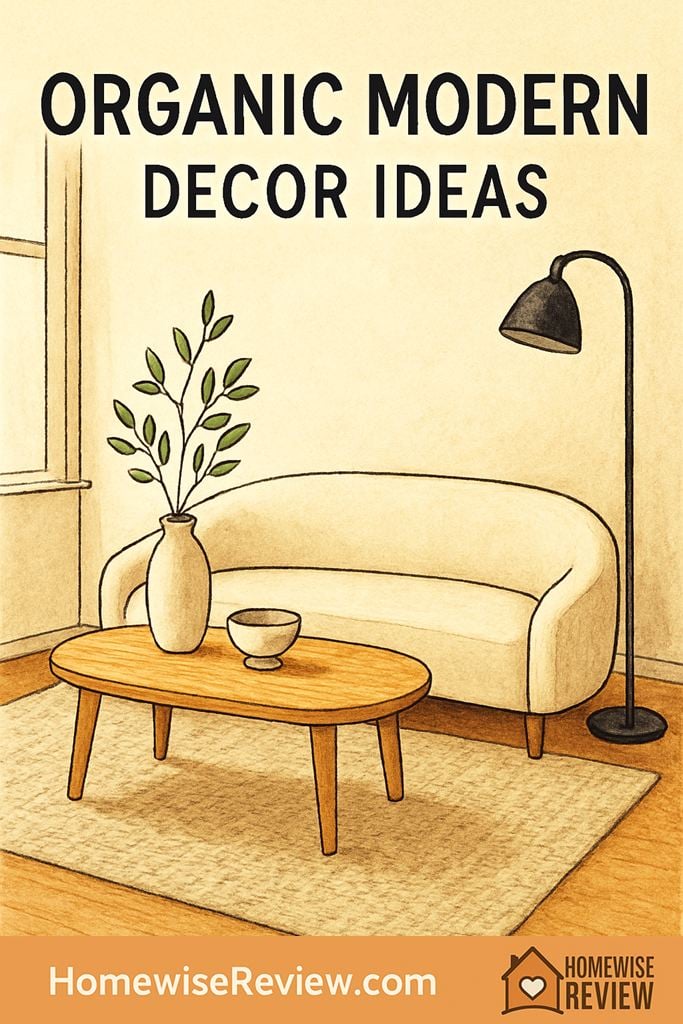
Ever walk into a room and feel like it is both pretty and somehow unfinished? I tried to force an organic modern look with a cart full of little “natural” accents, and my living room ended up reading cluttered and flat instead of calm. The fix was backing up and choosing one clean-lined anchor piece first, then layering in just a couple of honest textures like wood grain and linen so the warmth felt intentional, not random.
Organic modern decor is the sweet spot between crisp, contemporary lines and the warmth of nature. The challenge is getting that balance without a room feeling sterile, beige, or cluttered with random “earthy” decor.
This guide breaks the style into clear building blocks and gives you room-by-room organic modern decor ideas, plus a simple checklist to pull it together on a real-life budget.
What “Organic Modern” Means (and Why It Works)
Organic modern style pairs modern design principles (clean lines, negative space, simple silhouettes) with organic elements (wood grain, stone, linen, clay, woven textures). The result feels intentional and calm, not themed or trendy.
Organic modern in one sentence
- Modern structure (streamlined furniture, tidy visual lines) + organic warmth (natural materials, texture, softly curved shapes).
How it differs from similar styles
| Style | What it prioritizes | Typical materials | Overall feel |
|---|---|---|---|
| Organic modern | Warm minimalism, texture, natural contrast | Oak, walnut, travertine, linen, boucle, clay, jute | Calm, elevated, cozy but uncluttered |
| Scandinavian | Light, airy function, bright neutrals | Light woods, wool, simple textiles | Fresh, bright, practical |
| Contemporary modern | Sleek shapes, fewer textures, crisp contrast | Metal, glass, lacquer, smooth upholstery | Polished, sometimes cool |
The Core Elements of Organic Modern Style
If you want organic modern decor ideas that actually look cohesive, anchor your decisions to a few consistent rules. The goal is not “all neutral everything,” it is intentional contrast and layered texture.
1) A soft, earthy color palette with controlled contrast
- Base neutrals: warm white, cream, oatmeal, greige, soft taupe.
- Mid-tones: sand, camel, warm wood tones, clay, muted olive.
- Contrast (use sparingly): matte black, deep charcoal, dark walnut, espresso.
Quick rule: pick 1 dominant neutral, 1 supporting neutral, and 1 contrast color. Repeat them throughout the room so it feels designed, not random.
2) Natural materials you can see and feel
- Wood: visible grain is your friend. Mix tones, but keep undertones consistent (mostly warm or mostly neutral).
- Stone and ceramic: travertine, limestone, marble-look surfaces, handmade pottery.
- Textiles: linen, cotton, wool blends, boucle, woven baskets, jute or sisal.
In organic modern spaces, texture does the work that pattern does in other styles. That keeps rooms restful while still feeling layered.
3) Clean silhouettes plus a few curves
- Use straight lines for your “big shapes” (sofa, rug, media console).
- Add curves in 1 to 3 places (round coffee table, arched mirror, curved chair) to keep it soft.
A common mistake is adding curves everywhere. One or two sculptural curves look intentional. Too many starts feeling like a showroom trend cycle.
4) Negative space that makes the room feel expensive
- Leave at least 20 to 30% of surfaces clear (side tables, console tops, counters).
- Avoid tiny decor clusters in every corner. Choose fewer pieces with better scale.
Organic Modern Decor Ideas, Room by Room
Start with the spaces you use most. Organic modern looks best when you build from the largest items down: paint, rug, major furniture, then lighting, then accessories.
Living room ideas
- Anchor with a substantial rug: a textured neutral (wool, wool blend, or a washable look-alike) makes everything feel calmer.
- Choose a sofa that is simple, not skinny: clean arms, comfortable depth, and upholstery that reads soft (linen look, performance fabric, boucle if you can maintain it).
- Layer woods: pair a light wood coffee table with a medium wood console, or vice versa. Repeat one tone in frames or bowls so it feels cohesive.
- One oversized art piece: large-scale art or a framed textile gives you impact without lots of little decor.
- Add black in small doses: a floor lamp, picture frame, or hardware for a crisp edge.
Kitchen and dining ideas
- Swap lighting first: warm metal (aged brass) or matte black pendants instantly modernize without renovation.
- Keep counters quiet: corral essentials on a tray (wood or stone) instead of spreading items out.
- Dining chairs with texture: upholstered seats, woven backs, or wood with a curved profile soften hard surfaces.
- Centerpiece rule: one low bowl (wood, ceramic, stone) with seasonal branches or fruit beats multiple small items.
Bedroom ideas
- Go tone-on-tone: layer cream, oat, and warm gray for a hotel-calm effect.
- Choose “quiet” patterns: if you want pattern, use subtle stripes, tiny checks, or textured weaves instead of loud prints.
- Warm lighting matters: use soft white bulbs and add a lamp with a linen shade to reduce the harsh overhead feel.
- One natural statement: a wood bench, a woven pendant, or a clay table lamp gives the room organic character.
Bathroom ideas
- Upgrade textiles: crisp, plush towels and a simple bath mat in a warm neutral read instantly elevated.
- Add one “spa” material: teak stool, stone tray, or a ribbed ceramic canister set.
- Keep bottles consistent: matching dispensers reduce visual noise and make the whole bathroom feel more modern.
Entryway ideas
- Use a closed-storage console: it keeps the first view of your home calm.
- One mirror with presence: arched or oversized rectangular mirrors amplify light and feel modern.
- A basket that matches your palette: it is practical and visually soft. If you have kids, this is the easiest “quick tidy” win.
How to Choose Furniture That Looks Organic Modern (Not Generic)
Organic modern furniture succeeds when it feels substantial, simple, and tactile. If a piece looks flimsy, overly trendy, or too ornate, it will fight the look.
Use this “3-part test” before you buy
- Shape: Is the silhouette clean, with one interesting detail (curve, leg shape, texture), not ten?
- Material: Does it have a natural or natural-looking finish, or at least a matte, soft appearance?
- Scale: Is it big enough to look grounded in the room? Undersized pieces make spaces feel piecemeal.
Best splurge spots vs. easy saves
| Spend more on | Why it is worth it | Save on | How to save without looking cheap |
|---|---|---|---|
| Sofa and main rug | They set the comfort and the visual “base layer” | Side tables and decor | Look for solid wood, matte finishes, and simple shapes |
| Lighting you see every day | Good lighting makes everything feel higher-end | Vases and bowls | Choose fewer, larger items in ceramic or stone-look materials |
| Mattress and bedding basics | Comfort matters, and textiles set the mood | Art frames | Buy matching frames and use oversized mats for a gallery feel |
Textiles: The Fastest Way to Add Organic Warmth
Textiles are where organic modern becomes cozy. If your room feels “nice but cold,” you probably need more texture, not more decor.
Layering formula (simple and reliable)
- Rug: textured neutral or subtle tonal pattern.
- Upholstery: one main fabric (sofa or bed) in a calm neutral.
- Accent textiles: 2 to 3 pillows with different textures (linen, boucle, knit), plus a throw.
- Window treatment: long panels in a linen-look fabric to soften hard edges.
Kid and pet reality check
- Prioritize washable or performance where hands and paws actually land.
- Choose medium tones for rugs if you cannot wash often. Very light rugs look gorgeous, but they show every snack crumb.
- Skip fringe in high-traffic zones. It looks pretty, but it can get worn quickly.
Lighting and Hardware: The “Quiet Luxury” Details
Organic modern rooms often look more expensive because the finishes are consistent and the lighting is layered. You do not need a full renovation to get that effect.
Lighting checklist
- One overhead fixture that suits the room’s scale (not too small).
- Two lamps per main space when possible (table lamp plus floor lamp, or two table lamps).
- Warm bulbs for a relaxed look. Consistent bulb color keeps your home from feeling patchy.
Hardware and metals that work
- Matte black: clean, modern contrast (great for lighting, faucets, frames).
- Aged brass: warmer and softer than shiny gold (great for cabinet pulls).
- Mixed metals: totally fine if you keep it to 2 finishes per room and repeat each finish at least twice.
Styling Without Clutter: Organic Modern Accessories That Matter
Accessories should add texture, height variation, and a touch of personality. If every surface is styled, it stops feeling restful.
Use the “one of each” styling set
- Something tall: branches in a vase, a tall lamp, or oversized art leaning on a console.
- Something sculptural: a ceramic bowl, carved wood object, or a stone bookend.
- Something soft: a woven basket, textile, or a textured throw.
- Something alive: greenery, even if it is a low-maintenance plant.
Greens and florals that look organic modern
- Olive branches, eucalyptus, simple leafy stems, or a single dramatic branch.
- Choose a matte ceramic or stone-look vase. Shiny glass tends to read more contemporary than organic.
A Simple Organic Modern Refresh Plan (One Weekend)
If you are overwhelmed, do not start by buying decor. Start by editing and choosing a palette, then add 2 to 4 high-impact pieces.
Weekend checklist
- Step 1: Edit surfaces. Clear coffee table, counters, and entry surfaces. Put away anything you do not use weekly.
- Step 2: Pick your palette. Choose one warm neutral base, one wood tone direction, and one contrast finish (often matte black).
- Step 3: Add one large texture. Rug, long linen-look curtains, or a substantial throw blanket.
- Step 4: Add one sculptural piece. Round coffee table, arched mirror, or a ceramic table lamp.
- Step 5: Finish with one “life” element. Greenery or a simple branch arrangement.
Decision shortcut: if you are stuck in the store
- If it is glossy, tiny, or overly detailed, it usually will not read organic modern.
- If it is matte, textured, and slightly oversized, it usually will.
Common Organic Modern Mistakes (and Easy Fixes)
- Mistake: Everything is beige.
Fix: Add contrast with black accents, dark wood, or a charcoal textile. - Mistake: Too many small decor items.
Fix: Remove half and replace with one larger bowl, one larger vase, or one oversized frame. - Mistake: Cold lighting.
Fix: Use warm bulbs and add at least one lamp in the room. - Mistake: Mixed undertones.
Fix: Decide if you are leaning warm (cream, camel, walnut) or neutral (soft white, oak, stone) and edit out the pieces that fight it. - Mistake: “Organic” without structure.
Fix: Bring back modern lines with a clean console, simple sofa silhouette, or squared-off rug shape.
Worth Knowing Before You Buy
Most people get organic modern wrong by buying a bunch of small "natural" decor first. That fills the room with scattered wood, baskets, and beige texture, but still leaves it feeling flat. The fix is simple: pick one clean-lined anchor piece first, then add only two visible textures, like wood grain and linen, so the room reads calm instead of cluttered.
Bottom Line
Organic modern decor works when you keep the foundation simple and add warmth through texture, natural materials, and a few sculptural shapes. Focus on fewer, better-scaled pieces, repeat a tight palette, and let negative space do part of the decorating for you.
If you want the look to feel livable, prioritize washable and durable textiles in the places your household actually uses most. Calm can be practical.
See also
If you want a broader framework for mixing clean lines with warmth, start with Modern decor ideas: a practical guide and then borrow light, airy layering tips from Scandinavian decor ideas.
- Washable rugs, throws, and linens that still look pulled together
- Home scent diffusers for a calm, cozy all-day feel
- Clean-burning candles that add cozy light and great scent
Frequently Asked Questions ▾
What colors are best for organic modern decor?
Start with warm whites and soft neutrals like cream, oatmeal, greige, and taupe. Add earthy mid-tones (sand, camel, clay, muted olive) and then use a small amount of contrast, often matte black or dark wood, to keep the room from looking flat.
Can organic modern work in a small apartment?
Yes. In small spaces, organic modern is especially effective because it relies on negative space and a limited palette. Choose fewer pieces with better scale (one substantial rug, one simple sofa, one statement light), and keep surfaces clear so the room feels bigger.
How do I make organic modern kid-friendly?
Use performance fabrics, medium-tone rugs that do not show every mark, and baskets with lids for quick pickups. Keep styling minimal on low tables and choose larger, heavier decor pieces that are harder to knock over than lots of small items.
What affordable materials still look organic modern?
Look for matte ceramic, stone-look composite, linen-look curtains, and wood veneers with visible grain (not high-gloss finishes). Woven textures like jute, seagrass, and textured cotton can deliver the organic feel without premium price tags.
What is the difference between organic modern and modern farmhouse?
Organic modern is cleaner and more minimal, with fewer rustic cues and less signage or distressed decor. Modern farmhouse leans more casual and vintage-inspired, often with higher contrast and more decorative trim, while organic modern relies on texture, sculptural shapes, and calm consistency.
As an Amazon Associate, we earn from qualifying purchases made through links on our site.