

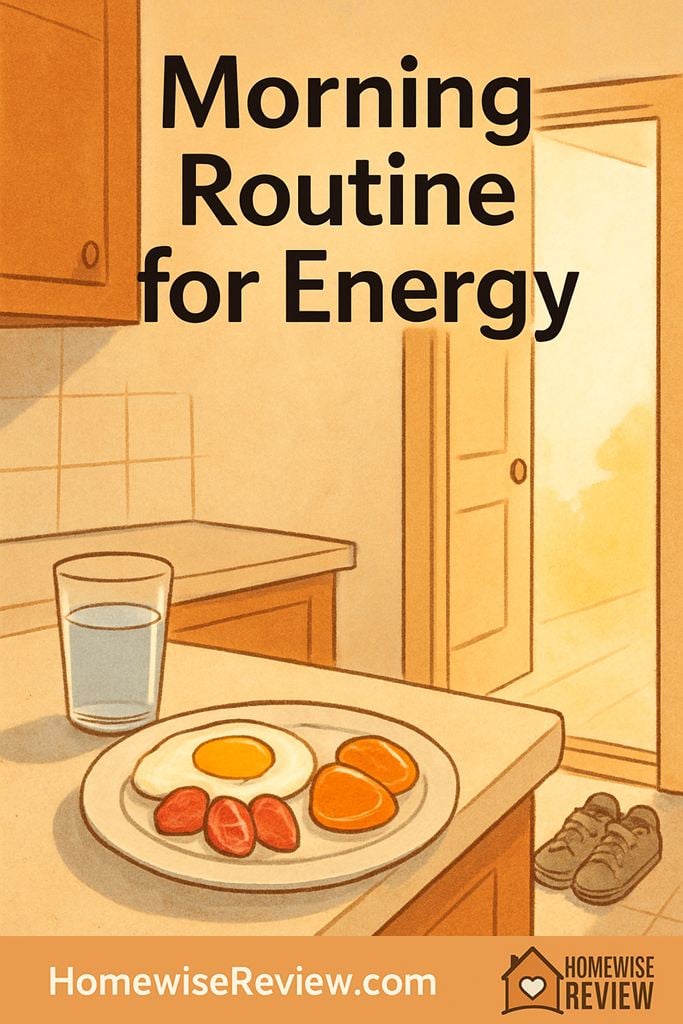
I stopped trying to “power through” my mornings and started treating energy like a set of cues I could trigger on autopilot. Now I open the blinds, drink a big glass of water, do five minutes of mobility, then eat something with protein before I even look at my phone. The difference is not that I feel wired, it is that I feel steady and I do not hit that mid-morning slump that used to send me back for a second coffee.
If you wake up tired, hit caffeine hard, and still crash by mid-morning, your routine is probably missing a few key “energy cues.” The good news is you do not need a perfect two-hour ritual. You need a simple sequence that tells your body it is time to wake up and stay steady.
Why your mornings feel low-energy (and what actually helps)
Morning energy is mostly biology plus consistency. Your brain and body respond to cues like light exposure, movement, hydration, and stable blood sugar. When those cues are missing (or late), you can feel foggy even after a full night in bed.
Start by spotting your biggest energy leaks
- Dim mornings: staying in low light keeps your “wake up” hormones sluggish.
- Dehydration: you lose water overnight, and even mild dehydration can feel like fatigue.
- Caffeine before basics: coffee on an empty tank can spike then crash.
- Breakfast that is mostly carbs: quick energy, then a dip.
- Immediate phone stress: your mind starts sprinting before your body is online.
The 5 building blocks of a morning routine for energy
If you only remember one thing, make it this: energizing mornings are built, not wished for. These five building blocks work because they align with how your body naturally wakes up.
| Building block | Why it boosts energy | Quickest version | Time |
|---|---|---|---|
| Light | Signals your circadian clock to increase alertness | Open blinds, step outside | 2 to 5 min |
| Hydration | Supports circulation, focus, and digestion after sleep | 12 to 16 oz water | 1 min |
| Movement | Increases blood flow and reduces morning stiffness | Brisk walk or mobility circuit | 3 to 15 min |
| Steady fuel | Helps prevent blood sugar spikes and mid-morning crashes | Protein plus fiber | 5 to 15 min |
| First focus | Calms stress response so you do not burn energy on overwhelm | 3-breath reset plus top-3 list | 2 to 5 min |
1) Get bright light early (even if it is cloudy)
Morning light is one of the strongest “on switches” you have. Try to get light exposure within the first hour of waking, ideally earlier. If you work from home, this matters even more because indoor lighting is usually too dim to be a strong cue.
- Open blinds immediately.
- Stand by a bright window while you drink water.
- Step outside for a quick lap around the yard or down the sidewalk.
2) Hydrate before coffee (or at least alongside it)
A simple water habit can change how awake you feel. Aim for 12 to 16 ounces soon after waking. If you wake up with headaches, intense grogginess, or you sweat at night, you may do better with a pinch of salt in water or a balanced electrolyte, but start simple and see what changes.
- Easy rule: drink water before your second sip of coffee.
- If you hate plain water: add lemon, use herbal tea, or drink sparkling water.
3) Move in a way that matches your energy level
You do not need a full workout to feel more awake. You need enough movement to increase circulation and gently raise your heart rate. The best choice is the one you will do most days.
- Low-energy mornings: 5 minutes of mobility (neck, shoulders, hips) plus an easy walk.
- Average mornings: 8 to 12 minutes of brisk walking, stairs, or a short bodyweight circuit.
- High-energy mornings: strength training or intervals, followed by a real breakfast.
4) Eat for stable energy: protein plus fiber, not sugar plus hope
A carb-only breakfast can feel great for 30 minutes, then leave you searching for snacks. Pair protein with fiber to smooth your energy curve. If you are not hungry right away, start with something small and protein-forward.
- Fast options: Greek yogurt plus berries; cottage cheese plus fruit; protein smoothie with spinach and chia.
- Make-ahead: egg muffins; overnight oats with added protein; chia pudding.
- Warm and filling: eggs plus sautéed greens; oatmeal with nut butter and protein; leftover dinner protein with toast.
5) Choose a “first focus” that lowers stress, not raises it
When your first minutes are reactive, your nervous system acts like the day is an emergency. A quick, intentional reset can keep you from burning energy on anxiety. Keep it short and consistent.
- Take 3 slow breaths: inhale 4 seconds, exhale 6 seconds.
- Write your top 3 priorities for the day on paper.
- Delay email and social feeds for 20 to 30 minutes if possible.
Choose a routine that fits your real life
The “best” morning routine is the one you can repeat on a regular Tuesday, not just on a perfect weekend. Pick a time length, then plug in the five building blocks at the level you can sustain.
| Routine style | Total time | Best for | What it includes |
|---|---|---|---|
| Minimal and consistent | 8 to 12 minutes | Busy mornings, low bandwidth, new habits | Light, water, quick movement, tiny plan |
| Steady energy routine | 20 to 30 minutes | Most people, most seasons | Light, water, 10-minute movement, protein-forward breakfast, plan |
| Workout-first routine | 35 to 60 minutes | Training goals, stress relief, higher energy needs | Light, water, strength or cardio, recovery breakfast, plan |
Step-by-step morning routines (pick one)
Use these as templates, not rules. The goal is to hit the building blocks with as little friction as possible.
The 10-minute “Survival but steady” routine
- Minute 0 to 2: Open blinds, stand in bright light, drink 12 ounces of water.
- Minute 2 to 6: Quick movement: 10 squats, 10 wall push-ups, 30-second plank, repeat once.
- Minute 6 to 8: 3 slow breaths, then write 3 priorities (or say them out loud).
- Minute 8 to 10: Coffee or tea plus a small protein bite (string cheese, yogurt, boiled egg, or a ready-made shake).
The 25-minute “Steady energy” routine
- Minute 0 to 5: Light plus water, then a quick rinse of your face to feel awake.
- Minute 5 to 15: Walk outside or do a 10-minute mobility and light cardio combo.
- Minute 15 to 23: Protein-forward breakfast (aim for 20 to 30 grams protein if that works for your body and goals).
- Minute 23 to 25: Review your day: top 3 tasks, one small “must do,” and one thing you will say no to.
The 45-minute “Workout-first” routine
- Minute 0 to 5: Light plus water. If you are sensitive to caffeine, wait until after your warm-up.
- Minute 5 to 35: Strength training or a structured workout (even a simple plan beats random intensity).
- Minute 35 to 45: Recovery breakfast: protein plus carbs plus a little fat (example: eggs and toast plus fruit).
If you are working out early, your breakfast matters more, not less. Under-fueling is a common reason people feel “wired but tired” later in the morning.
Troubleshooting: why you still feel tired (and what to adjust)
If your routine is in place but your energy is not improving after 1 to 2 weeks, use this quick troubleshooting checklist. Change one variable at a time so you can actually tell what helped.
Caffeine: timing and dosing
- If you crash mid-morning: reduce the size of your first coffee or pair it with food.
- If you feel jittery: delay caffeine 30 to 60 minutes after waking, or switch to tea.
- If you need more and more: try a 3-day caffeine reset or cap intake earlier in the day.
Sleep debt and inconsistent wake times
- If weekends wreck weekdays: keep wake time within 60 to 90 minutes of your normal schedule.
- If you wake often at night: focus on evening wind-down and bedroom cues, not just a morning fix.
Blood sugar swings
- If you get hungry fast after breakfast: add more protein or fiber.
- If you feel shaky or irritable: avoid a sugary coffee drink on an empty stomach.
- If you do not like breakfast: start with a small protein option, then build from there.
Movement mismatch
- If exercise drains you all day: lower intensity, shorten it, or move workouts later.
- If you feel stiff and foggy: add 5 to 10 minutes of easy walking and mobility.
Mental overload first thing
- If your mind races: keep your phone out of reach for the first 15 minutes.
- If you feel behind instantly: write a “parking lot” list for worries and handle only the next right step.
Make it stick: a simple night-before setup
Consistency is not about motivation. It is about removing morning decisions so you can run your routine on autopilot.
Set up your environment in 5 minutes
- Water ready: fill a glass or bottle and place it where you will see it.
- Breakfast plan: choose one of your “default” breakfasts and prep what you can (fruit washed, eggs boiled, oats portioned).
- Movement cue: set shoes and a light layer by the door or next to your bed.
- Phone boundary: charge your phone away from your bed if possible, or at least silence non-essential notifications.
If you have kids, make the first 15 minutes calmer
- Put out breakfast basics the night before (bowls, spoons, simple options).
- Use a predictable order: water, quick movement, then breakfast.
- Keep one quiet “morning basket” for early risers (books, coloring, puzzles), so you can start the day without chaos.
Bottom Line
The most reliable morning routine for energy is built on light, hydration, movement, steady fuel, and a calm first focus. Start with the 10-minute version and repeat it until it feels automatic, then level up one piece at a time. Energy follows consistent cues more than perfect effort.
See also
If your mornings never feel refreshing, start with your nighttime foundation by tightening up your sleep hygiene routine.
- Tiny lifestyle upgrades under 5 minutes that make mornings easier
- Strength training for women over 40 (a smart way to build more day-long energy)
- Beauty and body care for runners and walkers if morning movement leaves you sweaty or chafed
- Diet tips for women over 40 for steadier energy and fewer crashes
Frequently Asked Questions ▾
How long should a morning routine for energy be?
It should be as long as you can repeat most days. For many people, 10 to 30 minutes is plenty. Start small, then expand if you want more movement or a sit-down breakfast.
Should I drink coffee right after waking?
If coffee works for you, you do not have to quit. Many people feel better drinking water first and waiting 30 to 60 minutes before caffeine, especially if they are prone to jitters or crashes. The simplest fix is pairing coffee with protein and fiber instead of having it on an empty stomach.
What is the best breakfast for steady energy?
Aim for protein plus fiber, and add carbs if you are active. Examples: Greek yogurt with berries and chia, eggs with whole-grain toast and fruit, or a smoothie with protein, spinach, and nut butter. If you do not like breakfast, start with something small and protein-forward and build from there.
Is morning exercise necessary for energy?
No, but some movement helps most people feel more alert. A 5 to 10 minute brisk walk or mobility routine can be enough to improve focus without requiring a full workout. If morning workouts leave you exhausted all day, lower intensity or move workouts later.
How soon will I feel a difference?
Many people notice improved alertness within a few days of adding light exposure, water, and a short walk. More stable energy and fewer crashes usually show up after 1 to 2 weeks of consistent sleep and breakfast choices. If nothing changes after two weeks, troubleshoot caffeine timing, sleep consistency, and breakfast balance.
As an Amazon Associate, we earn from qualifying purchases made through links on our site.