

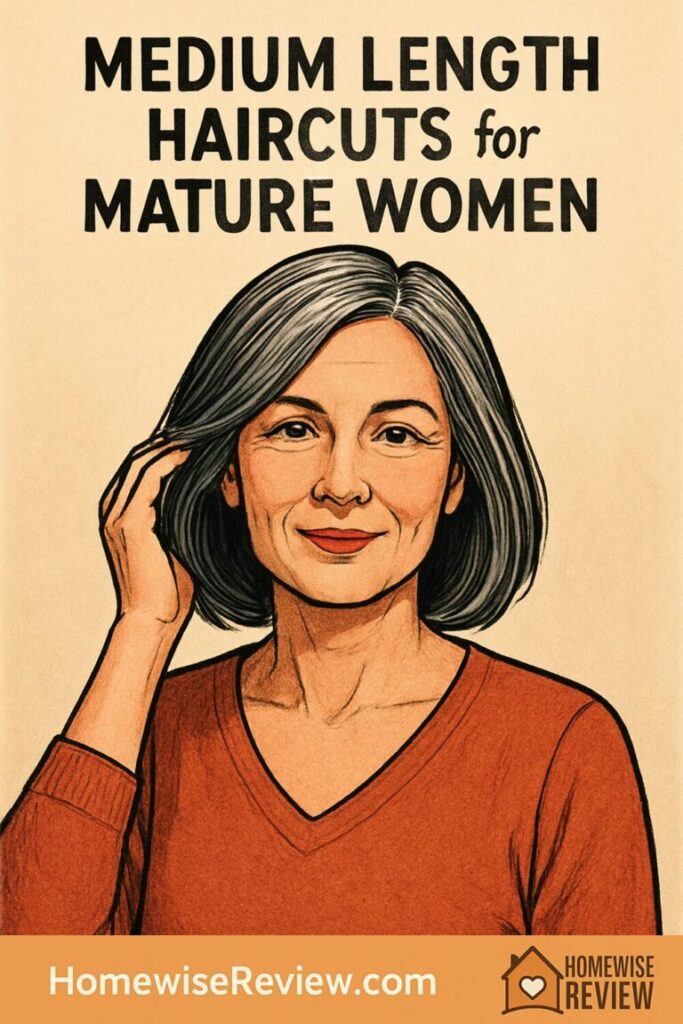
Medium length hair can either make you look fresh and polished or drag your features down as hair changes with age. Learn how to choose a cut that flatters your face, works with thinning or graying strands, and fits your real life.
As hair changes with age, it can feel harder to find a cut that looks modern without demanding an hour of styling every morning. Medium length haircuts are a sweet spot for many mature women, offering movement and softness without the heaviness of long hair or the upkeep of a very short crop.
The key is choosing a medium cut that works with your face shape, hair texture, and lifestyle. This guide walks through what to consider, shows specific haircut ideas, and offers styling tips so your shoulder length hair feels intentional and flattering, not like an in between stage.
Why medium length works so well for mature women
Medium length generally means hair that sits between the collarbone and a few inches below the shoulders. That range gives enough length for soft movement and updos, but not so much that hair starts to look dragged down or straggly at the ends.
For mature women, this length can soften facial features and neck lines without hiding them. Layers and shaping around the face help draw attention to the eyes and cheekbones, while removing bulk from heavy areas like the back of the head or lower length that can look dated.
Medium cuts also handle common age related changes better. When hair becomes finer or more fragile, it is easier to create the illusion of fullness through layered, shoulder length shapes than with very long hair, which can show every thin spot. At the same time, medium cuts are far less drastic than a pixie, which not everyone is ready for.
How to choose a medium length haircut that suits you
Before you show your stylist a photo and say “Cut it like this,” take a few minutes to think through your own hair and lifestyle. A medium cut that looks great in a picture may not fit your texture, thickness, or styling habits.
Step 1: Know your hair texture and density
Start by assessing your natural hair. Is it straight, wavy, curly, or coily? Is it fine and silky, medium, or coarse? Has it thinned with age, or do you still have a lot of density?
Fine or thinning hair usually looks best with soft layers near the top and around the face, and a slightly blunt perimeter at the bottom to keep the ends looking full. Avoid very heavy, chunky layers that can make ends look wispy. Thicker or coarser hair can handle more layering through the mid lengths to remove bulk and help it move instead of forming a helmet shape.
Step 2: Consider your face shape and features
The right medium length cut should highlight what you like most about your face. If you love your eyes, ask for soft, face framing pieces that fall at or just below the cheekbones. If you want to soften a strong jaw or sharper lines, slightly longer layers that skim the jaw and neck can be very flattering.
Round face shapes often benefit from a bit of height at the crown and pieces that hit below the chin, not right at it. Longer face shapes usually look balanced with some width at the sides and minimal height on top. If you prefer to disguise forehead lines, consider light bangs or long curtain fringe that can be parted in the middle or swept to the side.
Step 3: Be honest about styling time and skills
A beautiful cut that takes 45 minutes to style is not a realistic choice for most busy adults. Think about how much time you truly want to spend on your hair each day and what tools you are comfortable using.
If you are happy to blow dry with a round brush or use a curling iron a few days per week, you can choose a cut that relies more on polished styling. If you prefer to wash and air dry, you want a shape that works with your natural texture, with layers placed to encourage it instead of fighting against it.
Step 4: Talk through maintenance and grow out
Ask your stylist how often the cut will need trims to keep its shape. Many medium cuts for mature women look best when refreshed every 6 to 8 weeks, especially if there are bangs or a lot of face framing pieces.
Also talk about how the cut will grow out. A good medium haircut should still look nice a few weeks past your appointment, gradually becoming slightly longer and softer rather than developing harsh corners or strange flips.
Flattering medium length haircut ideas for mature women
Once you understand your hair, face, and routine, it becomes easier to pick specific haircut styles that will work for you. Here are some of the most reliable medium length options for mature women, with notes on who they suit best and what to ask for at the salon.
1. The soft layered long bob (lob)
This cut typically hits right at or slightly below the collarbone, with long, subtle layers and gentle shaping around the face. It is ideal if you like a clean, polished look that can still be tucked behind the ears or pulled into a low ponytail.
The lob flatters most face shapes and works especially well for straight to wavy hair. Ask your stylist for a collarbone skimming cut with long layers that start below the cheekbones, and soft, feathery ends instead of a blunt, heavy line. If your hair is fine, emphasize that you want fullness at the ends, not too much thinning.
2. Shoulder length cut with face framing layers
If you want movement without a lot of layers in the back, a shoulder length style with most of the layering around the face can be a good choice. This keeps the bulk of your hair looking full while softening your features in front.
Ask for a one length or slightly layered cut that hits near the shoulders, with shorter pieces around the face that fall between cheekbone and jaw level. This style is easy to blow dry with a round brush or air dry with a smoothing cream if your hair has some natural wave.
3. Medium shag with curtain bangs
A modern shag is a smart option if your hair is fine or has a soft wave, and you want more texture and height. Layers are cut throughout the crown and mid lengths to create volume and movement, balanced by wispy, face framing bangs that part in the middle or off to the side.
This cut can help disguise thinning at the crown because the layered pieces create intentional fullness. Ask your stylist for a shoulder to collarbone length shag with lots of texture through the top, piecey ends, and long curtain bangs that blend into the sides. Style it with a light mousse or texture cream so it looks lived in, not messy.
4. Blunt collarbone cut for sleek hair
If your hair is naturally straight and you like a sharp, simple look, a blunt collarbone cut can feel sophisticated and very modern. The ends are cut mostly one length, which makes hair appear thicker, with minimal interior layering.
This option works best if you are comfortable using a blow dryer or flat iron to keep the shape smooth. Ask for a straight, collarbone length line with barely there internal layers only to prevent the hair from flipping out. You can add very subtle, long face framing to avoid a severe look.
5. Wavy mid length with a side part
For naturally wavy hair or anyone who likes soft curls, a mid length cut with layers that start below the chin can be extremely flattering. A slightly off center or side part helps create lift at the front and can break up any thinning at the hairline.
Ask your stylist for a shoulder grazing cut with long layers through the bottom half and gentle shaping around the face. The goal is to enhance your natural wave pattern, not to create tight ringlets. With a bit of curl cream or light gel, this style can often be air dried for a relaxed, effortless look.
6. Medium cut for natural curls or coils
If you wear your curls or coils naturally, medium length can help you get both definition and manageable volume. Too short and the hair may spring up higher than you like, too long and curls can stretch out or feel heavy.
Look for a stylist experienced with curly or textured cuts and ask for layering that follows your curl pattern. Many curly cuts are done on dry hair so the stylist can see how each curl lives. The layers should encourage your hair to form spirals or coils instead of a triangle shape with most of the volume at the bottom.
Working with gray or colored hair at medium length
Hair color and gray growth patterns can completely change how a medium cut looks. The goal is to make the color and length feel cohesive and intentional, whether you are embracing gray or still coloring your hair.
Enhancing natural gray
If you have mostly gray or silver hair, medium length cuts with movement and light layering tend to look soft and elegant. Harsh, blunt lines can sometimes make gray hair appear more wiry or coarse than it is.
Consider subtle face framing layers and gentle shaping at the ends so your gray catches the light and has dimension. A smooth finish or loose wave also helps gray look shiny and healthy instead of matte or dull.
Softening solid color or highlights
For women who color their hair, very solid, dark color at medium length can sometimes feel heavy next to mature skin tones. Adding a few fine highlights or lowlights around the face can bring back softness and depth without committing to a high maintenance color routine.
Ask your colorist for delicate, blended pieces rather than chunky streaks. Combined with a layered medium cut, those subtle shifts in tone keep the overall look youthful and dynamic.
Styling tips to keep medium hair modern and low fuss
The right styling habits can make your haircut look like you just left the salon, even on busy mornings. You do not need a drawer full of tools, just a few targeted techniques.
A quick everyday routine
For most medium cuts, a simple routine works well. After washing, gently blot water from your hair with a towel and apply a lightweight leave in conditioner or smoothing cream to the mid lengths and ends.
If you blow dry, focus first on the roots around your part and the front pieces, since they set the tone for the whole style. Use a round brush or paddle brush to direct hair away from the face and create a bit of volume. Let the back and ends air dry the rest of the way if you prefer a softer look.
Heat styling without excess damage
Medium length hair often looks its best with a bit of polish from a blow dryer or curling tool, but heat can be more damaging on aging hair that is already drier or finer. Limit high heat and always protect your hair before styling.
Use your dryer on a medium heat setting and keep curling irons or flat irons set to the lowest temperature that will hold your style. Rotate in heat free styling days, such as setting damp hair in large Velcro rollers or braids to create gentle waves.
Volume tricks for fine or thinning hair
If your main concern is flatness at the crown or part, use products and techniques that specifically target the roots. Apply a small amount of volumizing spray or mousse at the scalp and blow dry with your head upside down or lifting sections up and away from the head.
When styling, avoid weighing down the roots with heavy creams or oils. Concentrate richer products on the bottom half of your hair and ends, leaving the top lighter so it can lift.
Managing frizz and dryness
As hair ages, it often becomes more porous and prone to frizz, especially in humid or dry climates. Medium length can highlight frizzy ends if you do not add enough moisture and smoothing.
Use a hydrating conditioner regularly and consider a weekly mask if your hair feels rough or brittle. On dry hair, a pea sized amount of light serum or cream smoothed just over the surface and ends will reduce frizz without making the hair look coated or greasy.
Getting the most from your salon visit
A clear conversation with your stylist is one of the best ways to guarantee a flattering medium length haircut. Showing up with inspiration and a few specific requests can make a big difference.
Bring two or three photos of cuts you like that show length and layering clearly, and point out what you like in each one. Then describe your hair texture and how you usually wear it, including any challenges such as thinning at the crown, frizz, or sensitive scalp.
Tell your stylist how much time you want to spend styling, and whether you typically use heat tools. Ask questions like: How often will this need trimming? Can I air dry it sometimes? How will this look as it grows out? When both you and the stylist are on the same page, your medium length haircut is far more likely to match your real life and your mirror.
See also
For maintaining your medium length style, check out our recommendations for the best hair straighteners that glide and protect. You might also find the best styling tools for people who are bad at hair helpful to simplify your routine. – Discover products that add body with our guide to volumizing products for fine hair. – Improve manageability with the top conditioners for dry hair that soften. – Choose the best brush for straight hair to keep your style sleek and polished.FAQ
What length counts as a medium haircut for mature women?
For most stylists, medium length means hair that falls somewhere between the top of the shoulders and a few inches below the collarbone. Shorter than that is usually considered a bob, and longer starts to behave more like long hair. Within that medium range, your stylist can fine tune the exact length to suit your height, neck length, and how much you want to be able to tie it back.
Are bangs a good idea with medium length hair after 50?
Bangs can be very flattering for mature women because they soften forehead lines and draw attention to the eyes. Light, wispy bangs or long curtain bangs that blend into the sides are usually easier to style and grow out than heavy, blunt fringe. If you are unsure, start with longer, face framing pieces that can be worn as curtain bangs or swept back, then gradually go shorter if you like the look.
How often should I trim a medium length haircut to keep it looking fresh?
Most medium cuts look their best with trims every 6 to 8 weeks, especially if you have layers or bangs that can lose their shape as they grow. If your hair is very healthy and the cut is a simple, one length style, you might be able to stretch to 10 weeks. Watch for signs like frayed ends, flipped out sections, or your style taking much longer to fix in the morning, which all indicate it is time for a refresh.
Can medium length hair work if my hair is thinning on top?
Yes, a carefully cut medium style can actually make thinning less obvious than longer hair. Ask your stylist for soft layers at the crown and around the face to create lift and movement, and keep the bottom fairly full rather than overly thinned out. A subtle side part, light fringe, and targeted volumizing products at the roots will also help camouflage thinner areas while keeping the overall look natural.
How can I grow out a short haircut to a medium length without going through an awkward stage?
The easiest way to grow out a short cut is to schedule “shape up” trims every 8 to 10 weeks where your stylist only cleans up the back and sides, letting the top and front catch up. During the transition, ask for soft layers that help everything blend and consider accessories like headbands or clips to manage in between lengths. Once your hair reaches your jaw and then your shoulders, you can shift into a more intentional medium length style with proper layering and face framing pieces.
As an Amazon Associate, we earn from qualifying purchases made through links on our site.