

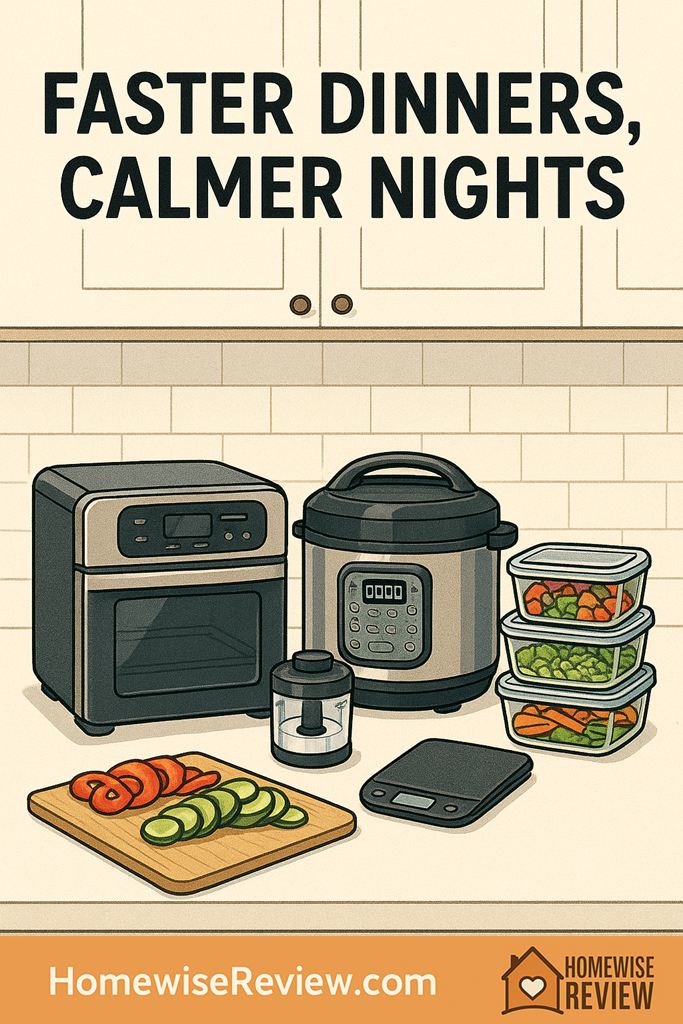
When dinner feels like a second job, the right gadget is the one that cuts hands-on minutes, not the one with the most buttons. The data shows where kitchen time really goes, and which 2023-era gadgets are built to take it back.
- Time-use data shows Americans spend roughly 30 to 40 minutes per day on food preparation and cleanup, with women averaging more time than men on this category.
- USDA spending data indicates food away from home represents about 55% of U.S. food expenditures, increasing the value of at-home systems that make weeknight meals easier to execute.
- EPA materials data shows food is about 24% of landfilled municipal solid waste by weight, linking meal-prep storage and portioning tools to waste reduction, not just convenience.
- Google Trends indicates “air fryer” reaches a recurring peak index of 100 during holiday-season surges, a signal of sustained consumer demand for faster, lower-attention countertop cooking.
Meal prep is not just about recipes. It is a workflow problem, and the numbers make that clear. National time-use data shows that food prep and cleanup take a meaningful slice of the day, and women still carry a larger share of that time on average.
At the same time, U.S. food spending has tilted heavily toward eating away from home, which raises the stakes: the easier it is to make a real meal at home, the more likely busy households are to do it. The most “revolutionary” kitchen gadgets of 2023 are not necessarily brand-new inventions. They are the ones that reliably reduce hands-on steps, decision fatigue, and cleanup friction.
The data behind the meal-prep squeeze
Two data signals explain why certain gadget categories surged in 2023. First, time: food preparation is not a single block of effort. It is a chain of small tasks, and each one is easy to start and annoying to finish. National time-use tables also separate “food prep and cleanup” from the rest of the day, which is useful because gadgets often help more with the finishing steps than the cooking itself.
Second, spending: when a household is leaning on takeout and restaurant meals, “competing” means lowering the activation energy of cooking. A gadget that makes Tuesday dinner easier can change habits more than a gadget that makes Saturday cooking more impressive.
Methodology: how this 2023 gadget report was built
Methodology source: Kitchen Prep Trend Scan 2023 (ATUS time-use tables, USDA food expenditure data, and Google Trends 5-year search interest).
This report combines three lenses: (1) U.S. time-use data for food prep and cleanup, (2) the split between food-at-home and food-away-from-home spending, and (3) search interest patterns for breakout countertop cooking and prep tools. Then, the “revolutionary” gadget set was defined as categories that consistently reduce hands-on minutes or reduce the number of separate tools and steps needed to finish a meal.
Where minute-savings are discussed below, they are presented as modeled ranges based on a standard weeknight scenario: one protein, one vegetable, one starch, plus leftovers packed for at least one lunch. Real results vary by cooking style, household size, and how often the gadget is used.
Finding 1: Hands-off heat beat “faster cooking” in 2023
The biggest shift is not raw speed. It is attention. The gadgets that change meal prep for busy women tend to convert active cooking into “set it and walk away” time, which can be traded for homework help, a load of laundry, or simply five minutes of quiet.
- Multi-cookers and pressure cookers: These reduce babysitting. The win is not just faster beans or tougher cuts. The win is fewer decisions and fewer pans.
- Air fryers and air fryer toaster ovens: Search interest has stayed elevated for years, and the practical reason is simple: crisp results with minimal preheating and easy batch cooking for sides.
- Smart thermometers and probe-guided cooking: Temperature is where many meals fail. These tools reduce the “is it done yet?” loop that keeps you hovering by the stove.
- Portable induction burners: Induction is not new, but it has become a popular add-on because it brings fast, consistent heat and can be easier to wipe clean than gas grates.
Modeled time impact: For a typical weeknight dinner, hands-off heat tools can shave 10 to 25 minutes of active attention per meal when they replace stovetop monitoring and reduce pan count. The most consistent savings come from combining “one main appliance” cooking with an easy side, rather than trying to cook everything in the gadget.
What to watch for: Capacity and cleanup design matter more than extra modes. A slightly larger basket, a truly dishwasher-safe insert, and an intuitive timer often beat a long list of presets.
Finding 2: The quiet revolution is in cutting, not cooking
Chopping is the bottleneck people underestimate because it is spread out across the meal. A few minutes of onions, a few minutes of garlic, a few minutes of vegetables, and suddenly you have burned a half hour before heat even enters the picture. In 2023, the strongest “busy weeknight” gadget wins clustered around repeatable knife work.
- Compact food choppers and mini processors: Best for onions, mirepoix, slaws, and quick salsas. They shine when you use them daily, not only for special recipes.
- Mandolines and batch slicers: For households that eat a lot of salads, stir-fries, or sheet-pan vegetables, uniform slicing speeds cooking and improves texture.
- Salad spinners and wash-dry systems: Not glamorous, but they remove the “wet greens problem” that leads to skipped veggies and more takeout.
- Digital kitchen scales: The underappreciated prep tool. Scales reduce measuring clutter and make portioning leftovers and freezer packs faster and more consistent.
Modeled time impact: In a meal that includes two vegetables, a cutting gadget can save 8 to 20 minutes depending on skill level and volume. The biggest payback happens when the tool also improves storage, like chopped vegetables going straight into stackable containers.
What to watch for: If setup and cleaning take longer than the chopping itself, the gadget will be abandoned. Favor tools with two or three parts, not twelve.
Finding 3: Storage gadgets are really food-waste gadgets
One reason meal prep fails is not cooking. It is the moment you open the fridge and realize your ingredients are limp, leaky, or unidentifiable. The 2023 wave of meal-prep-friendly storage tools focuses on extending ingredient usability and making leftovers frictionless to pack.
- Vacuum sealers: The most powerful shift for freezer-based meal prep. They reduce freezer burn and make bulk buying and batch cooking more realistic.
- Souper cubes, silicone freezer trays, and portion molds: These turn soups, rice, beans, and sauces into stackable “meal components” instead of mystery containers.
- Produce keepers and humidity-control bins: Not magic, but helpful for households where shopping happens once a week and produce has to last.
- Leakproof, stackable lunch containers: A busy-woman game changer because it supports the second meal: tomorrow’s lunch.
Why the data points here: EPA materials data consistently shows food as a major category of landfill waste by weight. When a storage tool helps you use what you bought, it is not just “organized.” It can lower grocery spend and reduce the number of emergency takeout nights.
Modeled time impact: Storage tools rarely save time during cooking. They save time on the next meal by making leftovers and prepped ingredients immediately usable. In practice, that can mean one fewer “start from zero” dinner per week, which is often the difference between cooking and ordering.
Many kitchens chase faster cooking and ignore the part people dread most: cleanup. Time-use data groups food prep with cleanup for a reason. If the gadget makes a meal easier but doubles the scrubbing, it will not last in a busy routine.
- Dishwasher-optimized tools: Gadgets that come apart cleanly, have fewer crevices, and are truly top-rack safe are quietly “revolutionary” because they do not add post-dinner work.
- Nonstick sheet-pan systems and silicone liners: When used appropriately, these reduce soak time and keep weeknight cooking from turning into a sink full of pans.
- Splatter-control and steam-control tools: Simple shields, lids, and vented covers can reduce the stovetop mess that drags cleanup into the evening.
- Countertop composters (trend category): Not a time saver for everyone, but some households find that contained scraps reduce odor management and repeated trash trips.
Modeled time impact: If a tool reduces cleanup by even 5 to 10 minutes per dinner, that is 25 to 50 minutes back across a five-night week. Over a month, cleanup-focused choices can outpace the gains from “fast cooking” features.
A simple ROI model: “minutes saved per week” per dollar
To cut through hype, treat gadgets like a time investment. Here is a quick model that works well for busy households:
- Step 1: Estimate how many weeknight meals the gadget will touch. Be honest. If it is only a weekend tool, it is not a weeknight solution.
- Step 2: Estimate active minutes saved per meal, not total cook time.
- Step 3: Multiply: meals per week × minutes saved = minutes saved per week.
- Step 4: Compare to pain points: if the worst part of cooking is cleanup, a “fast cooker” may not feel like a win.
Example: If a compact chopper saves 10 active minutes on four dinners per week, that is 40 minutes saved weekly. In a month, that is roughly 2.5 hours. Even without putting a dollar value on your time, that is enough to change how weeknights feel.
One practical note from my own kitchen: the gadgets that stick are the ones I can put away quickly and pull out without rearranging a cabinet. Convenience is not laziness. It is what makes a routine sustainable.
What “revolutionary” is not: features that do not change your workflow
Some trends look innovative but do not reduce friction in real life. If you are short on time and counter space, be cautious with:
- Single-task tools that duplicate what you already do easily with a knife and cutting board.
- Hard-to-clean gadgets with narrow channels, non-removable blades, or lots of seals.
- Overconnected appliances where the app adds steps instead of removing them.
- Undersized “mini” appliances that require multiple batches for a family-sized meal.
In 2023, the best signal of a lasting gadget category is not novelty. It is repeat use. If it cannot earn a spot in your weeknight rhythm, it is not revolutionary for you.
Buying Guides Based on This Data
If you are deciding which upgrades matter most, start with kitchen gadgets that actually earn counter space to filter out the clutter quickly. For the foundation underneath any “smart” add-on, this guide to must-have kitchen tools every home cook actually uses helps you spend on what you will reach for daily. And if your bottleneck is uneven heat or fussy cleanup, these best kitchen pots and pans for real-world cooking picks explain what truly improves weeknight performance.
Frequently Asked Questions ▾
Do air fryers actually save time, or just cook differently?
They often save active time by reducing preheating, simplifying side dishes, and keeping you from hovering over a pan. The biggest win is predictable results with minimal monitoring.
What is the single most “worth it” gadget category for busy weeknights?
For many households, it is a hands-off heat tool with easy cleanup, like a multi-cooker or an air fryer toaster oven. If chopping is your main bottleneck, a compact chopper can deliver a bigger daily impact.
How can I tell if a gadget will end up in the donation pile?
If it takes longer than two minutes to set up and more than a few minutes to clean, it is at risk. Also watch for gadgets that require special storage or extra accessories to function.
Is “smart” connectivity important for meal prep?
Only when it reduces attention, like a probe thermometer that alerts you at target temperature. Connectivity that adds steps, requires frequent troubleshooting, or interrupts cooking is usually not a net win.
As an Amazon Associate, we earn from qualifying purchases made through links on our site.