

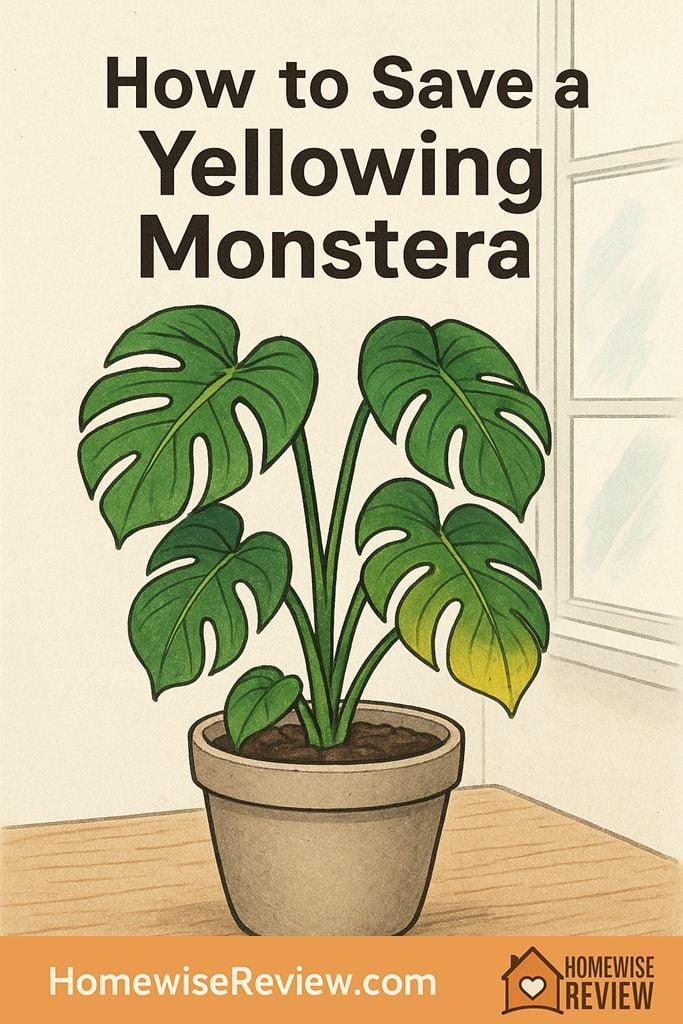
I kept watering my Monstera on a schedule because it felt responsible, and the yellow leaves kept multiplying anyway. When I finally tipped the pot and caught that sour, swampy smell, it clicked that I was treating my calendar instead of the soil. I slowed down, checked moisture a few inches down, and made one change at a time so I could actually see what helped.
A yellowing Monstera is your plant’s way of saying, “Something is off.” The good news is that most yellow-leaf problems come down to a handful of common issues: watering, light, root health, or nutrients.
Start by reading the pattern of yellowing, then make one or two targeted changes. When you change everything at once, it is hard to know what actually helped.
What yellow leaves are telling you
Yellowing (chlorosis) happens when a leaf cannot produce or keep enough chlorophyll. Sometimes it is normal aging. Other times it is a stress signal that needs quick attention.
When yellowing is normal
- One older, lowest leaf turns yellow every so often, while the rest of the plant looks good.
- New leaves keep emerging at a normal pace, with healthy color and size.
- No mushy stems, no foul soil smell, and the pot dries at a reasonable rate.
If only one old leaf is fading and everything else looks strong, you can usually snip it and move on.
When yellowing is a problem
- Multiple leaves yellow at once, especially within a week or two.
- New growth is pale or yellow instead of a fresh, even green.
- Yellow plus brown, crispy edges, spotting, or drooping.
- Soil stays wet for many days, or stems feel soft.
Fast triage: identify the pattern
Before you repot or fertilize, take two minutes to observe. Which leaves are yellowing, and what does the soil feel like today?
| What you see | Most likely cause | What to check today |
|---|---|---|
| Lower, older leaves yellowing first; soil feels wet | Overwatering, poor drainage, early root stress | Finger-test 2 to 3 inches down; look for a pot with drainage holes; smell the soil |
| Leaf edges yellow then turn brown and crispy; soil dries very fast | Underwatering or inconsistent watering; low humidity | How light the pot feels; how long since last thorough watering; humidity near the plant |
| Newest leaves are pale/yellow, older leaves stay greener | Nutrient deficiency (often nitrogen or iron), high pH, or weak light | When you last fertilized; whether it is near a bright window; water type (hard water can raise pH) |
| Yellowing with soft, dark patches; stems droop; soil smells “off” | Root rot | Gently slide plant out to inspect roots; check for mushy roots and soggy soil |
| Yellow stippling, fine webbing, or sticky residue | Pests (spider mites, thrips, scale) | Inspect undersides of leaves with a flashlight; check along stems and petioles |
| Yellow patches on the side facing the window | Sun stress (too much direct sun) | Hours of direct sun hitting leaves; look for bleached, papery areas |
Step-by-step: fix the most common causes
Work through these in order. Watering and light are the “big levers” for Monsteras, and they can mimic nutrient issues.
1) Correct watering (the most common reason)
Monsteras like evenly moist soil, but they hate sitting in water. The goal is a thorough watering, followed by partial drying.
- Do a depth check: Stick your finger 2 to 3 inches into the soil. If it feels wet or cool, wait. If it feels mostly dry, it is time to water.
- Water deeply: Water until it flows from the drainage holes, then let it drain fully. Do not leave the pot standing in a saucer of water.
- Match frequency to your home: In brighter light and warmer temps, you will water more often. In winter or low light, less often.
If you suspect overwatering:
- Pause watering until the top half of the pot dries, not just the surface.
- Confirm the pot has drainage holes and the soil is not compacted.
- Increase airflow around the pot (a little space from the wall helps).
If you suspect underwatering:
- Rehydrate thoroughly. If water runs straight through and the soil pulls from the pot edge, bottom-water for 20 to 30 minutes, then drain.
- Set a simple check routine: pick up the pot every few days to learn its “dry weight.”
2) Adjust light to “bright, indirect”
Too little light can cause slow growth and yellowing; too much direct sun can bleach or scorch leaves. A Monstera typically thrives near an east window, or a few feet back from a bright south or west window with a sheer curtain.
- Too little light signs: long gaps between leaves, smaller new leaves, weak stems that lean hard.
- Too much sun signs: faded patches, crispy areas, yellowing on the window-facing side.
- Easy fix: Move the plant 1 to 3 feet at a time and give it 10 to 14 days to respond.
3) Check drainage and soil structure
Even “perfect” watering fails if the soil holds too much water or compacts into a dense mass. Monsteras do best in a chunky, airy mix that drains but still holds some moisture.
- Red flags: water puddles on top, soil stays wet for 7+ days, fungus gnats, or a sour smell.
- Quick improvement: poke a few gentle holes with a chopstick to aerate, and let the pot dry more between waterings.
- Long-term fix: plan a repot into a chunkier mix (details below).
4) Feed the plant, but only when conditions are right
A Monstera in low light or soggy soil will not use fertilizer well, and feeding can make things worse. Fertilize when the plant is in active growth and the roots are healthy.
- When to fertilize: spring through early fall, or anytime you see steady new leaves in bright indoor light.
- How often: a diluted, balanced fertilizer every 4 to 6 weeks is a safe starting point for most homes.
- Watch for salt buildup: crispy tips plus a white crust on soil can mean fertilizer salts. Flush the pot with plenty of water, let it drain, then resume a lighter feeding schedule.
5) Raise humidity and stabilize temperature (if edges are crisp)
Monsteras tolerate average household humidity, but yellowing with crispy margins often improves with more consistent moisture in the air and fewer extremes.
- Keep it away from heating vents and cold drafts.
- Aim for steady temps (roughly 65 to 80 F is comfortable for most homes and for Monsteras).
- Group plants together or use a humidifier if your indoor air is very dry.
6) Inspect for pests (especially if yellowing looks speckled)
Pests can cause mottled yellowing, dull leaves, or distorted new growth. The earlier you catch them, the easier they are to manage.
- Spider mites: fine webbing, tiny speckles, dusty-looking leaves.
- Thrips: silvery streaks, tiny black dots (frass), damaged new leaves.
- Scale: small brown bumps along stems and leaf veins.
Simple control plan:
- Isolate the plant for 2 to 3 weeks.
- Rinse leaves (top and underside) in the sink or shower.
- Wipe leaves with a soft cloth and repeat weekly. Consistency matters more than intensity.
When and how to repot a Monstera that is yellowing
If you suspect root issues, repotting can be the turning point. The goal is to remove compromised roots, refresh soil structure, and right-size the pot so it dries at a healthy pace.
Signs you should consider repotting now
- Soil stays wet for a long time, even with careful watering.
- Multiple leaves yellow quickly, and the plant droops despite wet soil.
- You see roots circling the pot, pushing out drainage holes, or the plant dries out extremely fast.
- The potting mix looks broken down and muddy rather than chunky.
How to check roots without panicking
- Lay down a towel or newspaper.
- Slide the root ball out. Healthy roots are firm and light-colored.
- Root rot signs: brown or black roots that are mushy, hollow, or smell foul.
Repot steps (clear and gentle)
- Trim damage: Use clean scissors or pruners to remove mushy roots. Keep only firm roots.
- Choose the right pot size: Go 1 to 2 inches wider than the root ball, not dramatically bigger. Oversized pots stay wet too long.
- Use an airy mix: A practical blend is potting soil plus orchid bark and perlite or pumice for chunk and airflow.
- Set the height: Keep the crown at the same level it was before. Burying stems can encourage rot.
- Water once: Water enough to settle the mix, then let it dry more than usual for the next week to avoid re-soaking stressed roots.
Aftercare: Put the plant in bright, indirect light and avoid fertilizer for 3 to 4 weeks. Let it focus on rebuilding roots first.
Pruning and cleanup: what to cut and what to keep
Yellow leaves do not usually turn green again, but they can still photosynthesize a little if they are only partly yellow. Prune strategically so you do not slow recovery.
Pruning rules of thumb
- If a leaf is over 50 percent yellow: remove it. It is not contributing much and can attract pests.
- If a leaf has small yellow sections: keep it for now and focus on fixing the cause.
- Cut at the petiole: snip the leaf stem close to the main stem without nicking the main stem.
- Use clean tools: wipe blades before and after to reduce disease spread.
Support helps leaves stay healthier
If stems are sprawling, add a stake or moss pole so the plant can climb. Better support improves light exposure and reduces strain on petioles.
Recovery timeline: what to expect week by week
Yellow leaves are often the “after effect” of an earlier problem, so you are watching for healthier new growth, not instant color change.
- First 3 to 7 days: Soil moisture stabilizes; drooping may improve if watering was the issue.
- Weeks 2 to 4: Yellowing slows. You may see a new leaf if conditions are good.
- Weeks 4 to 8: New leaves should look evenly green and sturdier. Old yellow leaves can be removed gradually.
Track one simple metric: take a photo from the same spot once a week. It keeps you from second-guessing normal variation.
Prevention checklist (simple and realistic)
- Check soil moisture at depth before watering, not just the surface.
- Always use a pot with drainage holes.
- Give bright, indirect light and rotate the pot every 1 to 2 weeks for even growth.
- Fertilize lightly during active growth, and flush the pot occasionally to reduce salt buildup.
- Inspect leaf undersides monthly for early pest signs.
- Repot every 1 to 2 years (or sooner if the mix breaks down or roots are crowded).
Worth Knowing Before You Buy
Most yellow leaves are not a fertilizer issue. If you water on a fixed schedule and the soil smells sour or swampy, the plant is staying too wet, and low light can cause the same yellowing. The practical takeaway is simple: change one thing at a time, because if you repot, feed, and move it at once, you will not know what stopped the yellowing.
Bottom Line
To save a yellowing Monstera, read the pattern first, then correct watering and light before reaching for fertilizer. If the soil stays wet or smells off, check roots and repot into a chunky, well-draining mix. Expect existing yellow leaves to stay yellow, and judge success by healthier new growth over the next few weeks.
See also
If you suspect nutrition is part of the problem, start with the best garden fertilizers for healthy leaves and compare symptoms with how to save a dying peace lily (many indoor leaf issues overlap).
- Best garden tools for balcony and container plants
- Garden tool organizers for small spaces
- Best garden gloves for repotting and pruning
Frequently Asked Questions ▾
Can yellow Monstera leaves turn green again?
Usually, no. Once a leaf has turned fully yellow, it rarely regains chlorophyll. Focus on stopping the cause so new leaves come in healthy and green.
Should I cut off yellow leaves right away?
If a leaf is mostly yellow (around half or more), remove it. If it is only slightly yellow, keep it temporarily while you correct care, since it can still contribute some energy.
How often should I water a Monstera to prevent yellowing?
There is no perfect weekly schedule because light, pot size, and temperature change everything. Water when the top 2 to 3 inches of soil feel mostly dry, then water thoroughly and let excess drain.
What is the fastest way to tell if yellowing is from overwatering?
Check the soil at depth and smell it. Wet, cool soil several inches down, slow drying, and a sour smell are strong clues. If you also see drooping with wet soil, inspect roots for rot.
Why are the newest Monstera leaves yellow?
Pale new growth often points to insufficient light, a nutrient issue, or watering problems that are limiting root function. Improve light first, confirm the soil is not staying soggy, and only then consider a gentle feeding during active growth.
As an Amazon Associate, we earn from qualifying purchases made through links on our site.