

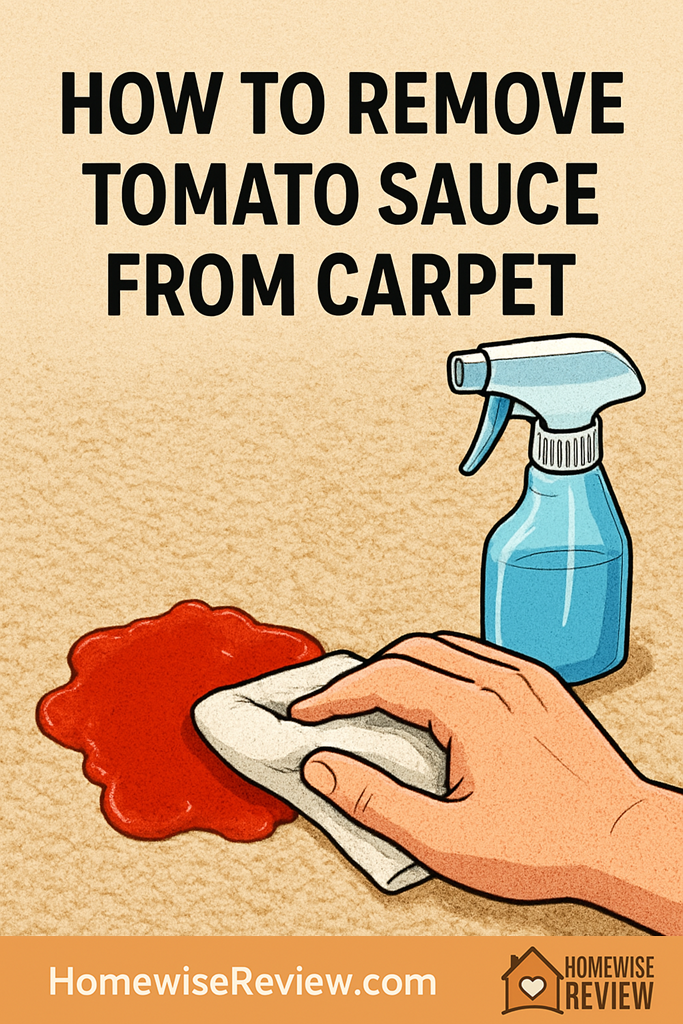
Tomato sauce can leave a stubborn red, oily stain that spreads fast in carpet fibers. Use the right blotting, rinsing, and stain-lifting steps to remove it without setting the color.
Tomato sauce on carpet is a worst-case spill because it combines red dye, acidity, and often oil. The good news is that most stains come out with quick blotting, a gentle detergent mix, and patient rinsing. The key is working from the outside in and avoiding heat that can set the color.
Why tomato sauce stains are hard to remove
Tomato sauce is not just “red food.” It usually contains pigments (lycopene), acids, and sometimes oil, all of which behave differently in carpet. Treating it like a simple spill can leave a pink shadow or a stain that reappears after drying.
What you are fighting
- Dye-like color: Red and orange pigments can bond to fibers if left too long or exposed to heat.
- Oily components: Olive oil, butter, meat fats, or cheese can create a greasy ring that detergent alone may not fully lift.
- Thick solids: Pulp and herbs cling to fiber tips and need to be lifted out before you “wash” the area.
Before you start: do this first to avoid making it worse
Most carpet damage comes from over-wetting, scrubbing, or using the wrong chemical on the wrong fiber. Take one minute to set up and you will get a cleaner result with less risk.
Quick prep checklist
- Blotting cloths: white paper towels or clean white cotton rags
- Vacuum (for later, after the area dries)
- A dull edge for solids: spoon or butter knife
- Spray bottle or small bowl for cleaning solution
- Cold water (lukewarm is okay for rehydrating dried sauce, but avoid hot)
Spot-test in 60 seconds
- Mix your planned solution (start mild: dish soap and water).
- Dab a hidden area of carpet with a cotton swab or cloth.
- Wait 2 to 3 minutes, then blot dry.
- If you see color transfer from the carpet or a lightened patch, stop and switch to plain water or call a pro.
Carpet fiber cautions (quick guide)
| Carpet type | Be careful with | Safer first choice |
|---|---|---|
| Wool or wool blends | High pH cleaners, heavy scrubbing, strong oxidizers | Cold water + a few drops of gentle dish soap |
| Nylon (common) | Over-wetting, heat | Dish soap solution, then targeted stain remover if needed |
| Polyester/olefin | Oily residue clinging | Dish soap solution plus extra rinsing |
| Unknown fiber | Strong chemicals | Start mild and escalate slowly |
How to remove fresh tomato sauce from carpet (the fastest method)
If the spill is still wet, speed matters more than strength. Your goal is to lift out solids, dilute the remaining color, and suspend oils so they blot away.
Step-by-step: fresh spill
- 1) Scoop, do not smear. Use a spoon or dull knife to lift off sauce solids. Work from the outside edge toward the center.
- 2) Blot with dry towels. Press firmly for 5 to 10 seconds, then lift straight up. Keep switching to clean sections of towel until you stop picking up sauce.
- 3) Flood lightly with cold water, then blot. Add a small amount of cold water (a few teaspoons to a tablespoon at a time, depending on stain size), then blot again. This dilution step is what prevents a pink halo later.
- 4) Apply a mild detergent mix. Mix 2 cups cold water with 1/2 teaspoon clear dish soap. Dab it onto the stain (do not pour), let it sit 3 minutes, then blot.
- 5) Rinse and blot repeatedly. Dampen with plain cold water, blot, and repeat until the soap feel is gone. Leftover soap can attract dirt and turn the spot gray.
- 6) Press-dry and weigh it down. Stack dry towels, press firmly, then place a heavy book or pan on top for 10 to 15 minutes to pull moisture out of the pad.
How much pressure is “blotting”?
Think “press and lift,” not “wipe.” Wiping pushes pigment deeper and frays fibers, especially on looped carpets. If you see fuzz, you are scrubbing too hard.
How to remove dried tomato sauce from carpet
Dried sauce needs two phases: break up the crust, then clean the remaining dye. Rushing to scrub a dry stain often spreads it and roughens the pile.
Step-by-step: dried stain
- 1) Vacuum around the area. Remove loose grit so you do not grind it in while working.
- 2) Gently scrape off the dried layer. Use a spoon edge to lift and chip away the top crust. Do not yank fibers.
- 3) Rehydrate with lukewarm water. Lightly dampen the stain (not soaking) and wait 5 minutes to soften what is left.
- 4) Blot to lift loosened residue. Press with a white towel until you stop pulling color.
- 5) Use the dish soap solution. Apply the same mix: 2 cups water + 1/2 teaspoon clear dish soap. Let sit 3 to 5 minutes, blot, then repeat once if needed.
- 6) Rinse thoroughly. Use plain water in small amounts and blot until there is no slick feel.
- 7) Dry completely. Towel-press, then airflow (fan) until fully dry to prevent wicking from the pad.
If the stain keeps “coming back” after it dries
That is usually wicking from the carpet pad. You cleaned the surface but the pad still holds tinted moisture that rises as it dries. Repeat the rinse and press-dry step, then add longer weighted drying time.
If the tomato sauce was oily (pizza, marinara with olive oil, meat sauce)
When oil is involved, the color can ride along with the grease. You will often see a slightly darker ring or an area that feels tacky after it dries. In that case, add one grease-focused step before your final rinses.
Choose your path based on what you see
| What you notice | Likely issue | What to do next |
|---|---|---|
| Red stain only, no shine | Mainly pigment and solids | Dish soap solution, then thorough rinse |
| Darker ring or greasy feel | Oil or fat residue | Extra dish soap applications plus extra rinsing |
| Cheese or creamy residue | Fat plus proteins | Lift solids first, then dish soap; avoid heat |
Grease-boost step (safe for most carpets)
- After initial blotting, apply the dish soap solution and let it dwell 5 minutes (not longer than 10).
- Blot firmly with clean towels until the area no longer transfers color or feels slick.
- Rinse in small amounts, blotting between each rinse. Plan on 3 to 6 rinse cycles for oily stains.
Stubborn pink or orange discoloration: how to escalate safely
If you removed the sauce but a faint pink or orange cast remains, you are dealing with leftover pigment. Escalate in controlled steps so you do not bleach the carpet or weaken fibers.
Escalation options (from mild to stronger)
| Option | Best for | How to use | Key cautions |
|---|---|---|---|
| Repeat detergent + rinse | Most light shadows | One more 3 to 5 minute dwell, then rinse well | Do not over-wet; dry thoroughly |
| White vinegar rinse (diluted) | Lingering dye haze after soap | Mix 1 cup water + 1 tablespoon white vinegar; dab, then blot and rinse | Spot-test; use gently on wool |
| 3% hydrogen peroxide (spot use) | Persistent pink on light carpets | Spot-test; dab, wait 5 minutes, blot; rinse and dry | Can lighten carpet; avoid on dark or unknown fibers |
| Oxygen-based carpet stain remover | Dye-based stains that resist soap | Follow label; rinse after if residue remains | Spot-test; do not mix with other chemicals |
When peroxide is appropriate (and when it is not)
- Consider it if: the carpet is light-colored, the stain is faint but clearly tinted, and soap plus rinsing did not finish the job.
- Avoid it if: the carpet is dark, patterned with dyed fibers, or you cannot identify the fiber type.
- Always: spot-test and use minimal product, then rinse and dry.
What not to do (common mistakes that set tomato stains)
These are the moves that turn a removable spill into a permanent tint or a damaged patch of carpet. If you avoid them, even a large spill is usually manageable.
- Do not use hot water or steam first. Heat can set red pigments and make the stain harder to lift.
- Do not scrub aggressively. Scrubbing frays fibers and drives color deeper into the pile and pad.
- Do not pour cleaner directly onto the stain. Over-wetting pushes sauce into the backing and increases wicking.
- Do not mix cleaning chemicals. Keep it to one approach at a time (soap, then rinse; vinegar only after soap is rinsed out).
- Do not skip the rinse. Soap residue is a magnet for dirt and can leave a noticeable spot weeks later.
Aftercare: make the cleaned area match the rest of the carpet
Even when the stain is gone, the spot can look different because fibers are flattened or residue remains. A few finishing steps help the repair disappear.
Finish strong
- Final rinse: Lightly mist with plain water and blot once more to remove trace cleaner.
- Press-dry: Use stacked towels and body weight for 30 to 60 seconds, then weigh towels down for 10 to 15 minutes.
- Airflow: Run a fan aimed across the spot until fully dry.
- Reset the pile: Once dry, gently brush with a clean spoon or soft brush to lift fibers.
- Vacuum last: Vacuum only after the carpet is fully dry to restore texture.
When to call a professional cleaner
DIY works best when you catch the spill early and can control moisture. If you are seeing signs of fiber risk or deep penetration, professional extraction can prevent permanent discoloration and pad odor.
Consider a pro if any of these are true
- The stain is large (roughly dinner-plate size or bigger) and soaked into the pad.
- Your carpet is wool, antique, or a specialty fiber and you cannot confirm safe products.
- You tried cleaning and the stain spread, lightened, or keeps wicking back.
- The area is on stairs or near a seam where over-wetting can cause rippling.
Bottom Line
Remove tomato sauce from carpet by lifting solids first, blotting (not scrubbing), and using a mild dish soap solution followed by thorough rinsing and press-drying. For dried stains, rehydrate gently before cleaning, and for oily sauces, plan on extra detergent dwell time and extra rinse cycles. If a pink tint remains, escalate carefully with spot-tested options like diluted vinegar or peroxide on light carpets.
See also
If you want a fast, choose-the-right-method flow, use our stain-rescue decision tree for quick steps, and for another pigment-heavy spill, compare the approach in our guide to removing red wine from carpet.
- How to remove grease from carpet (for oily sauce rings)
- How to remove pet stains from carpet (deep-clean and de-odor basics)
- How to remove blood from a couch (blotting technique and fiber-safe rules)
Frequently Asked Questions ▾
Can I use vinegar to remove tomato sauce from carpet?
Yes, but treat vinegar as a light “step up” after you have already removed solids and rinsed out dish soap. Use it diluted (for example, 1 cup water plus 1 tablespoon white vinegar), dab and blot, then rinse with plain water and dry. Always spot-test first, especially on wool.
Will bleach remove tomato sauce stains?
Chlorine bleach is risky on carpet because it can permanently lighten or damage fibers and can remove carpet dye along with the stain. If you need a stronger option, a spot-tested oxygen-based remover or careful peroxide use on light carpet is typically safer than chlorine bleach.
Why does the tomato stain disappear wet, then come back when it dries?
That is usually wicking from the carpet pad. Moisture in the pad carries leftover pigment back up as it dries. The fix is better extraction: rinse lightly, then press-dry with towels and weight for longer, plus airflow until fully dry.
How long should I let dish soap sit on the stain?
A short dwell is enough. Aim for 3 to 5 minutes so the soap can loosen pigments and oils, then blot and rinse. Leaving soap too long can make rinsing harder and can attract soil later.
As an Amazon Associate, we earn from qualifying purchases made through links on our site.