

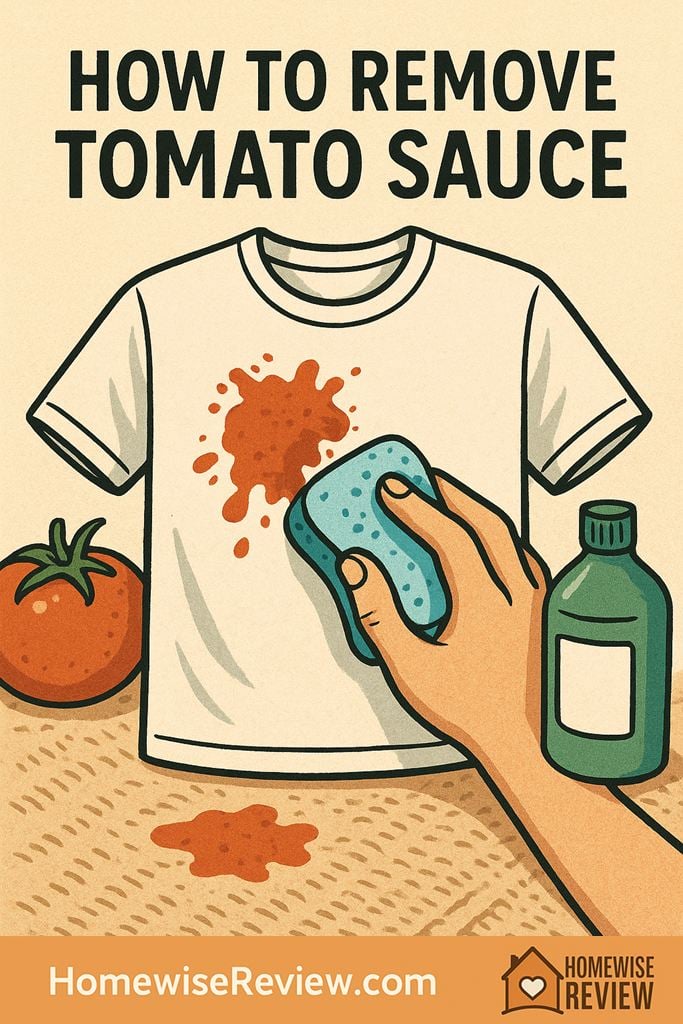
Tomato sauce stains are a triple threat: oil, pigment, and acid that love to set with heat. Use the right order of steps and you can usually remove the red without damaging fabric or carpet.
Tomato sauce is one of the most common “it looked clean until it dried” stains. The good news is that most can be removed at home if you treat them in the right order: lift the solids, break the grease, then tackle the dye.
This guide walks you through fast first aid and surface-specific methods for clothes, carpet, upholstery, plastic, and hard surfaces, plus what to do when you are left with a stubborn pink or orange shadow.
Quick action checklist (do this first)
- Scoop, do not smear: Lift off excess sauce with a spoon or dull knife.
- Blot, do not rub: Press with a clean white cloth or paper towel to pull liquid up.
- Flush with cool water (fabrics): Run cool water through the stain from the back side to push it out.
- Degrease next: Work in a few drops of dish soap or liquid laundry detergent for 2 to 5 minutes.
- Rinse well: Residual soap can hold onto pigment if left behind.
- Air-dry until you are sure: Heat from a dryer, iron, or hot water can set the dye.
Why tomato sauce stains are so stubborn
It is usually three stains in one
Most red pasta sauce contains oil (from olive oil, meat, or cheese), red pigment (tomato carotenoids and added spices), and acid (tomatoes and vinegar). If you only treat the color, the grease can keep the dye anchored. If you only treat the grease, the red can linger as a pink or orange cast.
Heat “cooks” the color into fibers
Dryers, hot water, and ironing are common reasons a light stain becomes permanent. When in doubt, treat and air-dry, then check in bright light before applying heat.
What to avoid (it saves you time and damage)
- Hot water early on: Use cool or lukewarm water for the initial flush and first wash.
- Rubbing carpet or upholstery: It drives pigment deeper and can fuzz fibers.
- Bleach on colored fabrics: Chlorine bleach can strip or yellow dye; use oxygen bleach when possible.
- Mixing cleaners: Never combine bleach with ammonia or acids. If you switch products, rinse first.
- Over-wetting upholstery: Too much water can cause rings or slow drying. Use small amounts and blot.
Pick the right method: a simple decision table
| Where is the stain? | Best first choice | If color remains | What to avoid |
|---|---|---|---|
| Washable clothes | Cool flush + dish soap or liquid detergent | Oxygen bleach soak, then rewash | Dryer until fully gone |
| Carpet | Blot + cool water + a few drops of dish soap | Oxygen-based carpet spotter (test first) | Scrubbing, soaking the pad |
| Upholstery | Blot + lightly applied dish-soap solution | Upholstery-safe enzyme/oxygen spotter | Over-wetting, aggressive brushing |
| Plastic containers | Dish soap + baking soda paste | Sunlight brightening or diluted oxygen bleach soak | Harsh abrasives that scratch plastic |
| Countertops, tile, grout | Dish soap + warm water wipe | Baking soda paste, then rinse | Leaving acidic cleaners on stone |
How to remove tomato sauce from washable clothing
Fresh stain (best-case scenario)
- Lift excess: Use a spoon to remove sauce without pushing it into the weave.
- Flush from the back: Hold the fabric under cool running water so the water pushes the sauce out the way it came in.
- Degrease: Apply 2 to 3 drops of dish soap or liquid laundry detergent directly to the stain. Gently rub fabric against itself for 30 to 60 seconds.
- Rinse: Rinse until the fabric no longer feels slick.
- Pre-treat and wash: Work in a small amount of detergent or a stain pre-treater. Wash using the warmest water allowed by the care label (but avoid hot if the stain is still visible).
- Air-dry and check: If you see any pink, do not machine-dry yet.
Dried or set stain (common after a missed spot)
- Rehydrate: Soak the stained area in cool water for 10 to 15 minutes to loosen dried solids.
- Work detergent into the fibers: Use liquid detergent or dish soap, massage for 2 to 3 minutes, then rinse.
- Soak with oxygen bleach: If the fabric is colorfast and the label allows it, soak in oxygen bleach solution for 1 to 6 hours (follow the product label for concentration). Then wash again.
- Repeat before heat: It is normal to need two rounds for older stains.
Whites, colors, and delicate fabrics
- Bright whites: Oxygen bleach is usually the safest escalation. Chlorine bleach can work on plain white cotton, but it is harsher and can weaken fibers over time. If you use it, follow the label exactly and rinse thoroughly.
- Colors: Stick to dish soap, liquid detergent, enzyme stain removers, and oxygen bleach labeled color-safe. Always patch-test on an inside seam first.
- Wool, silk, “dry clean only”: Blot, then use a small amount of cool water and a drop of gentle soap, blotting from the outside in. Do not soak. If the care label is strict or the item is structured (suits, lined dresses), take it to a cleaner and tell them the stain is tomato-based with oil.
How to remove tomato sauce from carpet and upholstery
Step 1: Remove solids and blot
- Scoop up sauce with a spoon. If you have chunks (meat, onions), remove them carefully so they do not smear.
- Blot with a clean white cloth or paper towel. Keep switching to a clean area so you are lifting, not reapplying.
Step 2: Apply a gentle degreasing solution
For most carpets and many upholstery fabrics, dish soap is a safe first-line degreaser because it targets the oily part of the stain.
- Mix 1 teaspoon dish soap in 2 cups cool water.
- Dampen (do not soak) a cloth with the solution and blot the stain from the outside toward the center.
- Pause for 3 to 5 minutes, then blot again with a clean damp cloth.
Step 3: Rinse and extract so residue does not attract dirt
- Blot with plain cool water to remove soap.
- Press firmly with dry towels to pull up as much moisture as possible.
- If you have a wet-dry vacuum or carpet extractor, use it for the rinse step to remove more water and speed drying.
If a red or orange shadow remains
At this point, the grease is usually handled, and you are seeing leftover pigment. Use a carpet or upholstery spotter labeled oxygen-based or enzyme-based, and patch-test first in an inconspicuous area. Apply lightly, give it dwell time as directed, then blot and rinse.
Upholstery note: Check the cleaning code tag if you can find it. If it says “S” (solvent only), avoid water-based cleaning and use a solvent upholstery cleaner instead of the steps above.
How to remove tomato sauce from hard surfaces and kitchen items
Countertops, stainless steel, and sealed surfaces
- Wipe up sauce immediately with a damp cloth.
- Wash with warm water and a few drops of dish soap, then rinse and dry.
- If a pink film remains, use a baking soda paste (baking soda plus a little water). Rub gently with a soft sponge, then rinse.
Stone caution: If you have marble, limestone, or other natural stone, avoid leaving acidic cleaners or vinegar sitting on the surface. Stick to pH-neutral dish soap and rinse well.
Plastic containers (the classic orange tint)
- Wash with dish soap first, using the hottest water the container can safely handle.
- Make a paste of baking soda and dish soap, coat the stained area, and let it sit for 15 to 30 minutes. Scrub with a non-scratch sponge and rinse.
- If staining persists, soak in an oxygen bleach solution for 1 to 2 hours (check that the plastic is safe), then rinse thoroughly.
If odor lingers, air-dry the container fully with the lid off. Trapped moisture can hold onto smells.
Grout, textured tile, and other “grabby” surfaces
- Clean with warm water and dish soap, using a soft brush to get into texture.
- For remaining color, apply a baking soda paste and scrub gently with an old toothbrush, then rinse.
- Dry the area. Tomato pigments can look darker on wet grout.
Pots, pans, and cooked-on splatter
- Fill the pan with warm water and a squirt of dish soap. Let it soak 15 to 30 minutes.
- Use a non-scratch scrubber for most finishes. For stainless steel, a baking soda paste can help lift pigment.
- For baked-on spots, simmer a little water with dish soap for a few minutes, then cool and scrub.
If the stain is still pink: a safe escalation ladder
When tomato sauce is “mostly gone” but still visible, you usually need more time, not more force. Escalate in steps so you do not damage fabric or carpet.
- Repeat degreasing: Another round of dish soap or detergent, then a thorough rinse.
- Oxygen bleach soak (laundry): The most reliable next step for washable, colorfast items. Soak, then wash again.
- Sunlight brightening (some fabrics and plastics): After cleaning, short sun exposure can help fade residual orange. Do not rely on this for delicate dyes that fade easily.
- Hydrogen peroxide (use caution): On some white or very colorfast fabrics, a small amount of 3% hydrogen peroxide can lighten remaining dye. Patch-test first, apply briefly, rinse thoroughly, and do not use on wool or silk.
Common mistakes that make tomato stains “come back”
- Leaving soap behind: Detergent residue can trap soil, making a faint stain reappear as it dries. Always rinse or rewash thoroughly.
- Drying too soon: If you machine-dry while any color remains, you often lock it in.
- Over-wetting carpet: Too much liquid can push stain into the pad and create a larger ring. Use small amounts and extract well.
- Skipping the grease step: Tomato sauce often contains enough oil that dye removers alone struggle. Degrease first for faster results.
Bottom Line
For tomato sauce, speed and sequence matter: remove solids, flush cool, degrease with dish soap or detergent, then treat lingering color with oxygen bleach or an oxygen-based spotter. Avoid heat until the stain is fully gone, and you will prevent most “permanent” pink shadows.
See also
If you want a fast way to choose the right approach for almost any spill, start with our stain-rescue decision tree, then use these grease-removal steps when tomato sauce leaves an oily shadow.
- How to remove red wine from carpet
- How to remove grease from carpet (without leaving a ring)
- How to remove deodorant stains from shirts
Frequently Asked Questions ▾
Does tomato sauce come out after it has dried?
Often, yes. Rehydrate the stain with cool water, work in dish soap or liquid detergent to break the grease, rinse, then use an oxygen bleach soak for the remaining pigment. Repeat before you use a dryer or iron.
Should I use vinegar on tomato sauce stains?
Vinegar is not usually the most effective first choice because tomato sauce is already acidic, and the tougher part is often oil plus pigment. Start with dish soap or detergent. If you try vinegar on hard surfaces, rinse well and avoid using it on natural stone.
Why did the stain turn orange or pink after washing?
That usually means some pigment stayed behind and the wash or heat made it more visible. Treat again before drying: degrease, rinse, then soak with oxygen bleach for washable fabrics or use an oxygen-based spotter for carpet.
Can I use bleach on tomato sauce stains?
Oxygen bleach is the safer option for most washable fabrics and many colors labeled color-safe. Chlorine bleach can work on plain white cotton, but it can weaken fibers and may yellow some materials. Always follow the care label and product directions.
How do I keep a carpet spot from leaving a ring?
Use small amounts of solution, blot from the outside in, and rinse by blotting with plain water afterward. Extract as much moisture as possible with dry towels (or an extractor), and let the area dry evenly with good airflow.
As an Amazon Associate, we earn from qualifying purchases made through links on our site.