

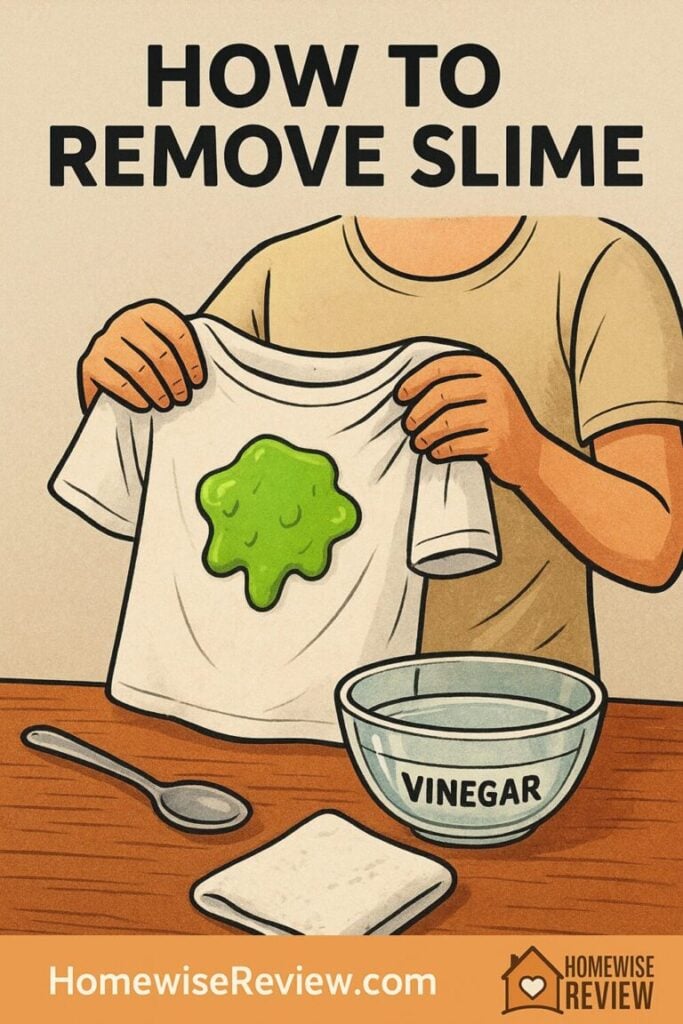
Slime on clothes, carpet, or hair can feel like a disaster, but with the right steps you can undo the mess without wrecking what you are trying to save.
Slime is fun for kids and a headache for whoever has to clean it up. The good news is that most slime messes can be removed completely if you match the method to the surface and avoid setting the stain with heat.
This guide walks you through simple, safe methods for getting slime out of clothes, carpet, furniture, hair, skin, and hard surfaces using supplies you probably already own. Skim to the section that matches your mess, then follow the steps in order.
Step 1: Identify the surface and slime type
Not all slime behaves the same. Classic school-glue slime is mostly water-soluble, while glitter, scented, and store-bought varieties can leave more residue or dye behind.
Before you start scrubbing, take a moment to note:
- The surface: washable clothes, carpet, upholstery, hair, skin, wood, walls, or hard flooring.
- The slime condition: fresh and gooey or dried and crusty. Fresh slime is easier to lift. Dried slime usually needs more soaking time.
- Any special concerns: delicate fabrics like silk or wool, antique rugs, or furniture with a water-sensitive tag.
If you are dealing with something delicate or expensive, plan to go slower, use milder products, and test in a hidden spot first.
Step 2: Gather simple supplies
You do not need specialty products for most slime cleanups. Round up a few basics:
- Dull butter knife, spoon, or old credit card for scraping
- White distilled vinegar
- Liquid dish soap and regular laundry detergent
- Rubbing alcohol (isopropyl), 70 percent is fine
- Small soft brush or old toothbrush
- Clean white cloths or paper towels
- Bowl or spray bottle and some cool to lukewarm water
- Optional: oxygen-based laundry booster, carpet stain remover, a few ice cubes, and a vacuum
Always ventilate the area, avoid mixing products, and wear gloves if you have sensitive skin.
How to remove slime from clothes and washable fabric
Clothing, sheets, and most washable fabrics are usually the easiest places to fix a slime accident as long as you keep heat away until the stain is gone.
Fresh slime on clothes
- Lift off the excess. Use a spoon or dull knife to gently scoop off as much slime as you can. Work from the outer edge toward the center so you do not spread it.
- Rinse from the back with cold water. Hold the fabric so the slime side faces down under a stream of cold water. Let the water push the slime out of the fibers from the back instead of forcing it deeper from the front.
- Soak with vinegar. Mix 1 part white vinegar with 2 parts cool water in a bowl. Lay the stained area in the solution, or pour a little directly on thick spots. Let it sit for 5 to 10 minutes.
- Loosen the slime. Gently work the area with your fingers or a soft brush, then rinse again under cold water. Repeat the vinegar soak if slime is still coming out.
- Add a bit of detergent. Massage a few drops of liquid dish soap or laundry detergent into any lingering slickness. Let it sit for 5 minutes, then rinse well.
- Wash and air-dry. Wash the garment as usual in cold or warm water according to the care label. Air-dry and inspect before using the dryer, since heat can permanently set any remaining stain.
Dried or stubborn slime on fabric
- Scrape what you can. Gently break off crusty pieces with a dull knife or fingernail. Be patient and avoid rough scraping that can fuzz or tear the fabric.
- Saturate with vinegar or rubbing alcohol. For most fabrics, pour white vinegar or rubbing alcohol directly onto the dried slime until it is fully damp. Let it sit for 10 to 15 minutes.
- Lift and blot. Use a spoon or the edge of a credit card to lift the softened slime, then blot with a clean cloth. Repeat the soak-and-blot cycle until the slime is gone or mostly gone.
- Treat leftover staining. If there is a faint colored shadow, apply an oxygen-based laundry booster or stain remover suitable for the fabric. Let it work for the time listed on the package.
- Wash and check. Wash in the warmest water that the care label allows. Air-dry and recheck the spot. Repeat the stain treatment if you still see color before you ever use the dryer.
Important: Always test vinegar or alcohol on a hidden seam first, especially on dark or bright fabrics, to be sure there is no color change.
For dry-clean-only fabrics, gently scrape away what you can, blot with a barely damp cloth, and then take the item to a professional cleaner as soon as possible. Point out the slime stain so they can use the right solvent.
How to remove slime from carpet and rugs
Carpet fibers hold onto slime, so the trick is to harden what you can, then use gentle moisture to pull the rest out without soaking the backing.
Fresh slime on carpet
- Scoop up the excess. Lift chunks with a spoon or dull knife. Avoid grinding the slime down into the pile.
- Stiffen if needed. If the slime is very gooey, hold an ice cube against it for a minute or two to firm it up, then lift again.
- Blot, do not scrub. Press a dry white cloth or paper towel onto the area to soak up moisture. Replace with a clean section of cloth as it fills.
- Clean with soapy water. Mix 1 tablespoon of mild dish soap into 2 cups of warm (not hot) water. Dip a cloth into the solution, wring it out so it is just damp, and dab the stained area, working from the outer edge toward the center. Alternate dabbing with soapy cloth and blotting with a dry cloth.
- Rinse and dry. Wipe the area with a cloth dampened in clean water to remove soap, then blot thoroughly with dry towels. Stand or press on folded towels to draw out as much moisture as possible.
Dried slime on carpet
- Freeze and break up. Place a few ice cubes in a plastic bag and lay it over the dried slime for 5 to 10 minutes. Once the slime is brittle, gently break it apart with a spoon or your fingers and vacuum up the loose pieces.
- Apply a vinegar solution. Mix equal parts white vinegar and water. Lightly spray or dab it on the remaining residue until just damp. Let sit for 3 to 5 minutes.
- Blot repeatedly. Blot with a clean cloth, lifting the softened slime. Repeat the dampen-and-blot cycle as needed, being careful not to soak the carpet pad.
- Treat dye stains if needed. If a colored halo remains, apply a carpet stain remover that is safe for your carpet type. Follow the label and always test in an inconspicuous spot first.
Vinegar vs carpet cleaner: Vinegar is inexpensive and safe for most synthetic carpets but can leave a light odor temporarily and is not ideal for natural wool. Dedicated carpet cleaners work faster on heavy or old slime stains but cost more and must match your carpet fiber, so always read the label.
How to remove slime from upholstery and couches
Upholstery fabrics have different cleaning codes. Check the tag under the cushions or on the frame:
- W: water-based cleaners are safe.
- S: use solvent-based cleaners only, no water.
- WS: water or solvent are usually safe.
- X: vacuum only, professional cleaning recommended.
Basic slime removal on upholstery
- Lift off what you can. Use a spoon or dull knife to remove excess slime, working carefully to avoid pushing it into seams.
- Blot with a dry cloth. Press a clean cloth onto the area to pick up loose moisture and residue.
- Use the right cleaner for the code. For W or WS fabrics, mix a few drops of dish soap into a cup of lukewarm water. Dip a cloth, wring almost dry, and blot the stain. For S fabrics, use a small amount of rubbing alcohol on a cloth and dab gently.
- Rinse lightly if water-safe. On W or WS fabrics, follow with a cloth dampened in plain water to remove soap. Blot with a dry towel to pull out moisture.
For X-coded or very delicate upholstery, stop after carefully scraping and dry blotting. Call a furniture cleaning professional to avoid water rings or damage.
How to get slime out of hair and off skin
Slime in hair looks dramatic, especially on long or curly hair, but it usually comes out with patience and the right slip. Do not reach for scissors.
Slime in hair
- Keep it from spreading. If you can, drape an old towel over shoulders and keep the slime area over a sink or tub.
- Coat with oil or conditioner. Apply a generous amount of cooking oil, baby oil, or thick hair conditioner directly to the slime and the hair around it.
- Massage gently. Work the product through with your fingers until the slime softens and starts to break apart.
- Comb from the ends up. Use a wide-tooth comb to slowly work the slime and oil mixture out of the hair, starting at the tips and moving toward the scalp.
- Shampoo and repeat if needed. Wash the hair with regular shampoo, then condition. If hair still feels slick, repeat the process once more.
Slime on skin
- Rinse first. Rinse the area with warm water to remove what will slide off easily.
- Add a little oil or soap. Rub a small amount of oil or mild dish soap over any remaining slime and massage until it lifts.
- Rinse and moisturize. Rinse well and apply lotion if the skin feels dry afterward.
If irritation appears, stop using cleaners and rinse with plain water. For persistent redness or rash, contact a medical professional.
How to remove slime from hard surfaces
Tables, floors, walls, and counters can usually be cleaned completely as long as you avoid scratching the finish.
Tables, counters, and hard floors
- Scrape gently. Use a plastic scraper or old credit card to lift off thick slime. Wipe the scraper on a paper towel as you go so you are not smearing it around.
- Soften with warm cloths. Lay a clean cloth dampened with warm water over any stuck bits for a few minutes to soften them.
- Wipe with soapy water. Clean the area with a cloth and a few drops of dish soap in warm water or a regular all-purpose cleaner, then wipe again with plain water.
- Dry the surface. Use a dry cloth to remove any remaining moisture and check for stickiness.
Walls and painted surfaces
- Peel off carefully. Gently peel or scrape slime away with a fingernail or plastic card.
- Use a damp cloth. Wipe lightly with a soft cloth dampened in warm water with a drop of dish soap. Avoid soaking the wall.
- Go easy on flat paint. On matte or flat paint, avoid abrasive pads. If a stain remains, try a second gentle wipe rather than scrubbing.
For sticky residue on finished wood, use a barely damp cloth and a bit of mild dish soap. Dry right away and, if needed, follow with a small amount of furniture polish to restore shine.
Common mistakes that make slime stains worse
- Using hot water too soon. Heat can set both slime and dye into fabric and carpet. Start with cold or cool water.
- Scrubbing aggressively. Hard scrubbing can push slime deeper and rough up fibers or paint. Blot, soak, and gently lift instead.
- Soaking upholstery or carpet. Too much liquid can cause water rings, lingering odors, or even mold in the padding.
- Mixing cleaners. Never mix products that contain bleach with vinegar or ammonia, and do not combine multiple strong cleaners in one spot.
- Using the dryer too soon. Heat from a dryer can set remaining stains. Always air-dry and check the spot first.
When to call a professional
Sometimes saving the item is worth handing it to an expert. Consider a professional cleaner if:
- The slime is on silk, wool, or other delicate fabrics.
- An expensive or antique rug has deep or widespread slime stains.
- Your couch has an S or X cleaning code and you are unsure what solvent is safe.
- Bright dye stains remain after careful attempts with mild methods.
In those cases, gently scrape off what you can, avoid soaking the surface, and keep it away from heat until a pro can look at it.
See also
For a fast way to pick the right fix for any sticky mess, start with our stain-rescue decision tree for slime and sticky residue, then keep future disasters smaller with these housekeeping shortcuts for spills and slime.
- Using a Dupray steam cleaner to lift stubborn sticky residue
- Scrub Daddy sponge review for scrubby slime cleanup
- Method all-purpose cleaner for everyday sticky surface cleanup
FAQ
Can I get slime out of clothes after they have already been in the dryer?
Yes, you often can, but it takes more patience. Start by saturating the dried spot with white vinegar or rubbing alcohol and let it sit for 15 to 20 minutes. Gently scrape and blot to lift softened slime, then repeat until the texture improves. Follow with a strong laundry detergent or oxygen-based stain remover before washing again and always air-dry to check your progress.
Does vinegar really dissolve slime?
Vinegar helps break down the glue and borax structure in many homemade slimes, which makes it easier to rinse or blot them out of fabrics and carpet. It works best when the slime is fully saturated and given a few minutes to soak. For very thick or dried slime, pairing vinegar with gentle scraping and a bit of dish soap gives better results than vinegar alone.
What is the safest way to remove slime from a mattress?
On a mattress, you want to avoid deep soaking. Scrape off as much slime as possible, then lightly dab the area with a cloth dipped in a mixture of 1 part white vinegar to 2 parts water. Blot with a dry towel and repeat until the residue is gone, then dab with plain water to rinse and press again with dry towels. Let the mattress air-dry completely, using a fan if possible, before making the bed.
How do I get dried slime off wood furniture without damaging the finish?
For finished wood, skip harsh scrubbing. Gently lift any chunks with a fingernail or plastic card, then place a warm, slightly damp cloth on the area for a few minutes to soften remaining slime. Wipe with a cloth and a drop of mild dish soap in water, then dry immediately with a soft towel. If the surface still feels tacky, a small amount of furniture polish can help restore the finish.
Is rubbing alcohol safe on carpet and upholstery?
Rubbing alcohol is usually safe on many synthetic carpets and some upholstery, and it can be very effective on stubborn slime, but you should always test it first. Apply a little to a white cloth and blot a hidden area to see if any color transfers. Use alcohol sparingly, work in a well-ventilated space, and avoid over-wetting the fabric to protect the backing and padding.
How can I prevent slime messes from becoming permanent stains?
The best protection is quick action and a few ground rules. Keep slime play on hard, washable surfaces and away from prized fabrics and rugs, and have kids wear old clothes or smocks. If a spill happens, scrape it up immediately, keep heat away, and treat the spot with cool water and mild cleaners before it has time to dry and bond to the material.
As an Amazon Associate, we earn from qualifying purchases made through links on our site.