

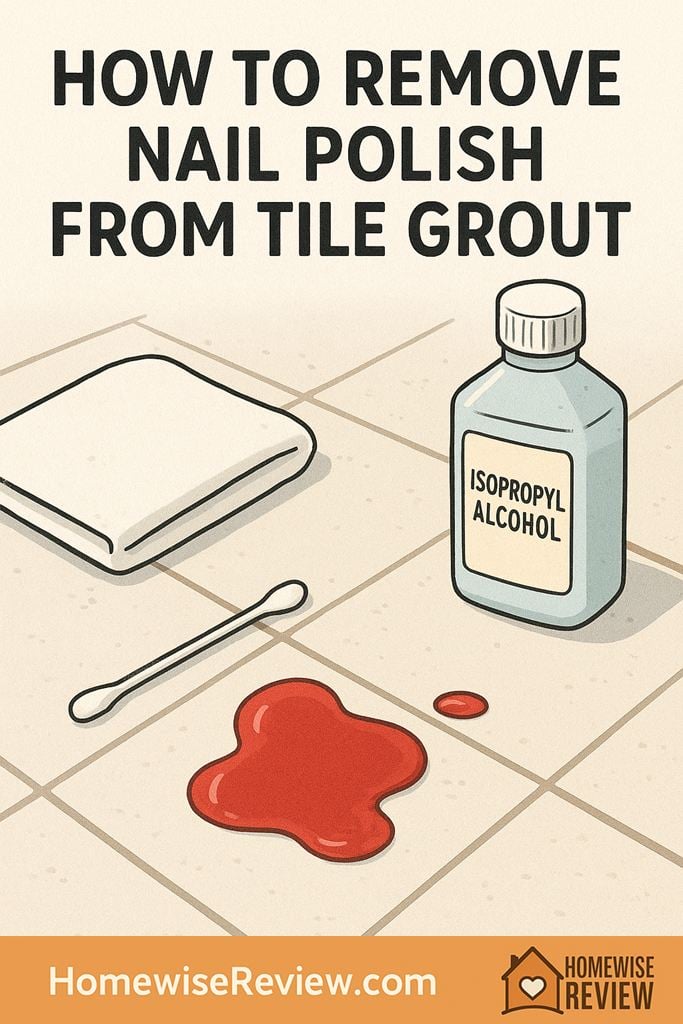
I tried to scrub a bright red polish spot out of my shower grout with a random cleaner and a stiff brush, and all I did was smear the color farther down the line. After that, I slowed down and treated it like a stain that needed lifting, not sanding. Starting with the gentlest option and blotting in small passes saved me from turning one dot into a permanent pink halo.
Nail polish on tile grout is one of those small accidents that can make an entire floor or shower look dirty. Grout is porous, so polish can sink in fast, and the wrong cleaner can spread the color or damage the seal. The key is to start gentle, work in small passes, and only “level up” to stronger solvents if you need to.
Why nail polish is so hard to remove from grout
Most nail polishes contain film-forming resins and pigments designed to cling tightly to a surface and dry quickly. On smooth tile, that film usually sits on top and can be scraped or dissolved. On grout, the liquid wicks down into tiny pores, which means you are not just removing a layer. You are lifting color out of a textured, absorbent material.
Two things determine how difficult the job will be
- Grout sealing: Sealed grout resists absorption, so polish stays closer to the surface.
- Time: Fresh polish is far easier than polish that has cured for 24 to 72 hours.
Before you start: check grout type, sealer, and color
Take 60 seconds to figure out what you are working with. It can save you from discoloration, haze, or a permanently lightened grout line.
Quick sealed vs unsealed test (1 minute)
- Drip a few drops of water onto clean grout near the stain.
- If it beads for a minute or two, your grout is likely sealed.
- If it darkens quickly as it absorbs water, it is likely unsealed or the sealer is worn.
White grout vs colored grout
- White grout: You have more room to use brightening steps later (peroxide or oxygen bleach).
- Colored grout: Strong solvents and whitening agents can create a lighter spot that is harder to hide than the original stain.
Supplies checklist (gather before you start)
Having everything at hand matters because you want to lift and blot, not rub the stain around while you hunt for tools.
- Paper towels or clean white rags
- Warm water and a few drops of dish soap
- Soft toothbrush or small grout brush
- Cotton swabs (for precision)
- Isopropyl alcohol (70% or 91%)
- Non-acetone nail polish remover
- Acetone (only if needed)
- Baking soda (optional, for a gentle scrub paste)
- Hydrogen peroxide 3% (optional, for whitening)
- Nitrile gloves and good ventilation
Pick the right method: what works best on grout
Start with the least aggressive option and move up only if the stain is not changing. The table below helps you choose based on how fresh the spill is and whether your grout is sealed.
| Method | Best for | Pros | Watch-outs |
|---|---|---|---|
| Dish soap + warm water | Fresh spills, surface smears | Safest starting point | Won’t dissolve cured polish |
| Isopropyl alcohol | Partly dried polish, light staining | Often lifts pigment without harshness | Can dull some sealers if overused |
| Non-acetone remover | Cured polish on sealed grout | Less aggressive than acetone | May be slower, can leave residue |
| Acetone | Stubborn cured polish, last resort | Fast solvent action | Can damage/strip sealer, may lighten colored grout |
| Peroxide or oxygen bleach | Faint tint left after removal | Brightens white grout | Can lighten colored grout, needs dwell time |
Step-by-step: remove nail polish from tile grout (safest first)
Work in a small area, about 6 to 12 inches of grout line at a time. The goal is to dissolve and lift, then blot away the color before it soaks deeper.
Step 1: Blot and gently lift (do not smear)
- If the polish is still wet, blot with a paper towel. Do not wipe side-to-side.
- If there is a thick puddle, use the edge of a plastic card or plastic scraper to lift excess off the grout and tile.
- Let any remaining polish fully dry before using solvents. Wet polish can spread into surrounding grout.
Step 2: Clean the area so you are treating the stain, not soap scum
- Mix warm water with a few drops of dish soap.
- Dip a toothbrush, scrub lightly along the grout, then wipe with a damp cloth.
- Dry thoroughly. Solvents work more predictably on a dry surface.
Step 3: Try isopropyl alcohol (a good “middle” option)
- Test in an inconspicuous grout spot first, especially if grout is colored.
- Moisten a cotton swab or folded paper towel with alcohol (do not flood the grout).
- Dab directly on the polish. Hold for 10 to 20 seconds.
- Scrub lightly with the toothbrush, then blot up the dissolved color.
- Repeat in short passes until you see no more transfer to the towel.
Tip: If the stain is spreading, you are using too much liquid. Switch to a barely damp swab and blot more often.
Step 4: Use non-acetone nail polish remover (targeted and controlled)
- Ventilate the room and wear gloves.
- Apply remover to a cotton swab for tight grout lines, or a small corner of a rag for larger stains.
- Dab and hold 10 to 30 seconds, then scrub lightly.
- Immediately wipe with a clean damp cloth to remove chemical residue.
- Dry, then reassess. Two or three short rounds are safer than one long soak.
If the remover contains oils or conditioners, it can leave a slick residue that attracts dirt later. A final wash with dish soap and warm water helps.
Step 5: Acetone (last resort, but often the most effective)
Acetone can strip grout sealer and may lighten pigmented grout. If you use it, keep it precise and brief.
- Patch test: Try it on a hidden section of grout and let it fully dry to check for lightening.
- Dampen a cotton swab with acetone. It should be moist, not dripping.
- Dab the stained grout for 5 to 15 seconds.
- Scrub gently, then blot immediately.
- Rinse with warm water, then wash with dish soap and rinse again.
- Dry completely with a towel.
If the polish is thick or flaking: mechanical help that will not scratch tile
Sometimes the best first move is removing the raised layer so your cleaner is only dealing with what is embedded in the grout.
Safe scraping techniques
- Use a plastic scraper, old gift card, or plastic putty knife.
- Hold it at a low angle and lift the polish up, instead of pushing it along the grout line.
- Avoid metal blades on glazed tile unless you are experienced. They can scratch or chip edges.
Gentle scrub paste option
- Make a paste of baking soda and a little water (thick like toothpaste).
- Apply to grout and scrub with a toothbrush for 30 to 60 seconds.
- Rinse and dry.
This will not dissolve polish on its own, but it can help remove residue after a solvent step.
After the polish is gone: how to remove the leftover tint or shadow
Even when the “chunk” of polish is gone, grout can hold a faint tint, especially from reds, pinks, and dark shades. Brightening is a separate step from polish removal, and you should only do it once you have stopped getting color transfer on your cloth.
Hydrogen peroxide (best for white grout)
- Blot the area dry.
- Apply 3% hydrogen peroxide to the grout (just enough to wet the line).
- Let it sit 5 to 10 minutes.
- Scrub lightly, rinse, and dry.
Oxygen bleach paste (for persistent staining)
- Mix oxygen bleach powder with a small amount of warm water to form a paste.
- Apply to grout, keep it damp, and let it dwell 10 to 15 minutes.
- Scrub, rinse thoroughly, and dry.
Important: On colored grout, peroxide and oxygen bleach can create a lighter spot. Patch test first and keep dwell times short.
When a grout pen makes sense
If you have removed the polish but the grout still looks uneven (or you accidentally lightened a spot), a grout pen can be a tidy cosmetic fix. It is best for small areas, and it works best on clean, fully dry grout.
What not to do (common mistakes that make grout look worse)
- Do not scrub aggressively right away. You can push pigment deeper into the pores.
- Do not flood the grout with remover. More liquid usually means more spread.
- Do not mix random chemicals. Keep it simple: one product at a time, rinse between steps.
- Do not use bleach first. Bleach does not dissolve nail polish well, and it can discolor grout and damage nearby finishes.
- Do not ignore rinsing. Leftover solvent or remover residue can attract dirt and create a dark “re-soil” line later.
Prevention: make the next spill a 2-minute cleanup
You do not need perfection, just a few small habits that reduce panic cleanup.
- Do nails over a washable tray or an old towel, not directly over grout lines.
- Keep cotton swabs and alcohol in the bathroom cabinet so you can act quickly.
- If your grout absorbs water quickly, consider resealing after deep cleaning and full drying.
Worth Knowing Before You Buy
The main mistake is treating grout like tile. Nail polish soaks into grout pores, so hard scrubbing with the wrong cleaner usually spreads the stain instead of pulling it out. The safer approach is to blot and lift in small passes, starting with alcohol, then non-acetone remover, and using acetone only if needed because colored or unsealed grout can lighten or turn hazy fast.
Bottom Line
For most grout, the best results come from gentle scraping, then controlled dabbing with alcohol or non-acetone remover, and acetone only if the stain will not budge. Blot often, keep liquids minimal, and rinse well so you do not leave residue behind. If a faint tint remains, brighten white grout with peroxide or oxygen bleach after the polish itself is fully removed.
See also
If you are unsure which cleaner to try first, start with our stain-rescue decision tree for quick steps and tips, and if you prefer gentler options, you may also like our roundup of non-toxic cleaning products for families.
- How to remove grease with a practical step-by-step method
- How to remove crayon from walls, clothes, and more
- How to remove hair dye stains from clothes
Frequently Asked Questions ▾
Will acetone damage tile grout?
Acetone usually will not “melt” cement-based grout, but it can strip topical grout sealer and may lighten colored grout if it pulls pigment or dries the surface unevenly. Use it sparingly, keep it on the stain only, and rinse well. If your grout is colored, patch test first and consider trying alcohol or non-acetone remover before acetone.
Can I use vinegar to remove nail polish from grout?
Vinegar is not very effective at dissolving nail polish, and it can etch some natural stone or weaken certain sealers if overused. For polish, alcohol, non-acetone remover, or acetone (carefully) are more reliable. If your tile is natural stone, avoid experimenting and stick to the gentlest options with spot testing.
How do I remove nail polish from colored grout without leaving a light spot?
Start with mechanical lifting (plastic scraper), then dab with isopropyl alcohol and blot frequently. Avoid peroxide, oxygen bleach, and long acetone soaks since those are more likely to change the grout color. If you end up with a slightly uneven line, a color-matched grout pen can be the cleanest fix.
Is a steam cleaner safe for nail polish on grout?
Steam can help loosen grime and soften some residues, but it is not a strong solvent for nail polish. It can be useful after you have removed most of the polish to help lift leftover haze, especially in shower grout. Avoid prolonged steaming if you suspect the grout sealer is already failing.
What if the polish stain is old and nothing is working?
Old stains sometimes leave pigment embedded below the surface. Try short, repeated applications of alcohol or non-acetone remover with thorough blotting, then consider a brightening step for white grout. If color remains in a small area after multiple careful passes, a grout pen or a small grout refresh may be more realistic than continued solvent use.
As an Amazon Associate, we earn from qualifying purchases made through links on our site.