

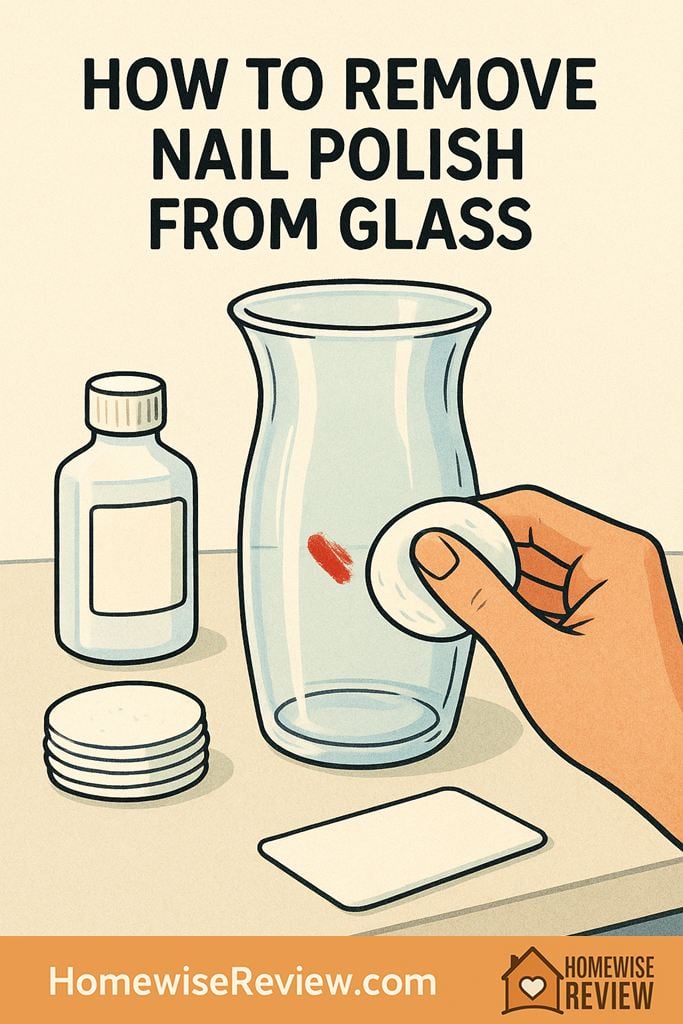
I swiped at a nail polish drip on a glass vase with the rough side of a sponge and ended up with a faint cloudy patch that looked worse than the spill. The fix was slowing down: a little acetone on a cotton round, short contact time, then lifting the softened polish with an old gift card instead of scrubbing. Now I treat glass like a no-scratch surface and keep the remover on the polish, not flooding the whole area.
Nail polish on glass is one of those messes that looks worse than it is. Because glass is non-porous, the polish usually sits on the surface, which means you can dissolve it or lift it off without deep scrubbing. The key is choosing a remover that won’t harm nearby finishes and using tools that won’t scratch.
Below is a practical, step-by-step guide for fresh spills, fully dried polish, glitter formulas, and tricky glass like mirrors and coated windows.
Before You Start: Protect the Glass (and What’s Around It)
1) Identify what kind of “glass” you’re cleaning
- Plain glass (vases, jars, table tops, windows): Usually safe for acetone and careful scraping.
- Mirrors: The reflective backing and edge paint can be damaged by soaking solvents. You want controlled, minimal liquid.
- Tinted windows or coated glass (some shower doors, specialty panes): Solvents can haze or strip coatings. Test first in a hidden corner.
- Glass with painted trim, vinyl decals, or a wood frame nearby: Acetone can soften paint and adhesives fast, so you’ll need to mask and work tightly.
2) Quick supply checklist
- Acetone (pure acetone works best) or nail polish remover
- 70% or 91% isopropyl alcohol (helpful alternative and for final wipe)
- Cotton rounds, paper towels, or a clean microfiber cloth
- Plastic scraper or old gift card
- Razor scraper (optional for thick, fully cured polish on plain glass only)
- Dish soap and warm water
- Painter’s tape (optional, for protecting frames/trim)
3) Safety and surface protection (worth 60 seconds)
- Ventilate: Open a window or run a fan when using acetone.
- Patch test: Especially on tinted or coated glass, mirror edges, or anything framed.
- Protect nearby materials: Tape off wood frames or painted trim, and place a paper towel “catch pad” under the drip zone.
- Use controlled liquid: Dampen a cloth, don’t pour remover directly onto the glass.
Choose the Best Method (Based on the Type of Polish and How Long It’s Been There)
If you match the method to the mess, you’ll remove polish faster and with less risk of scratches or clouding.
| Situation | Best remover | Best tool | Why it works (and cautions) |
|---|---|---|---|
| Fresh wet spill | Acetone or remover | Cotton round + wipe | Dissolves quickly before it cures. Keep remover off frames and decals. |
| Dried regular polish (thin layer) | Acetone | Plastic scraper + cloth | Soften then lift. Avoid aggressive scrubbing that can scratch. |
| Thick drips or multiple coats | Acetone | Razor scraper (plain glass only) | Mechanical lift is faster once softened. Incorrect angle can scratch. |
| Glitter polish | Acetone (often repeated) | Plastic scraper + patience | Glitter binders cling. Work in small sections, repeat soften and lift. |
| Mirror or glass with coating/tint | Isopropyl alcohol first, then tiny acetone if safe | Dampened cloth only | Less risk to coatings. Test and avoid soaking edges and backing. |
| “Cloudy” residue after removal | Dish soap, then alcohol | Microfiber | Removes oils and remover film for a clear finish. |
Step-by-Step: Removing Dried Nail Polish From Glass (Most Common)
This method is safe for most plain glass surfaces and gives you the best balance of speed and control.
Steps
- 1) Clean the area first. Wipe with warm, soapy water and dry. This keeps grit from causing scratches when you scrape.
- 2) Soften the polish. Dampen a cotton round or folded paper towel with acetone. Press it on the polish for 20 to 60 seconds. For vertical glass, hold it in place with gentle pressure so it doesn’t drip.
- 3) Lift with a plastic edge. Use a plastic scraper or old gift card at a low angle and gently push from the outside edge toward the center. Wipe the lifted polish onto a paper towel immediately.
- 4) Repeat in small sections. Re-wet the cloth, press, lift. Two or three rounds is normal for thicker spots.
- 5) Detail-clean the “shadow.” Dampen a fresh cloth with acetone and wipe lightly. Switch to clean cloth sections so you’re not smearing dissolved polish back on.
- 6) Neutralize and shine. Wash with a drop of dish soap and warm water, rinse, then dry with microfiber. Finish with a quick wipe of isopropyl alcohol if you see streaks.
If you still feel texture
- Press an acetone-dampened cotton round on the spot for another 30 seconds.
- Use the plastic scraper again.
- Do a final soapy wash. Remaining texture is usually leftover binder, not “stained” glass.
Step-by-Step: Cleaning a Fresh Nail Polish Spill on Glass
Fresh polish is easier, but it spreads fast. Your goal is to lift, not smear.
- 1) Blot, don’t wipe. Use a dry paper towel edge to blot up the thickest puddle.
- 2) Switch to remover. Dampen a cotton round with acetone or remover. Press and lift in short, straight motions.
- 3) Work from outside in. This keeps the spill from expanding into a larger haze.
- 4) Final wash. Dish soap and warm water removes oily residue so the glass looks truly clear.
Stubborn Situations (Glitter, Gel Top Coat, Textured Glass)
Glitter polish: plan on “soften and lift” cycles
- Glitter polish contains plastic particles and stronger binders, so it often takes 3 to 6 short rounds instead of one.
- Use acetone, press for 45 to 60 seconds, then lift with a plastic card.
- Keep switching to clean cotton rounds. Dirty rounds re-deposit sparkle and tint.
Gel top coat or very hard, glossy layers
- On plain glass, a razor scraper can save time once the polish is softened.
- Press acetone on the area first, then scrape at a low angle with light pressure.
- If you feel resistance, stop and re-soften. Forcing a blade is how scratches happen.
Textured or etched glass (where polish sits in tiny grooves)
- Use a soft-bristle toothbrush with a few drops of acetone on the bristles (not dripping).
- Scrub gently in small circles, then wipe immediately with a clean cloth.
- Finish with dish soap and warm water to remove any solvent film caught in the texture.
How to Use a Razor Scraper Safely (Only for Plain Glass)
A razor scraper can be excellent on flat, uncoated glass, but it is not for mirrors, tinted panes, or anything you cannot confidently identify.
Razor scraper checklist
- Use a new blade. Dull blades chatter and scratch.
- Hold the blade at a low angle (about 15 to 30 degrees).
- Keep the surface slightly lubricated with a damp cloth or a thin film of remover so the blade glides.
- Push in one direction with light pressure. Do not saw back and forth.
- Wipe the blade edge often so you’re not dragging debris across the glass.
What Not to Do (Common Mistakes That Make Glass Look Worse)
- Do not use steel wool or abrasive powders. They can leave permanent micro-scratches that show in sunlight.
- Do not soak mirror edges. Liquid can seep behind the glass and damage the reflective backing.
- Do not pour acetone directly on framed glass. It can drip into wood, paint, or adhesives and cause dull spots.
- Do not “scrub harder” as your first move. Softening the polish is almost always faster and safer than force.
How to Remove the Last Cloudy Film (So Glass Looks Truly Clear)
After acetone or remover, it’s normal to see a faint haze. That haze is usually solvent residue and dissolved polish oils, not damage.
- Wash: Warm water plus a drop of dish soap, then rinse.
- Dry: Use a clean microfiber cloth, not a linty towel.
- Polish the finish: Wipe with a small amount of isopropyl alcohol to remove streaks.
- For stubborn streaking: Buff with a second dry microfiber cloth. Often the “problem” is just leftover moisture.
Preventing Future Spills (Simple, Real-Life Habits)
- Do nails over a washable surface: A silicone mat, an old plate, or a folded paper bag protects glass tables.
- Keep remover within reach: Fresh spills take seconds if you can grab acetone immediately.
- Use a cap check: Wipe bottle necks so caps screw on fully. Many “mystery drips” come from polish trapped in the threads.
Bottom Line
Most nail polish comes off glass cleanly with acetone, a short soak, and gentle lifting with a plastic edge. Save razor scraping for thick, fully dried polish on plain glass only, and always finish with a quick soapy wash so the surface looks crystal clear instead of streaky.
See also
If you’re dealing with other glass messes, How to remove candle wax from glass is the closest cousin to this cleanup, and how to remove crayon is a lifesaver for kid-related marks.
- Stain-rescue decision tree for fast next steps
- Scrub Daddy sponges review for scratch-conscious scrubbing
- Dupray Neat steam cleaner review for chemical-free deep cleaning
Frequently Asked Questions ▾
Will acetone damage glass?
On plain, uncoated glass, acetone is typically safe and very effective. The bigger risk is what’s next to the glass: painted trim, wood finishes, vinyl decals, and some coatings can soften or haze, so patch test and keep liquid controlled.
Can I use nail polish remover instead of pure acetone?
Yes. Regular remover works, but it can be slower because it often contains oils and added ingredients. If you use remover, plan on an extra round or two, and always finish with dish soap to remove the oily film.
Is a razor blade safe for removing nail polish from a window or mirror?
Use a razor scraper only on plain, uncoated glass you’re confident about. Avoid mirrors, tinted windows, and coated glass because scratching or damaging the backing or coating is more likely. When in doubt, stick with acetone plus a plastic scraper.
How do I remove nail polish from the corner edge of a mirror without damaging it?
Use minimal liquid and avoid soaking. Dampen a cotton swab with acetone (not dripping), touch it to the polish for a few seconds, then gently lift with a fingernail or plastic edge. Wipe dry immediately so solvent does not seep into the mirror’s edge backing.
As an Amazon Associate, we earn from qualifying purchases made through links on our site.