

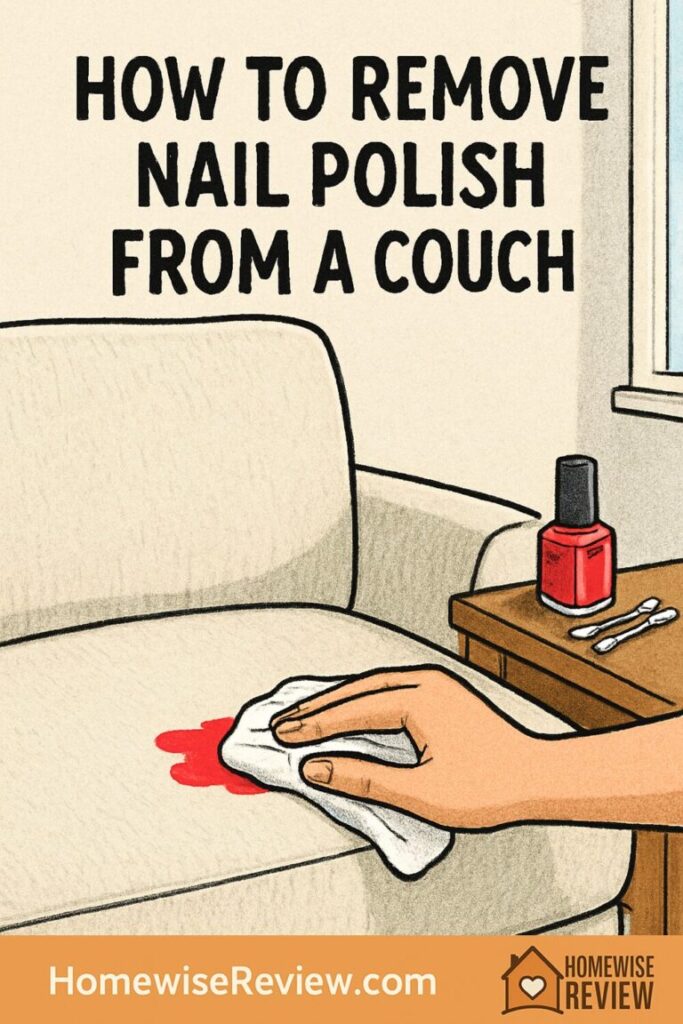
A nail polish spill on your couch feels like a disaster, but you usually have a good chance of saving the fabric if you move carefully and use the right cleaners.
Nail polish on a couch can make your stomach drop. The good news is that with a little patience and the right technique, you can usually remove or at least greatly fade the stain without wrecking your upholstery.
This guide walks you through what to do for fresh and dried spills on fabric, microfiber, and leather couches, plus the mistakes that can make a small spill much worse.
Step 1: Check your couch fabric and care tag
Before you touch the stain, look for the fabric care tag under a cushion or along the underside of the couch. You may see codes like:
- W – Water-based cleaners are safe.
- S – Use solvent-based cleaners only, not water.
- W/S – Either water-based or solvent-based cleaners can be used.
- X – Vacuum only. No liquid cleaners. These fabrics should usually be handled by a pro.
If there is no tag, assume you need to test very gently in a hidden spot. Different materials react differently to nail polish remover and alcohol:
- Cotton, linen, polyester, microfiber: Often tolerate rubbing alcohol and non-acetone remover, but always test first.
- Velvet, silk, wool, or blends: Much more delicate. Go slowly, use very little liquid, and consider calling a professional for large or old stains.
- Leather and faux leather: Need a different approach than fabric. Jump to the leather section if this is you.
Step 2: Gather safe cleaning supplies
You do not need a cabinet full of specialty products to tackle nail polish on a couch. Start with what you have, but use them carefully:
- White paper towels or white cotton cloths (no color that can transfer)
- Cotton swabs for precise dabbing
- A dull knife, plastic scraper, or old credit card (for dried polish)
- Mild clear dish soap
- Rubbing alcohol (isopropyl, 70 percent or higher)
- Non-acetone nail polish remover (colorless and fragrance-free if possible)
- Hydrogen peroxide (for white or colorfast light fabrics only)
- A small bowl of cool water
- Optional: upholstery cleaner appropriate for your fabric
Open a window, turn on a fan, and consider wearing disposable gloves if you are using nail polish remover or strong solvents. Always, always test any cleaner on a hidden area before touching the visible stain.
How to remove fresh nail polish from a fabric couch
Fresh polish is easier to remove than a dried stain, but it is also very easy to smear. Move slowly and resist the urge to scrub.
1. Gently remove excess polish
- Use a dull knife, spoon, or the edge of an old credit card to lift off as much wet polish as you can.
- Wipe the tool onto a paper towel after each pass so you are not re-depositing polish.
- Avoid pressing the spill deeper into the fabric or spreading it outward.
2. Blot, do not rub
- Place a folded white cloth or paper towel on top of the spill and lightly press.
- Lift and rotate to a clean section as soon as color transfers.
- Continue until no more polish comes up on the dry cloth.
3. Patch-test your cleaner
- In an inconspicuous spot, dab a little rubbing alcohol or non-acetone nail polish remover on the fabric.
- Blot with a white cloth and check for color transfer, fading, or roughness as it dries.
- If the fabric looks unchanged once dry, you can move on to the stained area.
4. Treat the stain with alcohol or non-acetone remover
Start with the least aggressive option that works. For many fabrics, rubbing alcohol is a good first step.
- Dampen (do not soak) a white cloth or cotton swab with rubbing alcohol.
- Working from the outer edge of the stain toward the center, gently dab the spot.
- You should see polish transfer onto the cloth. Rotate to a clean area frequently.
- If alcohol is not lifting the stain, switch to a small amount of non-acetone nail polish remover, using the same blotting motion.
- Avoid over-wetting. Too much liquid can push the stain deeper or damage the cushion filling.
5. Rinse with mild soapy water
- Mix a few drops of clear dish soap into a small bowl of cool water.
- Dip a clean white cloth into the solution, wring well, and blot the cleaned area.
- This helps lift remaining residue from the polish remover and reduces the chance of a ring forming.
- Follow with a cloth dampened with plain water to rinse.
6. Blot dry
- Use a dry towel to press moisture out of the fabric.
- If possible, point a fan at the spot to speed up drying.
- Avoid sitting on the area until it is fully dry to prevent new creases or dirt from embedding.
If a faint stain remains
Some polish colors, especially reds and deep pinks, can leave a shadow. You can try one of these careful follow-up steps:
- For white or colorfast light fabrics: Dab a small amount of hydrogen peroxide on a cloth and gently blot. Rinse with water afterward and blot dry.
- For colored fabrics: Repeat the alcohol or non-acetone remover treatment once more, then rinse and dry again.
- If fabric still looks stained but is improved, stop before you damage the fibers. A professional cleaner can sometimes finish the job without over-bleaching.
How to remove dried nail polish from a fabric couch
Dried nail polish behaves more like a crust of plastic than a liquid stain. The key is to break up the hardened polish first, then lift any remaining color.
1. Gently scrape off the crust
- Use a dull knife, spoon, or plastic scraper to chip away at the dried polish.
- Work slowly and keep the blade flat to the fabric so you are not cutting threads.
- Vacuum up the flakes as you go so they do not smear back into the fabric.
2. Soften remaining polish with alcohol or remover
- Patch-test rubbing alcohol or non-acetone nail polish remover on a hidden spot.
- Once it passes, dampen a cotton swab or cloth and press it onto the stained area for 20 to 30 seconds to soften the residue.
- Blot and gently rub in tiny circles, constantly lifting polish onto the cloth.
- Repeat as needed, switching to a fresh cloth section often.
3. Finish with soapy water and dry
- Blot with a mild dish soap and water solution to remove solvent residue.
- Rinse with a cloth dampened with plain water.
- Blot dry and let the area air dry completely.
Special cases: microfiber, velvet, and delicate fabrics
Some fabrics require extra caution to avoid water marks, matting, or texture changes.
Microfiber couches
- Check the care tag carefully. Many microfiber couches are labeled S or W/S, so solvents are usually safer than lots of water.
- Use rubbing alcohol rather than nail polish remover if possible, since it tends to be gentler on microfiber.
- Apply with a lightly dampened cloth, blotting instead of scrubbing.
- After it dries, gently brush the fibers with a clean, soft-bristled brush or a dry cloth to restore the nap.
Velvet and other delicate fabrics
- Use minimal liquid. Too much moisture can flatten or watermark velvet.
- Blot with a barely damp cloth and rubbing alcohol, using a very light touch.
- Work in the direction of the nap and avoid pressing hard.
- For large or dark stains on delicate fabrics, it is often safer to call a professional upholstery cleaner.
How to remove nail polish from leather or faux leather couches
Leather and faux leather are less absorbent than fabric, which is helpful, but they can discolor or dry out quickly with harsh solvents.
1. Wipe fresh spills immediately
- Use a dry, white cloth or paper towel to gently lift away wet polish.
- Blot, do not wipe in big strokes, so you do not smear it over a larger area.
- Try a tiny amount of rubbing alcohol or non-acetone nail polish remover on the back or underside of a cushion.
- Let it dry and look for dullness, discoloration, or a rough feel.
- If you notice any damage, stop and contact a leather specialist before treating the visible spot.
3. Gently lift the polish
- Dampen a cotton swab with rubbing alcohol or non-acetone remover.
- Touch just the stained area, working in small dabs rather than broad strokes.
- Immediately blot with a clean, dry cloth to remove both the softened polish and any excess solvent.
- Repeat with fresh swabs and cloth until the stain is gone or as light as you can safely get it.
4. Clean and condition the leather
- Wipe the area with a slightly damp cloth and a little mild soap, then wipe again with plain water.
- Pat dry with a towel.
- Finish with a leather conditioner to restore moisture and shine to the cleaned spot.
For faux leather, the same process usually works, but the material can sometimes bubble or peel if harsh solvents are used. Always test first and use the mildest product that gets results.
Common mistakes to avoid
When you are stressed about a bright splash of polish, it is easy to follow bad internet tips that do more harm than good. Avoid these pitfalls:
- Do not scrub aggressively. Scrubbing drives polish deeper into the fibers and can rough up the fabric.
- Do not use colored cloths or paper towels. Dyes can bleed and create a second stain while you are trying to fix the first.
- Be very cautious with pure acetone. It can strip color and finish from many fabrics and leather. Use only as a last resort on a fully tested, stable fabric.
- Skip hair spray, perfume, or colored cleaning sprays. They often contain dyes and sticky ingredients that attract dirt and can permanently stain.
- Do not soak the cushion. Excess water or solvent can lead to water marks, mold, or lingering odors inside the cushion.
- Do not use bleach on colored upholstery. It will usually remove fabric dye along with the nail polish, leaving a pale spot.
When to call a professional
DIY methods are great for small, fresh spills on everyday fabrics. It may be worth calling a pro if:
- The couch is very expensive, vintage, or made with delicate fabric like silk, wool, or rayon.
- The spill is large or has soaked deeply into a cushion.
- You have already tried home methods and the stain is not improving, or the fabric looks stressed.
- The care tag says X (vacuum only) or you are unsure what the fabric is.
When you call, describe the exact polish type and color, what you have already tried, and the fabric content if known. This helps the cleaner choose the safest treatment.
How to prevent future nail polish spills on your couch
A few small habits can save you from repeating this clean up:
- Do your nails at a table with a hard surface you can easily wipe down.
- If you like to paint nails while watching TV, spread a tray, towel, or old blanket over the couch first.
- Keep nail polish and remover in a small bin or caddy that is easy to carry to your chosen nail station.
- Set a house rule that open nail polish bottles stay off soft furniture.
See also
For a quick visual roadmap when you are staring at a fresh spill, try our stain-rescue decision tree for nail polish on upholstery, and if you prefer gentler formulas, see our guide to non-toxic cleaning products that work on furniture stains.
- Using Mrs. Meyer’s multi-surface cleaner on upholstery stains
- Method all-purpose cleaner for spot-cleaning couches
- How Scrub Daddy sponges can help with tough fabric stains
FAQ
Will nail polish remover ruin my couch?
It can, depending on your fabric and the type of remover. Acetone-based removers are harsh and can strip color or finish from many fabrics and leather. Non-acetone removers and rubbing alcohol are usually safer, but you must always test them on a hidden spot first. If you see fading, roughness, or color on your test cloth, avoid that product on the visible stain and consider calling a professional.
Can I use acetone on a microfiber couch?
It is risky to use straight acetone on microfiber because it can strip color and damage the fibers. For most microfiber couches, rubbing alcohol is a safer option and is often effective on nail polish when you blot carefully. If alcohol alone does not work and you are tempted to try acetone, test a tiny amount in a very hidden area first and stop immediately if you see any damage.
What if I do not have nail polish remover?
If you do not have remover, rubbing alcohol is the next best option for many fabrics. Use it the same way you would use remover: patch-test first, then dab from the outside of the stain toward the center with a white cloth. For very small, fresh spills, quick blotting and then cleaning with a mild dish soap and water solution may remove enough polish to make the spot nearly invisible.
Can I completely remove red or dark nail polish from a couch?
Red, berry, and other dark colors are the toughest because their pigments cling strongly to fabric. You can often get the stain much lighter or nearly invisible, especially if you treat it while it is fresh, but sometimes a faint shadow remains. Multiple gentle treatments are better than one aggressive attempt that damages the fabric. On expensive or delicate upholstery, a professional cleaner may be able to safely push the results further than you can at home.
How long will my couch take to dry after cleaning a nail polish stain?
Drying time depends on the fabric and how much liquid you used, but count on several hours. Light spot cleaning on a fabric couch may feel dry to the touch within 2 to 4 hours, while thicker cushions can take most of a day to dry completely inside. Speed things up by blotting well, pointing a fan at the area, and keeping the room well ventilated. Avoid using a hair dryer on high heat, especially on delicate fabrics or leather.
Is it better to tackle the stain myself or wait for a professional?
For small, fresh spills on everyday fabric or microfiber, careful DIY cleaning usually makes sense and often works well. If the couch is expensive, the fabric is delicate, the stain is large, or your test spot reacts badly to common cleaners, it may be safer to lightly blot away excess polish and then stop until a professional can take a look. Waiting in that case can actually prevent permanent damage.
As an Amazon Associate, we earn from qualifying purchases made through links on our site.