

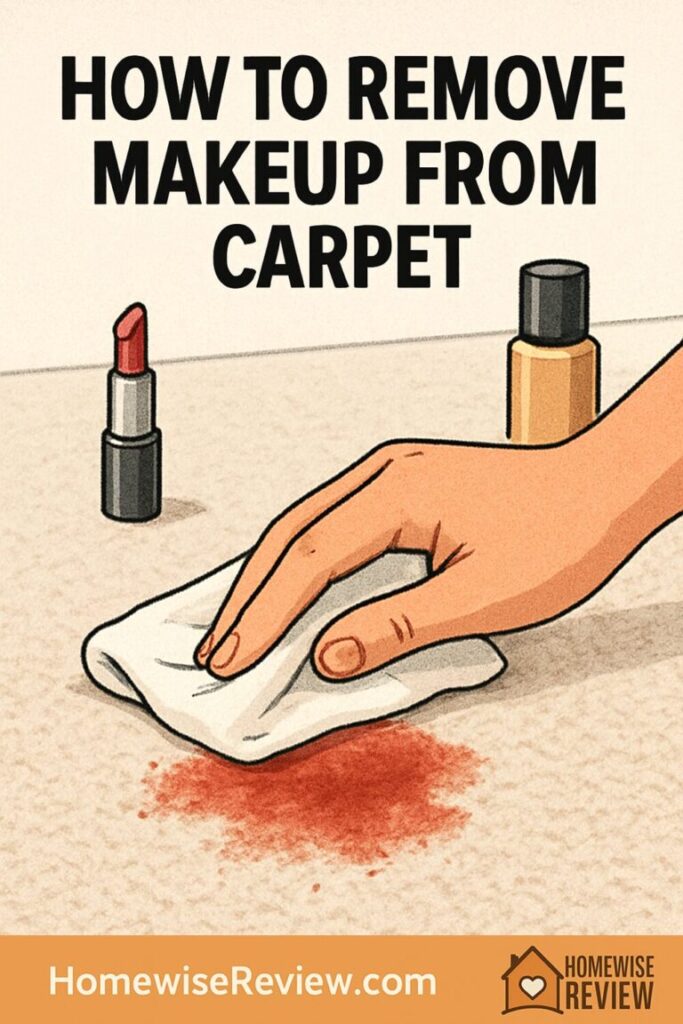
Spilled foundation or smeared mascara on carpet does not have to be permanent if you act quickly and use the right method for the type of makeup. Save your carpet with safe, step by step stain removal you can trust.
Makeup stains on carpet look dramatic, but most can be removed if you match the method to the type of product and work in the right order. This guide walks you through exactly what to do for fresh and dried stains, from foundation and powder to lipstick and mascara.
Before you start: protect the carpet and test products
Before you grab the nearest cleaner, take a minute to set yourself up for success. That short pause can prevent a small stain from turning into a bigger, permanent patch.
- Act quickly, but do not rub. Fresh makeup is much easier to remove than dried, but aggressive scrubbing can drive pigment deeper into the fibers.
- Blot with white cloths or paper towels. Colored or printed towels can transfer dye to your carpet.
- Check your carpet type. Synthetic carpets (nylon, polyester, olefin) are fairly forgiving. Wool and other natural fibers are more delicate and can be damaged by strong chemicals or high heat.
- Test every cleaner in a hidden spot. Try your solution on an inconspicuous area first, blot, then let it dry to make sure there is no color change or damage.
- Gather simple tools: a dull knife or spoon, white cloths or paper towels, a small bowl, mild dish soap, white vinegar, rubbing alcohol (isopropyl), and cool to lukewarm water.
Know your stain: how different makeup types behave on carpet
The right method depends on what is in the makeup. In general, the more oil and pigment a product has, the more carefully you need to treat it.
Liquid and cream foundation
These usually contain oils, pigments, and sometimes sunscreen. They spread easily and can leave a dark ring if you use too much water, so focus on gentle blotting and small amounts of cleaner.
Powder makeup (blush, bronzer, eyeshadow, setting powder)
Loose powders fall between carpet fibers and can smear if they get wet too soon. The key is to remove as much dry product as possible before you introduce moisture.
Lipstick and lip gloss
Lip products are heavy on oils and waxes and packed with pigment. You will usually need a solvent like rubbing alcohol, followed by a soapy rinse, to fully break them up.
Mascara, eyeliner, and brow products
These are dark, sticky, and often water resistant. Treat them as oily stains and expect to repeat a couple of cycles of blotting and cleaning.
Waterproof or long wear formulas
Anything labeled waterproof, smudge proof, or 24 hour wear resists plain water. Start with a very small amount of rubbing alcohol or a non oily makeup remover on a cloth, then follow with a mild soapy solution to remove residue.
General steps for fresh makeup spills on carpet
If you just dropped foundation or brushed a compact onto the floor, start with this basic process, then move to the product specific sections if needed.
Step 1: Remove excess product
- Liquids and creams: Use a spoon or dull knife to gently scoop up globs of makeup. Work from the outside of the spill inward, so you do not spread it.
- Powders: Lightly shake or tap the area to loosen loose powder, then carefully vacuum using the hose attachment. Avoid pressing the powder deeper into the carpet.
Step 2: Blot, do not scrub
Place a folded white cloth or paper towel over the stain and gently press straight down. Lift, move to a clean area of the cloth, and repeat. Keep blotting until very little transfers to the cloth.
Rubbing side to side can fray carpet fibers and spread the stain into a larger halo, which is much harder to remove.
Step 3: Apply a mild cleaning solution
For most fresh stains, start with a safe, gentle mix:
- Mix 1 teaspoon of clear, mild dish soap with 1 cup of lukewarm water.
- Lightly dampen a clean white cloth in the solution. Do not pour it straight on the carpet.
- Blot the stain, working from the outer edge toward the center. Rotate to a clean part of the cloth as the stain lifts.
Step 4: Rinse and blot dry
- Dampen a new cloth with plain cool water and blot the area to remove any soapy residue. Leftover soap can attract dirt later.
- Press a dry towel over the spot and stand on it to pull out as much moisture as possible.
- Fluff the carpet fibers with your fingers and let the area air dry completely before walking on it.
How to remove specific makeup stains from carpet
Liquid and cream foundation stains
Foundation is one of the most common carpet makeup stains, especially near vanities and closets. Here is a focused method that works for most formulas.
- Scoop and blot: Gently lift any thick product with a spoon, then blot with a dry white cloth until you are removing very little foundation.
- Use dish soap solution: Mix 1 teaspoon of clear dish soap with 1 cup of warm (not hot) water. Blot the stain with a cloth dampened in the solution, working from the edges inward.
- Address oily residue: If the stain looks greasy, add 1 teaspoon of white vinegar to your soapy solution and continue blotting.
- Try rubbing alcohol for stubborn spots: For set in or long wear foundation, lightly dampen a clean cloth with rubbing alcohol and dab at the stain. Follow immediately with a plain water blot to rinse.
- Rinse and dry: Blot with plain water, then with a dry towel until the area feels barely damp.
On wool or delicate carpets, skip the vinegar and use very small amounts of rubbing alcohol, always tested in a hidden area first.
Powder makeup spills (blush, bronzer, setting powder, eyeshadow)
Resist the urge to use water immediately on powder. Moisture turns loose particles into paste that is harder to remove.
- Vacuum first: Use the hose with no brush attachment and slowly vacuum up as much powder as possible. Keep the nozzle slightly above the surface so you do not grind powder in.
- Lift stubborn clumps: For packed powder, gently nudge it up with a spoon or credit card and vacuum again.
- Spot clean remaining color: If there is still visible pigment, use the dish soap and water solution. Dampen a cloth and blot lightly.
- Rinse and dry: Blot with plain water, then press with a dry towel.
Highly pigmented eyeshadow may leave a faint tint. A small amount of rubbing alcohol on a cloth, followed by a water rinse, can often remove that leftover color.
Lipstick and lip gloss stains
Lipstick combines oil, wax, and bright pigment, so you need to dissolve the oils first, then wash away what is left.
- Scrape off excess: Carefully lift any thick lipstick with a dull knife or spoon. Wipe the tool between passes so you do not smear color into clean fibers.
- Blot with a dry cloth: Press a dry white cloth onto the stain to pull out surface oils.
- Use rubbing alcohol: Dampen a corner of a clean cloth with rubbing alcohol and gently dab the stain. Work slowly, checking the cloth often as color transfers.
- Follow with soapy water: Once most of the color is gone, switch to the dish soap and water solution to remove remaining residue.
- Rinse and dry thoroughly: Blot with plain water, then press with a dry towel until nearly dry.
Avoid acetone based nail polish removers on carpet, especially on synthetic fibers, since they can damage backing and discolor dyes.
Mascara, eyeliner, and brow product stains
These stains look small but intense. They are usually oil based, so treat them similarly to lipstick but on a smaller scale.
- Blot gently: Use a dry cloth to pick up any excess product. Avoid wiping, which can turn a tiny dot into a streak.
- Apply rubbing alcohol: Use a cotton swab or the corner of a cloth dampened with rubbing alcohol to dab directly on the mark.
- Lift and rotate: Continue dabbing, switching to clean areas of the cloth as color transfers.
- Wash out residue: Finish with the dish soap solution to remove leftover oils, then blot with plain water.
For waterproof mascara or liner, you may need two or three cycles of alcohol blotting followed by soapy water to fully remove the shadow of the stain.
Old or dried makeup stains
Once makeup has dried into carpet, you must first soften it before it will release.
- Loosen the surface: Gently scrape any crusted material with a dull knife. Vacuum up loose flakes.
- Pre soak with soapy water: Lightly mist or dab the area with the dish soap solution. Let it sit for 5 to 10 minutes to soften the stain.
- Blot, do not scrub: Press with a cloth and lift straight up. Repeat until you stop seeing progress.
- Use targeted help: For lingering color, apply a small amount of rubbing alcohol or a drop of hydrogen peroxide on light, colorfast carpets. Blot immediately and test first.
Hydrogen peroxide can lighten dyes, so only use it on white or very light carpets that pass a careful test in a hidden area.
Cleaning products: store bought vs DIY solutions
You can remove most makeup stains with simple household products, but there are times when a dedicated carpet cleaner is worth it. Here is how the options compare so you can choose quickly.
DIY solutions
- Dish soap and water (1 teaspoon soap to 1 cup water): gentle, safe on most carpets, excellent starting point for foundation and many powders.
- White vinegar and water (1 part vinegar to 3 parts water): helps cut greasy residues and deodorize, but should be used lightly and avoided on natural fibers that react poorly to acids.
- Rubbing alcohol: effective on oily, waxy, and waterproof makeup like lipstick and mascara. Always apply to a cloth, never pour directly on carpet.
Advantages: Low cost, likely already in your home, and gentle if used correctly. You can also control how strong the mixture is.
Drawbacks: May take more time and repeated applications, and they are less effective on extremely stubborn or old stains.
Store bought carpet stain removers
If you deal with frequent spills or have a high traffic area near a vanity, keeping a carpet stain remover on hand can pay off.
- Look for products labeled safe for your specific carpet type.
- Avoid chlorine bleach based cleaners, which can strip color and weaken fibers.
- Always follow the label directions and test in a hidden spot first.
Advantages: Designed for tough stains, usually faster acting, and some include built in odor control or fabric protectants.
Drawbacks: Higher cost, sometimes strong odors, and more risk of color change if you skip testing.
What not to do on makeup stains
When you are stressed about a stain, it is easy to do something that makes it harder to fix. Avoid these common mistakes.
- Do not scrub or brush aggressively. This roughs up fibers and spreads pigment.
- Do not pour cleaner directly on the stain. Excess liquid drives makeup deeper and can soak the carpet pad.
- Avoid very hot water. Heat can set certain dyes and proteins, making the stain permanent.
- Skip bleach and harsh solvents. Chlorine bleach, acetone, and paint thinners can damage carpet backing and strip color.
- Do not skip the rinse. Any cleaner left in the fibers can attract dirt later, leaving a gray patch where the stain used to be.
When to call a professional
Most everyday makeup stains are fixable at home, but in some cases a professional carpet cleaner is the safest choice.
- The stain covers a large area or soaked deep into the padding.
- Your carpet is wool, silk, or an expensive natural fiber you are nervous to treat.
- You have tried several careful methods and the stain is still very visible.
- The makeup included self tanner or strong dyes that left a noticeable color change.
A pro has stronger tools, controlled heat, and cleaning solutions tailored to your carpet type, which can save you from damage on costly flooring.
See also
For more help deciding how to tackle tricky spots, use our stain-rescue decision tree alongside tips for using Scrub Daddy sponges on tough stains.
- Consider whether a Dupray Neat steam cleaner is worth it for deep carpet and upholstery cleaning.
- Learn how Mrs. Meyer’s multi-surface cleaner fits into a whole home cleaning routine.
- Get practical Method all-purpose cleaner tips for everyday messes beyond makeup.
FAQ
Can I use makeup remover wipes on carpet stains?
Sometimes, but with caution. Many makeup wipes contain oils and conditioners that can leave a residue in carpet fibers. If you try one, use it to loosen the stain, then immediately follow with a dish soap and water solution and a plain water rinse so you are not left with a greasy patch that attracts dirt.
Is hydrogen peroxide safe for removing makeup from carpet?
Hydrogen peroxide can help with certain pigmented stains on light, colorfast carpets, but it has a mild bleaching effect. Only use 3 percent household peroxide, test in a hidden area, and apply with a cotton swab or cloth rather than pouring. Avoid it entirely on dark or richly colored carpets where lightening would be obvious.
What if I do not know what kind of makeup caused the stain?
If you are unsure, start with the gentlest option. Blot with a dry cloth, then use the dish soap and water mixture. If color remains and the carpet passes a colorfastness test, move up to small amounts of rubbing alcohol on a cloth, followed by a water rinse. Avoid strong chemicals until you know more about the carpet and stain.
How long should I let cleaning solution sit on a makeup stain?
For fresh stains, you usually do not need much dwell time. Apply the cleaner to your cloth and start blotting right away. For dried or stubborn makeup, let the soapy solution sit on the stain for 5 to 10 minutes to soften it, but do not let the area get soaked to the point that water reaches the pad beneath the carpet.
Why does a stain reappear after the carpet dries?
Reappearing stains often mean some of the makeup soaked into the backing or pad and wicked back up as the surface dried. To fix this, repeat your cleaning, using very little liquid but more blotting with dry towels to pull moisture out from deeper layers. In severe cases, a professional cleaner with extraction equipment may be needed.
As an Amazon Associate, we earn from qualifying purchases made through links on our site.