

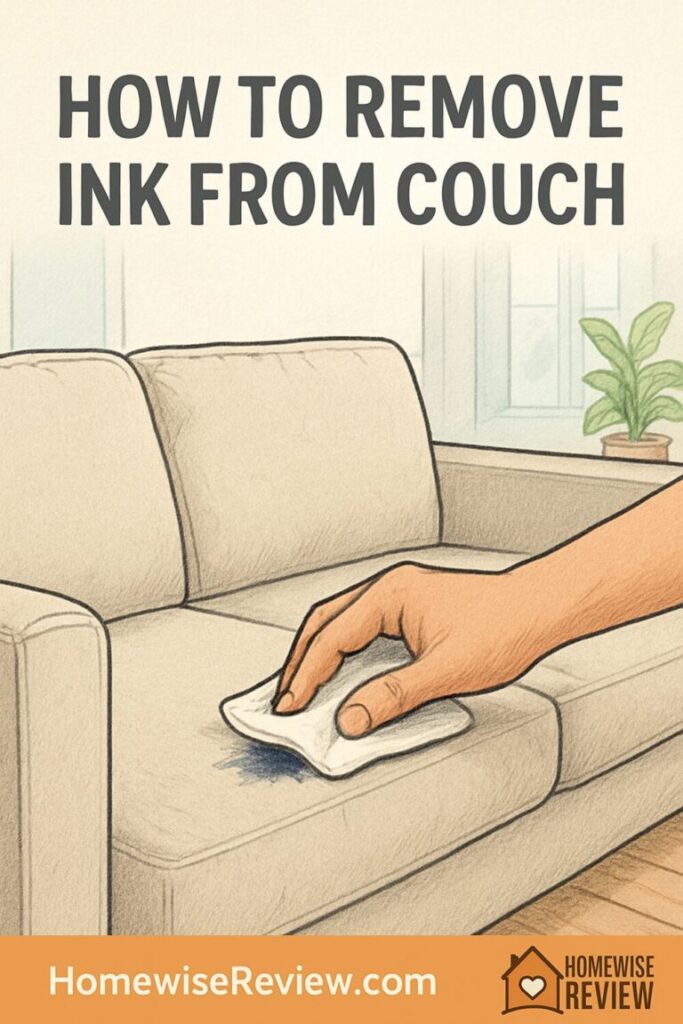
A leaking pen or stray marker line on your couch can feel permanent, but most ink stains can be lifted if you act quickly and use the right method for your fabric. Here is how to treat ink on your sofa safely, step by step.
Ink is one of those stains that looks final, especially on a light couch. The good news is that with the right approach you can often remove or at least dramatically fade ink without damaging your upholstery.
This guide walks you through what to do immediately, how to choose the safest cleaning method for your couch material, and how to handle both fresh and older ink stains.
Before you start: Know your couch and your ink
Ink and couch fabrics react very differently to cleaners. A trick that works on a polyester slipcover can permanently discolor a leather sofa. Take one minute to gather two key pieces of information before you touch the stain.
Check the upholstery cleaning code
Look for the upholstery tag, usually under a seat cushion or on the underside of the couch. You will see a letter code:
- W means water based cleaners are safe.
- S means use solvent only, no water based cleaners.
- WS means water based or solvent cleaners are usually safe.
- X means vacuum only. Do not spot clean yourself; call a professional.
If you do not see a tag or code, treat the fabric as delicate and always test your cleaner on a hidden spot first.
Identify the type of ink
You probably will not know the exact formula, but rough types are enough:
- Ballpoint pen is oil based and responds well to rubbing alcohol.
- Gel pens and rollerball pens are often water based dyes that respond to mild soap and oxygen based stain removers.
- Permanent markers are the toughest and may only fully come out with professional products or cleaning.
When in doubt, start with the gentlest method that can realistically touch ink, then slowly step up. Harsh chemicals can fade fabric or strip the finish from leather much faster than they remove the stain.
Emergency steps the moment ink hits the couch
If the ink is still wet, quick action prevents it from spreading deep into the cushions.
- Blot, do not rub. Use a clean white cloth or paper towel to gently dab the ink. Work from the outside edge of the stain toward the center. Change to a clean section of cloth as soon as it picks up color.
- Keep the area small. Avoid flooding the spot with water or cleaner at first. Extra liquid helps ink travel deeper and wider.
- Remove loose items. If the cushion cover is removable, take it off, but do not wash it yet. If ink has soaked into a seam or zipper, blot there too.
- Test your cleaner. Before treating the stain, test your chosen product on an inconspicuous spot, such as the back or underside of the couch. Check for color bleeding, fading, or fabric damage after it dries.
Once you have blotted as much as possible, pick the method that matches your couch material.
How to remove ink from fabric or microfiber couches
Most fabric and microfiber sofas have a W or WS tag, which gives you options. You will still want to work carefully and avoid overwetting the cushion.
What you will need
- Clean white cloths or microfiber towels
- Cotton swabs or cotton balls
- Mild dish soap
- Rubbing alcohol (isopropyl alcohol, 70 percent is usually enough)
- Small bowl of cool water
- Optional: oxygen based stain remover or upholstery spot cleaner labeled safe for your fabric
Method 1: Dish soap and water for fresh or water based ink
This is the gentlest option and a good starting point for fresh, light ink stains on W or WS fabrics.
- Mix your solution. In a small bowl, add 1 teaspoon of mild dish soap to 1 cup of cool water. Stir gently to avoid heavy suds.
- Lightly dampen a cloth. Dip a clean white cloth into the solution, then wring it out well so it is just damp, not dripping.
- Blot the stain. Press the damp cloth onto the ink stain, working from the outside in. Lift and rotate to a clean area of the cloth as ink transfers.
- Rinse the area. Once the ink stops transferring, lightly blot with another cloth dampened in plain cool water to remove soap residue.
- Dry thoroughly. Blot with a dry towel to pull out moisture. If possible, point a fan at the area until completely dry to prevent water rings.
If you see no improvement after a few minutes, move to an alcohol based method instead of scrubbing harder.
Method 2: Rubbing alcohol for ballpoint and stubborn ink
Rubbing alcohol is very effective on ballpoint pen stains and many other inks, but it can be drying. Always test on a hidden area of your couch first.
- Prepare the area. Place a clean white cloth or folded paper towel under the stained section if possible, especially on removable cushion covers, so ink does not transfer deeper.
- Apply alcohol to a swab, not the couch. Moisten a cotton swab or corner of a cloth with rubbing alcohol. The fabric should be damp, not soaking.
- Blot with control. Gently dab the ink stain with the alcohol dampened swab, again working from the outside edge inward. You should see ink lifting onto the swab or cloth.
- Switch to clean sections often. As soon as the swab or cloth picks up ink, switch to a fresh one. This keeps you from re-depositing color.
- Limit contact time. Once you notice the stain has lightened significantly or your test area starts to look dull, stop and move to a clean, slightly damp cloth to blot away leftover alcohol.
- Dry completely. Blot with a dry towel and let the area air dry fully.
If needed, you can repeat this process once or twice, letting the fabric dry in between rounds. Multiple gentle passes are safer than one aggressive session.
Method 3: Oxygen based cleaner for lingering color
For W or WS fabrics that still have a shadow of color after soap or alcohol, an oxygen based cleaner can help. Do not use this method on silk, wool blends, or fabrics with an X tag.
- Mix according to the label. In a small bowl, mix a little powdered oxygen cleaner with cool water or use a ready made upholstery product, following the directions for upholstery.
- Test first. Spot test the solution on a hidden part of the couch and let it dry fully to confirm there is no bleaching or color shift.
- Apply sparingly. Lightly dab the stain with the solution using a cloth or soft sponge, then let it sit for 5 to 10 minutes.
- Blot and rinse. Blot with a clean damp cloth to lift both the cleaner and the ink residue. Avoid soaking the cushion.
- Dry well. Blot with a dry towel, then allow the spot to air dry.
How to remove ink from leather and faux leather couches
Leather and many faux leathers can be easy to wipe clean if you act quickly, but harsh cleaners can permanently dull or discolor the finish. Always start with the mildest approach and use products specifically labeled as safe for leather when possible.
What you will need
- Soft white cloths
- Mild liquid soap, such as a gentle hand soap
- Rubbing alcohol or a dedicated leather ink remover (optional, for tough stains)
- Leather conditioner
Step 1: Try a mild soap solution
For fresh, light ink on leather or vinyl, a gentle soap and water mix may be enough.
- Mix your solution. Combine a few drops of mild soap with 1 cup of lukewarm water.
- Dampen a cloth. Dip a cloth into the soapy water and wring thoroughly so it is just slightly damp.
- Blot, do not scrub. Gently dab the ink stain, lifting away color. Avoid scrubbing, which can spread the ink and damage the finish.
- Wipe with plain water. Use a second cloth dampened with plain water to remove any soap residue.
- Dry and condition. Pat dry with a soft towel. Once fully dry, apply a small amount of leather conditioner over the cleaned area to restore moisture and shine.
Step 2: Use rubbing alcohol carefully for stubborn ink
Rubbing alcohol can remove ink from many leather and faux leather surfaces, but it also strips oils. Use it sparingly and always follow with conditioner.
- Test in a hidden spot. Apply a tiny amount of alcohol to a cotton swab and dab an unseen area, such as under a cushion or on the back. Once it dries, look for lightening, roughness, or dull patches. If you see damage, skip this method.
- Apply with precision. Dampen a cotton swab or the corner of a cloth with alcohol and gently touch only the ink line or spot. Work slowly and avoid spreading the liquid outside the stain.
- Lift the ink. As the ink transfers to the swab, switch to a clean one. Take breaks and check the leather after each short round to avoid over treating.
- Neutralize and condition. Wipe the area with a barely damp cloth to remove leftover alcohol, then let it dry. Finish by applying a leather conditioner to the entire cleaned section to even out the appearance and replace lost oils.
If you are concerned about damaging an expensive leather sofa, using a dedicated leather ink remover or calling a leather specialist is often worth it.
Dealing with old or set in ink stains
Old ink that has dried for days or weeks is tougher because it has settled into the fibers. The approach is similar, but expect more gradual results and know that very old stains may never disappear completely.
- Start gentle first. Try dish soap and water on fabric or mild soap on leather before jumping to strong solvents.
- Use multiple light treatments. Allow the area to dry fully between attempts with alcohol or oxygen cleaner. Gentle repetition is safer than soaking or scrubbing.
- Manage expectations. Your goal may shift from perfect removal to making the stain much less noticeable, especially on older fabric or darker inks.
What not to do when removing ink from a couch
The wrong move can set the stain permanently or damage the upholstery. Avoid these common mistakes:
- Do not scrub aggressively. Scrubbing forces ink deeper and can rough up the fabric or leather finish.
- Do not use bleach or acetone. Chlorine bleach, nail polish remover, and similar products are far too harsh for most couches and can strip color instantly.
- Do not mix random cleaners. Combining products is unnecessary and can create harmful fumes or unpredictable reactions.
- Do not skip the patch test. Always test a new cleaner on an inconspicuous area and let it dry fully before using it on the stain.
- Avoid colored cloths or sponges. Dyes from your cleaning cloth can transfer to damp upholstery.
When to call a professional cleaner
Sometimes the safest and most economical choice is to hand the problem to a pro, especially when:
- The tag lists an X code or the fabric is silk, wool, or another delicate material.
- The couch is expensive, new, or under warranty.
- The ink stain is very large, deeply soaked, or you have already tried a couple of methods without success.
- You notice color loss, stiffness, or a rough feel where you spot cleaned.
Professional upholstery or leather cleaners have stronger yet fabric specific products and powerful extraction tools that pull moisture and dissolved ink out more effectively than home methods.
See also
If you find yourself battling more stains than just ink, use our helpful stain rescue decision tree along with this guide to non toxic cleaning products for families to build a simple, reliable cleaning kit.
- Learn how versatile scrubber sponges handle messes in our Scrub Daddy sponge review.
- See how a plant based spray performs in our Method all purpose cleaner review.
- Compare another popular option in our Mrs. Meyers multi surface cleaner review.
FAQ
Will rubbing alcohol ruin my couch?
Used correctly, rubbing alcohol can safely remove ink from many fabric and some leather couches, but it always carries a risk. It can fade certain dyes, leave a dull patch, or dry out leather if you use too much or skip conditioning afterward.
To use it as safely as possible, test a small hidden area first and let it dry completely. If the color stays even and the texture feels normal, proceed with small amounts, applied to a cloth or cotton swab instead of directly to the couch, and stop as soon as the ink stops lifting.
How do I get pen ink out of a microfiber couch?
Most microfiber couches clean up well if you follow the care tag. For a W or WS code, start by blotting, then try a mild dish soap and water mix. If the stain remains, move to small amounts of rubbing alcohol, applied with a cloth, and blot until the ink transfers.
Some microfiber is labeled S, which means you should avoid water and use only solvent based cleaners. In that case, use rubbing alcohol more sparingly, testing first, or choose a commercial solvent upholstery cleaner that lists microfiber as compatible.
Can I use hair spray to remove ink from upholstery?
Old advice often suggests hair spray for ink, but modern formulas are less effective and can leave sticky residue and added fragrance in your couch. The alcohol content is also unpredictable, which makes results inconsistent and raises the risk of damage.
Rubbing alcohol or a dedicated upholstery cleaner is more reliable, easier to rinse, and less likely to attract dirt afterward. If you already tried hair spray, follow up by gently blotting with a damp cloth and a tiny bit of mild soap to remove the residue.
How long does it take to remove an ink stain from a couch?
The active cleaning usually takes 10 to 30 minutes, but you should allow extra time for the area to dry completely between treatments. Fresh stains that you treat right away often come out in a single, short session.
Older or heavier stains may require several gentle passes over a day or two. Trying to rush by scrubbing hard or soaking the cushion increases the risk of spreading ink and damaging the fabric.
What if the ink stain is on removable couch covers?
Removable covers give you more control, but you should still spot treat the stain before machine washing. Blot up surface ink, then use dish soap, rubbing alcohol, or an oxygen based stain remover on the specific area, following the fabric code and testing first.
Once the stain has faded, wash the cover by itself in cool water on a gentle cycle and air dry. Avoid high heat from the dryer until you are sure the stain is gone, since heat can set any remaining ink permanently.
Is it worth trying to fix permanent marker on a couch at home?
Permanent marker is one of the toughest ink stains to remove, and full removal at home is not always realistic. You can still try gentle methods on fabric or leather to fade the mark, but stop if you see color loss or damage to the upholstery.
If the couch is valuable or the stain is in a very visible spot, consulting a professional cleaner is usually the safest path. They have specialized solvents and tools that may salvage the area more effectively than home treatments.
As an Amazon Associate, we earn from qualifying purchases made through links on our site.