

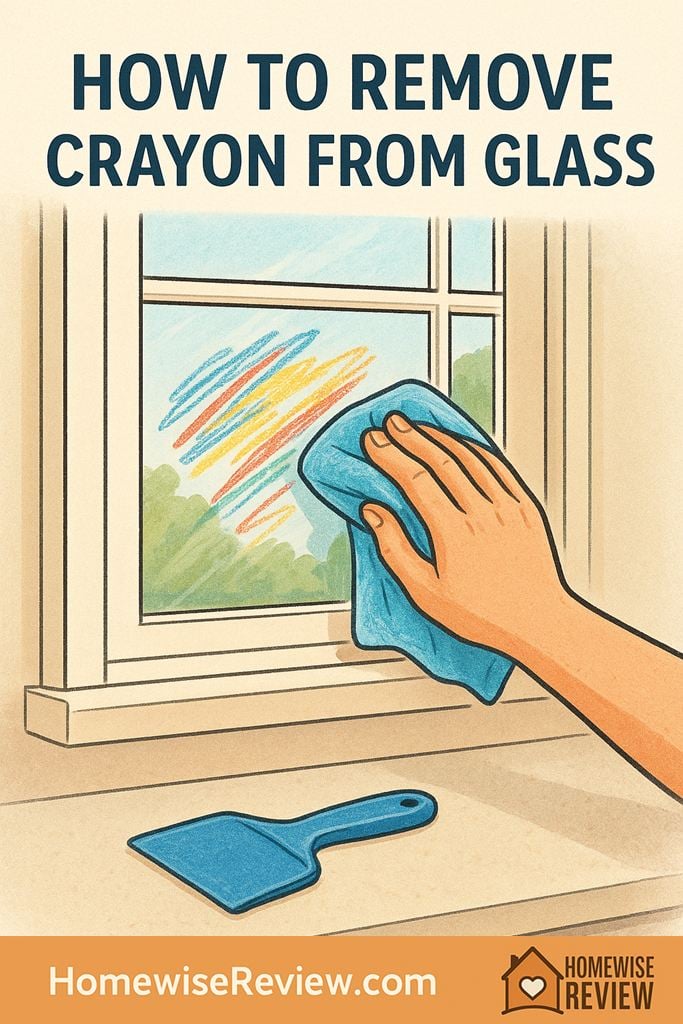
I tried to scrub crayon off a mirror with a rough sponge and ended up with a smeary wax haze that looked worse than the original scribble. The fix was slowing down and softening the wax first, then using a gentle edge with a light touch instead of pressure. Now I always check for any tiny grit on the glass before I scrape, because that is what turns a quick cleanup into a scratch.
Crayon marks on glass are mostly wax and pigment, which is why they smear when you try to “just wipe them.” The safest approach is to soften or dissolve the wax first, then lift it off the surface with a gentle edge.
Start with the least aggressive method and move up only as needed. That keeps you from scratching glass, dulling coated surfaces, or leaving a hazy residue you have to re-clean later.
Why crayon sticks to glass (and why it smears)
Crayons are made from waxes (like paraffin) plus color pigments. On smooth glass, the wax can grip in a thin film, especially if it was pressed hard or warmed by sun, a heater vent, or hot water.
When you use plain water, you often spread the wax around instead of removing it. The goal is to either lift the wax mechanically (scrape safely) or break it down chemically (alcohol, oil, or a mild solvent), then finish with a streak-free glass clean.
Before you start: identify the glass and protect the area
Most everyday glass cleans up easily, but a few surfaces need extra care. Taking 30 seconds to check the setting helps you choose the safest method the first time.
Common glass surfaces and what to watch for
- Windows and patio doors: Usually straightforward, but protect wood trim, painted sills, and window screens from drips.
- Mirrors: Avoid flooding the edges, since moisture can creep behind the mirror backing and cause black spots over time.
- Shower doors: Soap scum can trap pigment. You may need a degreasing step after wax removal.
- Coated or tinted glass (some low-E windows): Stay gentle. Avoid harsh solvents and abrasive powders.
- Glass tables: Scrapers are fine if used correctly, but watch for grit. One grain of sand under your tool can scratch.
Quick safety checklist
- Test your method in a small corner first, especially on tinted or coated panes.
- Remove grit: dust the glass with a dry microfiber cloth before scraping.
- Use a plastic scraper first when possible, and keep blades flat if you use a razor tool.
- Ventilate if using rubbing alcohol or a solvent-based product.
What you need (simple, budget-friendly supplies)
You do not need specialty products for most crayon-on-glass situations. A few basics cover almost every scenario.
- Microfiber cloths (2 to 4)
- Warm water + a few drops of dish soap
- Plastic scraper or old gift card
- Rubbing alcohol (isopropyl alcohol, 70% or 91%)
- Paper towels (optional, for the first messy pass)
- Glass cleaner or a vinegar-water mix (for final streak-free finish)
Best method first: scrape gently, then dissolve the residue
If the crayon is thick or raised, scraping first prevents you from spreading wax over a larger area. The key is using the right angle and a clean edge.
Step-by-step (works for most windows, doors, and tables)
- Dust the area: Wipe lightly with a dry microfiber cloth to remove any grit.
- Soften if needed: If the crayon is very hard or cold, hold a warm (not hot) damp cloth on the mark for 20 to 30 seconds.
- Scrape with a plastic edge: Hold the scraper at a low angle (about 20 to 30 degrees) and push gently. Wipe the edge often.
- Dissolve the film: Put rubbing alcohol on a clean cloth and rub the remaining haze in small circles.
- Wash and finish: Clean with warm soapy water, then a glass cleaner for a streak-free shine.
If you must use a razor scraper
- Only use a fresh, rust-free blade designed for glass.
- Keep the glass wet with soapy water while scraping.
- Hold the blade very flat and move in one direction, not back and forth.
- Stop immediately if you feel skipping, since that usually means grit is under the blade.
Method comparison: choose the right remover for your situation
| Method | Best for | Pros | Watch-outs |
|---|---|---|---|
| Plastic scraper + dish soap | Thick crayon, raised lines | Low risk of scratching, inexpensive | May leave wax film that needs alcohol afterward |
| Rubbing alcohol | Waxy haze, leftover pigment | Fast, usually streak-free after finishing | Test first on coated/tinted glass; can dry out some painted trim if it drips |
| Oil (baby oil or cooking oil) | Stubborn wax that keeps smearing | Breaks up wax well | Needs a follow-up degrease step to remove oily residue |
| Vinegar-water finish | Final polish after removal | Good streak control, pantry staple | Not strong enough by itself for thick crayon |
Step-by-step methods (from gentle to stronger)
If the first approach does not fully remove the mark, work down this list. Most people only need one or two of these steps.
1) Warm soapy water (good for fresh marks)
- Mix warm water with a few drops of dish soap.
- Wet a microfiber cloth and wipe the crayon to loosen surface residue.
- If it smears, stop and switch to scraping or alcohol rather than rubbing harder.
2) Rubbing alcohol (best all-around for wax film)
- Dampen a cloth with isopropyl alcohol (do not soak it to dripping).
- Rub the mark gently in small circles, then wipe clean with a fresh cloth.
- Wash the area with soapy water afterward to remove loosened pigment.
- Finish with glass cleaner for clarity and streak control.
3) Oil method (when crayon keeps smearing)
Oil can be surprisingly effective because it mixes with wax and helps it slide off the glass. This is my fallback if alcohol is not moving a stubborn, sun-baked mark.
- Put a small drop of baby oil or cooking oil on a cloth.
- Rub the crayon lightly until it lifts and the glass feels smooth.
- Degrease immediately: wash with dish soap and warm water, then dry.
- Finish with glass cleaner or vinegar-water to remove any remaining haze.
4) Baking soda paste (only if needed, and very gently)
Baking soda is mildly abrasive. On plain glass it is usually safe, but you should avoid it on coated surfaces and be gentle on mirrors.
- Make a thin paste: baking soda + a little water.
- Using a soft cloth, rub very lightly for 10 to 15 seconds.
- Rinse and wipe dry completely, then check for haze.
5) Commercial adhesive remover (last resort for stubborn residue)
If you have a remover meant for adhesive and residue, it can work on crayon wax too. Use it sparingly and keep it off frames, caulk, and painted trim.
- Apply to a cloth, not directly to the glass, to control drips.
- Rub the residue, then wash with dish soap to remove any oily solvent film.
- Finish with a glass cleaner for a clear, squeak-free surface.
How to remove crayon from specific glass items
The removal basics stay the same, but these tweaks help you avoid common mishaps on different surfaces.
Windows and sliding glass doors
- Put a towel along the bottom track to catch drips and crumbs of wax.
- Scrape downward so debris falls onto the towel, not into the track.
- Finish by cleaning the track area, since wax crumbs can pick up dirt.
Mirrors
- Use the least liquid possible, especially near edges.
- Prefer alcohol on a cloth over spraying glass cleaner heavily.
- Dry immediately with a clean microfiber to prevent edge seepage.
Shower doors
- Remove crayon first (scrape, alcohol, or oil), then address soap scum.
- If you use the oil method, do not skip the dish soap wash, or the door will attract film faster.
- Dry with a microfiber cloth to prevent water spots while you are already there.
Glass tabletops and display cabinets
- Dust first. One tiny crumb can scratch if trapped under your cloth or scraper.
- Use a plastic scraper unless the crayon is extremely stubborn.
- Buff dry with a second microfiber cloth for a clear finish.
Troubleshooting: common problems and quick fixes
“It’s gone, but the glass looks cloudy.”
- Cloudiness is usually wax or oil residue. Wash with dish soap and warm water, rinse, then finish with glass cleaner.
- Switch to a fresh microfiber cloth. A cloth that has wax on it will re-deposit haze.
“The crayon just smears into a bigger mess.”
- Stop rubbing with water alone. Scrape up the bulk with a plastic edge.
- Use rubbing alcohol to break down the film, then wipe clean with a dry cloth.
“There’s pigment left in tiny dots or texture.”
- Dab alcohol and let it sit for 10 to 20 seconds, then wipe.
- For textured glass, use a soft toothbrush with a little soapy water, then rinse and dry.
“I’m worried about scratching.”
- Do a quick grit check: wipe with a dry microfiber before any scraping.
- Use plastic first, keep tools flat, and keep the surface lightly lubricated with soapy water if you move to a razor scraper.
Prevention tips (especially if kids love window art)
If crayon-on-glass is a repeat event, a little prevention can save time and keep your glass looking crisp.
- Offer washable window crayons or dry-erase markers as the “glass-only” option, and store regular crayons elsewhere.
- Keep a small “quick clean” kit: microfiber cloth + rubbing alcohol in a labeled spray bottle (test your glass first).
- Clean sooner rather than later. Heat and sunlight set wax into a thinner, harder-to-lift film.
Bottom Line
To remove crayon from glass without scratching, scrape off the bulk gently with a plastic edge, then dissolve the waxy film with rubbing alcohol and finish with a streak-free glass clean. If residue keeps smearing, a tiny bit of oil can lift the wax, but follow it with dish soap to remove the greasy layer.
See also
If you are dealing with a bigger mess across multiple surfaces, start with our full crayon removal guide and pair it with the stain-rescue decision tree to choose the safest next step fast.
- How to remove candle wax from glass
- Steam cleaner review for deep-clean jobs
- How to remove grease and oily residue
Frequently Asked Questions ▾
Can I use Windex or glass cleaner to remove crayon from glass?
Glass cleaner is great for the final polish, but it usually is not strong enough to break down crayon wax by itself. Remove the wax first (scrape, alcohol, or oil), then use glass cleaner to eliminate streaks.
Will a Magic Eraser remove crayon from glass?
It can, but use it cautiously. Magic Erasers are micro-abrasive, and while glass is hard, coated or tinted surfaces can be more sensitive. If you try it, use very light pressure, keep it wet, and test a small corner first.
Is rubbing alcohol safe on windows and mirrors?
Rubbing alcohol is typically safe on plain glass and works well on crayon film. Use it on a cloth (not dripping wet), avoid soaking mirror edges, and wipe dry afterward. For specialty coatings, test a small area first.
How do I remove crayon from textured or frosted glass?
Start with rubbing alcohol on a cloth to loosen wax, then use a soft toothbrush with warm soapy water to reach into the texture. Rinse with a damp cloth and dry well to prevent a cloudy look.
What is the fastest method if I am in a hurry?
Scrape off the thick crayon with a plastic edge, then wipe the area with rubbing alcohol and finish with a quick glass clean. That combination usually removes both the wax and the pigment without multiple rounds.
As an Amazon Associate, we earn from qualifying purchases made through links on our site.