

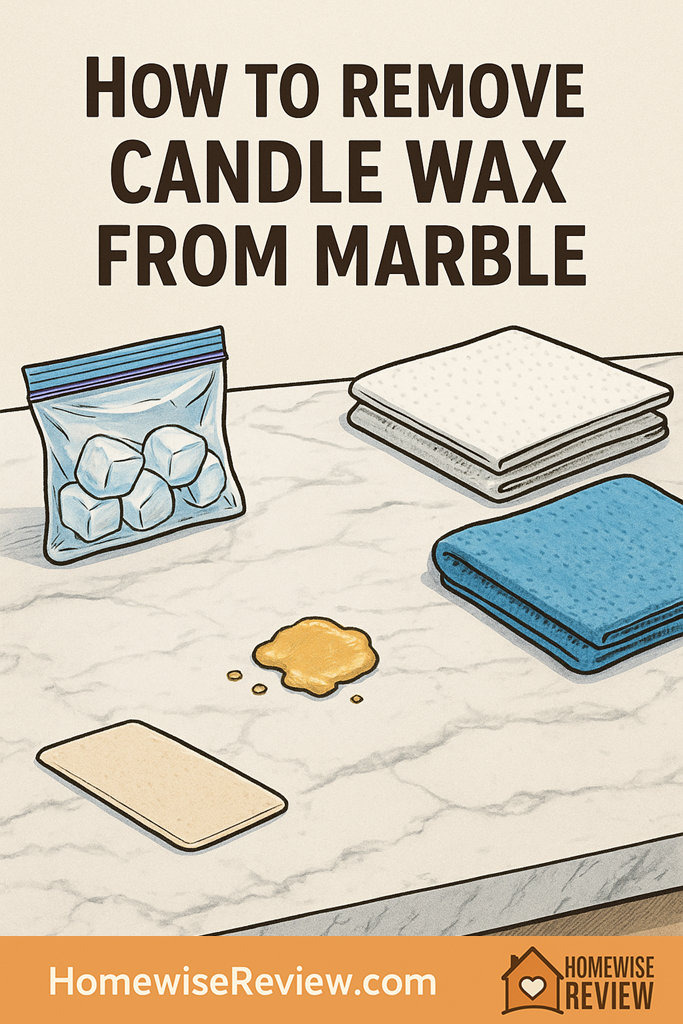
Candle wax on marble can look permanent, but most spills come off cleanly with the right sequence. The key is protecting marble from scratches and acid damage while you remove the wax and any oily residue.
Candle wax and marble are a stressful combo: wax hardens fast, and marble scratches and etches easily. The good news is that wax is usually removable without lasting damage if you work gently and avoid common “shortcut” cleaners. Use the steps below to remove the wax first, then deal with any leftover dull spot or stain.
Why marble needs a gentle approach
Marble is a calcium-based stone, which means it can etch (lose shine) when it contacts acids and it can scratch if you use abrasive tools. Wax removal is mostly mechanical (lifting and scraping), but the “easy” methods people try, like vinegar or a razor blade, are exactly what can damage marble.
Two different problems can happen after a wax spill
- Wax on the surface: a raised drip, puddle, or thin film that you can feel with your fingernail.
- Residue in the stone: a darker, slightly oily-looking area after the wax is gone, especially on honed marble or unsealed stone.
Before you start: identify what you’re seeing
This quick check helps you choose the safest first move and avoid repeating steps that do not apply to your situation.
| What you see | What it likely is | Best first move |
|---|---|---|
| Raised blob or puddle of wax | Surface wax | Harden it, then lift with a plastic scraper |
| Thin, hazy, slightly sticky film | Smear of wax | Lift with absorbent paper and gentle warmth |
| Dark spot after wax is removed | Oil stain from wax or dye | Treat like a stain with a stone-safe poultice |
| Dull, lighter patch with a “water mark” look | Etching (finish damage) | Stop using cleaners; consider marble polish or a pro |
What you’ll need (and what to avoid)
Gather supplies first so you are not tempted to grab something harsh midway through.
Recommended supplies
- Plastic putty knife or an old plastic card (no metal)
- Ice cubes in a zip-top bag, or a flexible ice pack
- Microfiber cloths
- Paper towels (plain, white works best)
- pH-neutral stone cleaner or a very mild dish soap solution (a few drops in warm water)
Optional, for stubborn residue or stains
- Hair dryer (low setting) to soften wax safely
- Stone poultice powder (made for marble) for oily stains
- Painter’s tape and plastic wrap (to cover a poultice)
Avoid these on marble
- Vinegar, lemon juice, bathroom descalers, or any acidic cleaner
- Abrasive powders, scrub pads, or gritty “paste” cleaners
- Magic-eraser style melamine pads (can dull polished marble)
- Metal razor blades or steel wool
- High heat directly on the stone (heat guns, very hot irons)
Step-by-step: remove hardened wax (safest starting method)
If you can feel a raised drip or puddle, start here. The goal is to remove bulk wax without pushing it into pores or scratching the finish.
- Let the wax cool completely. If it is still soft, you will smear it and make cleanup harder.
- Harden it further with cold. Put ice in a zip-top bag and rest it on the wax for 2 to 5 minutes. Wipe away condensation so water does not pool on the stone.
- Lift the wax with a plastic edge. Hold a plastic putty knife nearly flat to the surface and gently nudge under the wax. Work from the outer edge toward the center to avoid dragging wax across clean marble.
- Pick up debris as you go. Use a dry paper towel to lift chunks immediately. If crumbs remain, wipe lightly with a dry microfiber cloth rather than rubbing hard.
- Clean the area. Use a pH-neutral stone cleaner, or a few drops of mild dish soap in warm water. Wring your cloth well so it is damp, not wet.
- Rinse and dry. Wipe with a clean damp cloth, then dry thoroughly with a microfiber towel. Drying prevents water spots and makes it easier to see what remains.
Tip: use multiple short passes, not pressure
On marble, pressure is the enemy. If the wax does not lift easily, re-chill it and try again rather than scraping harder.
Step-by-step: remove a thin wax film (without scratching)
Sometimes the “blob” is gone but the marble looks hazy or feels slightly draggy. That is usually a thin wax film, and it comes off best by absorbing it.
- Lay down an absorbent layer. Place two to three layers of paper towel over the waxy area.
- Warm gently. Use a hair dryer on low, held several inches away, and move it continuously for 10 to 20 seconds at a time. You are aiming for slightly softened wax, not hot stone.
- Lift and replace. As the wax warms, it should transfer into the paper towel. Lift the paper towel, fold it to a clean spot, or replace it, and repeat until no more wax transfers.
- Finish with a stone-safe clean. Wipe with a pH-neutral stone cleaner, then rinse (lightly) and dry.
If you only have an iron
- Set it to the lowest heat that will work, typically “synthetic” or “low.”
- Keep a thick paper towel layer between iron and wax, and avoid hovering over the same spot.
- Stop if the stone feels warm to the touch. Let it cool fully before continuing.
If a dark or oily spot remains: treat it like a stain
Candle wax often contains oils and dyes that can leave a shadow even after the surface wax is gone. This is more common on honed marble (matte finish) and on marble that needs resealing.
Fast test: stain vs. etch
- Stain: area looks darker than the surrounding stone, often with softer edges.
- Etch: area looks lighter or duller, like the shine was erased, and it may show most when light hits at an angle.
If you are seeing dullness without darkness, skip stain treatments and jump to the “When to call a pro” section. Poultices remove oils; they do not restore shine.
Stone-safe poultice method (best for oily wax stains)
A poultice is an absorbent paste that draws oils up and out. For marble, choose a poultice product labeled safe for natural stone and follow its directions closely. These steps describe the typical workflow.
- Clean first. Wipe the area with pH-neutral stone cleaner and let it dry completely.
- Apply poultice. Spread a layer about 1/4 inch thick over the stain and 1 inch beyond the edges.
- Cover to slow drying. Place plastic wrap over the poultice and tape the edges. Poke a few small holes to let it breathe.
- Wait. Leave it for the time specified on the product (often 12 to 24 hours). Slow drying gives it time to pull oils out.
- Remove gently. Lift off the dried poultice with a plastic scraper. Do not grind it into the stone.
- Rinse and dry. Wipe with a clean damp cloth, then dry thoroughly and reassess after a few hours. Some stains need a second application.
When a poultice is worth it
- The spot is clearly darker and persists after normal cleaning.
- The wax was colored, fragranced, or oily.
- The marble is honed or unsealed and seems to “hold onto” stains.
Common mistakes that make wax removal worse
Most marble damage during wax cleanup comes from trying to go faster. These are the big ones to avoid.
- Scraping with a razor blade: even careful use can leave micro-scratches that show in raking light.
- Using vinegar or acidic cleaners: acids can etch marble immediately, leaving a dull spot that looks like a stain.
- Scrubbing hard with a rough pad: friction can haze polished stone and drive softened wax into pores.
- Pouring boiling water on wax: it can spread wax and create a larger oil residue area.
- Skipping the final rinse and dry: leftover cleaner or moisture can mask remaining wax film and cause streaking.
Aftercare: restore the look and reduce future stains
Once the wax is removed, a little aftercare helps the marble look uniform and makes the next spill less stressful.
Do a quick “water drop” sealer check
- Put a few drops of water on the cleaned, dry marble.
- Wait 10 minutes.
- If the water darkens the stone: the marble may need resealing.
- If the water beads and wipes up with no darkening: the sealer is likely still doing its job.
Prevention that actually works
- Use candle plates or trays with a raised lip (especially for soft or scented candles).
- Trim wicks to reduce dripping and soot.
- Clean small wax dots right away before they get stepped on and ground in.
- Keep a plastic card and microfiber cloth in your cleaning kit so you do not reach for metal tools.
When to call a pro (or switch tactics)
Some issues are not wax anymore, they are surface damage or deep staining. Consider professional help if any of these are true:
- The area is dull and lighter (etching), and it is in a high-visibility spot like a countertop island.
- You see a roughened texture or multiple fine scratches that were not there before.
- The stain keeps returning after two poultice rounds.
- The marble is historic, thin, or part of a large installed surface where spot-fixes look worse than the stain.
Bottom Line
Harden the wax, lift it gently with plastic, then remove any film by warming through paper towel so the wax transfers off the stone. If a dark shadow remains, treat it like an oil stain with a marble-safe poultice, and avoid acids or abrasives that can permanently dull the finish.
See also
If you are cleaning wax off multiple materials, start with how to remove candle wax from glass, and for similar waxy buildup with pigment, use our steps on how to remove crayon wax from surfaces.
- Stain-rescue decision tree for quick next steps
- Non-toxic cleaner picks for real family homes
- How to remove grease without spreading the stain
Frequently Asked Questions ▾
Can I use vinegar or baking soda to remove candle wax from marble?
Do not use vinegar on marble. It is acidic and can etch the surface quickly. Baking soda is less risky than vinegar but can still be abrasive on polished marble, so it is not a great choice for wax removal. Stick to cold, plastic scraping, gentle warmth through paper towel, and a pH-neutral stone cleaner.
Will a razor blade scratch marble?
Yes, it can. Even if you do not see a deep scratch immediately, a razor can leave fine marks that show under bright or angled light. A plastic putty knife or plastic card is far safer.
Why is there a dark spot after I removed the wax?
That is usually oil residue that soaked into the stone or into tiny surface pores. Clean the surface first, then use a marble-safe poultice to draw the oil out. If the spot is dull and lighter instead of darker, it may be etching rather than staining.
Can I use a hair dryer on marble to melt wax?
Yes, if you keep it on low heat, keep it moving, and use it to warm wax through paper towel so it absorbs up and away. Avoid overheating one spot, and always dry the stone after so you can clearly see whether any film remains.
How long does a poultice take to remove a wax oil stain?
Most poultices need 12 to 24 hours per application, plus time for the stone to fully dry so you can judge results. Light stains may improve in one round; deeper stains often need two applications.
As an Amazon Associate, we earn from qualifying purchases made through links on our site.