

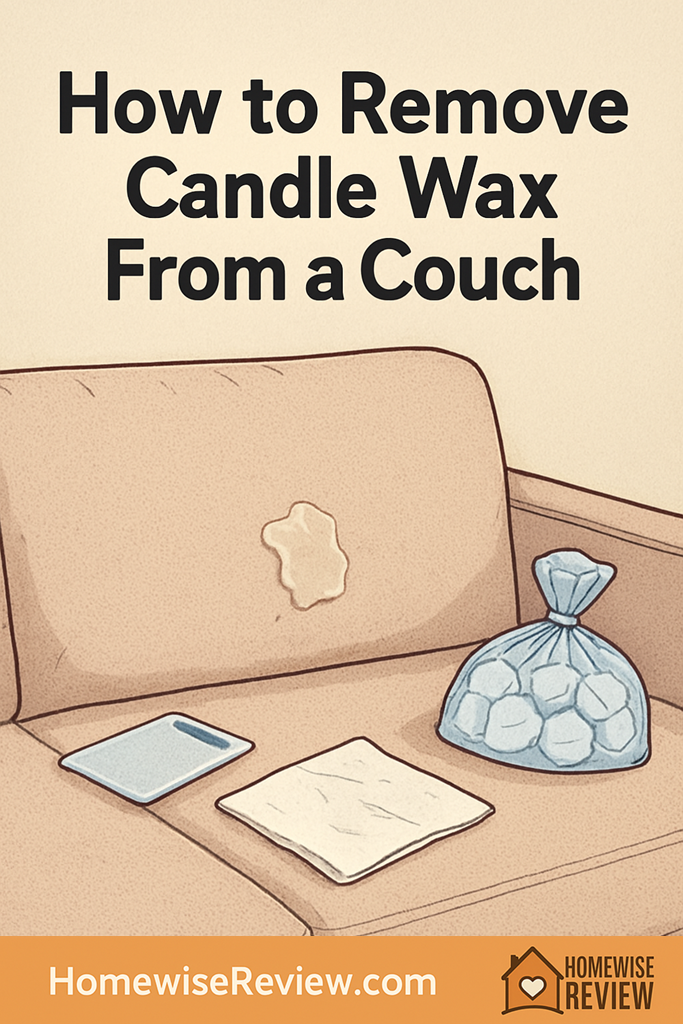
Candle wax on a couch looks scary, but most of it comes off cleanly if you stop smearing it and use the right heat or cold technique. Here’s how to remove wax and any leftover stain without damaging upholstery.
Candle wax on a couch is a two-part problem: the hardened wax sitting on top, and the oily residue or dye that can cling to fibers underneath. The fastest way to make it worse is rubbing or trying to wipe it while it’s soft.
The good news is that most wax comes off with one of two controlled approaches, freezing or gentle heat, followed by a targeted cleanup step for any remaining stain.
Before you start: let the wax harden and prep the area
If the wax is still soft, your goal is to stop it from spreading deeper into the upholstery. Give it time to harden, or speed things up with cold.
Quick checklist
- Harden it: Wait 15 to 30 minutes, or place a bag of ice on the wax for 5 to 10 minutes.
- Lift drips (if any): If there are thick blobs, gently pick off what you can once hard.
- Protect the area: Slide a towel or paper under removable cushions so any residue does not transfer to the couch base.
- Test first: Try your cleaning step on a hidden seam to check for color change or texture damage.
What to gather
- Dull plastic scraper (old gift card works well)
- Ice in a zip-top bag (or an ice pack wrapped in a thin towel)
- White paper towels or plain white cloths
- Brown paper bag or parchment paper (for heat-blot method)
- Vacuum with upholstery attachment
- Mild dish soap and warm water (for water-safe fabrics)
- Rubbing alcohol or a dry-cleaning solvent labeled for upholstery (for solvent-only fabrics)
Identify your couch material and cleaning code
Many couches have a care tag under a seat cushion or on the underside. If you can find it, it will steer you toward water-based or solvent-based cleanup for the oily residue step.
| Tag code | What it means | What to do after wax is lifted |
|---|---|---|
| W | Water-based cleaners are safe | Use a small amount of mild soap and water to remove residue, then blot dry |
| S | Solvent-based cleaners only | Use rubbing alcohol or an upholstery-safe solvent; avoid water soaking |
| WS | Water or solvent is okay | Start with the gentlest method (often soap and water) and escalate if needed |
| X | Vacuum only (no liquids) | Stick to wax-lifting steps and consider professional help for residue |
Choose your wax-removal method: freeze vs gentle heat
Both approaches can work. The best choice depends on whether the wax is sitting on top (freeze works great) or melted into the weave (heat and blotting often pulls more out).
| Method | Best for | Why it works | Main risk |
|---|---|---|---|
| Freeze and lift | Thick drips, delicate fabrics, textured weaves | Wax becomes brittle and releases from fibers | Scraping too hard and fuzzing or snagging fabric |
| Gentle heat and blot | Thin wax smeared into fibers, flatter weaves | Wax re-melts and transfers into paper | Overheating and setting dye, shrinking, or leaving a shiny spot |
Method 1: Freeze and lift (best starting point for most couches)
This is the safest first pass because it minimizes rubbing and keeps wax from spreading. It is especially helpful on nubby fabrics where heated wax can travel.
Step-by-step
- Freeze: Hold an ice bag on the wax for 5 to 10 minutes until the wax feels hard and brittle.
- Crack the wax: Press lightly with your fingernail or the edge of a plastic card to fracture the wax.
- Lift, do not gouge: Use a dull plastic edge to gently pry pieces up. Work from the outside toward the center.
- Vacuum crumbs: Use an upholstery attachment to pull out small flakes from the weave.
- Repeat: Freeze again if the wax softens as you work.
Tips that prevent damage
- Keep the scraper flat to the fabric so you lift wax instead of shaving fibers.
- If threads start to pull, stop scraping and switch to the heat-and-blot method for what remains.
Method 2: Gentle heat and blot (for wax that soaked into fibers)
Use low heat and absorbent paper to pull melted wax out of the upholstery. The goal is controlled melting, not warming the entire cushion.
Step-by-step
- Remove what you can first: Do a quick freeze-and-lift pass to get rid of raised wax.
- Layer absorbent paper: Place a brown paper bag or parchment over the wax. Put a white paper towel underneath the fabric only if you can access it (like on removable covers).
- Apply low heat: Use a warm iron on the lowest setting with no steam, or use a hair dryer on low from a few inches away.
- Blot and move: As wax transfers, lift the paper and replace it with a clean section. Keep moving to avoid overheating one spot.
- Stop when transfer slows: Once you are no longer seeing wax on the paper, let the area cool.
Heat control rules
- Use short contact: 1 to 3 seconds with an iron, then check. With a hair dryer, use 10 to 20 second bursts.
- Never use high heat “to speed it up.” That is how you set dye and create permanent shine or texture change.
- If your couch tag is X or the fabric feels delicate (velvet, silk blends), lean toward freezing and professional cleaning for residue.
How to remove the oily residue after the wax is gone
Even after you lift the wax, you may see a darker spot or a “greasy halo.” That is typically oil from the wax base, and it needs a different approach than the wax itself.
For W or WS fabrics: mild soap and blotting
- Mix a small bowl of warm water with a few drops of mild dish soap.
- Dampen a white cloth (do not soak it), then blot the spot from outside in.
- Switch to a clean damp cloth with plain water to remove soap residue.
- Blot dry with a towel, then let it air dry fully. Fluff fibers with a soft brush once dry if needed.
For S fabrics: solvent approach (light application)
- Ventilate the room and keep the amount of liquid minimal.
- Dampen a white cloth with rubbing alcohol or an upholstery-safe solvent.
- Blot gently, rotating to a clean area of the cloth often so you lift residue instead of spreading it.
- Let it air dry, then vacuum lightly to restore texture.
If you do not know the code
- Start with the least risky option: blot with barely damp plain water and stop if you see color transfer.
- If water causes a ring or texture change, switch to a solvent method or consult a pro.
How to handle candle dye, fragrance oils, or soot staining
Colored candles can leave dye behind even after the wax base is removed. Soot from a smoky candle can also create a gray shadow, especially on light fabric.
For dye stains on W or WS fabric
- Blot with mild soapy water first to remove any remaining oils that hold dye in place.
- If color remains, try blotting with rubbing alcohol on a hidden spot first, then on the stain.
- Use small amounts and keep blotting until the transfer stops.
For soot smudges
- Do not wet it first. Start by vacuuming with an upholstery brush to remove loose soot.
- Then use the appropriate residue method (soap and water for W/WS, solvent for S) with light blotting.
Fabric-specific notes (so you do not create a bigger problem)
Microfiber and “suede-like” couches
Microfiber can show water marks and texture changes if you scrub. Use freeze-and-lift, then very light blotting for residue, and finish by brushing the nap in one direction once dry.
Velvet or high-pile fabrics
Heat can crush pile and leave shiny tracks. Freeze-and-lift is usually safer, and if residue remains, blot minimally and avoid pressing hard. If the stain is large or colored, professional cleaning is often the safest choice.
Leather and faux leather
Do not use an iron on leather. Let the wax harden, then gently lift it with a plastic card. If a film remains, warm it slightly with your hands, wipe with a soft cloth, and follow with a leather-safe cleaner or conditioner appropriate for your item.
Removable cushion covers
If the cover comes off, you can place paper towels behind the stained area and use the gentle heat-and-blot method more effectively. Always check the care label before washing, and do not machine-dry until you are sure the stain is gone.
What not to do (common mistakes that set stains)
- Do not rub soft wax. It pushes wax and dye deeper into fibers.
- Do not use high heat or steam. It can set dye, distort synthetic fibers, or damage backings.
- Do not use sharp blades. They can cut threads and create a permanent rough patch.
- Do not soak the cushion. Too much liquid can cause water rings, slow drying, and odor.
- Do not mix random cleaners. Stick to one method at a time and test first.
When it’s worth calling a professional
DIY methods work well for small to medium wax drips. For certain situations, a pro saves you from permanent fabric change or widespread staining.
- The couch tag is X and you still see an oily mark.
- The wax covered a large area (bigger than a dinner plate) or soaked through to inner padding.
- The candle was strongly dyed (red, purple, black) and left a visible color stain.
- Your fabric is delicate (velvet, silk blend) or the couch is an heirloom piece.
- You smell lingering smoke or fragrance oils after cleaning, suggesting deep absorption.
Bottom Line
Harden the wax first, lift it gently, then use low heat and absorbent paper only if wax is trapped in the weave. Finish by treating any oily residue based on your couch’s cleaning code so you remove the halo without creating water rings or texture damage.
See also
If you’re deciding between water-based and solvent-based steps for a mystery spot, start with our stain-rescue decision tree.
- How to get slime out of a couch without spreading it
- How to remove blood stains from couch fabric
- How to remove mildew from leather safely
- How to remove crayon from walls, clothes, and more
Frequently Asked Questions ▾
Can I remove candle wax from a couch with a hair dryer?
Yes, as long as you use low heat and keep it moving. Pair it with paper towels or a brown paper bag to absorb the melted wax, and stop frequently to check the fabric so it does not overheat or get shiny.
Why is there still a dark spot after the wax is gone?
That is usually oily residue from the wax base or fragrance oils. Treat it like a grease stain: blot with mild soapy water for W/WS fabrics, or use a solvent method for S fabrics, always testing first.
Will vinegar remove candle wax from upholstery?
Vinegar is not very effective on wax itself because wax is oil-based. Focus on freezing or gentle heat to remove the wax, then use the correct cleaner for any residue based on the couch’s care code.
What if the wax is colored and left a pink or red stain?
Remove all wax first, then address the dye. On many fabrics, careful blotting with rubbing alcohol can help lift color, but testing is critical because some upholstery dyes can shift or bleed.
Can I put removable cushion covers in the washing machine after wax removal?
Only if the care label allows it. Lift wax first, treat residue, then wash according to the label. Air-dry or dry on low until you are sure the stain is fully gone, since heat can set leftover dye or oil.
As an Amazon Associate, we earn from qualifying purchases made through links on our site.