

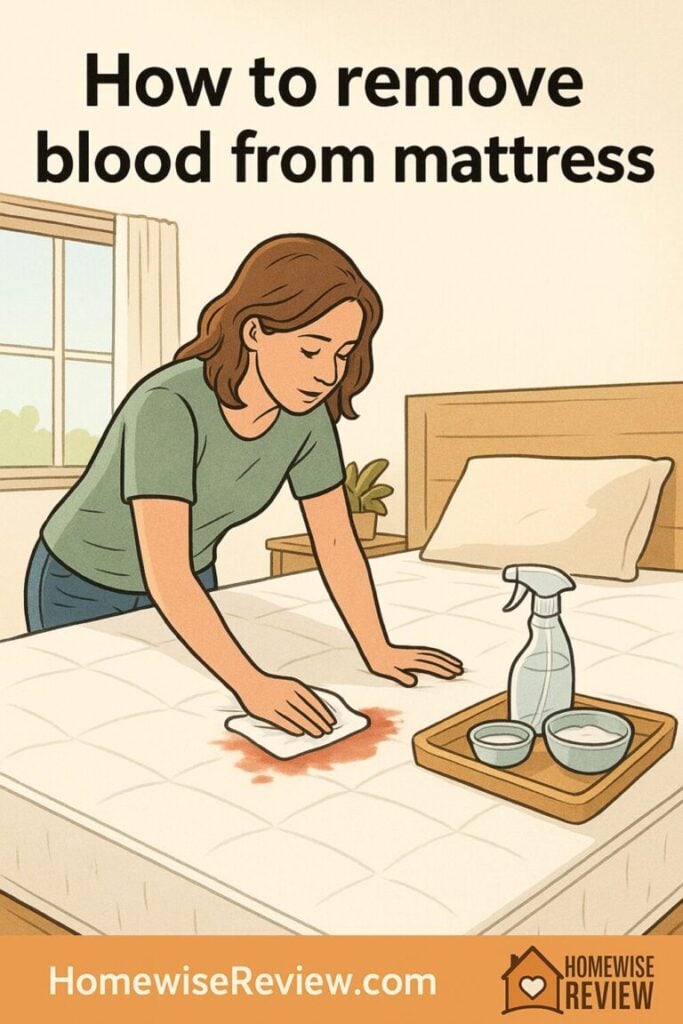
Blood on a mattress dries fast and feels impossible to clean, but you can lift it safely if you move methodically and avoid a few common mistakes. This step-by-step guide keeps your mattress as dry, sanitary, and comfortable as possible while you erase the stain.
Blood on a mattress is one of those messes that feels permanent, especially once it dries. The good news is that you can usually remove blood stains completely or at least fade them so they are barely noticeable, without ruining the mattress.
This guide walks you through the safest, most effective methods for lifting both fresh and dried blood from different types of mattresses, while keeping moisture and harsh chemicals to a minimum.
Why blood stains are so hard to remove
Blood sets quickly because it is rich in protein and iron. When blood meets warm water or heat, those proteins cook into the fabric and bond to the mattress fibers and foam.
Mattresses also absorb liquid deeply and dry slowly. That combination makes blood stains tougher than typical spills, and it is why the right technique matters more than brute scrubbing or strong bleach.
Before you start: check your mattress and gather supplies
Know your mattress type
Look at the label on the side or back of your mattress if you are not sure what you own. The care tag often names the material and sometimes lists cleaning warnings such as ‘no liquids’ or ‘spot clean only’.
Memory foam and latex mattresses absorb liquid deeply and should never be soaked. Traditional innerspring or hybrid mattresses tolerate a bit more moisture, but you still want to keep the surface as dry as you can.
If you use a zippered encasement or waterproof protector, remove and treat that cover separately in the wash. You might discover that most of the blood is on the cover, not in the mattress itself.
Basic stain-removal kit
You do not need specialty chemicals to remove blood from a mattress. Gather these basics before you start so you can move quickly:
- Clean white cloths or towels, plus a sponge if you have one
- A small bowl of cold water, never warm or hot
- Mild liquid dish soap or a gentle laundry detergent
- 3 percent hydrogen peroxide in a dark bottle
- Baking soda
- An enzyme cleaner labeled for blood or protein stains, if you have it
- A spray bottle and a soft brush or old toothbrush
- A fan or portable heater set to a cool or low setting to speed drying
You do not need to use every product on this list. Start with the mildest option that works, especially if you or someone in your home has sensitive skin or allergies.
Golden rules for removing blood from a mattress
Act as quickly as you can. Fresh blood responds to plain cold water and gentle soap, while dried blood usually needs a bit more time and product.
Always use cold water. Warm or hot water can set the blood permanently by cooking the proteins into the fabric.
Blot, do not rub. Press a clean cloth straight down to lift blood up out of the mattress. Rubbing pushes the stain deeper and can spread it into a larger halo.
Keep the mattress as dry as possible. Use only small amounts of liquid at a time, and blot thoroughly after each step so moisture does not sink into the core.
Test stain removers on an inconspicuous spot first. Hydrogen peroxide, enzyme cleaners, and even strong detergents can lighten or discolor some fabrics and foams.
How to remove fresh blood from a mattress
If the blood is still wet or only slightly dried, start with this gentle routine. It protects the fabric and usually removes the stain with minimal effort.
1. Blot up as much as possible
Use a dry white cloth or paper towel to blot the fresh blood. Work from the outside of the stain toward the center so you do not spread it.
Continue with clean sections of the cloth until it stops picking up blood. Avoid pressing so hard that you drive moisture deeper into the mattress.
2. Rinse with cold water, lightly
Lightly dampen a clean cloth with cold water. You want it barely wet, not dripping.
Blot the stained area with the damp cloth, again working from the outside in. This dilutes and lifts the blood without soaking the mattress. Follow with a dry cloth to absorb the loosened blood and extra water.
3. Treat the stain with mild soap
Mix one teaspoon of mild dish soap or gentle detergent with one cup of cold water. Stir gently to avoid too many bubbles.
Dip a cloth or sponge into the soapy solution, squeeze it out well, and dab it on the stained area. Let it sit for 5 to 10 minutes, then blot with a clean damp cloth to rinse, followed by a dry cloth to remove moisture.
4. Use hydrogen peroxide for lingering marks
If a faint stain remains, use 3 percent hydrogen peroxide, which is the standard strength sold for first aid. Pour a small amount into a bowl instead of applying directly from the bottle so you can control how much you use.
Dip a cotton ball, cotton swab, or corner of a cloth into the peroxide and dab it onto the stain. It will fizz as it breaks down the blood. Let it bubble for 5 minutes, then blot with a dry cloth.
Repeat once or twice if needed. Do not scrub, and stop if you notice any color change in the fabric.
5. Dry the mattress thoroughly
Once the stain looks gone or significantly lighter, scatter a thin layer of baking soda over the damp area. Baking soda helps absorb moisture and neutralize any remaining odor.
Leave it in place for at least 30 minutes, then vacuum it up using the upholstery attachment. Aim a fan at the mattress or open a window to help the area dry completely before you put bedding back on.
How to remove dried blood from a mattress
Dried blood is tougher but often still treatable. The goal is to rehydrate the stain slowly, break it apart, and lift out the residue without over-wetting the mattress.
1. Loosen the dried residue
Use a dry, soft brush or an old toothbrush to gently loosen any crusted blood on the surface. Vacuum the area with the upholstery attachment to pull up the loose particles.
2. Rehydrate with cold soapy water
Mix a teaspoon of mild dish soap with a cup of cold water. Lightly dampen a cloth in the solution, squeeze it out thoroughly, and lay it over the stain for 5 to 10 minutes.
This softens the dried blood so it can start to release from the fabric. After soaking, blot firmly with a dry cloth to remove as much moisture and loosened stain as you can.
3. Try a hydrogen peroxide treatment
For stubborn dried stains, hydrogen peroxide is often the most effective home option. Pour a small amount of 3 percent peroxide into a spray bottle or bowl.
Either lightly mist the stained area or dab it with a cloth so it is damp but not soaked. Let it sit for 5 to 10 minutes until the fizzing slows, then blot with a dry cloth.
If the stain is still visible, you can repeat this cycle several times, allowing the fabric to dry partially between treatments. Be patient and use gentle pressure rather than aggressive scrubbing.
4. Use a baking soda and peroxide paste for heavy stains
If plain peroxide is not enough, mix a simple paste: combine one part baking soda with two parts hydrogen peroxide in a small bowl. Stir until it forms a spreadable, foamy paste.
Use a spoon or cloth to spread a thin layer over the stain. Let it sit for 30 to 60 minutes, then gently scrape off the dried paste with a spoon and vacuum the residue.
Finish by blotting with a damp cloth to remove any remaining powder, followed by a dry cloth and a fan to speed drying.
5. Enzyme cleaner for very stubborn blood
If a shadow of the stain is still there, an enzyme cleaner formulated for protein stains can help. Check that the product label mentions blood, sweat, or grass.
Spray a light mist on the stained area or apply with a cloth so you do not oversaturate the mattress. Let it sit according to the directions on the bottle, usually 5 to 15 minutes, then blot thoroughly with a damp cloth followed by a dry one.
Special tips for memory foam, latex, and pillow-top mattresses
Foam and pillow-top mattresses can stain just like any other, but they hold onto water longer. Too much liquid can lead to mold, odors, or a mattress that takes days to dry.
On these softer surfaces, always apply cleaners with a cloth or spray bottle rather than pouring them directly on the mattress. Use the smallest amount that still lets you dampen the stain, and follow each treatment with slow, firm blotting using a thick, dry towel.
Avoid harsh scrubbing that distorts the foam. Instead, press and lift repeatedly so the towel acts like a sponge pulling moisture and dissolved blood upward.
If your mattress has a removable, washable cover, unzip it and treat the cover in the washing machine according to the care tag, then treat any remaining stain on the foam itself as a separate, gentle spot clean.
How to prevent future blood stains on your mattress
The easiest blood stains to remove are the ones that never reach the mattress in the first place. A good mattress protector is the single best defense.
Choose a waterproof or water resistant protector that fully covers the top and sides of the mattress. For children, people who menstruate, or anyone recovering from surgery, a zippered encasement offers extra protection.
Keep an extra fitted sheet and protector on hand. If an accident happens in the middle of the night, you can strip the bed, quickly treat the stain, and remake it without waiting for laundry to finish.
Encourage anyone who is injured or menstruating to use a dark towel or pad on top of the sheet as a temporary backup if you expect leaks, especially on white bedding.
When it is time to call a professional or consider replacement
Home methods work well for small to moderate stains, but there are times when professional help is the safer choice. If a large amount of blood soaked into the mattress, especially deep into foam, it can be hard to sanitize thoroughly on your own.
Call a professional upholstery or mattress cleaning service if you see widespread staining, notice a strong odor, or have concerns about bacteria or illness. They have extraction equipment that can rinse and vacuum at the same time while keeping the mattress structure intact.
If your mattress is already old, sagging, or uncomfortable, a severe blood stain might be a practical signal to replace it instead of investing in deep cleaning. In that case, focus your efforts on laundering or replacing your bedding and starting fresh with a high quality protector on the new mattress.
See also
For help tackling other tough laundry and bedding messes, use our stain-rescue decision tree alongside our detergents and additives guide for people with sensitive skin.
- Compare powder and liquid detergents for sensitive-skin households
- Plan a laundry routine for allergy-prone homes
- Review of Seventh Generation Free & Clear detergent
FAQ
Can I use bleach to remove blood from a mattress?
Chlorine bleach is not recommended for mattresses in most cases. It can weaken fibers, discolor fabrics, irritate your skin, and is difficult to rinse out fully from thick materials like foam.
Bleach also does not work especially well on protein stains like blood. Instead, stick to cold water, mild soap, hydrogen peroxide, and enzyme cleaners, which are safer and usually more effective.
How long does a mattress take to dry after cleaning a blood stain?
If you use only light moisture and blot well, a spot-treated area should feel dry to the touch in a few hours. Pointing a fan at the mattress or opening a window speeds things up significantly.
In a cool or humid room, allow at least 8 to 12 hours before you remake the bed fully. If the mattress still feels cool or damp when you press your palm to it, give it more time to dry to prevent odors or mildew.
Will hydrogen peroxide ruin my mattress?
Hydrogen peroxide at 3 percent strength is generally safe on white or very light fabrics when used sparingly. It can, however, lighten or spot darker fabrics and some dyed mattress covers.
Always test peroxide on an inconspicuous area first, use only small amounts at a time, and blot thoroughly afterward. If you are unsure, start with cold water and mild soap, and consider an enzyme cleaner that is labeled color safe.
What if the blood stain is several months old?
Very old blood stains are the most difficult to remove completely, but you can still improve their appearance. Plan on several slow treatment cycles using cold soapy water, hydrogen peroxide, and possibly an enzyme cleaner.
Between treatments, allow the mattress to dry fully and evaluate the progress. If the stain is still dark, you may not be able to erase it fully, but you can usually fade it enough that it no longer stands out under normal bedding.
As an Amazon Associate, we earn from qualifying purchases made through links on our site.