

Blood stains can look permanent, but with the right steps you can usually erase them completely from clothes, bedding, and around the house.
Blood stains look dramatic, but they do not have to be permanent. With a little patience and the right products, you can usually remove blood from clothes, sheets, mattresses, carpet, and hard surfaces without ruining them.
This guide walks you through what to do first, how to treat fresh and dried blood, and which methods are safest for different materials. You can skim to the section that matches your stain, or read through once so you know exactly what to grab when the next nosebleed or scraped knee happens.
Before you start: quick rules for blood stains
Blood is a protein stain. That means it reacts differently from coffee or mud, and a few common cleaning habits can make it much harder to remove.
Key rules for success
- Act fast. Fresh blood is far easier to remove than dried blood.
- Use cold water only. Hot water can cook the proteins and set the stain.
- Blot, do not scrub hard. Scrubbing can push blood deeper into fibers or spread the stain.
- Test products on a hidden area. Some cleaners can fade certain dyes or damage delicate fabrics.
- Do not machine dry until the stain is gone. Heat from the dryer can set remaining blood for good.
Supplies that work well on blood
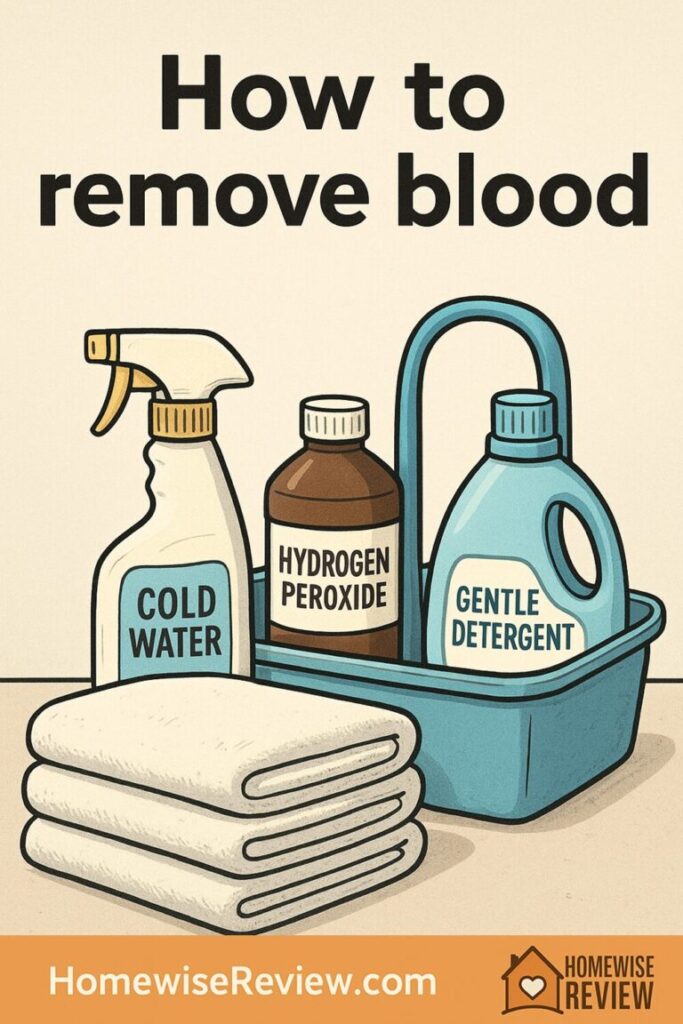
You do not need specialty chemicals for most blood stains. Gather:
- Cold water in a bowl or spray bottle
- Clean white cloths or paper towels for blotting
- Liquid laundry detergent, preferably one with enzymes
- A gentle stain remover or enzyme cleaner (pet stain removers often work well)
- 3 percent hydrogen peroxide for light or colorfast items
- Oxygen bleach powder for soaking washable items
- A soft brush or old toothbrush
- Disposable gloves if you are cleaning someone else’s blood
Safety and hygiene
Blood can carry germs. For small household stains from family members, washing with detergent and, when appropriate, a disinfectant is usually enough.
- Wear disposable gloves if you are cleaning someone else’s blood.
- Do not mix bleach with ammonia or vinegar; that can release dangerous fumes.
- For large amounts of blood or workplace spills, follow your local health guidelines or contact a professional biohazard cleaner.
How to remove fresh blood from washable clothes and sheets
If you catch the stain while it is still wet or tacky, you have the best chance of getting the fabric back to normal.
Step-by-step for fresh blood on laundry
- Rinse with cold running water. Hold the stained area under a gentle stream of cold water, with the back of the stain facing the water so it pushes blood out of the fibers. Continue until most of the blood has flushed away.
- Soak in cold water. Fill a sink or bucket with cold water and submerge the stained area for 15 to 30 minutes. Gently squeeze the fabric under water a few times.
- Apply liquid laundry detergent. Rub a small amount of liquid detergent into the stain with your fingers or a soft brush. Let it sit for 10 to 15 minutes. Look for a detergent that mentions enzymes or stain-fighting on the label.
- Wash on cold. Wash the item in the machine on a cold cycle with your usual detergent. Add an oxygen bleach product if the fabric care label says it is safe.
- Check before drying. After washing, inspect the stained area in good light. If any shadow of blood remains, repeat the pre-treat and wash. Do not put the item in the dryer until the stain is fully gone.
Special notes for white vs colored fabrics
- White cotton and linens: You can usually be more aggressive. If a faint stain remains after washing, dab it with a small amount of hydrogen peroxide, let it fizz for a minute, then rinse well and wash again on cold.
- Colored fabrics: Avoid chlorine bleach unless the care label clearly allows it. Hydrogen peroxide can sometimes lighten colors, so always spot test in a hidden area first.
Delicate fabrics like silk and wool
Silk, wool, and some lingerie fabrics need a gentler touch.
- Blot off excess blood with a dry white cloth.
- Dab the stain with cold water, then blot again. Do not soak silk for long periods.
- Use a small amount of gentle, silk-safe detergent or a baby shampoo on the stain and work it in with your fingers.
- Rinse in cold water until all soap is gone, then lay flat on a towel to dry.
If the stain is large or on an expensive item, you may be better off taking it to a professional dry cleaner and pointing out the blood stain specifically.
How to remove dried blood stains from fabric
Once blood dries, it binds more tightly to fibers, but you can still often remove it with patience. The goal is to rehydrate the stain, then break it down with enzymes or peroxide.
Step-by-step for dried blood on washable fabrics
- Gently scrape off crusted blood. Use a dull knife, spoon, or old credit card to lift away any dried flakes without damaging the fabric.
- Soak in cold water for at least 30 minutes. For very old stains, several hours or overnight can help. Change the water if it becomes very pink.
- Apply an enzyme cleaner or liquid detergent. Rub liquid laundry detergent or an enzyme stain remover into the stain. Let it sit at least 15 to 30 minutes. For very stubborn stains, cover the area with detergent and keep it slightly damp for an hour.
- Boost with oxygen bleach if safe. For colorfast fabrics, dissolve oxygen bleach powder in cold water according to package directions and soak the garment for several hours.
- Wash on cold and repeat if needed. Wash in cold water. If the stain lightens but does not disappear, repeat the pretreat and wash cycle before letting the fabric dry completely.
Using hydrogen peroxide on dried blood
Hydrogen peroxide breaks down blood effectively, especially on whites and some colorfast fabrics.
- Pour a small amount of 3 percent hydrogen peroxide directly on the stain.
- Let it bubble for a minute or two, then blot with a clean cloth.
- Rinse thoroughly with cold water and then wash normally.
Always test peroxide on an inside seam or hidden spot first. If the test patch lightens, skip peroxide and stick with detergent and oxygen bleach instead.
How to remove blood from a mattress or upholstery
Mattresses, sofas, and chairs are trickier because you cannot just toss them in the washing machine. The key is to use as little liquid as possible while still loosening the stain.
Fresh blood on a mattress or couch
- Blot right away. Use paper towels or a clean cloth to blot up as much blood as possible. Work from the outside of the stain in toward the center.
- Apply cold water sparingly. Lightly mist the area with cold water or dab with a damp cloth. Blot again to lift blood into the cloth. Repeat until very little color transfers.
- Use a mild detergent solution. Mix a small amount of liquid dish soap or laundry detergent with cold water. Dip a cloth into the solution, wring it almost dry, then dab the stain. Blot with a dry cloth afterward.
- Dry thoroughly. Press a dry towel over the area and, if possible, place a fan so air circulates. Avoid leaving the mattress or cushion wet inside, since that can cause mildew.
Dried blood on a mattress
Dried stains may need a bit more power.
- Lightly dampen the stained area with cold water to soften it.
- Apply a small amount of enzyme cleaner (a pet stain remover often works) and let it sit for 10 to 15 minutes.
- Blot with a clean cloth, then repeat if needed.
- For white or very light mattresses, you can try dabbing with a cloth slightly dampened with hydrogen peroxide, then blotting and rinsing with a barely damp cloth afterward.
Always check upholstery tags. If the tag says S or Dry clean only, avoid water and use a solvent-based upholstery cleaner or call a professional.
How to remove blood from carpet and rugs
Carpet fibers can grip onto blood, so take your time and plan on several rounds of blotting.
Fresh blood on carpet
- Blot up liquid blood. Press a clean white cloth or paper towels onto the spot. Replace cloths as they become saturated. Do not rub.
- Apply cold water. Pour a small amount of cold water directly on the stained area or mist it with a spray bottle. Blot again to lift more blood.
- Use a mild soap solution. Mix one teaspoon of clear dish soap with one cup of cold water. Apply just enough to wet the fibers, then blot and repeat until the stain lightens.
- Rinse and dry. Dab the area with a cloth dipped in plain cold water to remove soap residue, then blot with a dry towel. Place a stack of dry towels over the damp spot and weigh them down with a heavy object for several hours.
Dried blood on carpet
- Loosen dried blood with a soft brush, then vacuum up any loose particles.
- Apply cold water and blot repeatedly to rehydrate the stain.
- Use the same dish soap solution as above and work in small sections, blotting between applications.
- For light-colored synthetic carpets, a small amount of hydrogen peroxide on a cloth may help, but always test in a closet or corner first.
If the stain covers a large area or sits in a high-traffic spot, consider renting a carpet cleaner after you pre-treat, or hire a professional carpet cleaning service.
How to remove blood from hard surfaces
Blood on hard, non-porous surfaces like tile, laminate, sealed stone, and countertops is usually much easier to deal with than fabric stains.
Basic method for tile, laminate, and sealed counters
- Wipe up excess blood with paper towels.
- Wash the area with a cloth dipped in cold water and a small amount of dish soap.
- Rinse with a clean damp cloth and dry with a towel.
- Disinfect using a product that is safe for your surface, following the label directions for contact time.
Special notes for wood and stone
- Finished wood: Use as little water as possible. Wipe with a barely damp soapy cloth, then dry immediately.
- Unfinished wood: Blot gently and consider lightly sanding if a stain remains, or contact a floor professional.
- Natural stone: Avoid vinegar and harsh acidic cleaners. Use a stone-safe cleaner recommended by the manufacturer.
When a blood stain will not come out
Sometimes, even with careful work, a faint shadow of blood remains, especially on delicate fabrics or older stains. At that point, you have a few options.
- Try one more round with an enzyme cleaner or oxygen bleach if the fabric allows it.
- Take valuable garments, rugs, or upholstery to a professional cleaner and explain exactly what the stain is and how long it has been there.
- For low-cost items, consider whether living with a faint mark or replacing the item makes more sense than more chemicals and time.
A simple blood-stain removal kit to keep at home
Because blood stains usually happen suddenly, it helps to keep a small kit ready so you are not scrambling.
- Pair of disposable gloves
- White cotton cloths or old white towels
- Spray bottle filled with cold water
- Liquid laundry detergent with enzymes
- Small bottle of 3 percent hydrogen peroxide
- Oxygen bleach powder for soaking laundry
- Enzyme-based cleaner that is safe for carpet and upholstery
- Soft brush or old toothbrush
Store these together in your laundry area or cleaning caddy so you can grab them quickly when you need them.
See also
If you face frequent spills and stains, use our stain-rescue decision tree and, if you have sensitive skin, pair it with our guide to laundry detergents and additives that are gentler on your body.
- Compare powder vs liquid detergents for sensitive-skin families to choose what fits your laundry style.
- Set up healthier habits with our ideas for laundry routines for households with allergies or eczema.
- Stock safer supplies with our picks for non-toxic, realistic cleaning products for families.
FAQ
Can I use hot water to remove blood stains?
It is best to avoid hot water on blood stains, especially at first. Heat can cause the proteins in blood to set into the fabric, making the stain much harder or even impossible to remove. Start with cold water for rinsing, soaking, and washing. Once the stain is fully gone, it is safe to wash the item on warm or hot if the care label allows it.
Is hydrogen peroxide safe on all fabrics?
Hydrogen peroxide is very effective on blood, but it can lighten some dyes and weaken delicate fibers over time. It is usually safe on white cotton, light-colored towels, and many synthetic fabrics. Always test it on a hidden seam or inside area first. If you see fading or a ring after it dries, skip peroxide on that item and stick with detergent and oxygen bleach.
What if I cannot wash the blood stain right away?
If you are out of the house or cannot do a full wash immediately, your goal is to keep the stain from drying in place. Rinse or dab the area with cold water as soon as you can, then blot with a dry cloth. If possible, apply a small amount of liquid detergent or stain remover and let it sit until you can wash the item properly. Avoid letting the fabric dry completely before you get to it.
How do I clean blood safely if it is not mine?
Wear disposable gloves and avoid direct contact with the blood. Blot and clean as described for the surface you are dealing with, then dispose of used paper towels or cloths in a sealed bag. After cleaning, wash your hands thoroughly with soap and water. For large spills or situations involving unknown health status, follow local health guidelines or contact a professional biohazard cleaning service.
Do home remedies like salt or baking soda really work on blood?
Salt and baking soda can help loosen some stains, but they are usually less effective on blood than modern enzyme detergents and peroxide. If you have proper laundry detergent, an enzyme cleaner, or oxygen bleach on hand, those are better first choices. Home remedies are more useful as a backup when you do not have access to regular cleaning products.
As an Amazon Associate, we earn from qualifying purchases made through links on our site.