

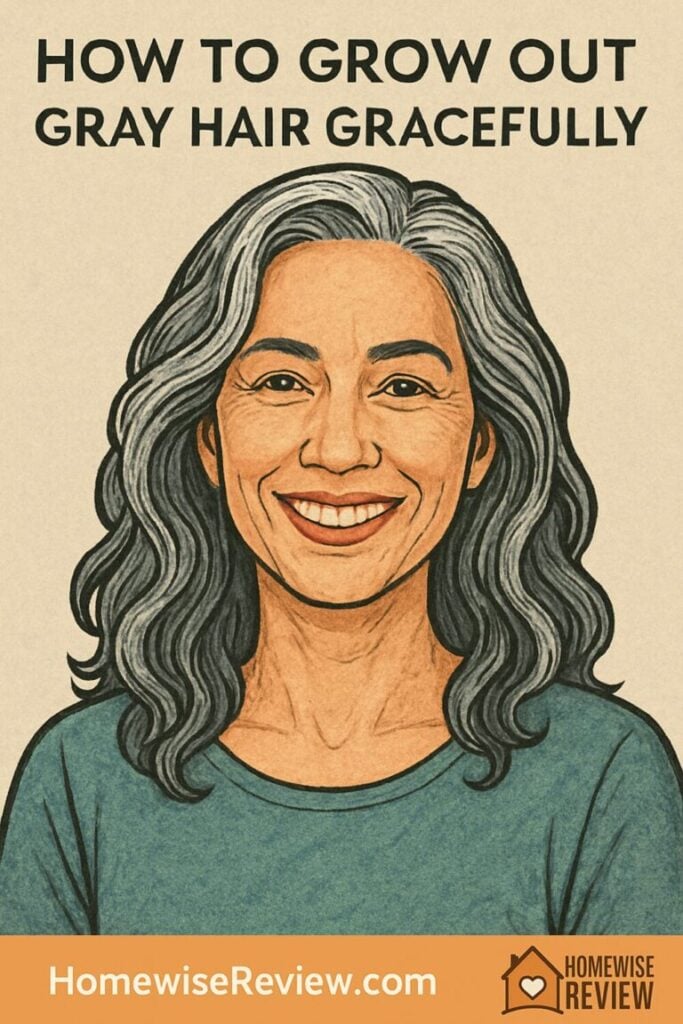
Tired of booking color appointments just to hide your roots? Use this step by step plan to grow out gray hair gracefully, without feeling frumpy in the process.
That first band of gray at your roots can feel like a spotlight on your age, your schedule, and every missed salon appointment. Growing it out gracefully is possible, but it does take a plan. The right strategy can help you move from constant touch ups to a soft, flattering gray that feels intentional instead of accidental.
This guide walks you through the real world options, how to pick the one that fits your life, and the day to day tweaks that keep your hair healthy while it changes. You do not have to cut everything off or suffer through an obvious stripe unless you want to. A few smart decisions up front make the entire transition calmer and quicker.
Why growing out gray hair feels complicated
Gray hair rarely appears all at once. It comes in patches and streaks, which means your natural color and your dyed color do not grow in at the same rate or pattern. That is why a harsh root line shows up so quickly after a color appointment.
On top of that, gray hair often has a different texture from the rest of your hair. It can feel coarser, drier, or more wiry, and sometimes it stands up instead of lying flat. When your hair suddenly behaves differently, your usual cut and products may stop working, and the change can feel more dramatic than it has to.
There is also the emotional side. Many people connect gray hair with aging, confidence, or even career worries. A graceful grow out respects both sides of the equation: helping your hair look good while you adjust to seeing more silver in the mirror.
Step 1: Clarify your end goal
Before you change anything, take a minute to picture what you want your hair to look like 1 to 2 years from now. Do you imagine a full silver mane, a salt and pepper blend, or just fewer color appointments with some gray still covered? There is no one right answer, only what feels right on your head and in your life.
Look closely at your roots in bright natural light. Notice how much of your new growth is gray, and whether it is evenly sprinkled or clustered in certain areas like the temples. If your hair is only 20 to 30 percent gray, you may want a different strategy than someone who is already mostly white underneath the dye.
Finally, think about your tolerance for change. Are you open to a shorter cut for a few months, or is your length nonnegotiable? Would you rather visit a salon several times to manage a soft transition, or quit traditional color and embrace a more dramatic shift? Your honest answers will narrow the options in a useful way.
Step 2: Choose your transition strategy
There are three broad approaches to growing out gray hair. You can blend it with color, stop coloring completely and let it grow, or cut off a lot of the old dye in one go. Each has tradeoffs in money, time, and visibility.
Option A: Blend with highlights or lowlights
Many people find this the most graceful route. A colorist adds soft highlights, lowlights, or a mix of both to break up the line between old dye and new gray growth. The goal is not to hide gray, but to mimic its pattern so the eye reads a natural, dimensional look instead of a stripe.
Cool toned highlights can echo bright silver strands, while slightly deeper lowlights can match your natural non gray color. Over several appointments, the amount of traditional color is reduced while your gray becomes the star. This is especially effective if your gray is scattered rather than solid white.
Pros:
- Softer, less obvious grow out line.
- Lets you keep more length while you transition.
- Gives your stylist room to adjust tone and brightness as you go.
Cons:
- Still requires salon visits for a while.
- Bleach or lightener can be drying if overused.
- Costs more up front than simply stopping color.
Option B: Stop coloring and let it grow
The cold turkey method is straightforward. You stop applying permanent color and let your natural gray grow in. You might add a clear or tinted gloss that slowly fades, but you are no longer coloring the roots.
This is usually the cheapest and healthiest approach for your hair, because you are avoiding chemicals. It also reveals your true pattern of gray fairly quickly, which some people find exciting and freeing.
Pros:
- Lowest maintenance once you commit.
- Least chemical exposure and potential damage.
- Fastest way to see your real gray color and pattern.
Cons:
- Demarcation line can be very visible for several months.
- May feel less polished in work or social situations if that line bothers you.
- Can be emotionally challenging if you are used to a very uniform color.
Option C: Do a big chop
Cutting your hair into a shorter style removes a large portion of the old dyed ends in one appointment. This can mean a chic pixie, a short bob, or just going from mid back length to your shoulders. It instantly reduces the time needed for the full transition.
A big chop is not for everyone, but for some it is a reset button that feels refreshing. Shorter hair can also make texture changes easier to style, especially if your gray is coming in coarser or curlier than before.
Pros:
- Fastest visible progress to mostly gray hair.
- Removes damaged ends and can improve overall hair health.
- Gives you a fresh, intentional hairstyle instead of a grow out phase.
Cons:
- You have to be comfortable with less length.
- Awkward growing stages if you plan to go long again later.
- Requires a stylist you trust with short cuts and gray texture.
Step 3: Plan your cut and timeline
Once you choose a strategy, map out a loose timeline. Gray hair typically grows at the same rate as the rest of your hair, about half an inch per month for many people. That means it can take 12 to 24 months to replace shoulder length color completely.
If you are blending with color, talk with your stylist about a three to six month plan. You might start with heavier highlights or lowlights to break up the line, then switch to softer, more spaced out appointments. Each visit should move you closer to your natural pattern instead of keeping you locked into full coverage.
If you are going cold turkey, regular trims still help. Removing half an inch to an inch every 8 to 12 weeks speeds up the point where your natural shade takes over the overall look, and it keeps your ends from looking frayed next to fresh, shiny new growth.
Step 4: Update your haircare routine for gray
Gray hair often needs more moisture and protection than pigmented hair. Melanin helps protect against sun and heat, and as that decreases, hair can become drier and more prone to frizz or dullness. A few changes to your routine can make a big difference in how graceful the grow out feels.
First, switch to a gentle, hydrating shampoo and a richer conditioner. Look for formulas designed for dry or mature hair, and avoid harsh sulfates if your scalp allows. If your hair is fine, apply conditioner mostly from mid lengths to ends so it does not weigh your roots down.
As your gray becomes more visible, you may notice yellow or brassy tones from pollution, heat styling, or hard water. Using a purple shampoo occasionally can help neutralize those tones and keep your silver looking bright rather than dull. Start with once every week or two and adjust based on how your hair responds.
Leave in conditioners, serums, and creams can smooth the wiry feel some gray hairs have. Apply a small amount to damp hair, focusing on the ends and any especially coarse areas like the hairline. Always use a heat protectant if you blow dry or use irons, because unprotected heat can scorch gray strands and make them look more yellow.
Step 5: Camouflage the awkward stages
Even with a great plan, there may be weeks when the grow out line bothers you. Having a few camouflage tricks ready can keep you from panicking and reaching for permanent dye when you are close to your goal.
Temporary root powders, crayons, or sprays can soften the contrast at the part, especially in the first couple of inches. These products wash out and are useful for events, photos, or important work days. Choose a color close to your dyed shade, not your gray, so it blends seamlessly with the lengths.
Simple styling changes help too. A zigzag or off center part hides demarcation better than a sharp straight part. Soft waves or curls blend colors more gracefully than stick straight styles, so this is a good time to experiment with heatless curls, rollers, or a curling iron on low heat. Headbands, scarves, and clips can also draw the eye to the style instead of the grow out line.
Step 6: Support strong, healthy growth
Healthy new growth will always look better than brittle, stressed hair, no matter its color. While you cannot force hair to grow dramatically faster, you can support it so each new inch is as strong and shiny as possible.
Focus on a balanced diet with enough protein, healthy fats, and iron rich foods, and stay hydrated. Stress management, sleep, and regular movement also support overall health, which shows up in your hair over time. If you suspect nutrient deficiencies or sudden shedding, talk with a healthcare professional rather than self diagnosing.
At home, be kind to your scalp and strands. Massage your scalp gently when you shampoo to encourage circulation. Use oils or lightweight treatments on your lengths if they feel dry, and avoid tight styles that tug at the roots. Trim away split ends regularly so they do not travel up the hair shaft and cause breakage that makes your hair seem stuck at one length.
Mindset: Growing into your gray with confidence
The technical steps matter, but so does how you talk to yourself during the transition. Gray hair can feel like a loss of control if you think about it only as something happening to you. Reframing it as a choice you are actively making helps you feel more confident at every stage.
Give yourself permission to experiment. Maybe you try a new haircut, a different makeup look, or bolder glasses that complement your changing hair color. These small updates send a signal that your gray is part of an intentional overall style, not an afterthought.
Finally, notice whose opinions you are carrying. Some workplaces or social circles are more used to gray than others. You are allowed to set boundaries around comments, and to remind yourself that choosing lower maintenance, healthier hair does not make you less professional or less vibrant. Many people find that once they commit to their gray, the confidence they feel outweighs any initial discomfort.
See also
For managing your roots during the transition, learn how to touch up regrowth without overlapping color to keep your hair looking fresh without over-processing. You might also find our tips on purple shampoos for gray hair helpful to maintain brightness and reduce brassiness. – Protect your skin during color changes with our advice on how to get hair dye off skin. – Explore natural support for your transition by checking out our guide to the best oils for hair growth. – Experiment with low-commitment options by trying the best temporary hair dye for subtle color updates.FAQ
How long does it really take to grow out gray hair gracefully?
For most people, it takes 12 to 24 months to fully grow out gray hair, depending on your starting length and how much you are willing to cut. If your hair is at your shoulders, you might reach a mostly natural look in about a year with regular trims. Longer hair or a decision to keep more of your current length can stretch the process closer to two years, though blending techniques can help it look intentional along the way.
What is the best age to start growing out gray hair?
There is no ideal age; the best time is when your lifestyle, budget, and feelings about color start to shift. Some people begin in their late thirties or forties when touch ups feel constant, while others wait until their sixties or beyond. Focus less on a specific age and more on whether you are tired of upkeep, curious about your natural color, or simply ready for a lower maintenance routine.
How can I make my gray roots less obvious at work during the transition?
To keep things polished at work, use temporary root touch up products in your part and around your hairline, and choose styles that soften hard lines. A slightly off center part, soft waves, or a half up style disguises the demarcation better than a severe middle part and stick straight hair. Keeping your cut neat, your ends trimmed, and your overall grooming consistent also signals intention, so colleagues focus on your work, not your roots.
Will my hair texture change when it turns gray, and how do I handle it?
Many people notice their gray hairs feel drier, coarser, or more wiry than their previous color, and sometimes curls become looser or tighter. You can handle this by using richer conditioners, leave in treatments, and smoothing creams, plus avoiding very high heat. A stylist experienced with gray hair can adjust your cut to work with the new texture instead of fighting it, which usually makes styling faster and less frustrating.
Is it ever worth going back to coloring after I grow out my gray?
Yes, you can always return to color later if you decide you miss it or want a change, and growing out your gray first gives you a clear starting canvas. Many people find that once they experience lower maintenance hair and get used to their natural shade, they stay with it or choose subtle glosses instead of full coverage color. If you do go back to dye, look for gentle formulas and consider techniques like soft highlights or demi permanent color that respect the health of your now mostly virgin hair.
As an Amazon Associate, we earn from qualifying purchases made through links on our site.