
How to Build a 5-Minute Work Makeup Routine Over 35
A practical five-minute work makeup routine that starts after skincare and adapts to your coverage needs, workplace, and schedule.

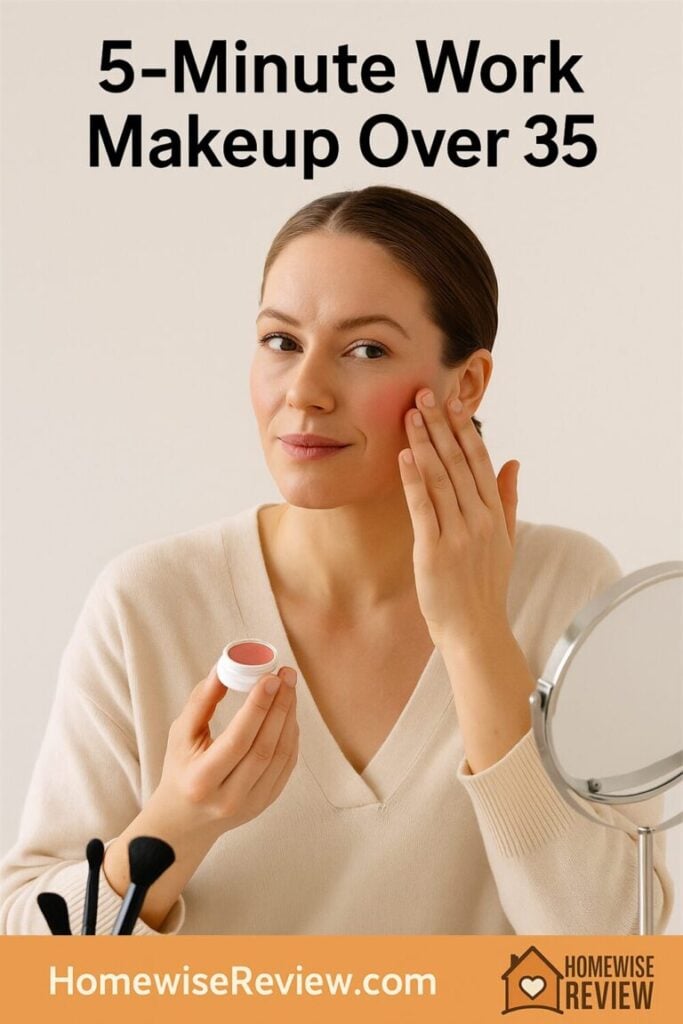
Use five focused makeup steps after skincare to create a polished work look, with simple adjustments for your skin, workplace, and schedule.
On this page
- What fits into a five-minute work makeup routine
- Complete skincare before starting the timer
- Choose the shortest base step that meets your needs
- Use concealer where it changes the overall result
- Pick one fast route for brows and eyes
- Make cheek and lip choices easy to repeat
- Adapt the routine to your workplace
- Build a compact kit around decisions, not product count
- Quick troubleshooting before work
A five-minute work makeup routine is realistic when your skincare is finished and your products are ready. This guide focuses on a short, repeatable sequence rather than promising a particular finish or wear time.
A useful work routine should help you look intentional without making you complete every possible makeup step. Age alone does not determine which formulas or colors will work; dryness, oil, texture, coverage preferences, lighting, and workplace expectations matter more. The plan below treats five minutes as makeup time after skincare and sunscreen, not as a claim that every morning routine can be completed from start to finish in five minutes.
HomeWise has not run a controlled wear test of the products in this guide. The recommendations are therefore practical application options, with clear places to shorten or adapt the routine.
What fits into a five-minute work makeup routine
Put the products you actually use in one tray or bag and choose one tool for each step. The sequence is easier to repeat when you are not searching through a larger collection.
- Minute 1: even only where needed. Apply a thin layer of your usual base to areas where you want more even tone, or skip base and spot-conceal.
- Minute 2: conceal selectively. Tap a small amount onto the specific shadows, redness, or marks you want to soften. Stop when the edges are blended.
- Minute 3: define brows or lashes. Choose the step that makes the larger difference for you. Fill obvious brow gaps, apply mascara, or split the minute between both.
- Minute 4: add cheek color. Use a familiar blush and blend until no edge is visible. Bronzer is optional, not a required extra step.
- Minute 5: finish and check. Add lip color or balm, then use powder only on areas that need it. Check the result in the lighting you will leave the house in.
This timing assumes containers are open, tools are clean, and you already know where each product works on your face. On a first attempt, accuracy matters more than beating the clock.
Complete skincare before starting the timer
Use the morning skincare and sunscreen that already suit you, following their directions. Allow the layers to settle before applying makeup. If products pill or separate, adding more makeup usually makes the problem more visible; give the base more time, use less product, or test the combination on a different morning.
Primer is optional. It may be useful on a specific area where makeup tends to move or where you want a different finish, but it does not need to cover the entire face. Skipping an unnecessary primer is an easy way to save time and reduce the number of layers.
Choose the shortest base step that meets your needs
The best five-minute base is the one you can blend predictably. Product labels such as skin tint, tinted moisturizer, and foundation do not guarantee a finish, so judge the formula you own by its coverage, texture, and compatibility with your skincare.
- Concealer only: the fastest option when you are comfortable leaving most skin bare. Place it only where you want coverage.
- Sheer base: useful when you want light evening across a larger area. Start in the center of the face and blend outward rather than building a thick layer everywhere.
- Foundation: appropriate when you want more coverage, provided you already know how little you need and how the formula behaves during your workday.
Match base near the jaw and check it against the neck in useful light. If a mark still shows after the first layer, targeted concealer usually adds less bulk than another full-face layer.
Use concealer where it changes the overall result
Under-eye concealer does not need to run from the lash line to the cheek. Start with a small amount on the darkest area and blend the edge into bare skin or base. Use the same targeted approach around the nose or on individual marks.
If concealer gathers in a line, press away the excess before deciding whether powder is needed. Adding more concealer on top of a crease can make the buildup more obvious. Readers who want a longer explanation can use the separate guide to makeup for dark circles.
Pick one fast route for brows and eyes
You do not need a complete eye look for every work setting. Choose a repeatable option:
- Brows first: brush them into place and add short strokes only in visible gaps. A familiar gel can replace pencil when shape is already sufficient.
- Mascara first: apply one controlled coat and clean any transfer after it dries rather than adding several rushed coats.
- Soft lash-line color: use a pencil or shadow along the visible lash line if that is quicker for you than mascara. Keep eye cosmetics out of the eye itself and stop using a product that causes irritation.
If sparse brows are the main concern, the guide to brow gels for sparse brows explains the format choices in more detail.
Make cheek and lip choices easy to repeat
Use a blush shade and formula you already know rather than experimenting on a rushed morning. Cream and liquid products can be applied with fingers when their directions allow it; powder can be quick with a single brush. Neither format is automatically better for a particular age group. The useful choice is the one that blends evenly over your base and remains comfortable for you.
Place blush where you like the balance on your own face, then soften the edges. Bronzer, contour, and highlighter are optional. If one of them regularly takes more than a minute to correct, leave it out of the workday version.
For lips, a balm, sheer color, or familiar lipstick can finish the routine. Choose based on comfort, the amount of maintenance you accept, and your workplace rather than a universal age-based color rule.
Adapt the routine to your workplace
Work makeup should not be forced into a single template for every job. Use the five-step structure, then change the emphasis:
- Formal or client-facing setting: spend the final minute on the feature that makes the look feel finished to you, such as a defined lip or tidier brow, instead of adding more base.
- Creative or casual setting: keep the short base routine and use one color accent if that fits the workplace.
- Remote meetings: check your actual camera preview. Center-face tone, brows, and lip color may read more clearly than subtle cheek or eye detail, but lighting and camera processing vary.
- Glasses: check where the frames touch your base and whether lashes meet the lenses. Adjust product placement to your frames rather than following a fixed rule.
- Long commute: carry only the item you genuinely reapply, plus blotting paper if useful. A small touch-up plan is easier than transporting the whole routine.
Build a compact kit around decisions, not product count
A practical kit can be as small as base or concealer, one brow or eye product, blush, lip color, and powder if you use it. Add a tool only when it makes application faster or more reliable. Clean tools are easier to assess than brushes carrying several old colors; the guide to cleaning makeup brushes covers a separate maintenance routine.
Readers who prefer a broader, less time-restricted routine can compare the natural makeup routine for mature skin and the over-40 makeup routine focused on light layers. Cold, dry weather may require different prep; see the guide to adjusting makeup in winter.
Quick troubleshooting before work
- Base looks patchy: stop layering, press away excess, and decide whether the area looks better with less product.
- Concealer creases: smooth the existing amount before adding a very small amount of powder, if any.
- Mascara transfers: let it dry, remove the mark cleanly, and note whether a different formula or fewer coats works better next time.
- Blush edge is obvious: soften it with the tool used for base rather than adding more blush.
- The routine exceeds five minutes: remove the least useful step. Speed should come from fewer decisions, not careless application.
For occasional lash definition beyond mascara: check our 35-product reusable false-lash claim audit before buying, especially for included adhesive, required liner and the difference between “up to” and “15+.”
For the occasional false-lash step: check our 30-product adhesive label audit before buying; exact clear and black formulas can make opposite latex disclosures even under one brand.
Frequently Asked Questions
Is skincare included in the five minutes?
No. The five minutes cover makeup after skincare and sunscreen have been applied according to their directions and have had time to settle.
Can I skip foundation and still have a work-ready routine?
Yes. If you prefer, use concealer only on specific areas, then choose brows or mascara, blush, and lip color. A work-ready result depends on your workplace and preferences, not on wearing foundation.
What should I prioritize for video meetings?
Open the camera you actually use and check the preview under your normal lighting. Evenness near the center of the face, brows, and lip color are often easier to see than subtle details, but the preview is more useful than a fixed rule.
How do I make the routine last through a long day?
Use products whose wear you already understand, keep layers thin, and plan one or two realistic touch-ups. Blotting excess oil and reapplying lip color may be more useful than adding another layer of face makeup.
As an Amazon Associate, we earn from qualifying purchases made through links on our site.
For more information, check out our comprehensive guide: Makeup