

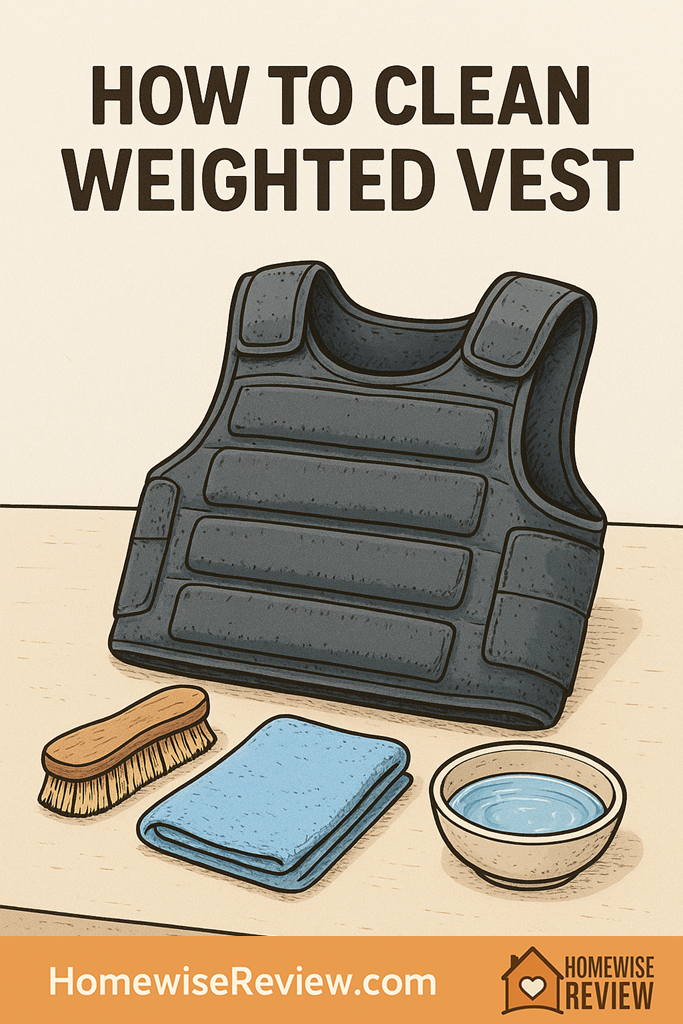
A weighted vest gets sweaty fast, and the wrong cleaning method can warp plates, trap mildew, or break down coatings. Use these simple, vest-specific steps to clean it thoroughly and keep it comfortable and safe.
Weighted vests collect sweat, salt, and skin oils in places regular shirts never do, especially around the collar, shoulder straps, and inside panels. If you wash it the wrong way, you can damage the outer fabric, the stitching, the Velcro, or even the weights themselves. The good news is that most vests clean up well with a simple routine once you match the method to the type of vest you own.
Before you clean: identify your vest type (this decides everything)
The biggest mistake people make is treating every weighted vest like a hoodie. A plate-style vest is built differently than a sand-filled vest, and “machine washable” often applies to the carrier only, not the weights.
Common weighted vest designs (and what to look for)
- Plate carrier style: weight plates slide into pockets (often steel). Usually you can remove weights and wash the carrier.
- Block or bar weights: small metal weights in multiple pockets. Sometimes removable, sometimes sewn in.
- Sand or iron-sand fill: soft, dense, and often not removable. These should rarely be fully submerged.
- Neoprene-coated or foam-padded: comfortable but can trap odor if not dried well.
Quick “check the label” checklist
- Look for “remove weights before washing” or “carrier only.”
- Check water temperature guidance (cold vs warm).
- Confirm if it is machine washable or hand wash only.
- Note any warnings about bleach, softener, or heat drying.
What to avoid (the short list that prevents most damage)
- Do not machine wash with weights inside unless the manufacturer explicitly says you can. The weight can tear seams and destroy your washer drum.
- Do not use high heat (hot water or high dryer heat). Heat can warp coatings, shrink webbing, and weaken adhesive-backed padding.
- Skip fabric softener. It leaves residue that holds odor and can reduce breathability.
- Avoid long soaks for vests with foam padding or non-removable weights. Soaking can trap water inside layers and invite mildew.
- Do not store it damp, even “just overnight.” That is how the sharp sour smell sets in.
Best cleaning method by vest type (use this table to choose fast)
| Vest type | Safest go-to method | What to watch out for |
|---|---|---|
| Plate carrier (weights removable) | Remove plates, hand wash or gentle machine wash the carrier | Velcro can snag; use a laundry bag or secure all closures |
| Multiple small weights (removable) | Remove weights, wipe interior pockets, hand wash carrier | Small pockets trap salt and grit; rinse thoroughly |
| Non-removable weights | Spot clean plus wipe-down, minimal water, fast drying | Do not soak; water can get trapped around weights and padding |
| Neoprene or heavily padded | Gentle hand wash, extra rinse, air dry with airflow | Detergent residue and slow drying drive lingering odor |
Step-by-step: routine clean (the method that works for most vests)
If your vest is used for running, rucking, HIIT, or garage workouts, a “routine clean” is usually about removing sweat salts and body oils before odor builds. Plan on 20 to 40 minutes total, with most of that time being hands-off drying.
1) The 10-minute post-workout reset (prevents most stink)
- Open the vest fully (zippers, buckles, and Velcro).
- Hang it so air can reach the inside panels (not flat on a floor or in a gym bag).
- Wipe the collar line and shoulder straps with a damp cloth if they are visibly salty.
- Let it air out until fully dry before storing.
This mini-routine matters because sweat salts stay behind even when the vest “looks dry.” Salt and oils feed bacteria over time, which is why a vest can smell worse on day five than it did right after a hard session.
2) Remove weights and prep the carrier
- Remove plates or weights and set them aside on a towel.
- Shake out grit (especially if you train outdoors).
- Close or cover Velcro panels to prevent snagging.
- Empty every pocket, including small accessory pouches.
3) Hand wash (safest for almost every weighted vest)
Hand washing gives you control and avoids the twisting and pounding that can stress seams and pocket stitching.
- Fill a basin with cool to lukewarm water.
- Add a small amount of mild detergent. You want enough to break down oils, not enough to leave residue.
- Agitate gently by pressing and swishing the carrier for 2 to 3 minutes.
- Target high-sweat zones with a soft cloth or soft brush: collar, shoulder straps, chest panel edges, and inner lining.
- Rinse thoroughly until the water runs clear and you do not feel slickness in the fabric.
- Press out water with a towel. Do not wring or twist.
4) Machine wash (only if the label allows it)
If the manufacturer says the carrier is machine washable, keep it gentle and protective.
- Cycle: delicate or gentle.
- Water: cold.
- Spin: low if you can choose it.
- Protection: place the carrier in a large laundry bag or pillowcase, and secure straps so they do not whip around.
- Load: wash with a few soft items (like towels) to cushion, not with jeans or anything abrasive.
Skip the dryer unless the label explicitly approves it. Even then, use low heat and remove promptly.
Spot cleaning and stain removal (salt, dirt, and “mystery gym marks”)
Spot cleaning is ideal when the vest is not overall dirty but has visible marks, salt lines, or a smelly collar. It is also the safest approach for vests with non-removable weights.
Spot clean method (5 to 10 minutes)
- Dampen a microfiber cloth with cool water.
- Add a small drop of detergent to the cloth, not directly to the vest.
- Blot and gently rub in small circles, working from the outside of the stain inward.
- Use a second cloth with plain water to “rinse” the area.
- Press with a dry towel, then air dry with strong airflow.
Common stain situations and what works
- Salt lines: wipe with plain water first, then a tiny amount of detergent if needed. Salt is water-soluble, so start simple.
- Mud or grit: let it dry, brush off loose dirt, then spot clean. Rubbing wet mud can grind particles deeper.
- Deodorant or sunscreen smears: pre-treat with a small amount of detergent, wait 5 minutes, then rinse-wipe and air dry.
Deodorizing and disinfecting safely (when soap is not enough)
If your vest smells fine when dry but gets funky as soon as you warm up, that usually means bacteria and residue are still in the fabric. You need better rinsing and a more effective odor reset, not stronger fragrance.
Odor reset options (choose one)
- Extra rinse: after washing, rinse the carrier one more time than you think you need. Residue is a major odor trap.
- Oxygen-based laundry booster: helpful for stubborn sweat odor on washable carriers. Avoid chlorine bleach, which can weaken fibers and damage coatings.
- Vinegar rinse (for some carriers): a small amount in rinse water can help cut residue. Do not use it on raw metal parts for long periods, and avoid extended contact with any exposed foam.
When to disinfect
- After training while sick, or if the vest is shared between people.
- If it was stored damp and now smells musty.
- After outdoor sessions where it contacted questionable surfaces (mud, public parks, garage floors).
Disinfecting is most effective after cleaning, because dirt and oils block disinfectants from working well.
Drying your weighted vest (this is where most mildew starts)
Drying is not an afterthought for weighted vests. Multiple layers, foam panels, and pocket seams can stay damp long after the outside feels dry.
Best drying setup
- Hang the carrier fully open on a sturdy hanger or drying rack.
- Aim a fan across it to move air through the interior panels.
- Rotate the vest once or twice so thick areas dry evenly.
- Do not place it in direct, hot sunlight for hours if the fabric has coatings or rubberized sections (it can accelerate cracking over time).
How to tell it is truly dry
- Press the thickest padding with a paper towel. It should not pick up moisture.
- Check inside pockets and seams where weights sit. Those areas dry last.
- Smell the interior panel. Damp fabric often has a faint sour note even before full mildew develops.
Cleaning the weights and hardware (plates, blocks, buckles, and Velcro)
Most weights should be cleaned separately from the carrier. The goal is to remove sweat salts and prevent corrosion, especially if you live in a humid area or sweat heavily.
Steel plates and metal blocks
- Wipe with a barely damp cloth to remove salt and grime.
- Dry immediately with a towel.
- If you see rust spots, address them early: scrub lightly and keep the plate dry before reinserting.
Plastic-coated weights
- Wipe with mild soapy water on a cloth, then wipe again with plain water.
- Dry completely so moisture does not get sealed into pockets.
Velcro, zippers, and buckles
- Velcro: remove lint and hair with your fingers or a soft brush before washing. It improves grip and reduces snagging.
- Zippers: rinse out grit with a damp cloth; do not oil them unless the manufacturer recommends it.
- Buckles: check for trapped sand and rinse-wipe so they click cleanly and do not grind.
How often should you clean a weighted vest?
Frequency depends on sweat level, indoor vs outdoor use, and whether you store it in a closed space. Use this as a realistic baseline for most busy schedules.
| Use pattern | Quick air-out | Wash or deep clean |
|---|---|---|
| Light use (1 to 2 times per week, low sweat) | After every use | Every 3 to 6 weeks |
| Moderate use (3 to 4 times per week) | After every use | Every 2 to 4 weeks |
| Heavy use (5+ times per week, high sweat or outdoor rucking) | After every use | Weekly or every 2 weeks |
| Shared vest (multiple users) | After every use | At least weekly, plus spot-disinfect as needed |
Storage tips that keep it fresh between workouts
- Never store it in a gym bag. Bags trap humidity and heat, which accelerates odor and mildew.
- Choose airflow over hidden storage. A hook in a closet with space around it is better than a tight shelf bin.
- Store weights dry and separate if possible. It reduces pocket stress and helps everything dry fully.
- Do a monthly seam check. Cleaning time is a good time to inspect pockets, stitching, and strap wear for safety.
Bottom Line
Clean a weighted vest by matching the method to the vest style: remove weights whenever possible, wash the carrier gently, rinse thoroughly, and air dry with strong airflow. If you control residue and drying, you prevent nearly all long-term odor and most premature wear.
See also
Start with our guide to laundry routines for gym clothes, then keep the stain-rescue decision tree for quick fixes nearby for those last-minute marks.
- Seventh Generation Free & Clear detergent review for sensitive-skin wash days
- Downy Rinse & Refresh review for tackling detergent residue and lingering odors
- Best non-toxic cleaning products for families (practical, not precious)
Frequently Asked Questions ▾
Can you put a weighted vest in the washing machine?
Only if the care label says the carrier is machine washable and the weights are removed. Use cold water on a gentle cycle, secure Velcro, and protect it in a laundry bag to reduce seam stress and snagging.
How do you clean a weighted vest that has non-removable weights?
Use spot cleaning and wipe-downs with minimal water, then dry aggressively with airflow. Avoid soaking, because water can get trapped around weights and padding, leading to mildew and rust.
What is the best way to get sweat smell out of a weighted vest?
Wash (or hand wash) the carrier with a mild detergent, then rinse more thoroughly than usual and air dry fully. If odor persists, use an oxygen-based laundry booster on washable carriers and focus on complete drying of thick panels and pockets.
Can you use bleach on a weighted vest?
Chlorine bleach is risky for most vests because it can weaken fibers and damage coatings. If you need a stronger odor reset, an oxygen-based booster is typically safer for washable fabrics, and disinfecting is most effective after cleaning and rinsing.
How long does a weighted vest take to dry?
It depends on padding and airflow, but many carriers take several hours to fully dry, and thick interior panels can take longer. Use a fan and keep the vest open, then check pockets and seams before storing.
As an Amazon Associate, we earn from qualifying purchases made through links on our site.