

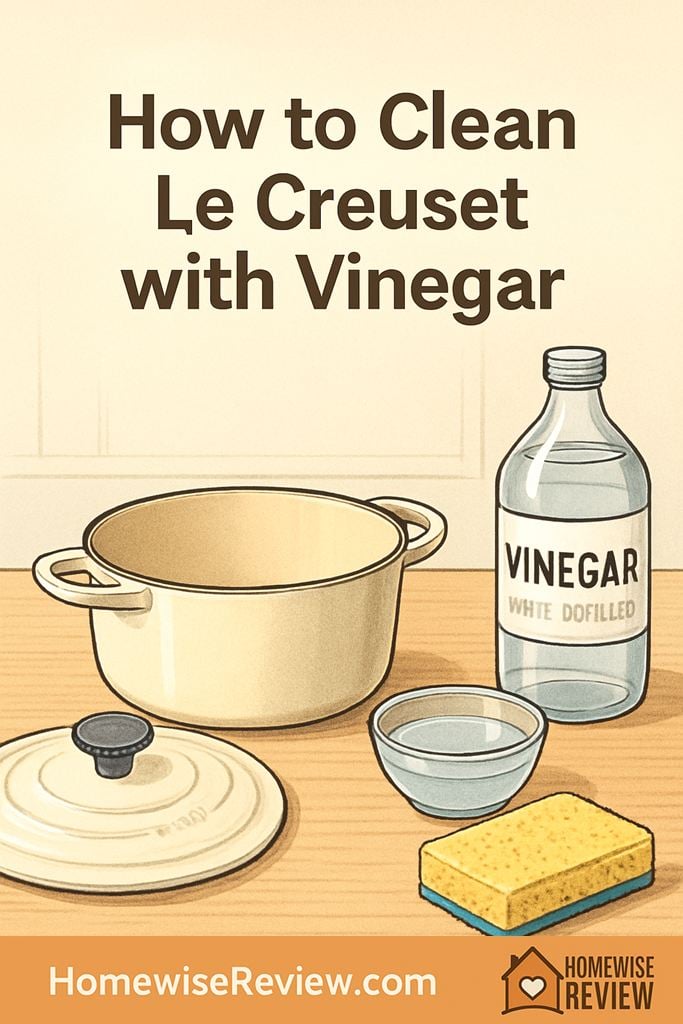
I set my favorite cream Le Creuset by the sink and poured in a splash of vinegar to chase a cloudy ring, figuring a little acid was a little acid. By the time I came back from answering a call, the film was gone but the enamel looked slightly flatter in that spot, like someone had rubbed the shine down with a soft eraser. It was not ruined, but it was enough to make me rethink the whole approach. Now I measure and dilute, keep the contact time short, and rinse like I mean it so the pot stays glossy while the mineral haze disappears.
Le Creuset enamel is tough, but it is not “anything goes” tough. Vinegar is a handy, budget-friendly cleaner for certain problems (especially mineral deposits and light discoloration), yet it can cause dullness if used too strong or left too long.
This guide walks you through the safest vinegar methods for enameled cast iron, plus when to skip vinegar and choose a different approach.
Before you start: Is vinegar safe for Le Creuset?
What vinegar is good for (and what it is not)
White distilled vinegar is mildly acidic, which makes it great for dissolving mineral scale (hard water film) and loosening some stuck-on residue. It can also help with odors and some light staining that soap alone does not touch.
Vinegar is not the best tool for heavy grease buildup or deep polymerized stains. It is also not a “soak it overnight” cleaner for enamel, because long contact with acid can dull the sheen.
What Le Creuset pieces this applies to
- Enameled cast iron (Dutch ovens, braisers, skillet interiors): Vinegar is generally safe when diluted and used briefly.
- Stoneware: Vinegar is usually fine for film and odors, but avoid long soaks and sudden temperature changes.
- Stainless steel (some accessories): Vinegar can remove water spots, but rinse well.
- Bare cast iron (if you have any uncoated pieces): Avoid vinegar soaks. Acid can strip seasoning and encourage rust.
Pick the right vinegar (and the right strength)
- Best choice: White distilled vinegar (typically 5% acidity).
- Use caution: “Cleaning vinegar” is often stronger (around 6%). It works faster, but increases the risk of dulling, so dilute more and shorten contact time.
- Skip: Vinegar with sugar or color (like balsamic). It can leave residue or tint in micro-texture.
Supplies you need (keep it gentle)
- White distilled vinegar
- Warm water
- Mild dish soap
- Soft sponge or non-scratch scrub pad
- Wooden spoon or silicone spatula (for lifting softened bits)
- Soft towel for drying
- Optional: baking soda (for a paste, when vinegar is not enough)
One practical tip: I keep a small labeled squeeze bottle of diluted vinegar under the sink so I am not eyeballing ratios when I am cleaning up after dinner.
Non-negotiables: 5 rules that protect the enamel
- Let the pot cool first: Do not pour cold vinegar solution into a ripping-hot pot. Thermal shock can crack enamel over time.
- Dilute for most jobs: Start with a 1:1 vinegar and water mix unless you are spot-treating a small area.
- Short contact time: Think minutes, not hours. Do not leave vinegar sitting overnight.
- No metal tools: Avoid steel wool, metal spatulas, or anything that can scratch.
- Rinse thoroughly: Any cleaner left behind can create dull spots or a lingering smell.
Method 1: Everyday cleaning with a vinegar “finish” (for haze and lingering odor)
This method is best when your pot is basically clean, but looks slightly cloudy, smells like last night’s curry, or has a faint brown tint that soap is not removing.
Steps
- Wash with warm water and a few drops of dish soap.
- Rinse, then add 1 cup warm water + 1 cup vinegar to the pot.
- Wipe the interior with a soft sponge so the solution contacts the surface evenly.
- Let it sit for 5 to 10 minutes.
- Rinse very well, then wash once more with a tiny bit of dish soap (this helps remove vinegar smell).
- Dry completely with a towel, including the rim and lid edge.
Why it works
Mineral haze and odor-causing residues often respond to mild acid plus a thorough rinse. The second quick soap wash prevents that “salad dressing” smell from sticking around.
Method 2: Remove hard-water scale and chalky white film
If you see a chalky ring near the waterline or a gritty white film, that is usually mineral buildup from hard water. Vinegar is one of the best tools for this.
Steps (soak method, but short)
- Fill the pot with enough warm water to cover the affected area.
- Add vinegar at a 1:1 ratio (equal parts vinegar and water).
- Let it sit for 10 to 15 minutes.
- Gently scrub with a soft sponge or non-scratch pad.
- Rinse thoroughly. If the film is stubborn, repeat once rather than extending soak time.
For the outside bottom (chalky ring under the pot)
- Mix 2 tablespoons vinegar + 2 tablespoons warm water.
- Dip a cloth in the mix and lay it on the spot for 5 minutes.
- Wipe, rinse, and dry. Avoid saturating the rim where raw cast iron may be exposed.
Method 3: Lift burnt-on food without scratching the enamel
For stuck-on residue, vinegar works best as part of a gentle “deglaze and simmer” approach. The goal is to soften the mess so it releases without aggressive scrubbing.
Steps (simmer and scrape gently)
- Cover the stuck-on area with water (about 1 to 2 inches in most pots).
- Add 2 to 3 tablespoons vinegar per quart of water.
- Bring to a gentle simmer on the stove for 5 to 10 minutes. Do not boil hard.
- Turn off heat and let it cool until it is safe to handle.
- Use a wooden spoon or silicone spatula to nudge softened bits loose.
- Wash with dish soap, rinse, and dry.
If there is still a brown ring
At that point, vinegar has usually done what it can. Switch to a baking soda paste (baking soda plus a little water) and gently scrub, or use a cleaner specifically made for enamel. The win is avoiding scratches that make future stains cling.
Method 4: Rust spots on the rim or lid edge (use vinegar carefully)
Many enameled cast iron pieces have exposed cast iron along the rim. If moisture sits there, you can get tiny orange rust freckles. Vinegar can remove rust, but it also removes seasoning and can encourage more rust if you do not dry and protect the area afterward.
Steps (spot treatment only)
- Dampen a cloth or cotton swab with diluted vinegar (1:1).
- Rub the rust spot for 30 to 60 seconds.
- Rinse immediately and dry thoroughly.
- Apply a pinhead-sized drop of neutral oil to the exposed rim and wipe it nearly dry. You want protection, not a greasy edge.
What not to do (common vinegar mistakes)
- Do not soak overnight: Long acid exposure can dull enamel and can worsen exposed-rim rust issues.
- Do not use straight vinegar as your default: Save full strength for tiny spot work, not whole-pot soaking.
- Do not mix vinegar with bleach: This can create dangerous fumes. Keep cleaning chemicals separate.
- Do not use abrasive powders aggressively: Even “mild” abrasives can create micro-scratches that attract staining.
- Do not ignore the lid edge and handles: Residue there can cause odor and grime buildup that makes the whole pot feel dirty.
Vinegar vs other cleaning options (when to choose what)
| Option | Best for | How to use | Main caution |
|---|---|---|---|
| Diluted white vinegar | Hard-water film, chalky deposits, light discoloration, odors | 1:1 vinegar and water, 5 to 15 minutes; or a short simmer for stuck bits | Over-soaking can dull enamel; rinse well |
| Dish soap + hot water | Everyday cleaning, fresh food residue | Wash promptly with a soft sponge | May not touch mineral film or stubborn staining |
| Baking soda paste | Brown rings, cooked-on staining, gentle scrubbing | Paste, let sit 10 to 20 minutes, then non-scratch scrub | Too much pressure can still dull over time |
| Enamel-specific cleaner | Deep stains you want to lift without experimenting | Follow label directions precisely | Cost; always test a small area first |
Prevention: keep Le Creuset cleaner with less effort
After-cooking habits that matter
- Do a quick deglaze: After cooking, add a splash of warm water while the pot is still warm (not hot), and scrape gently with a wooden spoon.
- Avoid high heat for long stretches: Enamel can discolor with repeated overheating, especially when dry.
- Do not store food long-term in the pot: Acidic foods (tomato, citrus) can contribute to staining and odor over time.
Drying and storage tips
- Dry the pot and lid fully, paying attention to the rim.
- If you stack pieces, place a soft towel or pan protector between them to prevent tiny chips and rub marks.
- Leave the lid slightly ajar during storage if odors have been an issue.
Bottom Line
Vinegar is a safe helper for cleaning Le Creuset when you use it diluted, keep contact time short, and rinse thoroughly. It shines for hard-water film, light discoloration, and odor, but for deep stains you will usually get better results from gentle simmering plus baking soda or an enamel-safe cleaner.
See also
If you are dealing with layered stains, start with our stain-rescue decision tree, then tackle any oily buildup using these practical grease removal steps.
- Scrub Daddy sponges review (non-scratch scrubbing)
- Best non-toxic cleaning products for families
- Best dishwasher pods and soaps for sensitive skin
Frequently Asked Questions ▾
Can I soak my Le Creuset in vinegar overnight?
I would not. A short soak (10 to 15 minutes) is usually enough for mineral film, and longer acid contact can dull enamel over time. Repeat a short soak if needed instead of extending the time.
Will vinegar remove burnt-on stains inside enameled cast iron?
It can help loosen stuck food when used in a short simmer, but it is not always strong enough for the brown “patina” ring. If the stain remains after simmering and washing, switch to a baking soda paste and gentle scrubbing.
Is vinegar safe on colored enamel exteriors?
In general, yes when diluted and used briefly, especially for hard-water spots. Do a quick spot test first, avoid strong cleaning vinegar, and always rinse and dry so no acid residue sits on the finish.
Can I use apple cider vinegar instead of white vinegar?
White distilled vinegar is the better choice because it is clear and less likely to leave residue or tint. If apple cider vinegar is all you have, dilute it well and rinse extra thoroughly.
Do I need to oil my Le Creuset after cleaning with vinegar?
Not on the enamel surfaces. The only time oil helps is on an exposed cast iron rim if you removed rust or noticed recurring rust freckles. Use a tiny amount and wipe nearly dry.
As an Amazon Associate, we earn from qualifying purchases made through links on our site.