

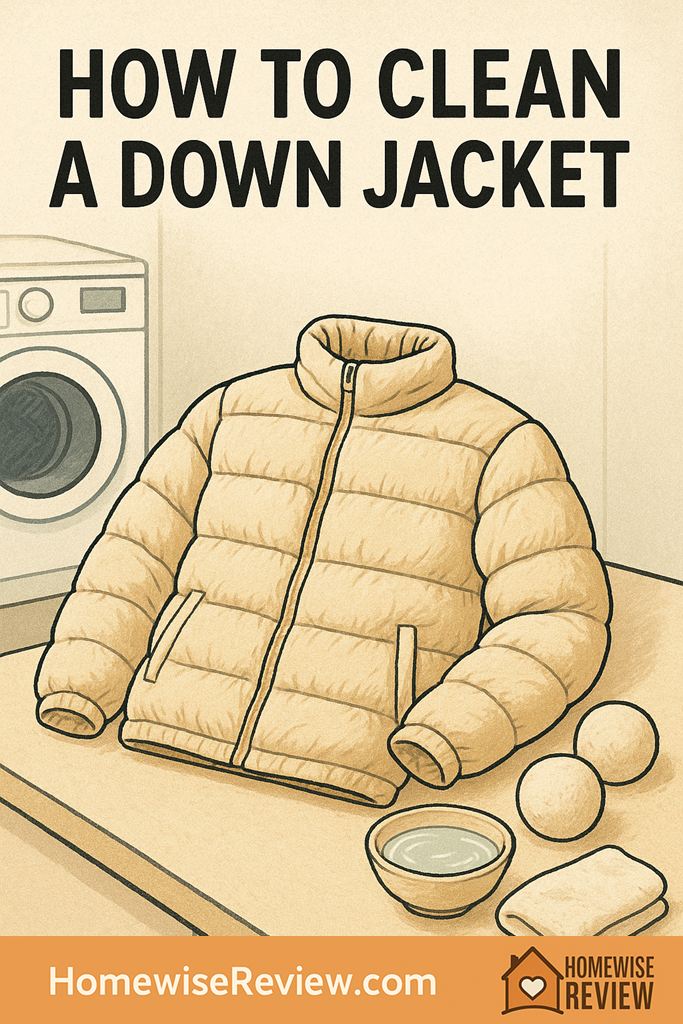
A down jacket that comes out clumpy, smelly, or flat usually is not “ruined”, it just needs the right wash and a very thorough dry. Here is the safe, step-by-step way to clean down without losing warmth or loft.
Down jackets are warm because tiny clusters of down trap air, and that loft is also what gets damaged by harsh detergent, too much agitation, or incomplete drying. The good news is most down jackets can be cleaned at home if you prep properly and dry them patiently.
Why down needs special care
Down is a natural insulation, and it works best when it is clean, fluffy, and evenly distributed in each baffle. Dirt and body oils make down feel heavier and reduce loft. Water alone is not the enemy, but trapped moisture is, because it causes clumps and can lead to mildew if the jacket stays damp too long.
What “loft” actually depends on
- Gentle cleaning: minimal agitation, mild detergent, no fabric softener.
- Thorough rinsing: leftover suds can make feathers stick together.
- Complete drying: down must be fully dry inside the baffles, not just the shell.
Before you wash: read the label and prep the jacket
Start with the care label. Brands vary in shell fabrics, coatings, and construction. If the label says “do not wash” or “dry clean only,” follow that instruction, or call the brand to confirm whether professional wet cleaning is allowed.
Quick decision check: can you wash it at home?
- Usually yes: labels that allow machine wash gentle, cold or warm, tumble dry low.
- Proceed with caution: leather trim, heavy faux fur, glued seams, very delicate shell fabrics.
- Usually no: true “dry clean only” items, or jackets with structural parts that can warp (some fashion pieces).
Supplies to gather (keep it simple)
- Mild liquid detergent (no bleach, no fabric softener)
- Clean microfiber cloth or soft sponge for spot cleaning
- Soft brush or old toothbrush for cuffs and collar
- 2 to 3 clean tennis balls or wool dryer balls (for drying)
- Optional: a down-specific wash (helpful, but not required for many jackets)
Prep steps that prevent damage
- Empty pockets and remove detachable parts (hood trim, faux fur, liners) if the label allows.
- Zip everything (front zipper, pockets) and fasten snaps or hook-and-loop to prevent snagging.
- Turn the jacket inside out to reduce wear on the outer shell.
- Check for tears and patch small holes first. Washing can worsen a rip and leak feathers.
Spot clean first when you can
If the jacket is not truly “dirty,” spot cleaning buys you time and reduces full wash frequency. Focus on the collar, cuffs, and around the chin where body oils build up.
- Mix a few drops of mild detergent with lukewarm water.
- Dab (do not scrub aggressively) with a damp cloth.
- Wipe again with clean water to remove residue.
- Air dry fully before wearing.
Choose your cleaning method
Your best method depends on how dirty the jacket is, the care label, and what equipment you have. For many everyday down puffers, a gentle machine wash plus a long, low dry is the easiest and most effective.
| Method | Best for | Pros | Cons |
|---|---|---|---|
| Spot cleaning | Small stains, oily collar/cuffs, light refresh | Fast, low risk, avoids wetting the down | Does not remove overall odor or sweat buildup |
| Machine wash (gentle) | Most washable down jackets | Thorough, consistent rinse, easiest for full clean | Requires careful drying, risk if washer is too rough |
| Hand wash | Delicate shells, no suitable washer, extra control | Gentlest agitation, good for older jackets | Harder to rinse fully, longer drying time |
| Professional cleaning | “Dry clean only,” heavy grime, specialty trims | Lower risk for complex garments | Quality varies, solvent cleaning can affect some finishes |
Step-by-step: how to machine wash a down jacket
If your jacket can be machine washed, this is the most reliable at-home approach. The two biggest keys are a gentle cycle and an extra rinse to remove every bit of detergent.
Washer settings (use this as your default)
| Setting | Recommended | Why it matters |
|---|---|---|
| Water temperature | Cold or cool | Protects shell fabric and finishes |
| Cycle | Delicate or gentle | Less agitation reduces stress on baffles and seams |
| Spin | Low to medium | Too much spin can strain wet seams; too little leaves it dripping |
| Detergent amount | Small amount | Down rinses best when you avoid excess suds |
| Extra rinse | Yes | Prevents clumping and residue odor |
Machine wash checklist
- Use the right machine if possible: a front-loader is gentler than an old-style top-loader with an agitator.
- Wash alone: one jacket per load. Overcrowding prevents proper rinsing.
- Add mild detergent: choose a fragrance-free liquid if you are sensitive, and skip any fabric softener.
- Run a gentle cycle: cold or cool water.
- Run an extra rinse: if you still see suds, run another rinse.
- Handle it like it is fragile when wet: lift from underneath with both hands. Wet down is heavy, and seams can stretch if you yank it by the shoulders.
If the jacket smells after washing
- Most common cause: detergent residue or not fully dry yet.
- Fix: rinse again (no detergent), then dry longer on low.
- Avoid: adding perfume boosters, scent beads, or softeners to “cover” the smell. They often make clumping worse.
Step-by-step: how to hand wash a down jacket
Hand washing is slower, but it is a good option for delicate pieces or if your washer is too rough. The key is gentle pressing instead of wringing, plus very thorough rinsing.
Hand-wash steps
- Fill a tub with cool water and a small amount of mild liquid detergent.
- Submerge the jacket and press it under water. Let it soak 10 to 15 minutes.
- Gently agitate: swish and press. Do not twist or wring.
- Drain and rinse: refill with clean water, press and swish, drain again. Repeat until the water runs clear and you see no suds.
- Press out water: press the jacket against the side of the tub. For extra help, lay it flat on a thick towel and roll the towel to absorb moisture.
Hand washing tip for cuffs and collars
For grime at cuffs or a makeup mark near the chin, use a soft brush with a tiny bit of diluted detergent. Brush lightly, rinse the area well, and avoid saturating the down more than necessary.
Drying and re-lofting: the step that makes or breaks the result
A down jacket can feel like a lumpy pillow right after washing. That is normal. Your job now is to fully dry it and break up the clumps as it dries, so the down redistributes evenly.
Best method: tumble dry low with dryer balls
- Set the dryer to low heat (or the lowest “tumble dry” setting recommended on the label).
- Add 2 to 3 clean tennis balls or wool dryer balls to help separate the down clusters.
- Plan for time: it often takes 1.5 to 3 hours, depending on jacket thickness and dryer strength.
- Pause and fluff: every 20 to 30 minutes, take the jacket out and gently break up clumps with your fingers, especially along seams and corners of baffles.
- Confirm it is truly dry: feel multiple baffles, not just the outer shell. Any cool, dense clumps mean moisture remains inside.
If you do not have tennis balls
Wool dryer balls work well and are quieter. If you have neither, you can still dry the jacket, but you will need to pause more often to manually break up clumps.
Air drying (only if you can be patient and thorough)
Air drying is possible, but it is slower and easier to get wrong. Use it when the care label forbids tumble drying or you do not have access to a dryer.
- Lay the jacket flat on a drying rack in a well-ventilated room.
- Flip it every few hours and gently break up clumps as it dries.
- Expect 24 to 48 hours (sometimes longer) depending on humidity.
- Do not hang it dripping wet for long periods. The weight can stretch seams and cause down to settle at the bottom.
How to fix stubborn clumps
- Warm (not hot) tumble + massage: low heat for 10 to 15 minutes, then manually separate clumps.
- Target baffles: pinch and pull apart the clump gently, moving along the channel.
- Do not increase heat to rush it: high heat can damage shell fabric and finishes.
Aftercare: keep the jacket cleaner longer
A little aftercare goes a long way, especially if you wear your jacket daily. Think of it as protecting the shell and reducing how often the down itself needs a full wash.
Restore water repellency (DWR) when needed
Many down jackets have a durable water-repellent finish. If water stops beading on the surface and starts soaking in, cleaning may help, but you might also need to reproof.
- First try: wash and dry as directed. Sometimes dirt is the reason water will not bead.
- If still soaking: use a reproofing product that matches your jacket and follow its directions carefully.
- Important: avoid fabric softener. It can interfere with water repellency and leave residue.
Deodorizing without coating the down
- Best option: a full rinse and complete dry if odor is from sweat buildup.
- Between washes: air the jacket out after wear, especially if you were cooking, around smoke, or in damp weather.
- Avoid: heavy fragrance sprays that can build up on fabric and trap odors.
Storage that protects loft
- Store fully dry to prevent mildew.
- Hang or store loosely in a breathable garment bag if possible.
- Avoid long-term compression: stuffing it in a tight sack for months can reduce loft over time.
Common mistakes to avoid
- Using fabric softener: it leaves residue and can make down clump.
- Using too much detergent: suds are hard to rinse from down.
- Skipping the extra rinse: residue often equals stiffness and odor.
- High heat drying: can damage shell fabric and melt trims.
- Putting a wet jacket away: even “almost dry” can mildew inside baffles.
- Wringing or twisting: stresses seams and breaks down the baffle structure.
When to repair or replace instead of washing
Cleaning fixes most performance issues, but it will not solve structural damage. If your jacket has major seam failures, large tears, or down migrating because internal baffles are broken, repair first so you do not lose filling in the wash.
Quick repair signals
- Visible holes or thinning fabric where feathers poke through
- Seams separating along baffles
- Down consistently settling to one area even after drying and fluffing
💡 Editor’s Final Thoughts
Most down jackets can be safely cleaned at home with a gentle wash, minimal detergent, and at least one extra rinse. The real secret is drying: low heat, dryer balls, and enough time to fully dry every baffle so the loft comes back.
See also
If you are choosing a gentle detergent for a down jacket, start with our Seventh Generation Free and Clear laundry detergent review and pair it with our guide to laundry detergents and additives for itchy skin.
- non-toxic cleaning products that actually work for families
- laundry routines for allergies or eczema-prone households
- laundry routines that keep gym clothes from holding odor
Frequently Asked Questions ▾
How often should I wash a down jacket?
For everyday winter wear, many people do a full wash 1 to 2 times per season, plus spot cleaning as needed. Wash sooner if the jacket smells, looks dingy, or the loft is noticeably reduced from oil and dirt buildup.
Can I use regular laundry detergent on a down jacket?
Usually yes, as long as it is a mild liquid detergent and you use a small amount with an extra rinse. Avoid bleach, fabric softener, and heavy fragrance additives, which can leave residue and contribute to clumping.
Why is my down jacket still lumpy after drying?
It is almost always not fully dry inside the baffles. Keep drying on low and pause to break up clumps by hand. A jacket can feel dry on the outside while holding moisture in dense pockets of down.
Is it safe to dry clean a down jacket?
Only if the care label recommends it. Some down jackets tolerate professional cleaning well, while others do better with gentle wet washing. If you choose a cleaner, ask whether they have experience with down and whether they offer professional wet cleaning as an alternative.
Can I wash a down jacket with tennis balls in the washer?
Save the tennis balls for the dryer, not the washer. In the washer they are not necessary and can add extra impact. In the dryer, they are helpful because they gently knock apart clumps as the jacket dries.
As an Amazon Associate, we earn from qualifying purchases made through links on our site.