

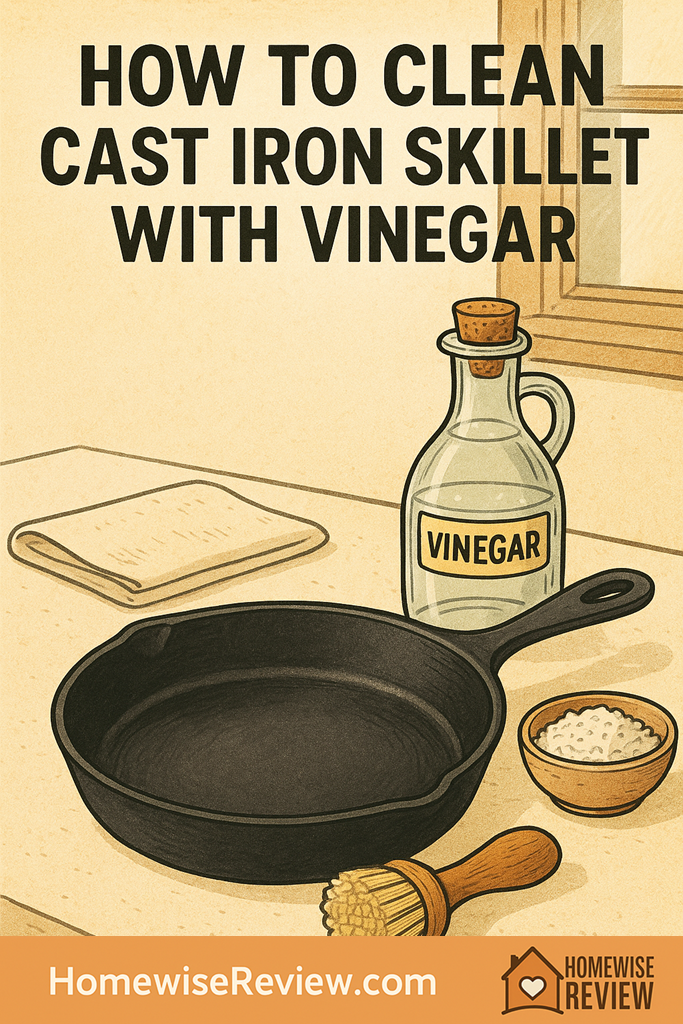
Cast iron holds onto rust, sticky buildup, and stubborn odors, and sometimes soap and scrubbing are not enough. Vinegar can fix it fast, as long as you use the right dilution and stop before it eats your seasoning.
Cast iron is tough, but it is not immune to rust, sticky oil buildup, or that stubborn “old pan” smell. Vinegar is one of the quickest ways to reset a problem skillet because it dissolves rust and breaks down mineral and burnt-on residue.
The catch is that vinegar is an acid, so it can also strip seasoning if you overdo it. The goal is controlled contact: dilute it, time it, rinse thoroughly, dry immediately, then re-season.
When vinegar is a good idea (and when it is not)
Use vinegar when you have one of these problems
- Rust spots or an orange film: especially after air-drying, dishwasher exposure, or humid storage.
- Metallic smell or taste: often happens when seasoning is thin or patchy.
- Mineral haze or chalky residue: common with hard water, especially if the pan is left wet.
- Stubborn, stuck-on gunk that will not budge: after you have tried hot water and scraping.
Avoid vinegar (or use a gentler method first) in these situations
- Routine cleaning after normal cooking: hot water, a brush, and a quick dry is usually enough.
- A well-seasoned pan with no rust: vinegar can dull and thin a good seasoning layer.
- Deep pitting or flaking seasoning: vinegar can reveal bare metal fast; you may be better off fully stripping and re-seasoning instead of spot-treating.
- Aluminum handles or non-cast components: verify the whole pan is cast iron; acid can discolor or damage other metals.
What you need (simple checklist)
Keep the setup basic so you can move quickly from vinegar to drying and re-seasoning.
- White distilled vinegar (most predictable)
- Water (for dilution)
- Non-abrasive scrubber or brush
- Stiff nylon brush or a pan scraper for stuck-on bits
- Paper towels or a clean cloth
- Cooking oil for re-seasoning (a neutral oil works well)
- Stovetop heat or an oven for drying and seasoning
Vinegar dilution and timing chart (use this to avoid stripping)
The two variables that protect your skillet are strength (how diluted) and time (how long it sits). When in doubt, start weaker and shorter, then repeat.
| Problem | Vinegar:Water | How to apply | Max contact time | What to do next |
|---|---|---|---|---|
| Light haze, mild odor | 1:4 | Wipe or quick rinse | 1 to 2 minutes | Rinse, dry on heat, thin oil wipe |
| Small rust spots | 1:1 | Spot-soak with paper towel | 10 to 20 minutes (check every 5) | Scrub, rinse, dry immediately, re-season |
| Widespread rust film | 1:1 | Shallow soak (pan only) | 30 to 45 minutes (check every 10) | Scrub thoroughly, rinse, dry, re-season same day |
| Sticky, tacky buildup (thin layer) | 1:2 | Wipe and scrub | 5 to 10 minutes | Rinse, dry, then do a short oven re-season |
Step-by-step: Clean a cast iron skillet with vinegar
This method is designed to remove the problem without turning the whole pan back into bare iron. Read through once before you start so you can move quickly from acid to drying.
Step 1: Pre-clean so vinegar can work on the real problem
- Rinse the skillet with hot water.
- Scrape off food bits with a pan scraper or stiff brush.
- If the pan is greasy, wipe it out with a paper towel first so you are not just smearing oil around.
Vinegar does not “cut” heavy grease well on its own. Removing surface oil first makes the vinegar step faster and more controlled.
Step 2: Choose your vinegar application method
- For small spots: use a vinegar-soaked paper towel as a compress on the problem area.
- For a light overall haze: use a diluted vinegar wipe or quick rinse, then scrub lightly.
- For widespread rust: do a shallow soak in the sink or a tub, using a diluted solution and frequent check-ins.
Step 3: Spot-treat rust with a vinegar compress (best for most pans)
If you have a few rusty patches, this is usually safer than soaking the entire skillet.
- Mix 1:1 vinegar and water in a bowl.
- Soak a folded paper towel in the solution and lay it over the rust spot.
- Wait 10 minutes, then lift and check. If the rust is softening, scrub gently with your brush or scrubber.
- Repeat in short rounds until the orange color is gone.
Stop as soon as the rust releases. Over-soaking is what strips seasoning and can leave the surface looking dull or gray.
Step 4: For widespread rust, soak briefly and check often
Use this when the whole cooking surface has a rust film and spot-treating would take forever.
- Plug the sink (or use a tub) and add enough 1:1 vinegar and water to cover the rusty area.
- Set a timer for 10 minutes. Pull the skillet out and scrub a small section to see if the rust wipes away.
- If needed, put it back and check every 10 minutes until the rust releases.
- Do not walk away. Total time is commonly 30 to 45 minutes, sometimes less.
If you see black seasoning lifting in sheets, or the iron starts looking uniformly matte and gray, end the soak and move on. That is the point where you are shifting from “clean and preserve” to “strip and rebuild.”
Step 5: For sticky, tacky buildup, use diluted vinegar plus scrubbing
Sticky seasoning is usually polymerized oil applied too thick or not baked long enough. Vinegar can help loosen the top layer so you can scrub it off, but it is not the only tool.
- Mix 1 part vinegar to 2 parts water.
- Apply to the sticky area and let it sit for 5 minutes.
- Scrub with firm, even pressure. Focus on the sticky “high spots.”
- Rinse and feel the surface. If it still feels tacky, repeat once, then switch to hot water scrubbing rather than extending vinegar time.
Step 6: Rinse like you mean it
- Rinse the skillet under warm running water until you no longer smell vinegar.
- Optional but helpful: wash quickly with a drop of mild dish soap, then rinse again.
Vinegar left behind can keep reacting with the iron and encourage flash rust. A thorough rinse stops the chemistry.
After vinegar: dry immediately and re-season (do not skip)
Once seasoning is thinned, cast iron rusts quickly. Drying and oiling right away is what prevents the “I cleaned it and it got worse” cycle.
Dry it fast (prevents flash rust)
- Wipe the skillet dry with a towel.
- Place it on a burner over medium heat for 3 to 5 minutes to evaporate moisture from pores and edges.
- Let it cool just until it is warm to the touch, not screaming hot.
Do a quick re-season (stovetop) for minor vinegar use
- Add 1/2 teaspoon of oil (adjust for pan size).
- Rub it over the entire pan, inside and out, then wipe until it looks almost dry. Excess oil turns sticky.
- Heat on medium until it just starts to smoke lightly, then turn off the heat and let it cool.
Do an oven re-season for rust removal or dull, patchy spots
- Preheat the oven to 450°F.
- Apply a very thin coat of oil over the whole skillet, then wipe it back aggressively with a clean towel.
- Place the skillet upside down on the oven rack (put a sheet pan below to catch drips).
- Bake for 60 minutes, then let it cool in the oven.
If the pan is still uneven after one round, a second thin coat is usually more effective than applying one thick coat.
Troubleshooting: common vinegar outcomes and what they mean
The pan turned gray or dull
- What happened: vinegar thinned or removed seasoning, exposing bare iron.
- Fix: rinse, dry on heat, then do an oven re-season (one or two rounds).
Orange rust came back minutes after rinsing
- What happened: flash rust from residual moisture on bare iron.
- Fix: scrub lightly with a dry towel or brush, rinse quickly, then dry on a burner immediately and oil. This usually resolves fast.
The surface feels sticky after re-oiling
- What happened: too much oil, or oil not heated long enough to polymerize.
- Fix: wipe off excess, heat a little longer, or do a full oven cycle with a very thin coat.
Food still sticks even after cleaning
- What happened: seasoning is thin, or the pan is not being preheated enough during cooking.
- Fix: build seasoning with a couple of thin oven cycles and cook with proper preheat (cast iron likes time). Also use enough fat for delicate foods until the surface improves.
How to avoid needing vinegar again
Vinegar is a great rescue tool. It is not a weekly maintenance step. These habits prevent most rust and sticky buildup issues.
- Dry on heat every time: 1 to 2 minutes on a warm burner prevents hidden moisture at the handle joint and rim.
- Oil lightly, then wipe back: “Almost dry” is the right amount for storage.
- Do not store food in the skillet: acids and moisture are a rust invitation.
- Use salt scrubbing for routine stuck-on bits: coarse salt plus a little water is often enough without touching seasoning.
- Fix small rust early: a 10-minute spot compress is easier than a full soak later.
Bottom Line
Vinegar can safely clean cast iron when you treat it like a targeted rescue, not a long soak. Dilute it, keep contact time short, scrub, rinse thoroughly, then dry on heat and re-season right away. If you do those steps in order, you can remove rust and residue without sacrificing the long-term performance of your skillet.
See also
If you are not sure whether you are dealing with rust, grease, or baked-on residue, start with our stain rescue decision tree and, for oily buildup, follow this step-by-step grease removal guide.
- Non-toxic cleaning products that actually work (roundup)
- Scrub Daddy sponge review for tough scrubbing jobs
- Method all-purpose cleaner review (what it is good for)
Frequently Asked Questions ▾
Can you soak a cast iron skillet in vinegar?
Yes, but keep it diluted and brief. A 1:1 vinegar and water soak with frequent check-ins (every 10 minutes) is usually enough for rust, and total time should typically stay under about 45 minutes to avoid stripping seasoning more than necessary.
Will vinegar ruin cast iron seasoning?
It can if it is too strong or left too long. Used in short, controlled rounds, vinegar is more likely to thin uneven spots than destroy everything. Plan to re-season afterward, especially if you removed rust.
Do I have to re-season after cleaning with vinegar?
If vinegar touched bare metal or removed rust, yes. At minimum, dry the skillet on heat and wipe on a thin coat of oil. For dull, gray, or patchy areas, do a full oven seasoning cycle.
Can I use apple cider vinegar instead of white vinegar?
You can, but white distilled vinegar is more predictable and less likely to leave odors or discoloration. If you use apple cider vinegar, dilute it the same way and rinse thoroughly.
Why does my skillet rust again right after I cleaned it?
That is usually flash rust, which happens when bare iron meets water and air. Dry the pan immediately on a burner, then oil it. Flash rust is common after vinegar cleaning and is usually easy to fix.
As an Amazon Associate, we earn from qualifying purchases made through links on our site.