
How to Choose a Cleanser if You Wear Heavy Sunscreen or Long-Wear Makeup Daily
A practical guide to choosing between micellar water, cleansing balms, cleansing oils, and gel cleansers when you wear water-resistant sunscreen or long-wear makeup every day.

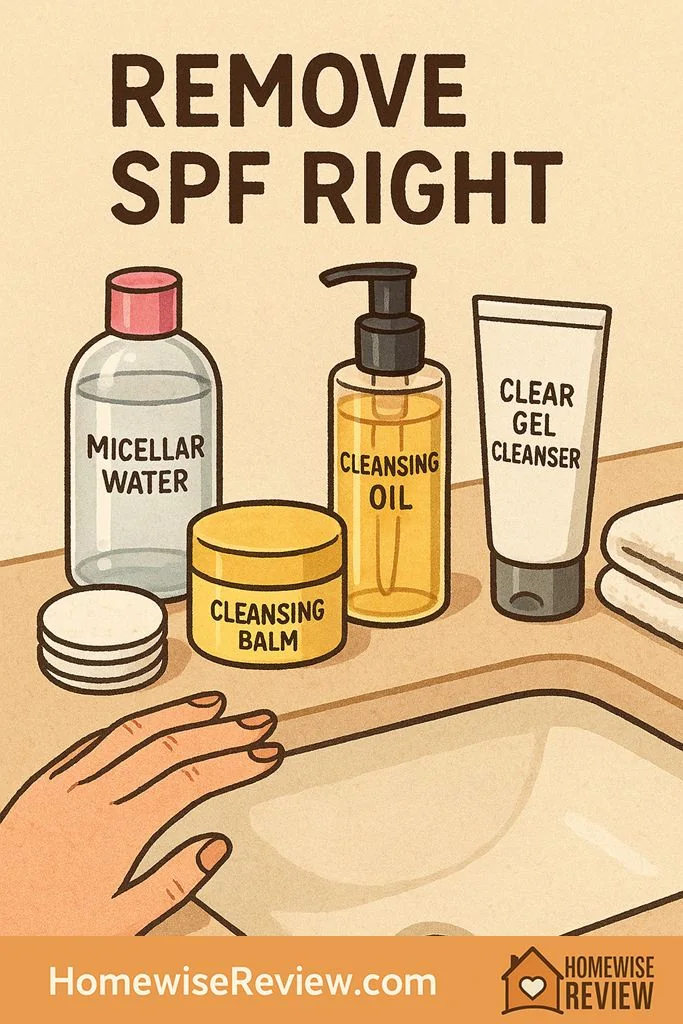
On this page
- Define tonight’s removal task
- An instruction map: three products, three different methods
- What a sunscreen-removal study can tell you
- Build the minimum workable evening routine
- Constraints that change the choice
- Check the method before buying more
- Practical shopping checks
- Related format guides
- Evidence limits
Choose from the exact removal directions, not a blanket ranking of oils, balms and micellar waters. Start with the smallest routine that follows those directions; add a second cleanser only for a defined job.
Quick decision: Read the sunscreen or makeup removal instructions, then match them to the exact cleanser. A remover labelled for waterproof makeup is a more useful starting point than assuming every micellar water is weak or every balm is strongest. Follow its dry-skin, wet-skin, shake and rinse directions. A second cleanser is a separate choice, not a requirement created by the word sunscreen.
Research method: This AI-assisted guide compares three US manufacturer instruction panels and a published sunscreen-removal study, checked October 1, 2026, with American Academy of Dermatology guidance. HomeWiseReview has not tested these products or measured residue on skin. The existing Jess West contributor byline does not imply personal testing of this update.
Define tonight’s removal task
List what you actually wore: sunscreen, foundation, setting products and eye makeup. Check any removal instructions on each package. Waterproof eye makeup may have different instructions from a facial sunscreen, and a cleanser permitted for the face is not automatically suitable around the eyes. Use the exact product name and variant when checking the label.
Water resistance is a useful detail to record, but it does not tell you whether a specific cleanser will remove a specific formula. SPF number, mineral versus chemical filters and the thickness you feel do not supply that matched removal result either. Look for the manufacturer’s removal guidance before buying an extra step.
An instruction map: three products, three different methods
These examples show why the directions matter. They are not a ranked shortlist, an independent effectiveness test or a recommendation for a diagnosed skin condition. Their instructions apply to the named US products, not to every member of the format.
| Exact US example | Starting method | Removal direction | What this establishes |
|---|---|---|---|
| Clinique Take The Day Off Cleansing Balm | Dry hands and dry skin; apply a small amount with fingertips | Rinse thoroughly; main directions say warm water and describe a following cleanser | One balm’s method and manufacturer makeup/sunscreen claims, not proof that all balms outperform micellar water |
| Garnier SkinActive Micellar Cleansing Water All-in-1 Waterproof | Shake the bi-phase product and saturate a cotton pad | Press on lashes for 10 to 15 seconds as directed, then wipe without harsh rubbing; label says no rinse | A waterproof-makeup variant with a specific shake and contact step, not a general instruction to rinse every micellar product |
| CeraVe Hydrating Facial Cleanser | Wet skin with lukewarm water; lather between palms and apply gently | Rinse well and pat dry | A rinse-off cleanser’s method; this direction alone does not establish removal of every long-wear layer |
Sources: Clinique’s US balm directions and FAQ; Garnier’s US Waterproof micellar instructions; CeraVe’s US Hydrating Facial Cleanser method. Recheck the package you receive because variants and directions can change.
What a sunscreen-removal study can tell you
A 20-participant study published in the Journal of Cosmetic Dermatology compared water, a foaming cleanser and a cleansing oil using imaging before and after sunscreen removal. For its non-waterproof sunscreen, mean image-based residue was 54.0%, 15.6% and 13.4%, respectively. For its waterproof sunscreen, the corresponding results were 59.3%, 36.8% and 5.8%.
Those are reported imaging results for the tested conditions, not percentages of remaining SPF protection. The oil performed differently from the foaming cleanser in the waterproof-sunscreen condition. The study does not establish a winner among the three instruction examples above. Its abstract does not test balms, micellar waters or an oil-then-cleanser sequence. It also does not answer removal of your full foundation, primer and mascara combination. Use it as a reason to consider formulation-specific removal, not a rule that everyone must double cleanse.
Build the minimum workable evening routine
- Check labels first. Find the makeup or sunscreen removal directions, the remover’s eye-area permission, and any shake, contact or rinse instructions. Do not substitute a similarly named variant.
- Use the chosen product as directed. Start dry or wet according to its label. Keep to its specified contact time where one exists; do not add a long massage timer to make the routine seem more thorough.
- Complete the removal step. Rinse a rinse-off product thoroughly. A no-rinse micellar direction is different. If makeup remains visibly at the hairline or lashes, reassess the method and exact remover instead of repeatedly scrubbing.
- Give an optional second cleanser a job. Use it when the selected remover’s instructions call for follow-up cleansing or a remaining removal task warrants it. An extra wash has no automatic benefit merely because you used sunscreen.
- Finish gently. Follow your usual moisturizer or clinician-directed routine. New discomfort is a reason to reassess the products and method, not to extend rubbing.
The AAD’s general face-washing guidance favors a gentle, non-abrasive cleanser, fingertips, lukewarm water and thorough rinsing. It discourages scrubbing and limits washing to twice daily and after sweating. These principles concern ordinary face washing; they do not override a remover’s specific dry-skin or no-rinse directions.
Constraints that change the choice
Limited time or sink access: A product expressly labelled no-rinse may fit the situation better than a rinse-off balm. That is a practical instruction match, not proof of equal removal. If the products you wear require a different removal step, convenience alone does not establish that they are removed.
Eye makeup: Check eye-area instructions separately. Garnier’s waterproof example specifies a short press before wiping; that is a direction for that product, not permission to put any facial oil in the eyes. Avoid pulling at the eyelid or substituting an unlabelled product.
Rosacea or prescription treatment: A texture ranking cannot select a safe product for a medical condition. The AAD’s rosacea guidance emphasizes gentle cleansing, avoiding rubbing and scrubbing, and choosing fragrance-free rather than merely unscented products. Ask your dermatologist about a suitable routine if finding tolerated products is difficult. Follow the prescriber’s advice about products used alongside treatment.
Check the method before buying more
Common avoidable problems are missing a shake step, applying a dry-skin product to a wet face, leaving a rinse-off cleanser behind, or using a facial product around the eyes without the relevant direction. Correct the labelled method before adding another bottle. No universal ranking here proves that more foam, a heavier balm or a longer wash solves the problem.
A clear towel or comfortable skin does not measure invisible sunscreen residue. Water beading is not a validated home removal test in the evidence used here. Visible makeup can flag an unfinished task, while discomfort can flag a tolerance problem; neither observation supplies a diagnosis or laboratory result. Stop using a new product that causes irritation and seek medical advice if symptoms persist.
Practical shopping checks
Choose one removal task and one exact variant before shopping. Compare the package’s waterproof-makeup claim if relevant, eye-use permission, starting method, rinse requirement and ingredient preferences. Keep an existing cleanser if it already fits the task; this source comparison supplies no reason to replace it solely to copy a two-step trend.
The format guides below are further reading, not proof that their individual recommendations have been freshly verified for your routine. Match current labels before buying. This educational article retains its existing internal routes and introduces no new merchant destinations.
Related format guides
- Check out our cleansing balm picks
- Browse the best oil-free micellar water options
- See micellar water for sensitive skin
- Explore the best Japanese micellar water choices
- Find the best cleansing balm for blackheads
Browse the HomeWise skincare hub for related routine and product guides.
Evidence limits
This is a source-based method comparison, not a comprehensive market survey or hands-on removal trial. The three current instruction panels, published study abstract and AAD guidance answer different questions. No balm-versus-oil-versus-micellar efficacy ranking, acne-prevention claim or personalized treatment recommendation is established.
Frequently Asked Questions
Do I need two cleansers after every sunscreen?
No universal two-cleanser rule follows from these sources. Start with the exact removal instructions and identify a purpose before adding another wash.
Should every micellar water be rinsed?
Follow the exact product’s directions. The US Garnier Waterproof example above says no rinse; that instruction cannot be transferred to all micellar products.
Should I follow a long cleansing timer?
No fixed long timer is supported by the evidence reviewed here. Follow any product-specific contact time and avoid extending massage in pursuit of deeper cleansing.
Is a balm safer for rosacea or for use with adapalene?
The format alone cannot establish that. Use clinician advice for a diagnosed condition or prescription routine rather than selecting treatment-compatible products from a texture ranking.