

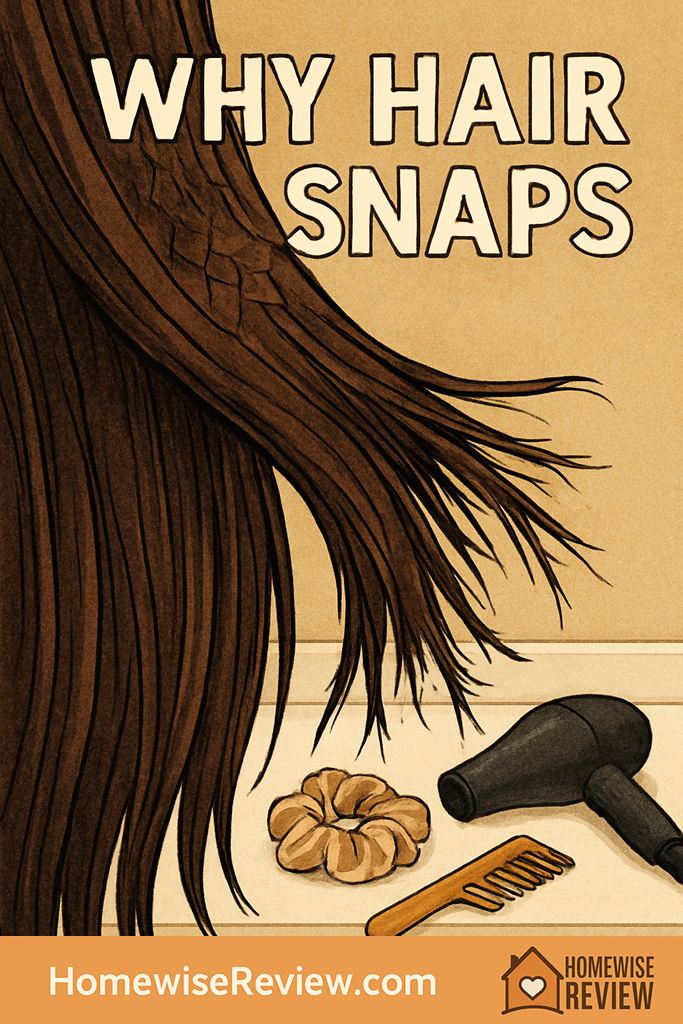
When hair starts snapping faster than it grows, the cause is usually layered damage, not bad luck. Heat, wet handling, bleach, and tension leave different fingerprints on the fiber, and the best treatments work by changing the strand's mechanics.
- The hair cuticle is only about 6 to 8 cell layers thick, so modest daily wear can expose the weaker cortex surprisingly fast.
- In a 30-wash controlled study, high-heat drying caused the most surface cracking, while prolonged natural drying still damaged internal hair structures.
- Breakage is usually cumulative: chemical processing, wet detangling, and tight styling compound damage at the same weak points.
- The most evidence-backed repair strategies work by lowering friction and limiting bond loss, not by permanently healing split fibers.
Hair breakage looks simple in the mirror, but the evidence says it is a materials problem with several moving parts. The outer cuticle is only about 6 to 8 cell layers thick, and once those layers chip away, the strand loses slip, catches on neighboring hairs, and becomes dramatically easier to snap during completely ordinary grooming.
One of the most surprising findings in the literature is that breakage is rarely caused by one dramatic mistake. It is usually the result of stacked stress: chemical processing, wet detangling, repetitive heat, and tension hitting the same weak points over and over. That compounding pattern explains why hair can seem fine for weeks and then start snapping all at once.
The first distinction that changes the diagnosis
Breakage and shedding are not the same event, and confusing them leads to the wrong fix. Shed hairs usually come out full length and often have a tiny bulb at one end because they released from the follicle. Broken hairs are shorter, more uneven, and show up as mid-length snap points, split ends, white dots, or a fuzzy halo around the crown, hairline, or nape.
This matters because a shedding problem points back to the scalp or growth cycle, while a breakage problem points to the shaft itself. In practice, many people believe their hair is not growing, when the real issue is that the oldest sections cannot survive washing, brushing, and styling long enough to retain length.
Finding 1: The cuticle is the first domino
Most breakage begins at the cuticle, not the root. In healthy hair, the cuticle acts like overlapping shingles that help strands slide past each other. Once those shingles lift, crack, or dissolve, the cortex underneath is left more exposed to water swings, heat, friction, and further splitting.
That is why breakage usually travels with tangling, dullness, rough ends, and hair that seems dry no matter how many masks it gets. The common description is that the hair will not hold moisture. The more precise explanation is that damaged cuticles create too much surface friction, so the hair loses smoothness faster than softening products can compensate for it.
Finding 2: Heat is only half the story
Heat earns its bad reputation honestly. Repeated flat ironing, frequent curling, and careless blow drying can roughen the cuticle, create bubbles and cracks, and dehydrate the fiber. But the literature also shows a less intuitive point: keeping hair wet for long periods is not automatically gentle. Water swells the strand, makes the cuticle easier to lift, and leaves wet hair especially vulnerable during brushing and combing.
A controlled dryer experiment captures that tradeoff well. Higher dryer heat caused the most visible surface cracking after repeated wash-and-dry cycles, yet natural drying also damaged the internal cell membrane complex because the hair stayed wet longer. The lesson is not that heat is safe. It is that moderate airflow, distance, and movement matter, and that aggressive towel rubbing or extended wet handling can be just as important to the breakage story as the dryer itself.
Finding 3: Chemical services multiply every later mistake
Bleach, relaxers, perms, high-lift color, and even frequent permanent dyeing change hair at a structural level. Alkaline formulas raise the cuticle. Oxidative chemistry attacks pigment, but it also disturbs proteins and protective lipids that give the strand flexibility and slip. After that, the hair may still look presentable, but it behaves less like resilient fiber and more like weathered fabric.
This is why recently lightened or straightened hair often seems manageable at first and then begins snapping during the next few wash days. The service creates the weakness, and ordinary habits reveal it. The biggest jump in damage usually comes from what happens afterward: rough detangling, repeated heat, skipping conditioner, or putting fragile hair into tight styles before it has recovered any surface lubrication.
Finding 4: Friction and tension are the silent amplifiers
If chemical processing opens the door, friction often walks in first. Cotton towels, rough pillowcases, dense brushes, tight elastics, repetitive teasing, and twisting the same sections every day all create localized stress. Hairline breakage and nape breakage are especially revealing because they often point to tension, buildup from strong hold styling products, or brushing fragile zones too aggressively.
Traction also explains why some people misread breakage as slow growth. The scalp may be producing hair at a normal rate, but the length never accumulates because the oldest sections keep snapping off. In other words, length retention is often a breakage problem long before it becomes a growth problem.
Which treatments actually feel revolutionary?
The most useful modern treatments are not revolutionary because they reverse dead tissue. Hair does not biologically heal once the fiber has split. What better treatments do, and do very well, is change the mechanics of the strand so it survives the next wash, detangle, and styling session with less damage.
Bond-focused systems are the best-known example. Their appeal is not just trendiness. They are designed to reduce structural loss during high-risk chemical services, especially lightening. The independent evidence is still smaller than the marketing language around them, but the mechanism is more credible than generic repair claims because it targets damage at the moment it is most likely to occur.
Low-friction conditioning systems matter even more, even if they sound less dramatic. Fatty alcohols, silicones, cationic conditioning agents, and certain polymers reduce combing force so strands slide instead of snag. That sounds cosmetic until you remember that a great deal of breakage happens during detangling. Less drag means fewer snapped fibers, and that is one of the most measurable wins in everyday hair care.
Acidic, cuticle-smoothing aftercare can also make a visible difference after color or relaxing. When hair has been pushed into a more alkaline state, lower-pH treatments help flatten the cuticle, improve shine, and restore some slip. They do not rebuild virgin hair, but they can slow the cycle where roughness creates tangles and tangles create breakage.
Protein treatments are helpful when hair feels overly stretchy, mushy, or freshly overprocessed. They are much less helpful when hair is already stiff and brittle. That is why protein gets such mixed reviews. The issue is not whether protein is good or bad. The issue is matching the treatment to the failure mode of the fiber.
What the evidence-backed routine looks like
- Keep hot tools below their highest settings, and reduce the number of passes even more aggressively than the temperature alone.
- Detangle only when the hair has enough slip from conditioner or leave-in product, starting at the ends and working upward with low tension.
- Treat the first two weeks after bleach or permanent color as a high-risk breakage window.
- Replace rough towels and tight elastics with gentler fabrics and looser hold.
- Use oils as finishing aids if you enjoy them, but not as a substitute for a real heat protectant or conditioner.
- Trim split ends before they climb. Waiting for a split end to seal itself usually costs more length, not less.
Methodology
This report uses the Hair Breakage Evidence Review: dermatology literature and hair-fiber studies, a synthesis of peer-reviewed reviews, controlled experiments on heat and washing, and clinical guidance on traction and chemical damage. Priority went to sources that explain how the fiber fails, not just broad wellness advice, because breakage is mostly a shaft-structure problem before it is a marketing problem.
Buying Guides Based on This Data
For the bigger picture on routines, washing cadence, and damage prevention, start with our ultimate hair care guide. If your breakage spikes after styling, this roundup on heat protectants for everyday blow drying is the most relevant next read. And if color processing is part of the pattern, our picks for the best shampoo for colored hair focus on gentler cleansing and cuticle-friendly upkeep.
Frequently Asked Questions ▾
Can hair breakage be reversed?
Not in the literal sense. Once a strand is cracked or split, the realistic goal is to patch, smooth, and protect it well enough to prevent further snapping until that damaged section can be trimmed.
Is air-drying always safer than blow drying?
Not automatically. Gentle blow drying from a distance can be less damaging than rough towel drying or leaving hair saturated for a long time, especially if the alternative includes a lot of wet brushing.
What is the fastest clue that the issue is breakage, not shedding?
Look at the hairs you lose. Full-length strands with a bulb suggest shedding, while shorter uneven pieces, white dots, split ends, and a rough halo suggest breakage.
As an Amazon Associate, we earn from qualifying purchases made through links on our site.