
Glycolic Acid Toners to Research If Burning or Over-Exfoliated Skin Worries You
If glycolic acid toner stings, burns, or leaves your skin feeling raw, the problem is often strength, frequency, and barrier condition. Here’s what to check before buying and a milder alternative to consider.

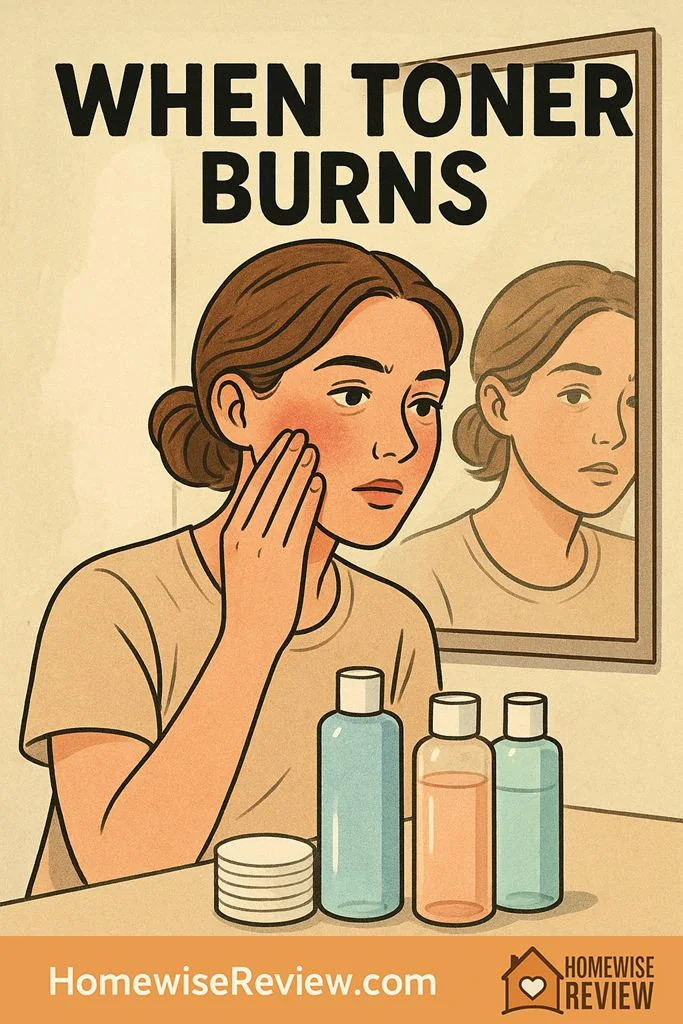
If glycolic acid toner tends to sting, burn, or leave your skin feeling tight and raw, the issue is usually formula fit and routine overload, not just bad luck. Stronger acids, frequent use, and a weakened barrier can turn a glow step into a fast over-exfoliation problem.
Burning from a glycolic acid toner is a pretty specific kind of regret. Your skin looks a little shinier at first, then it starts feeling hot, tender, overly tight, or strangely smooth in that not-good way. If you already know your face reacts easily, or you are trying to avoid that raw, over-exfoliated feeling before you buy, this is the part worth slowing down for.
The key point is not that glycolic acid toners are automatically unsafe. It is that they are often a bad fit for people who underestimate four things: acid strength, acid type, how often they will actually use it, and the condition of their skin barrier on the day they apply it. That is why one person calls a toner a glow staple and another says it felt like too much by the third use.
Why this complaint happens
Glycolic acid is an alpha hydroxy acid, and it is known for being effective. It is also known for feeling sharper than gentler exfoliating options on some skin types. Because its molecule is small, it can penetrate readily, which helps with smoothing and brightening but can also increase the chance of stinging if your skin is reactive.
Burning usually comes from a combination of factors rather than one dramatic mistake. A moderate or strong concentration can be fine on sturdy, oily skin used to acids, then feel harsh on someone with dry patches, post-acne irritation, rosacea tendencies, or a barrier that is already stressed from retinoids, benzoyl peroxide, vitamin C, harsh cleansers, shaving, cold weather, or too many “active” products layered together.
Frequency is where a lot of shoppers get tripped up. A toner can be marketed like a simple daily step, but daily exfoliation is not automatically gentle. If you use a glycolic toner four or five nights a week, then add a scrub, a retinoid, or another acid serum, the irritation can build gradually. You may not notice it on night one. You notice it when your moisturizer suddenly stings and your skin starts looking glossy, flushed, or papery.
Barrier condition matters just as much as the formula. Skin that is already compromised tends to overreact to products that used to feel normal. Even applying an acid toner right after a hot shower, on freshly shaved skin, or onto a damp face can make the experience feel more intense. That is why the same bottle can seem fine one week and irritating the next.
What to watch for before buying
Before you get distracted by the word glow, look for signals that tell you how assertive the product may feel in real life.
- High or highlighted acid strength. If the percentage is prominently marketed, take it seriously. A 7% glycolic toner is not a beginner’s water. If the percentage is not disclosed, that does not automatically make it mild. It just means you need to read the rest of the formula and the brand’s usage directions more carefully.
- Glycolic-first positioning. If the product is sold primarily as an exfoliating toner rather than a hydrating toner with mild brightening support, expect more bite.
- Daily-use messaging. “Use morning and night” or “for everyday radiance” can encourage overuse. Sensitive skin usually does better when exfoliation is spaced out.
- Multiple potential irritants in one formula. Fragrance, strongly astringent ingredients, or a cocktail of acids can push a toner from effective to too much for reactive skin.
- A routine that is already active-heavy. If you use retinoids, acne treatments, or exfoliating masks, a glycolic toner may be one active too many.
- Thin, watery formulas that are easy to over-apply. Toners can feel deceptively light, which makes it easy to saturate a cotton pad and sweep on more than intended.
Two practical habits matter here. First, patch test before using a glycolic toner all over your face. Second, do not judge a new acid product by the first use alone. Use it sparingly, on dry skin, and give your barrier a few days to tell you whether it actually likes the routine.
Products to scrutinize before buying
These are not products to label as bad. They are simply glycolic toners that deserve a closer read if burning, redness, or over-exfoliation is your main concern. The common problem is fit, not scandal.
| Product | Why to check carefully | What to verify before buying |
|---|---|---|
| The Ordinary Glycolic Acid 7% Exfoliating Toner | The 7% glycolic callout tells you this is a real exfoliating step, not a casual hydrating toner. The large bottle can also tempt frequent use. | Ask whether your skin already tolerates leave-on acids, and whether you can commit to using it only a few times a week instead of treating it like a daily splash. |
| Pixi Glow Tonic | It is often talked about as an easy glow product, which can make it sound softer than it may feel on a sensitive or overworked barrier. | Check your routine for retinoids, exfoliating cleansers, vitamin C acids, or scrubs. “Glow” marketing does not cancel out irritation potential. |
| Mario Badescu Glycolic Acid Toner | A glycolic toner with a more clarifying profile can be a lot for dry, redness-prone, or fragrance-sensitive skin. | Read the full ingredient list closely and think about whether your skin usually dislikes brisk, tingly toners rather than assuming all toners are interchangeable. |
| The INKEY List Glycolic Acid Exfoliating Toner | An acid-forward toner can be easy to overdo if you are buying it to fix texture fast. | Verify how often the brand suggests using it, and be honest about whether your barrier is currently calm enough for another active product. |
If you are deciding among these, the smartest question is not “Which one is strongest?” It is “What is my skin like after a normal week of skincare?” If your face already gets flushed after cleansing, feels dry around the nose and mouth, or stings when you apply bland moisturizer, you are not in a great position to add a straightforward glycolic toner.
Another clue is how you respond to non-acid toners. If hydrating toners feel soothing and you still crave a little brightness, you may want a milder exfoliating profile. If even simple toners make you feel hot or itchy, skip acid toners entirely until your barrier is stable.
Better-fit alternative
BYOMA Brightening Toner is the more sensible place to start if your goal is mild exfoliation without jumping straight to a stronger glycolic toner. Its gentler acid blend and barrier-supporting positioning make it a better candidate for shoppers who want smoother-looking skin but are wary of the hot, tight, overworked feeling that glycolic-heavy toners can trigger. In other words, it is less of a “go hard for glow” product and more of a cautious step for people who need the formula to meet them halfway.
That does not make it irritation-proof. If your skin is currently raw, peeling, sunburned, freshly over-exfoliated, or stinging even with plain moisturizer, you should still skip it for now. The same goes if you are using a prescription retinoid aggressively or you know your skin reacts badly to any exfoliating acid, even in milder blends.
The tradeoff is simple: gentler usually means slower. BYOMA Brightening Toner is not the choice for someone expecting a quick, dramatic resurfacing effect. If you want a strong peel-like result from a daily toner, this may feel too restrained. But that restraint is exactly why it is the safer bet for readers trying to avoid the common burning complaint.
Final buyer guidance
If your skin has ever felt hot, glossy-tight, or tender after an acid, do not buy a glycolic toner just because it is popular or labeled for glow. Space out exfoliation, patch test first, and if you still want a toner step, BYOMA Brightening Toner is the more cautious place to start.
See also
If your skin barrier already feels stressed, these guides can help you slow things down and shop more carefully.
- Gentle exfoliators after overdoing acids
- Best toner with salicylic acid
- See our guide to reading ingredient lists
- pH drift in opened products
- Best Japanese hydrating toner
As an Amazon Associate, we earn from qualifying purchases made through links on our site.