

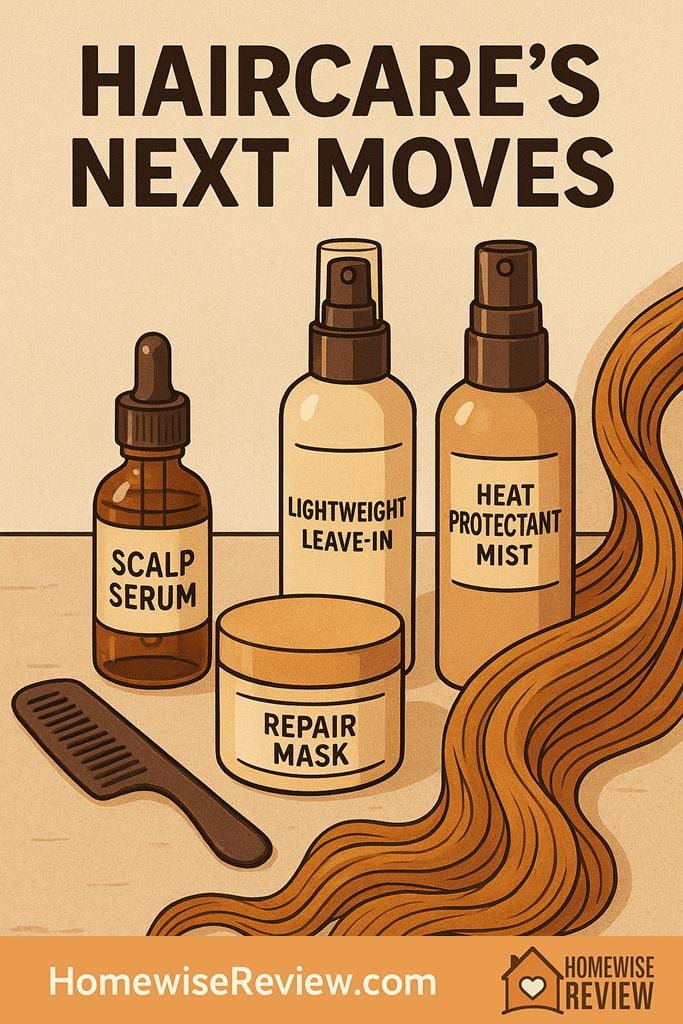
Haircare is getting more clinical, more preventative, and more selective about price all at once. The routines gaining momentum now promise scalp health, less damage, and results people can actually track.
- McKinsey projects the global beauty market will reach about $580 billion by 2027, with roughly 6% annual growth still supporting premium haircare.
- On Google Trends' 100-point scale, U.S. interest in scalp serum and rosemary oil for hair reached peak or near-peak levels across the last five years.
- Search interest in heat protectant stayed elevated, reinforcing prevention as a daily haircare step rather than a special-occasion product.
- Bond repair remains a high-interest search term, but the language is broadening into everyday shampoos, masks, and leave-ins as repair claims go mainstream.
Haircare is entering 2024 with a very different center of gravity. McKinsey projects the global beauty market will reach roughly $580 billion by 2027, and the strongest signals inside hair are not about trend cuts or one-off styling hacks. They are about scalp health, damage prevention, and formulas that sound more like treatment plans than cosmetics.
Search behavior points the same way. Over the last five years, Google Trends has pushed terms like scalp serum, rosemary oil for hair, heat protectant, and bond repair to peak or near-peak U.S. interest. That shift matters because it suggests consumers are no longer shopping haircare mainly for finish and fragrance. They are shopping it for maintenance, recovery, and control.
1. Hair health is overtaking styling as the main story
One of the clearest changes is the skinification of hair. Consumers are rewarding products that explain a mechanism, not just a mood. Peptides, ceramides, proteins, acids, barrier support, and scalp balance all signal that a formula is supposed to do something specific, not simply make hair feel nicer for a day.
That changes how the entire aisle is judged. Shampoo is no longer just about cleansing. Conditioner is no longer just about softness. In 2024, the brands with the strongest momentum are the ones that can explain what a product does, when to use it, and what kind of result should show up with repeat use. Pretty packaging still helps, but efficacy language is doing more of the heavy lifting.
2. Scalp care is moving from niche to baseline
Scalp care used to live at the edge of the category, usually tied to dandruff, buildup, or salon detox treatments. Now it sits much closer to facial skincare: cleanse, exfoliate, soothe, protect, and support the barrier. Google Trends helps explain why the category keeps widening. Terms like scalp serum and rosemary oil for hair have climbed enough to make scalp-focused care feel routine rather than specialized.
The biggest winners here are likely to be low-friction products. Lightweight serums, pre-wash oils, and calming shampoos fit into daily life without asking people to build a ten-step ritual. That practicality is important. Most shoppers want healthier roots, less irritation, less oil imbalance, and less anxiety around shedding. They do not necessarily want a whole new hobby.
3. Prevention is becoming more valuable than repair
Repair defined the last big wave of haircare marketing, but 2024 looks more prevention-first. Search interest in heat protectant remains elevated, and that lines up with how people now talk about damage. They are thinking less about fixing a crisis after the fact and more about limiting the slow accumulation of stress from blow drying, coloring, UV exposure, tight styles, and hard water.
This is why protective products are likely to keep spreading into everyday categories. Expect more leave-ins that moisturize and shield, more masks that combine repair with anti-frizz or detangling, and more shampoos that quietly borrow bond-building language. Repair is not disappearing. It is becoming expected, which usually means the next growth comes from products that promise to stop the damage earlier in the cycle.
4. The market is splitting into hero splurges and value basics
Haircare is also showing a sharper budget pattern. Many consumers still seem willing to pay for one high-belief treatment, whether that is a growth serum, a bond-builder, or a salon-like mask. At the same time, they are scrutinizing the price of basics like shampoo, conditioner, and routine support products much more closely.
That split favors categories with visible proof. A single expensive treatment can survive if the result feels measurable, fast enough, or uniquely effective. Routine staples have a tougher job. They need either excellent cost per use or strong multi-tasking performance. This is why one of the biggest 2024 opportunities sits in masstige haircare: formulas that look premium, perform credibly, and still feel financially reasonable.
5. Personalization is getting more technical
Personalization has been promised for years, but the next version is less about fun quizzes and more about diagnosis. Scalp cameras, app-based analysis, and more detailed routine builders are pushing the category toward specifics like density, porosity, curl pattern, color history, and scalp condition. Even when the final product is mass-market, shoppers increasingly expect the recommendation to feel custom.
The deeper shift is not technology for its own sake. It is accountability. Once people can track oiliness, breakage, growth, or shedding over time, vague product claims become much easier to tune out. The strongest brands in this part of the market will be the ones that make routines easier to follow and progress easier to understand, not the ones that simply add the most digital features.
6. Sustainability is getting more specific and less slogan-driven
Sustainability still matters, but the tone around it is changing. Broad eco language is weaker than it was a few years ago. Shoppers are looking for more concrete proof, such as refill formats that are actually convenient, concentrated formulas that reduce bulk, and packaging that does not make the product harder to use.
That subtle shift matters because haircare has always had a practical streak. Consumers tend to reward choices that save space, last longer, or cut down on waste without adding inconvenience. In 2024, the greener claim that travels furthest is likely to be the one that improves performance or daily usability, not just the one that sounds most virtuous.
7. Natural ingredients are staying, but they have to feel more credible
Botanical ingredients are not disappearing, but they are no longer persuasive on name recognition alone. Rosemary is the best example. Interest remains high, yet expectations around it have matured. Consumers increasingly want a stable, easy-to-use formula with a clear role in the routine, not just a DIY oil trend floating around social media.
That points to a broader pattern for 2024: hybrid formulas. The strongest launches often combine familiar botanicals with more clinical support ingredients, then place them inside treatment categories like scalp serums, strengthening masks, or protective leave-ins. The market is not choosing between natural and clinical. It is rewarding products that make the two feel compatible and purposeful.
Methodology
This forecast combines two main signals: industry growth data and search behavior. The market context comes from McKinsey’s beauty industry outlook, while the trend direction comes from U.S. Google Trends data over a five-year window for search terms tied to scalp care, damage repair, heat protection, and botanical growth claims.
Just as important, the analysis looks for overlap. A trend is treated as more durable when it shows up in search language, product positioning, and the broader logic of consumer spending at the same time. That does not predict every viral launch, but it does help separate temporary noise from habits that are likely to last.
Buying Guides Based on This Data
If the shift toward lighter, treatment-style daily products stands out most, this guide to lightweight leave-in conditioners shows how hydration is getting more refined. For the prevention-first movement, these best heat protectants for everyday blow drying make the damage-control trend easy to spot in real formulas. And if the budget split feels familiar, the best affordable hair masks that rival salon brands capture why value products are getting much more treatment-like.
Frequently Asked Questions ▾
Which haircare trend looks most durable?
Scalp care has the strongest staying power because it solves several common concerns at once, including buildup, sensitivity, flakes, oil imbalance, and thinning worries. It also fits naturally into products people already use, which makes it easier to maintain than a flashier niche trend.
Is bond repair fading out?
Not exactly. Bond repair looks less like a breakout novelty now and more like a baseline expectation. That usually means the language will keep spreading into daily shampoos, masks, and leave-ins rather than disappearing.
Will people spend more or less on haircare?
Both patterns can happen at the same time. The clearest shopping behavior right now is selective spending: one product gets the splurge if the benefit feels believable, while the rest of the routine faces stricter value checks.
As an Amazon Associate, we earn from qualifying purchases made through links on our site.