

Repairs and protects hair between salon visits, lowering risk of costly color corrections.
We may earn a small referral fee
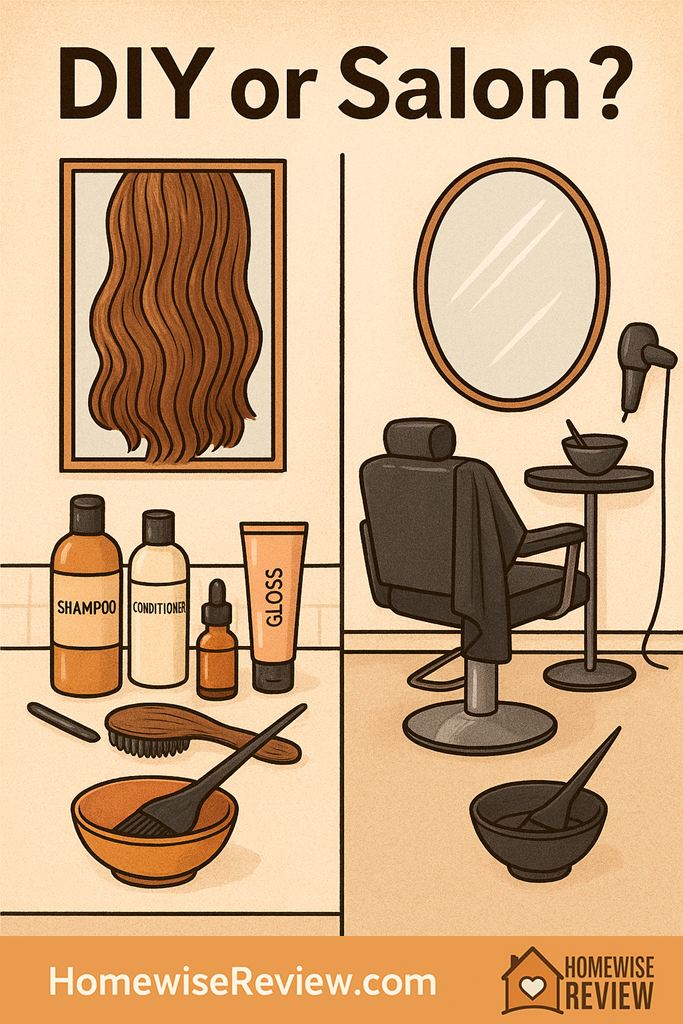
Home hair routines can save real money, but one bad bleach job or uneven cut can wipe out the bargain fast. The real winner depends on which costs matter most: cash, time, damage risk, or results.
- Routine DIY maintenance often works out to about $1 to $5 per use, far below typical salon add-on pricing.
- Box color at roughly $10 to $20 can look 5 to 10 times cheaper than a salon color visit up front, but correction work can erase that gap quickly.
- BLS price-index data show professional haircuts and related personal care services remain a rising recurring expense.
- The clearest consumer trend is hybrid care: home products stretch time between appointments, while salons still dominate high-risk services.
The popular version of this debate is simple: DIY is cheap, salon care is expensive. The data points to a more complicated truth. Professional hair services remain a recurring, inflation-sensitive expense, but hair-fiber research also shows that the most expensive mistake is often the one made at home with bleach, aggressive heat, or layered color that later needs correction.
That is why the useful comparison is not shelf price versus appointment price. It is cost per successful result, plus the time required, the chance of damage, and how often the service has to be repeated to keep hair looking healthy.
The sticker-price gap is huge, but annual cost matters more
At-home hair care usually wins the first-glance price battle. A mask, leave-in, lightweight oil, or scalp treatment can stretch across several uses, putting many DIY sessions in the rough range of $1 to $5 each. Even box color often sits in the $10 to $20 zone, while a salon gloss, blowout, trim, or color visit can move quickly from tens of dollars into triple digits.
But annual spending tells the more revealing story. A $14 mask used weekly for a few months may stay genuinely cheap. A $16 box dye repeated too often, followed by purple shampoo, extra repair products, and eventually a correction visit, can become a much more expensive pattern than it first appears. Low purchase price is not the same thing as low total cost.
- Low-risk DIY: wash-day products, masks, leave-ins, lightweight oils, scalp care, shine refreshers.
- Medium-risk DIY: root touch-ups, blowouts, basic heat styling, trims on already simple shapes.
- High-risk DIY: bleach, major color shifts, bangs, layers, textured cuts, and any kind of correction work.
The strongest cost advantage for DIY shows up when the task is repeatable and forgiving. The moment precision becomes important, the value equation changes fast.
DIY wins when the goal is maintenance, not transformation
Peer-reviewed research on hair cosmetics helps explain why home care can be so efficient. Gentle cleansing, conditioning, lower friction, and sensible heat habits help preserve the hair fiber over time. That makes DIY unusually effective when the goal is maintenance rather than reinvention.
This is where home care has a structural edge. A five-minute mask at home does not require travel, tipping, scheduling, or a service minimum. For households paying attention to recurring expenses, steady, boring maintenance often beats occasional rescue spending.
The biggest savings usually come from small habits that do not feel glamorous: conditioning consistently, detangling carefully when hair is wet, using heat protection, and applying oil or leave-in only where it adds slip instead of buildup. Those steps do not create dramatic before-and-after moments, but they lower the odds of paying for repair later.
In cost terms, DIY performs best when it protects work that is already in good shape. It is weak when it has to create a complex result from scratch.
Salon care wins when chemistry or shape gets complicated
The salon advantage is not just comfort or aesthetics. It is risk management. Research on heat and cosmetic processing has long shown that bleaching, permanent color, repeated hot-tool use, and harsh handling create cumulative stress on the hair shaft. The more a routine depends on strong chemicals or precise placement, the more skill changes the outcome.
That is why salon care is often the rational splurge for blonding, gray blending on resistant hair, color correction, major reshaping, relaxer transitions, or any haircut where balance matters from every angle. A trained stylist is not only selling labor. They are reducing the chance of uneven lift, snapped ends, brassiness, patchiness, or a shape that grows out poorly.
If one professional appointment prevents a major correction, its higher upfront cost can be cheaper over a full year. That is especially true for long hair, heavily processed hair, curls that show blunt mistakes quickly, or hair with a complicated color history. In those cases, the premium is often paying for judgment as much as technique.
DIY fans often count product price but forget labor. Mixing color, sectioning, applying evenly, cleaning up, drying, styling, and troubleshooting can turn a cheap session into a half-day project. Salon loyalists can miss the opposite cost: travel, waiting, booking, and reshuffling a schedule around a fixed appointment.
The practical takeaway is straightforward. DIY is strongest when the task is repeatable, flexible, and easy to correct. Salon care becomes more attractive as soon as the task needs precision, a second set of eyes, or a result that must look polished the same day.
This also explains why many routines end up costing more than expected. People do the easy work at home, then pay salon prices when the result matters most. Economically, that hybrid pattern is not irrational. It is often the most efficient split.
The strongest trend is not DIY replacing salons. It is the rise of the hybrid routine
Search behavior and spending patterns suggest consumers are not choosing one camp forever. They are mixing them. When budgets tighten, people stretch time between appointments, use at-home glosses and masks, or cover roots temporarily. When a wedding, vacation, job interview, or major style change comes up, salon demand comes back quickly.
BLS spending and price data help explain that behavior. Professional services are recurring and tied to labor, so they rarely become meaningfully cheap. Home care, by contrast, is modular. A person can downgrade one step, skip another, or buy a smaller product without abandoning the entire routine.
That flexibility is a powerful market trend. It turns hair care into a sliding budget category rather than an all-or-nothing commitment. Salons still hold the expertise advantage, but retail products keep absorbing more of the maintenance work that once happened almost entirely in the chair.
Where the best value usually shows up
The lowest cost per good hair day usually comes from pairing professional structure with home maintenance. A well-cut shape, correctly placed color, or one solid correction can create a stable base. Then affordable home care does the quiet work of preserving softness, tone, shine, and manageability between appointments.
Put differently, salon care creates leverage and DIY protects it. That is a more durable value formula than either extreme. Pure salon dependence can turn routine upkeep into a budget burden, while pure DIY can become costly the moment technique fails.
For most budgets, the sensible split is simple: use professional help for cutting, bleaching, major color changes, and corrective work, then use home care for cleansing, conditioning, styling support, and stretching the life of the result. The money tends to follow the risk.
Methodology
This analysis synthesizes public pricing and behavior signals rather than relying on one national average. It draws on BLS and FRED data for personal care service pricing, BLS household expenditure data, Google Trends search interest around DIY color and salon discovery, and peer-reviewed research on hair-fiber damage from cosmetics and heat. Because salon menus, hair length, and product usage vary widely by city and hair type, the dollar figures here are scenario-based ranges meant to compare categories, not quote a universal U.S. price.
Buying Guides Based on This Data
If breakage is already part of the equation, starting with the best shampoo for damaged hair can make a DIY routine far more effective between appointments. For daily upkeep that feels lighter and easier to layer, see our guide to lightweight leave-ins and compare where they fit in a maintenance-first plan. If shine and frizz control are the missing pieces, the best lightweight hair oil can help extend that freshly finished look without adding much cost per use.
Frequently Asked Questions ▾
Is DIY hair care actually cheaper than salon care?
For routine maintenance, usually yes. For bleaching, major reshaping, or color correction, not always. The more technical the service, the easier it is for one mistake to erase the initial savings.
What should almost never be a first-time DIY experiment?
Major lightening, dramatic color changes, bangs, strong chemical straightening, and any service performed over already processed hair. Those are the areas where technique and judgment matter most.
What is the best value setup for most people?
A hybrid plan usually wins: pay for professional cutting or complex color when needed, then use affordable home products and gentle habits to extend the result. That keeps recurring salon costs lower without pretending every job belongs in the bathroom mirror.
As an Amazon Associate, we earn from qualifying purchases made through links on our site.