

Convertible crib with clean lines — sturdy, stylish, and built to grow with baby while pairing easily with washable bedding and soft lighting.
We may earn a small referral fee
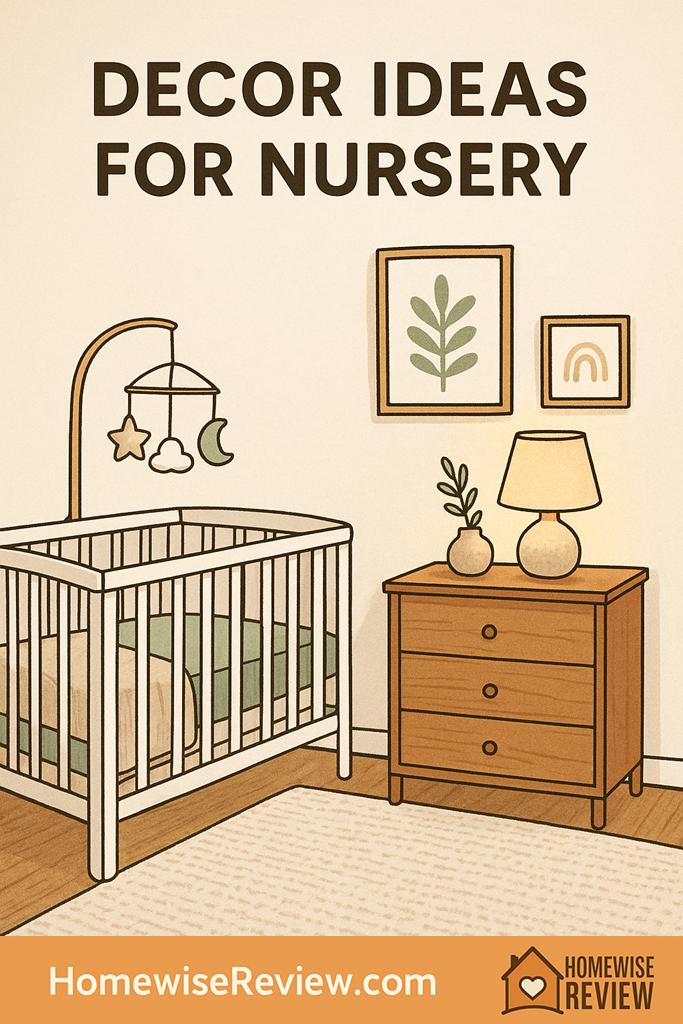
You want a nursery that feels peaceful, looks put-together, and is actually practical at 2 a.m. The right plan makes the room easier to clean, easier to use, and easier to love for years.
A nursery can get overwhelming fast: too many themes, too many “must-haves,” and not enough space for real life. The best nursery decor ideas start with function, then layer in warmth and personality without creating clutter.
Use this guide to pick a simple direction, make a plan for layout and lighting, and choose finishes and textiles that can handle spit-up, diaper changes, and growth spurts.
Start with what matters most: safety, sleep, and flexibility
Before you choose art or colors, set a few non-negotiables. Great nursery decor supports sleep, stays safe as your baby becomes mobile, and adapts as your needs change.
Safety basics that affect decor choices
- Anchor tall furniture: Dresser, bookcases, and wardrobes should be secured to studs with anti-tip hardware.
- Keep cords out of reach: Choose cordless window treatments when possible; otherwise use cord cleats and keep cords high and tight.
- Skip heavy items above the crib: Avoid framed glass, heavy shelves, or mirrors where they could fall.
- Choose low-odor finishes: Paint and adhesives can linger; plan for ventilation and drying time.
Make sleep easier with the room setup
Design for calm, not stimulation. A soothing palette, dimmable lighting, and fewer visual “hot spots” near the crib help the room feel like a place to rest.
Decor that can grow with your child
Try to avoid decor locked to a single phase (like a very specific baby theme). Instead, build a base that can transition to a toddler room by swapping a few pieces: art, bedding, and a rug.
Pick a simple color plan (and stop there)
Color is the fastest way to make a nursery feel intentional. The trick is choosing a limited palette that plays well with changing toys, books, and laundry baskets.
An easy formula: the 60-30-10 rule
- 60%: main color (usually walls and large furniture tones)
- 30%: secondary color (rug, curtains, glider upholstery)
- 10%: accent color (pillows, baskets, art, small decor)
If you want the room to feel calm quickly, make the 60% a warm white, soft greige, pale sage, or muted blue-gray.
Nursery palette ideas by mood
| Goal | Main (60%) | Secondary (30%) | Accent (10%) |
|---|---|---|---|
| Calm and airy | Warm white | Light oak, oatmeal | Sage or dusty blue |
| Cozy and grounded | Soft greige | Walnut, camel | Terracotta or brass |
| Fresh and playful (but not loud) | Pale sage | Cream, light wood | Mustard or coral |
| Classic and soothing | Misty blue-gray | White, natural rattan | Navy or deep green |
Paint finish tips that hold up in a nursery
- Walls: Eggshell or satin is easier to wipe than flat, without highlighting every bump.
- Trim and doors: Semi-gloss is durable and cleans well.
- Touch-ups: Keep a labeled jar of leftover paint and the exact sheen; sheen mismatches show.
Wall decor ideas: big impact without visual chaos
Walls are where many nurseries go from “calm” to “busy.” Choose one strong wall move, then keep the rest simple so the room feels restful.
Option 1: One accent wall (paint, wallpaper, or mural)
An accent wall behind the crib can anchor the room, but keep contrast moderate. Soft pattern scales (tiny stars, subtle stripes, watercolor washes) are easier to live with than bold, high-contrast prints.
- Painted arch: A simple arch behind the crib creates a focal point without buying anything.
- Half-wall color block: Paint the lower 40 to 48 inches for structure and scuff protection.
- Wallpaper panel: Frame a centered panel with thin trim for a finished look.
Option 2: Removable decals for renters or commitment-averse planners
Decals are great for quick personality, but placement matters. Keep them higher than the main “grab zone,” especially once your baby starts standing.
- Test adhesion in an inconspicuous spot, especially on matte paint.
- Choose a limited color set that matches your textiles so it looks intentional.
- Use odd-number groupings (3, 5, 7) for a natural, styled look.
Option 3: A small, tidy gallery wall
A gallery wall works best when it’s contained and consistent. Use matching frames (or two finishes max), and align to an invisible grid so it reads as calm rather than chaotic.
- Keep glass frames away from areas where little hands can reach.
- Use lightweight frames and secure hanging hardware.
- Choose art that can grow: animals, botanicals, abstracts, maps, or letter prints.
Plan the layout: three zones that make daily life easier
Even a small nursery feels calmer when each task has a “home.” Think in zones so you are not searching for wipes, burp cloths, or pajamas in the dark.
The three-zone layout
- Sleep zone: Crib or bassinet, minimal decor, blackout solution, white noise if you use it.
- Changing zone: Dresser with changing pad, diapers and wipes within arm’s reach, a lidded trash or diaper pail.
- Feeding/comfort zone: Glider or rocker, small table, a soft throw, and a dimmable lamp.
Quick layout checklist (use this before you buy decor)
- Leave a clear walking path from door to crib, especially for nighttime.
- Keep the changing surface close to storage, not across the room.
- Place a hamper where clothes actually come off (usually near the changing area).
- Plan one “drop zone” basket for random items you will inevitably carry in.
- Route cords behind furniture and use cord covers if needed.
Textile decor ideas: cozy, washable, and low-stress
Textiles do the heavy lifting in a nursery. They soften sound, add warmth, and help the room feel finished. They also get messy, so durability matters as much as style.
Rug sizing that looks right (and protects the floor)
- Small nursery: Aim for at least 5×7 so front legs of the crib and chair can sit on it.
- Medium to large nursery: 6×9 or 8×10 helps define the whole room and makes tummy-time more comfortable.
- Placement tip: Slide the rug forward so it reaches the chair and changing area, not only under the crib.
Window treatments: the difference between “cute” and “sleep-friendly”
Layering is the cleanest way to get both function and style. Use a blackout shade for naps, plus simple curtains to soften the room and add color.
- Hang curtains wider and higher than the window to make the room feel bigger.
- Choose machine-washable curtains when possible.
- Stick to one curtain style for a calmer look (for example, pinch pleat or grommet, not both).
Fabric choices at a glance
| Material | Best for | Watch-outs |
|---|---|---|
| Cotton | Breathable bedding, easy-care curtains | Can wrinkle; lighter colors may show stains |
| Cotton-linen blend | Relaxed, elevated texture | May need gentle cycles; can shrink |
| Wool or wool-blend | Warmth and sound dampening in rugs | Shedding and spot-cleaning; check sensitivity |
| Poly performance fabrics | Glider upholstery, stain resistance | Can feel less natural; check for pilling |
Storage that looks like decor (and stays that way)
The fastest way to keep a nursery feeling peaceful is to control visual clutter. Storage is not just organization, it is a design tool.
Open vs. closed storage: when to use each
- Closed storage (drawers, cabinets): Best for diapers, creams, backup supplies, and anything you do not want visible.
- Open storage (shelves, baskets): Best for a small rotation of books and toys, plus daily grab items.
Three small systems that prevent “nursery creep”
- One basket per category: Burp cloths, bath, swaddles, bibs. If the basket is full, something has to leave.
- A two-bin clothing flow: “Too small” and “Next size.” You will sort faster and stop overstuffing drawers.
- Toy rotation: Keep only a few items out. Store the rest and swap weekly to keep the room calmer.
Lighting ideas that work for midnight changes
Nursery lighting should support sleep, safety, and a calmer mood. Plan for at least two layers so you are not forced to use harsh overhead light at night.
A simple, effective lighting plan
- Overhead: Put it on a dimmer if possible for flexible brightness.
- Task light: A table lamp near the feeding chair with a warm bulb (around 2700K).
- Low night light: Enough to navigate without fully waking you up.
Placement tip: light the chair, not the crib
Position the lamp so the chair gets the light, and the crib stays darker. It helps keep the sleep zone visually quiet, especially during night feeds.
Decor that feels personal without becoming clutter
The most memorable nurseries feel like home, not a catalog. Choose a few meaningful pieces and give them space to breathe.
High-impact, low-clutter decor ideas
- One statement print: A large piece above a dresser (not above the crib) reads polished instantly.
- Name or initial detail: Keep it small and removable so it can change with the room later.
- Book covers as art: Display 3 to 5 face-out books on a ledge for color and rotation.
- A mobile with simple shapes: Choose soft neutrals or one accent color so it does not dominate.
How to style shelves safely
- Keep heavier items low and toward the back.
- Avoid leaning mirrors or large frames on upper shelves.
- Limit “tiny decor” that becomes a hazard once your child can reach.
Budget-friendly nursery decor ideas (where to spend vs. save)
You can make a nursery feel elevated without overspending. Put money where it changes daily comfort, and save on pieces you can swap later.
| Spend (comfort + longevity) | Save (easy to upgrade later) |
|---|---|
| Glider/rocker that fits your body | Throw pillows and small decor objects |
| Blackout solution for better naps | Trendy wall decals or themed accessories |
| Rug that is comfortable and easy to clean | Artwork (use printable or thrifted frames) |
| Dresser that can become kid storage later | Extra baskets (start with fewer, add as needed) |
Bottom Line
The best decor ideas for a nursery start with a calm color plan, a three-zone layout, and textiles that can handle real messes. Keep the walls and big pieces simple, then add personality through art, lighting, and a few meaningful accents you can swap as your child grows.
See also
For a calm, sleep-friendly baseline, start with Scandinavian decor ideas for calm, cozy rooms and simplify maintenance with washable rugs, throws, and linens for messy homes.
- Modern decor ideas that keep a nursery clean and uncluttered
- Eclectic nursery touches: how to mix styles without looking busy
- Under-sink storage ideas to keep nursery cleanup supplies organized
Frequently Asked Questions ▾
What is the best nursery theme if I do not want it to feel “babyish”?
Choose a simple style direction instead of a theme: warm neutral, soft Scandinavian, or modern minimal. Then add one kid-friendly motif (like animals or botanicals) through removable art, a mobile, or a few books so it still feels playful.
Should I put an accent wall behind the crib?
You can, but keep it calm. Choose muted color or low-contrast pattern, and avoid heavy decor above the crib. If you want a focal point without risk, place the statement wall behind a dresser or reading nook instead.
What rug material works best in a nursery?
Look for a soft, low-pile rug that is easy to vacuum and spot-clean. If you expect frequent messes, prioritize washable options or rugs that tolerate regular cleaning without shedding or holding odors.
How do I decorate a small nursery without making it feel crowded?
Use fewer, larger pieces: one substantial rug, one larger wall print, and closed storage that hides supplies. Keep surfaces mostly clear, and limit open-shelf styling to a small rotation of books or a couple of baskets.
What lighting is best for nighttime diaper changes?
Use a warm, dimmable lamp near the chair plus a very low night light for navigation. Avoid bright overhead lighting at night; it wakes everyone up and makes the room feel harsher.
As an Amazon Associate, we earn from qualifying purchases made through links on our site.