

Narrow console with hidden cubbies and a shoe shelf. Corral keys, shoes, and mail while keeping the look polished and easy to maintain.
We may earn a small referral fee
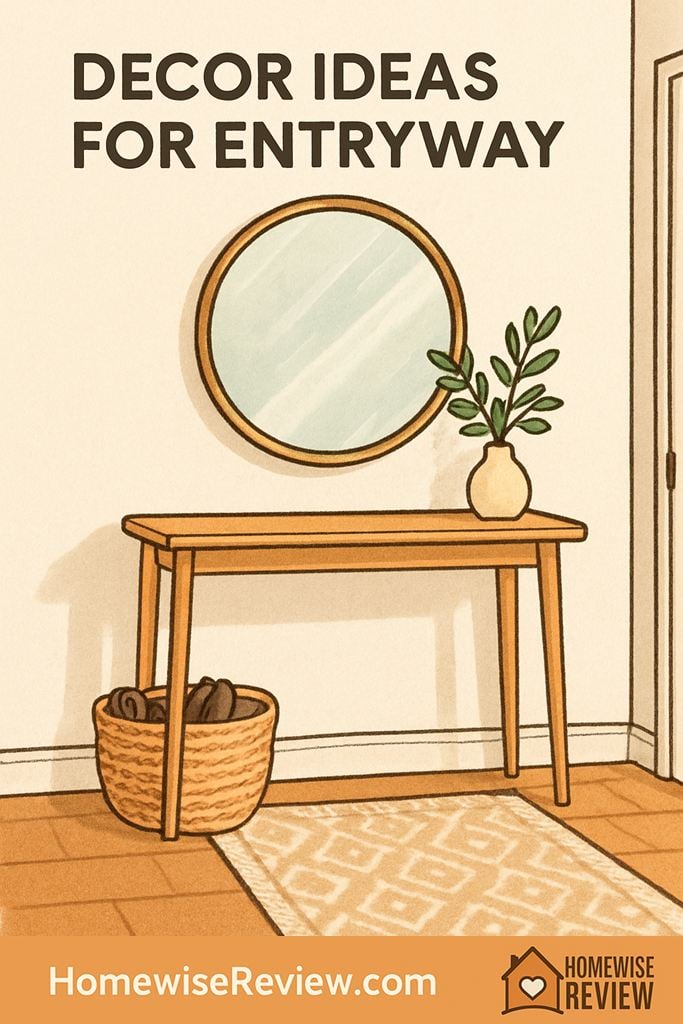
Your entryway sets the tone for the whole home, but it can quickly become a clutter magnet. A few high-impact decor choices can make it feel welcoming, organized, and easy to maintain.
Your entryway has two jobs: welcome people in and catch the mess before it spreads. The right decor ideas make it look pulled together, but also make daily life easier, especially when shoes, bags, and keys need a “home.”
Below is a practical, step-by-step approach that works for tiny foyers, long hallways, and open-concept front doors alike. Focus on function first, then add style in layers so it stays tidy.
Start with a simple plan (so the decor actually works)
Before you buy anything, map how you use the space. Great entryway decor isn’t about adding more, it’s about placing the right pieces where you naturally reach for them.
Identify your “must-have” zones
- Drop zone: keys, wallet, sunglasses, mail.
- Shoe zone: a defined spot to take shoes off and store them.
- Hang zone: coats, hats, bags, dog leash.
- Check-and-go zone: mirror, lint roller, maybe a small tray for essentials.
- Softening layer: rug, runner, or a small mat to warm up hard floors.
Quick measuring checklist
- Measure wall width where a console, hooks, or bench could go.
- Measure the walking path, and keep at least 36 inches clear where possible.
- Note door swing (including storm door) so furniture does not block it.
- Decide what must be within arm’s reach of the door handle (keys, leash, packages).
Pick a style direction (then repeat it in 3 places)
Entryways feel cohesive when one style idea repeats across a few items. Choose a direction and echo it in your rug, lighting, and one wall element (mirror or art) before adding accessories.
Style guide: what to choose and what to avoid
| Style direction | Works best with | Avoid in the entryway |
|---|---|---|
| Clean and modern | Simple lines, black or brass accents, one bold art piece | Lots of tiny decor items that create visual noise |
| Warm and classic | Wood tones, woven baskets, soft neutral rug, shaded lamp | Overly matchy sets that feel dated |
| Light and airy | Pale walls, natural textures, gentle contrast (tan, ivory, gray) | Bright white rugs if you track in dirt often |
| Collected and eclectic | Vintage mirror, mixed frames, curated color palette (2 to 3 colors) | Random souvenirs without a storage plan |
Anchor the space with “big impact” basics
If your entryway feels unfinished, it is usually missing one of these: a rug, proper lighting, or a substantial wall focal point. Start here before you buy little accessories.
Entryway rug: the fastest way to make it feel intentional
- Choose a pattern or texture that hides everyday dirt (heathered, vintage-style, small geometrics).
- Prioritize low pile so doors clear it and it vacuums easily.
- Add a rug pad for safety and to keep edges from curling.
Rug sizing cheat sheet
| Entryway type | Good rug choice | Fit tip |
|---|---|---|
| Narrow hallway | Runner | Leave 3 to 5 inches of floor showing on each side. |
| Small foyer | 3′ x 5′ or similar | Make sure the door clears, or choose a thinner rug. |
| Open entry area | 5′ x 7′ or larger | Front legs of a bench or console can sit on the rug. |
Console table or entry shelf: your “landing strip”
- Choose something narrow (10 to 14 inches deep) for tight walkways.
- Look for at least one drawer if you want the surface to stay clear.
- If space is very tight, use a floating shelf plus a small basket underneath for shoes.
Mirror: decor that’s also functional
- Hang it so the center is roughly 57 to 60 inches from the floor (adjust for your household).
- Use a mirror to bounce light if the entryway is dim.
- Pick a frame finish you already have nearby (black, brass, nickel, or wood).
Lighting: make it warm, not harsh
- Aim for 2700K to 3000K bulbs for a welcoming glow.
- In a foyer, a semi-flush mount or small chandelier adds polish without taking up floor space.
- If you have a console, a small lamp softens the room and feels inviting at night.
Storage that looks like decor (and keeps the floor clear)
The most beautiful entryway ideas fall apart without a storage plan. Your goal is to make clutter harder to create.
Hooks and racks: the easiest “yes” for busy households
- Use two heights of hooks: adult height for coats and lower hooks for kids’ backpacks.
- Install hooks into studs when possible, especially for heavy bags.
- Keep it consistent: matching hooks instantly look more polished than a random mix.
Baskets and bins: hide the small stuff
- Choose baskets that fit the furniture (under-bench or under-console) so they look built-in.
- Label the inside of the basket if needed, but keep the outside clean for a calmer look.
- One basket for “to return” (library books, returns, hand-me-downs) prevents piles.
Shoe storage that does not scream “shoe storage”
- Bench with cubbies: good for daily shoes and quick seating.
- Closed shoe cabinet: best if you want visual calm and minimal dust.
- Boot tray: best for wet seasons and muddy shoes.
In my house, a simple boot tray is what actually saves the rug in rainy weeks. It is not fancy, but it keeps the mess contained.
Wall decor ideas that earn their spot
Entryways are usually small, so wall decor needs to do one of three things: add height, add light, or add personality without creating clutter.
A simple gallery wall formula (that looks curated)
- Pick one frame finish (all black, all wood, or all brass) to reduce visual noise.
- Use 2 to 3 art sizes repeated, instead of many random sizes.
- Keep a consistent gap between frames (about 2 inches is easy and clean).
- Include at least one “breathing space” area so it does not feel crowded.
One statement piece (the simplest option)
- A large framed print, a textile wall hanging, or an oversized mirror can replace many smaller items.
- If your entryway is narrow, choose a flatter piece so it does not bump shoulders.
Add warmth with a few finishing layers (without overdoing it)
The most inviting entryways feel soft, lived-in, and calm. You get that feeling from texture and a small dose of life, not from lots of knickknacks.
Greenery: real or faux, but make it believable
- Low light? Choose a quality faux plant in a simple pot, or use a hardy real option if your light allows.
- Go larger than you think: one medium plant often looks better than three tiny ones.
- Use a tray under the pot if the spot is near wood floors.
A tray setup that stays tidy
- Use one tray for keys and small essentials, and commit to keeping only those items there.
- Add one small catchall bowl for coins or hair ties, and skip the rest.
- Leave some empty space on the console so it looks calm, not crowded.
Scent, gently (so it feels clean, not overpowering)
- Place scent on a console or shelf, not the floor (safer and more subtle).
- Choose one scent profile for the season and stick with it so it feels intentional.
- If anyone in your home is sensitive, start with the lowest setting and build slowly.
Small entryway decor ideas (apartments, narrow halls, and “no foyer” homes)
If you do not have a defined entryway, create one with a few visual cues and one clear drop zone. The goal is to keep everyday items from drifting into the living room.
Smart space-saving options
- Floating shelf + hooks: adds storage with almost no footprint.
- Slim bench: choose one with hidden storage, or add baskets beneath.
- Wall-mounted organizer: mail slot, key hooks, and a small ledge in one.
- Tall mirror: visually enlarges a tight space and adds “finished” style.
Make a “visual boundary” in open-concept spaces
- Use a rug to mark the entry zone.
- Position a narrow console behind a sofa if the door opens into the living room.
- Add one overhead light or lamp to differentiate the space at night.
Create a clutter-proof routine with your decor
The secret to an entryway that stays pretty is a setup that makes it easy to reset. Decor can help if it guides behavior, like baskets that “assign” where things go.
A simple “one-touch” rule for drop items
- Keys: tray or hook only, no counters.
- Shoes: rack, cubby, or tray only, not loose on the floor.
- Mail: one bin labeled “sort” and a weekly recycle habit.
10-minute evening entryway reset checklist
- Put shoes into the rack or basket.
- Hang coats and backpacks.
- Empty the “sort” bin into recycle or to-do pile.
- Wipe the console surface.
- Quick vacuum of the rug edge and around the door.
Easy seasonal swaps that do not create clutter
Seasonal decor is fun, but entryways get overwhelmed quickly. Keep it simple so you are swapping one or two things, not redecorating.
A low-clutter seasonal formula
- One swap: wreath, stems in a vase, or a small bowl filler.
- One textile swap: doormat, runner, or pillow on a bench (if you have one).
- One scent swap: a gentle seasonal profile if you enjoy home fragrance.
Common entryway decorating mistakes (and quick fixes)
- Mistake: Too many small decor items. Fix: Replace with one larger piece of art or a mirror.
- Mistake: No place for shoes. Fix: Add a tray or slim cabinet before you add more decor.
- Mistake: Rug that is too thick for the door. Fix: Choose a low-pile rug or a thinner washable option.
- Mistake: Dark entryway lighting. Fix: Warmer bulbs and a lamp on a timer can transform the feel.
- Mistake: “Catch-all” surfaces. Fix: Add a tray and a drawer, and keep the rest clear.
Worth Knowing Before You Buy
If you buy entryway furniture before figuring out what actually lands there every day, you will end up with clutter on the floor. Start by tracking where shoes, bags, keys, and mail pile up, then choose pieces that match that traffic: a narrow console for mail and keys, hooks for bags, bins or a shoe shelf for footwear. Skip that step and a nice-looking setup stops working fast, especially in small foyers and open front-door layouts.
Bottom Line
The best decor ideas for an entryway start with function: a rug, a clear drop zone, and storage that matches real habits. Once the basics are in place, a mirror, good lighting, and a few intentional textures make the space feel welcoming without adding clutter.
See also
If you want a cleaner-lined look, start with our modern decor ideas for entryways and pair it with our guide to the best washable rugs for entryways.
- Scandinavian decor ideas for a calm, light entry
- Eclectic decor ideas that still feel curated
- Guide to home scent diffusers for a cozy first impression
Frequently Asked Questions ▾
How do I decorate a small entryway without making it feel crowded?
Choose wall-mounted pieces first: a mirror, a slim shelf, and hooks. Keep decor to one statement element (like art or a mirror) plus one functional accent (like a tray) so the surfaces stay clear.
What is the most important item to buy for an entryway?
A good rug or runner is often the biggest upgrade because it defines the space, adds warmth, and catches dirt. If you already have a rug, the next most impactful item is lighting that feels warm and welcoming.
How do I make my entryway look expensive on a budget?
Go bigger with fewer items: one substantial mirror, one lamp or upgraded ceiling fixture, and matching hardware (hooks, frames, tray finish). Consistency in finishes and scale reads “intentional,” even when the pieces are affordable.
What should I put on an entryway console table?
Stick to a simple trio: a lamp or tall vase for height, a tray for keys, and one grounding item like a small stack of books or a lidded box. Leave at least one-third of the surface empty so it stays calm and functional.
How can I keep the entryway tidy with kids?
Give each child one labeled hook and one basket, and keep both at their height. A boot tray for daily shoes and a quick evening reset routine usually does more than any decorative storage system.
As an Amazon Associate, we earn from qualifying purchases made through links on our site.