

A warm‑white slipcovered sofa that provides a textured, neutral anchor—perfect for creating a cohesive, elevated coastal look.
We may earn a small referral fee
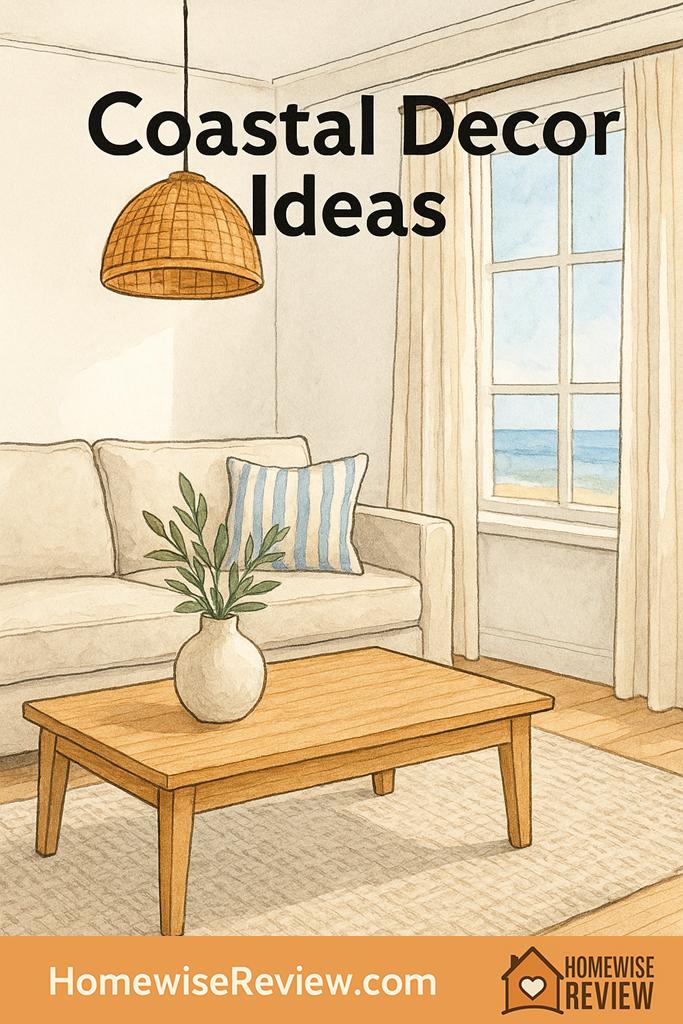
Want a coastal look without seashell clutter or cheesy signs? These coastal decor ideas focus on light, texture, and a few smart choices that make your home feel airy, calm, and intentional.
Coastal decor is easy to get wrong: it can slip into “beach gift shop” fast, or feel cold and empty if you play it too safe. The goal is a home that feels bright, relaxed, and clean, with natural texture and a hint of ocean air. The best results come from choosing a clear coastal direction, then repeating a few materials and colors on purpose.
What “coastal” decor really means (and what to skip)
Coastal style is less about literal beach objects and more about atmosphere: soft light, breezy layers, and nature-inspired materials. Think sun-washed neutrals, airy window treatments, and tactile texture that makes a room feel welcoming. If you want it to look elevated, treat “beach” as inspiration, not a shopping category.
Coastal staples that always work
- Light-reflecting neutrals (warm white, ivory, sand, pale gray)
- Watery blues and sea-glass greens used as accents
- Natural textures (linen, cotton, rattan, jute, light oak)
- Simple shapes and uncluttered surfaces
What to skip if you want a modern, adult look
- Overly literal decor: anchors, ship wheels, word art, novelty shells
- Matching “coastal sets” where every piece repeats the same motif
- Too many small knickknacks that collect dust and feel busy
- Harsh, bright primary blues that read sporty instead of soothing
Pick your coastal lane: three looks to choose from
Before buying anything, choose a coastal direction. This keeps your room cohesive and prevents that mixed-style clutter that makes spaces feel unfinished.
| Coastal style | Best for | Go-to colors | Signature materials | Easy “tell” |
|---|---|---|---|---|
| Modern coastal | Newer homes, condos, minimalists | Warm white, pale oak, navy accents | Linen, oak, matte black, glass | Clean lines with just a few beachy textures |
| Classic coastal | Family rooms, casual dining, laid-back spaces | White, sand, soft blue, sea-glass green | Rattan, slipcovers, striped cotton | More pattern and texture, still light and bright |
| Coastal cottage | Older homes, rentals, cozy bedrooms | Cream, driftwood gray, muted pastels | Woven baskets, painted wood, vintage brass | Soft, collected look with gentle contrast |
Color palette: how to get that sun-washed glow
Coastal rooms feel airy because the palette is restrained. A simple formula helps you avoid a “blue everywhere” room and makes the space easier to update later.
A reliable 60-30-10 palette
- 60% base: warm white or sandy neutral on walls and large upholstery
- 30% secondary: light wood tones, soft gray, or a quiet blue in rugs and accent chairs
- 10% accent: navy, deep teal, or black in small hits (hardware, frames, a lamp shade trim)
Paint and finish tips that matter
- Choose warm whites if your floors are warm-toned wood or you have beige stone. Cool whites can turn sterile.
- Use eggshell or satin on walls for cleanability, especially in high-traffic coastal homes.
- Repeat one accent color at least three times in a room (pillow, art, and a vase) so it feels intentional.
Materials and texture: the secret to cozy coastal
Texture is what keeps a light palette from feeling flat. The coastal look is strongest when you layer a few natural materials and mix smooth with nubby finishes.
Start with two “workhorse” textures
- Linen or cotton slipcovers: relaxed, breathable, easy to pair with other patterns.
- Woven elements: rattan, cane, seagrass, or woven baskets add instant coastal character.
Then add one grounding element
- Wood: light oak, white oak, or driftwood finishes.
- Stone or ceramic: matte white ceramics, travertine-style accessories, or a chunky ceramic lamp base.
- Metal (sparingly): brushed nickel for a traditional coastal feel, matte black for modern coastal.
Furniture: keep it comfortable, not bulky
Coastal rooms read “breezy” when furniture sits a little lighter visually. That can mean exposed legs, slimmer arms, or fewer oversized pieces competing for attention.
Three furniture choices that instantly lean coastal
- Sofas with simple lines in performance fabric, cotton, or a washable slipcover look.
- Light wood coffee tables or round tables that soften a boxy layout.
- Accent chairs with airy structure (cane back, rattan, or a slim wood frame with cushions).
A quick spacing rule for better flow
- Leave 30 to 36 inches for main walkways when you can.
- Keep 16 to 18 inches between a sofa and coffee table so it’s comfortable to use.
Window treatments: make the light feel softer
Natural light is a core coastal “material.” The right window treatment filters light during the day and looks calm at night.
Best options by vibe
- Sheer curtains: romantic coastal cottage, gentle light diffusion.
- Linen-blend panels: the most versatile for adult, elevated coastal rooms.
- Woven shades: instant texture; layer with panels if you need more softness.
Hanging tips that make ceilings feel taller
- Mount the rod 4 to 8 inches above the window frame, or closer to the ceiling if possible.
- Choose panels that just kiss the floor for a clean, tailored look.
Rugs, throws, and fabrics: coastal comfort that can handle real life
Coastal homes often deal with sand, sunscreen, wet towels, and pets. You can keep the look soft and layered without choosing delicate textiles that stress you out.
Rug guidelines that work in most rooms
- Go larger than you think: in living rooms, aim for front legs of furniture on the rug.
- Choose low-pile or flatweave if you have kids or pets; it hides crumbs and vacuums easily.
- Use pattern strategically: subtle stripes, small geometrics, or heathered neutrals help hide wear.
Layering for an easy coastal look
- Start with a neutral base rug (jute-style or a washable flatweave).
- Add a soft throw in a faded blue or natural linen tone.
- Finish with two pillow textures (for example: nubby cream plus a simple stripe).
Wall decor and art: coastal without clichés
Wall decor is where coastal rooms often go too literal. Instead of filling walls with themed items, aim for a few larger pieces that reinforce color and mood.
Art ideas that feel coastal and refined
- Abstracts in ocean tones (soft blues, gray-greens, sandy whites).
- Coastal photography with plenty of negative space (dunes, foggy shoreline, waves).
- Textural wall art like woven hangings or plaster-style pieces for a sun-bleached feel.
Frame choices that elevate the look
- Light oak frames for warmth and a beachy, natural vibe.
- Thin black frames for modern coastal contrast.
- White mats keep art crisp and help a room feel brighter.
Lighting: the fastest way to make coastal feel warm at night
During the day, coastal decor is mostly about sunlight. At night, it’s about gentle layers of light that keep the room from feeling stark.
A simple coastal lighting plan
- Overhead: a woven pendant, glass fixture, or a simple semi-flush mount.
- Task lighting: a reading lamp near seating, especially in family rooms.
- Ambient: a table lamp with a linen shade for soft, warm glow.
Bulb tip (small detail, big impact)
- Use warm bulbs (around 2700K to 3000K) to keep whites from looking icy.
Styling surfaces: keep it breathable and intentional
Coastal spaces look best when surfaces are not overcrowded. The styling should feel like a few meaningful pieces, not a shelf full of small decor.
The “rule of three” made practical
- One tall item: a lamp, vase with branches, or a large hurricane-style glass.
- One medium item: a bowl, stack of books, or a ceramic vessel.
- One small item: a candle, shell dish (simple, not kitschy), or a small framed photo.
Coastal coffee table formula
- A low tray (wood or woven) to corral items
- One natural element (driftwood-style branch, greenery, or stones)
- One soft element (a small book stack or a textile coaster)
Coastal decor ideas for small spaces and rentals
You can get a coastal feel without painting walls or buying large furniture. Focus on removable updates that change the light, texture, and palette fast.
High-impact, low-commitment upgrades
- Swap pillow covers to linen-look solids and one subtle stripe.
- Add a large rug in a light neutral to brighten the whole room visually.
- Use peel-and-stick details carefully: a subtle grasscloth-style wallpaper on one wall can look upscale if aligned well.
- Replace one light fixture (keep the original to reinstall later) or add a statement table lamp.
Small-space layout tip
- Choose furniture with legs you can see. Visual openness reads coastal even if the footprint is compact.
A step-by-step plan to refresh a room in coastal style
If you try to do everything at once, coastal decor can become a pile of random “beachy” purchases. This plan keeps you focused and helps you see progress quickly.
Weekend refresh checklist (2 to 6 hours)
- Pick one palette: warm white + sand + one blue accent
- Declutter flat surfaces and remove overly themed decor
- Swap in 2 to 4 pillow covers and one throw with texture
- Add one natural element: woven basket, rattan tray, or ceramic vase
- Update lighting warmth with the right bulb color temperature
Deeper refresh checklist (1 to 3 weekends)
- Repaint walls in a warm white or light greige
- Upgrade window treatments to linen-blend panels or woven shades
- Replace or layer a rug sized correctly for the seating area
- Choose one large art piece (or a balanced pair) with coastal color cues
- Unify metals (mostly nickel OR mostly black) for a calmer look
Common coastal decor mistakes (and quick fixes)
Most “off” coastal rooms have the right ingredients but the wrong balance. Fixes are usually simple: edit down, reduce contrast, and repeat your best choices.
- Mistake: Too many shades of blue. Fix: Keep blue to one or two tones and add more sand, cream, and wood.
- Mistake: Everything is light and the room feels washed out. Fix: Add one grounding accent like navy, black, or a darker wood tone in small doses.
- Mistake: Theme overload. Fix: Replace novelty items with texture: woven, linen, ceramic, and simple coastal art.
- Mistake: The room feels cold at night. Fix: Add a second lamp, switch to warmer bulbs, and include a soft throw.
Bottom Line
Great coastal decor comes from restraint: a light palette, natural textures, and a few intentional accents that repeat. Choose a coastal direction, size your textiles correctly, and focus on warm, layered lighting so the space feels calm all day and cozy at night.
See also
For a coastal-friendly home that stays comfortable in high-traffic areas, start with our picks for washable rugs, throws, and linens and add atmosphere with this guide to home scent diffusers.
- Modern decor ideas that pair well with a clean, modern coastal look
- Scandinavian decor ideas for bright neutrals and natural texture
- Clean-burning candle picks for a cozy, beachy evening glow
Frequently Asked Questions ▾
How do I make my home look coastal without decorating with seashells?
Use coastal cues that feel natural: warm white walls, linen textures, light wood, and art that suggests the shoreline through color and space (not literal objects). Add one woven element (basket, tray, shade) and one watery accent color repeated a few times.
What colors work best for coastal decor?
Start with warm whites and sandy neutrals, then add muted blues or sea-glass greens as accents. If the room feels too pale, use a small grounding color like navy or matte black in frames, hardware, or a lamp.
Can coastal decor work in a home that is nowhere near the beach?
Yes. Coastal style is more about light, comfort, and natural materials than location. Stick to a restrained palette and avoid overly literal beach themes so it reads as “relaxed and airy” rather than “vacation souvenir.”
What’s the easiest coastal update if I can’t paint?
Change textiles and lighting. Add linen-blend curtains, swap pillow covers for neutrals plus a subtle stripe, and choose a correctly sized rug in a light, textured weave. Then warm up the room with soft lamp lighting.
How do I keep coastal decor from looking cheap?
Edit down small decor, prioritize fewer larger pieces, and invest in texture instead of theme. Woven materials, solid ceramics, simple frames, and quality fabrics look more elevated than novelty items, especially when your palette is consistent.
As an Amazon Associate, we earn from qualifying purchases made through links on our site.