

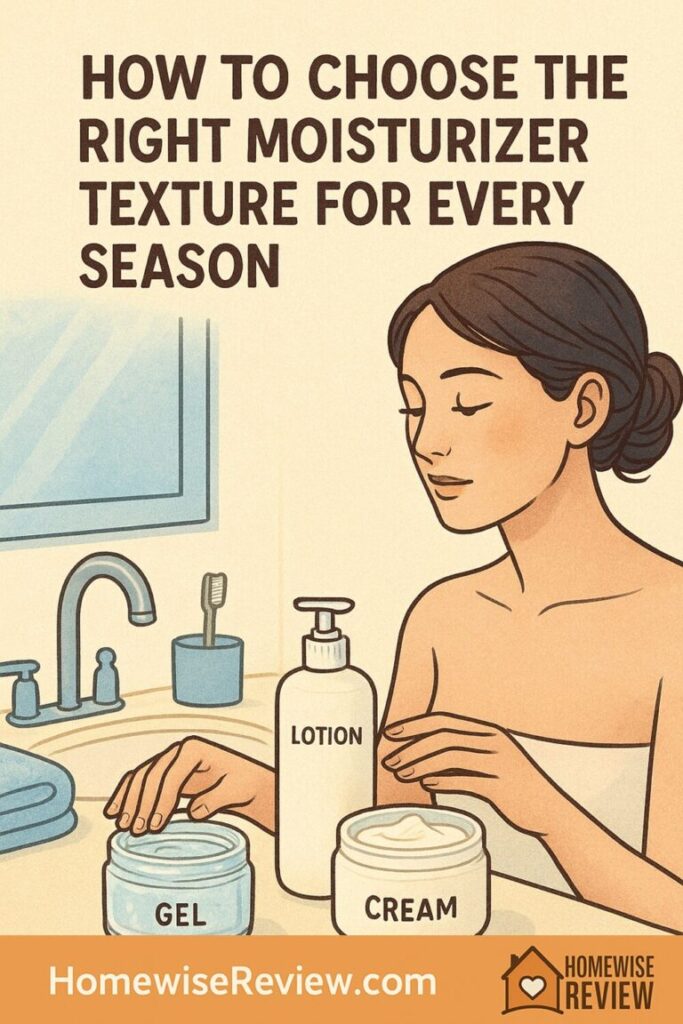
Your skin does not need the same heavy cream in August that it craves in January. Matching moisturizer texture to the season keeps your face comfortable, balanced, and far less fussy.
If your skin care routine never changes with the weather, your moisturizer might be working against you. The texture that saves your skin in winter can feel like a sticky film in summer, and a featherweight gel that feels perfect in July may leave you flaky by January.
Once you understand how different textures behave in different conditions, you can keep the same trusted ingredients and simply adjust how rich or light your moisturizer is. That small shift often fixes issues like midday shine, dry patches, or foundation that never sits quite right.
Why moisturizer texture matters more than you think
Most moisturizers are built around the same basic idea: add water, add oil, then lock it in. Texture is what changes the ratio of water to oil and how much “seal” you get on top of the skin. That balance controls how heavy, breathable, or protective the product feels.
Lightweight textures let water evaporate more quickly, which can feel fresh in humid heat but too bare in a dry, heated office. Richer, more occlusive textures slow down water loss, which your skin loves in cold wind but may hate in muggy weather. Matching texture to your season keeps your barrier happier with fewer surprises.
Start with your skin and your climate
Figure out your baseline skin type
Before you think about seasons, get a quick read on your natural skin tendencies. Wash your face with a gentle cleanser, pat dry, and wait 30 minutes without applying anything. Notice what you feel and see.
- Mostly comfortable, no obvious shine or flakes: likely normal.
- Shiny all over, especially the T-zone: oily.
- Tight, dull, or flaky patches: dry.
- Shiny T-zone with dry cheeks: combination.
- Burns, stings, or flushes easily: sensitive, no matter the oil level.
Your baseline will not change completely from season to season, but the way it behaves will. Oily skin may feel almost normal in winter. Dry skin can act combination in humid weather. Think of texture choices as fine tuning around this baseline.
Factor in your environment
Climate is the missing piece. The same moisturizer feels very different in Boston in January compared with Miami in July. Ask yourself:
- How humid is it most of the year? High humidity supports your skin’s hydration, so you can usually wear lighter textures. Very dry air pulls water out of your skin, so you need richer options.
- How extreme are your winters and summers? Strong wind, cold, and indoor heat call for more protective textures. Intense sun and sweat call for breathable, non-greasy layers.
- What about your indoor environment? Air conditioning, forced heat, and constant hot showers all dry the skin and may mean using a richer texture than the outdoor temperature suggests.
Moisturizer textures explained
You do not need to memorize chemistry. It helps to recognize a few broad texture families so you can pick the right one for the season and your skin type.
Gels
What they feel like: Clear or translucent, bouncy, mostly water based. They vanish quickly and leave a fresh finish.
Best for: Oily or very combination skin, hot and humid weather, people who hate the feel of product on their face.
Watch out for: Pure gel moisturizers can be too light for dry or mature skin, especially in air conditioning or cold weather. If your cheeks feel tight an hour later, you likely need something creamier.
Gel-creams or water creams
What they feel like: A cross between gel and lotion. They look like a thin cream but feel cool and watery on contact.
Best for: Normal, combination, and slightly oily skin, especially in spring and summer. They are great for layering under sunscreen and makeup.
Watch out for: In very dry winter air, even gel-creams may not fully protect dry or compromised skin unless you add a richer layer on top at night.
Lotions
What they feel like: Light, milky creams that spread easily and absorb within a few minutes. They usually come in pumps or squeeze bottles.
Best for: Most skin types in mild weather. Lotions often make a reliable “middle ground” option that you adjust by adding lighter or heavier serums underneath.
Watch out for: If your skin is very oily, some lotions might feel a bit too creamy in peak summer. If you are very dry, they may not be enough in deep winter.
Creams
What they feel like: Thicker, often in a jar. They have more oil and butter content and leave a cushioned, slightly dewy finish.
Best for: Dry, mature, or sensitive skin, cold climates, or anyone who spends hours in heated or air conditioned spaces. They shine in fall and winter, especially at night.
Watch out for: In hot, humid weather, heavy creams can sit on top of the skin, leading to clogged pores and that “mask” feeling. If you feel greasy or sticky, you likely need to step down to a lighter texture.
Balms and ointments
What they feel like: Very rich, almost solid, with ingredients like petrolatum, waxes, and dense oils. They form a strong seal on the skin.
Best for: Spot treating very dry or irritated areas, protecting the skin in harsh wind or cold, and slugging style routines where you apply a pea sized amount as the last step at night.
Watch out for: Used all over the face in the wrong climate, balms can trap too much heat and sweat, which may trigger breakouts for some people.
Facial oils
What they feel like: Pure oils or blends. They do not add water, but they soften and smooth the skin and can help prevent water loss when layered over something hydrating.
Best for: Dry or mature skin that still feels tight after cream, or targeted use on cheeks while keeping the T-zone more lightweight.
Watch out for: Oils are not a replacement for a true moisturizer if your skin is dehydrated. To avoid congestion, especially in warm weather, use only a few drops over a water based serum or lotion.
Your seasonal moisturizer game plan
Instead of buying a completely new routine every few months, think about building a small “wardrobe” of textures you can rotate. Then adjust with the weather like you do with clothes.
Spring: balance and reset
As the air gets a bit more humid and temperatures rise, you can usually move out of your heaviest textures. Many people also deal with irritation from allergies or post winter sensitivity, so gentle, breathable layers are ideal.
- Oily and combination skin: Switch from heavy cream to gel-creams or light lotions. Look for words like “oil free” or “water cream.” Use richer cream only at night on any dry patches.
- Normal and dry skin: A soft lotion or light cream is usually enough by day, with a slightly richer cream kept for cool, windy days or nights.
- Sensitive or reactive skin: Prioritize simple formulas and mid weight textures. Anything too thick can trap heat in flushed skin, while very light gels might not protect enough from pollen and wind.
Summer: keep it light and breathable
Heat, sweat, and sunscreen can make any moisturizer feel heavier than it is. Summer is the time to focus on hydration and breathability, especially during the day.
- Oily and acne prone skin: Gels or very lightweight gel-creams typically work best. If your sunscreen is already creamy, you might only need a hydrating serum under it in the morning.
- Normal and combination skin: Gel-creams and light lotions balance comfort and shine control. You can reserve richer cream for the eye area or dry cheeks only.
- Dry or mature skin: You may still prefer a lotion year round, but consider a lighter texture for daytime and keep cream or a drop of oil for nighttime repair.
At night in summer, many people do well using serum plus a lighter moisturizer rather than a heavy night cream. If you wake up oily, that is a sign your texture is too rich for the season.
Fall: transition and repair
As humidity drops and temperatures cool, a lot of people suddenly feel tight or notice dullness. This is your cue to gently step up to richer textures before your barrier becomes cranky.
- All skin types: Shift one “step heavier.” Gels move to gel-creams, gel-creams move to lotions, lotions move to creams.
- Dry and sensitive skin: Introduce cream at least at night, and consider a very thin layer of balm on the most exposed areas if you spend time in wind.
- Oily skin: You may not need a full cream, but bumping from a gel to a gel-cream at night can prevent the dehydration that triggers more oil production.
Winter: protect and cushion
Winter is when texture matters most. Cold air, wind, and indoor heating all pull moisture out of your skin. Even oily types can become dehydrated and flaky while still breaking out.
- Normal and dry skin: A true cream becomes the star, especially at night. During the day, you might use a lotion under sunscreen if you do not love a dewy finish. For very dry patches, tap a small amount of balm on top.
- Oily and combination skin: Do not be afraid of creams. A thin layer of a well formulated cream at night often helps reduce greasy shine by day. If cream feels too heavy for your T-zone, focus it on cheeks and eye area.
- Compromised or irritated skin: Look for thicker, barrier focused creams with ceramides and avoid a lot of active ingredients until your skin calms. Adding a few drops of oil over cream at night can help seal everything in.
How to layer different textures without suffocating your skin
Layering lets you customize texture without owning twenty moisturizers. The simplest rule is: go from thinnest to thickest, water based to oil based.
- Step 1: Apply watery products first such as toners, essences, or hydrating serums.
- Step 2: Follow with lotion, gel-cream, or cream, depending on your season and skin type.
- Step 3: Finish with oils or balms only if you need extra sealing on top, and use a pea sized amount for your entire face.
In hot weather, you might stop after a light lotion. In winter, you may stack a hydrating serum under cream, then a thin veil of balm on the driest spots. If products start to pill or feel sticky, you are either using too much or your final layer is too heavy for the climate.
Red flags that you are using the wrong texture
Texture issues usually show up quickly if you know what to look for. Adjusting one step lighter or heavier often solves the problem.
- Greasy shine within an hour: Your moisturizer is too rich for your skin or the weather. Try a lighter texture just during the day.
- Tightness or flakes even after moisturizing: Your texture is too light or not occlusive enough for your climate. Step up one level, especially at night.
- Makeup separating or sliding off: Your daytime moisturizer is either too heavy or not fully absorbing before you apply makeup. Try a gel-cream or lotion and give it a few minutes to sink in.
- Stinging, burning, or new redness: The problem may be more about formula than texture, but very thin gels with lots of alcohol or fragrance can be more irritating in dry or cold air.
- Clogged pores or more breakouts: Occasional breakouts can come from using a winter weight cream into spring and summer. Oily and combination skin often need to “step down” by one texture as the weather warms.
Read the label: how to quickly judge texture before you buy
Names on the front of the tube can be misleading, so it helps to glance at the ingredient list for clues.
- Very light textures: Water or aloe near the top with multiple humectants like glycerin and hyaluronic acid, and very few heavy oils or butters. Often called gel, fluid, or water cream.
- Medium textures: Water is still first, but you will see more emollients like squalane, esters, and light plant oils. These are typically lotions and standard creams.
- Heavy textures: Rich butters (shea, cocoa) and waxes or petrolatum appear high in the list. These are your cold weather creams, balms, and ointments.
When in doubt, think about your current season and go one notch lighter for day and one notch richer for night. You can always add a drop of oil to a lighter lotion in winter or dilute a cream with hydrating serum in summer to tweak the texture.
See also
If your body skin still feels parched after moisturizing, our guide to the best body lotion for dry skin pairs well with a gentle cleanser from our best body wash for dry skin roundup to keep your barrier happier year round.
- For deep winter comfort, explore the best body butters for winter nights that feel rich without ruining your sheets.
- When your face feels rough or reactive, these best ceramide serums for compromised barriers can strengthen your skin under any moisturizer texture.
- If you wear makeup most days, our guide to mineral face sunscreens that layer well under cosmetics can help complete your daytime routine.
FAQ
How often should I change my moisturizer texture through the year?
Most people do well with two or three main textures for the year: a lighter option for warm, humid months, a medium option for in between seasons, and a richer cream for cold, dry weather. You do not have to change on a specific date. Watch for signs like new tightness, flaking, or excess shine, which usually show up as the weather shifts in spring and fall and signal that it is time to step one level lighter or heavier.
Can I use the same moisturizer in summer and winter if I have very simple skin?
If your skin is truly low maintenance and you live in a fairly stable climate, you might be able to use the same mid weight lotion year round. To keep that working, adjust how much you use and what you layer with it. In winter, pair it with a hydrating serum underneath or a few drops of oil on top at night. In summer, use a smaller amount and rely more on your sunscreen for added moisture.
Is it okay to use a heavy winter cream on oily or acne prone skin?
It can be, as long as you choose a formula that is noncomedogenic and pay attention to how your skin responds. Oily and acne prone skin still needs moisture, especially in winter, and a moderate cream can actually reduce rebound oiliness when used at night. If you notice new clogged pores or your face looks very shiny within an hour, scale back to applying cream only on dry areas or switch to a gel-cream texture instead.
What is the best moisturizer texture to wear under makeup in hot weather?
In heat and humidity, the best textures under makeup are usually gels or gel-creams that sink in quickly and leave a soft, non greasy finish. They provide enough hydration so foundation does not cling to dry spots, but they will not cause your base to slide. Let your moisturizer fully absorb for a few minutes, then apply a sunscreen that works well with makeup and keep any heavier creams for nighttime.
How can I tell if I need an oil or balm on top of my moisturizer in winter?
If your skin feels comfortable right after applying cream but tight or rough again within a couple of hours, adding a very thin layer of oil or balm on top at night can help. This is especially true if you see visible flakes or spend a lot of time in heated indoor air. Start with a pea sized amount for your whole face, concentrate on the driest areas, and avoid your oiliest zones if you are prone to congestion. If you wake up greasy or breaking out, scale back or reserve these heavier layers for only the most exposed spots.
As an Amazon Associate, we earn from qualifying purchases made through links on our site.